
Star Trek TOS Props and the Strength of Tape
An in depth look at Star Trek TOS props held together with tape, examining how 1960s television craft, disciplined design, and performance turned fragile objects into lasting icons of science fiction.


The visual authority of "Star Trek: The Original Series" has always rested on an apparent contradiction. The series looks composed and purposeful while being produced at remarkable speed under the financial realities of 1960s television. Tape was not a failure of imagination but a quiet partner in maintaining that illusion.
In production terms, tape functioned as maintenance rather than repair. It stabilized fragile objects long enough for blocking, lighting, and performance to carry the scene. The camera never lingers on construction because the design never asks it to.
This article examines seven props whose reliability depended on tape. Each example demonstrates how material fragility can coexist with visual confidence. What matters is not what these objects were made of but how they were used.
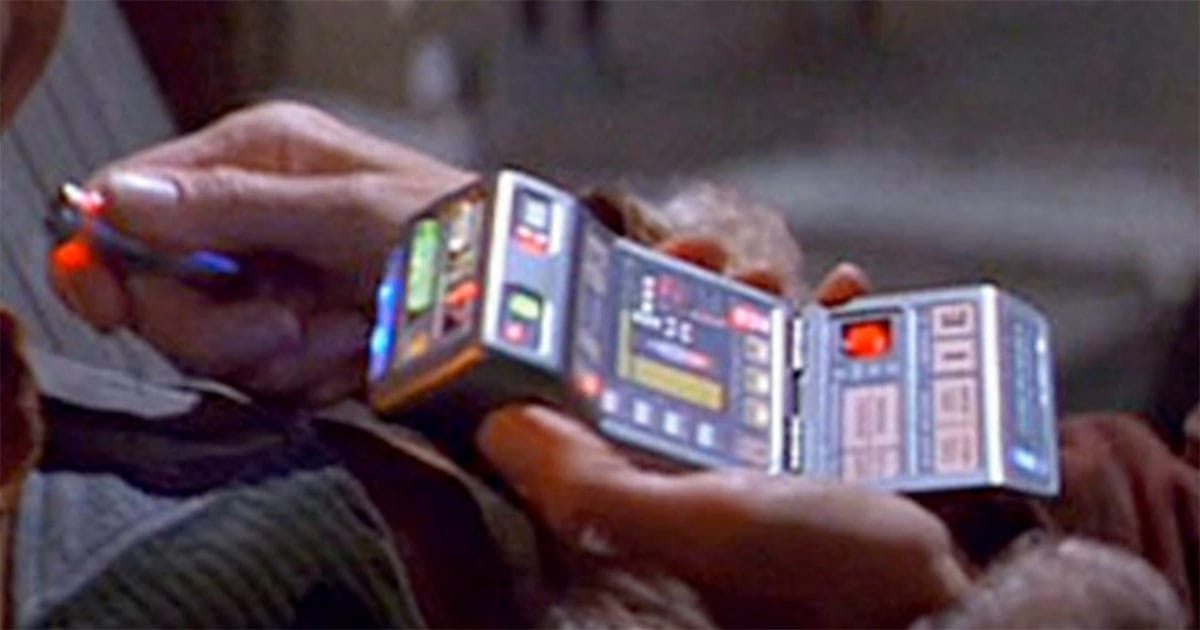
Tools of Command in the Actor's Hand
The communicator is the most famous example of controlled instability. Hinges weakened quickly under repeated flips, and internal springs lost tension. Tape applied just out of frame kept the clamshell aligned long enough for the gesture to read clearly.
On screen, the communicator succeeds because it is treated as decisive equipment. The motion is practiced and economical. The audience responds to authority, not hardware.
The phaser faced a different problem. Its modular body and holster wear caused seams to separate and internal parts to rattle. Tape kept the profile intact and prevented distracting movement during action scenes.
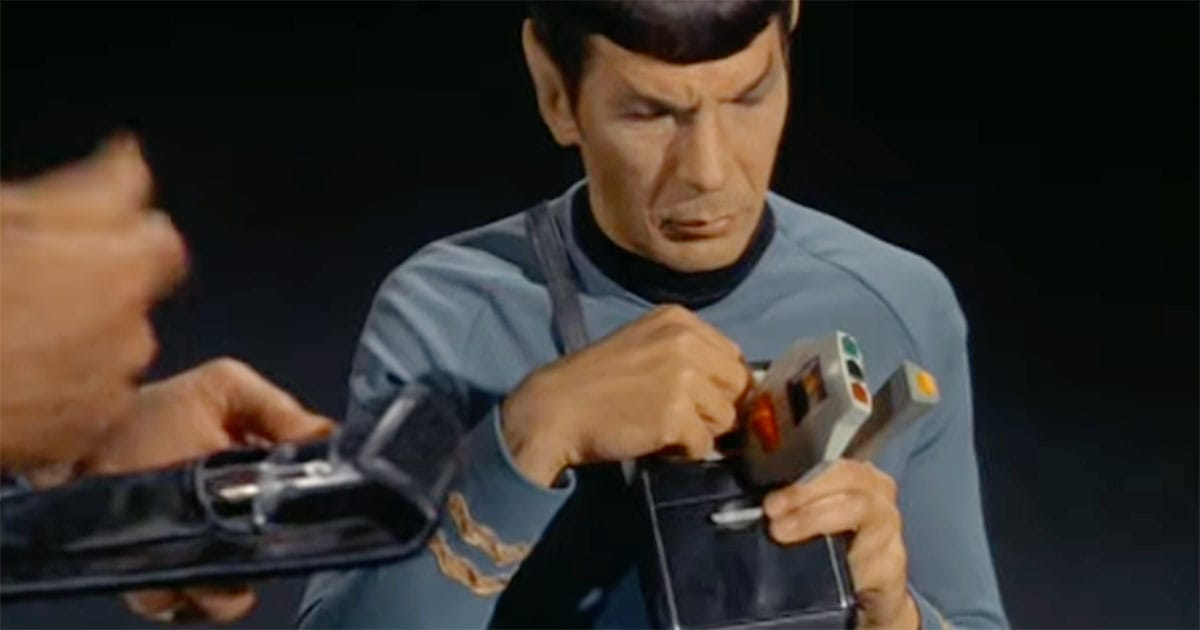
The phaser reads as credible because it is handled with restraint. It is pointed deliberately and lowered with purpose. The prop's simplicity works in its favor when stability is preserved.
The tricorder was built from repurposed electronics that were never meant for dramatic use. Panels loosened and battery compartments shifted during shooting. Tape secured these elements so the prop could survive repeated takes.
The tricorder's believability comes from ritual. Actors scan, pause, and read with practiced rhythm. The device feels sophisticated because it is used as if it were.
Sickbay and the Performance of Precision
Sickbay hand instruments required constant attention. Lightweight shells and interchangeable parts were prone to misalignment. Tape ensured continuity across camera setups and preserved the illusion of precision.
Medical props succeed through abstraction. Their shapes suggest function without inviting scrutiny. Calm procedure and measured dialogue carry the weight of belief.
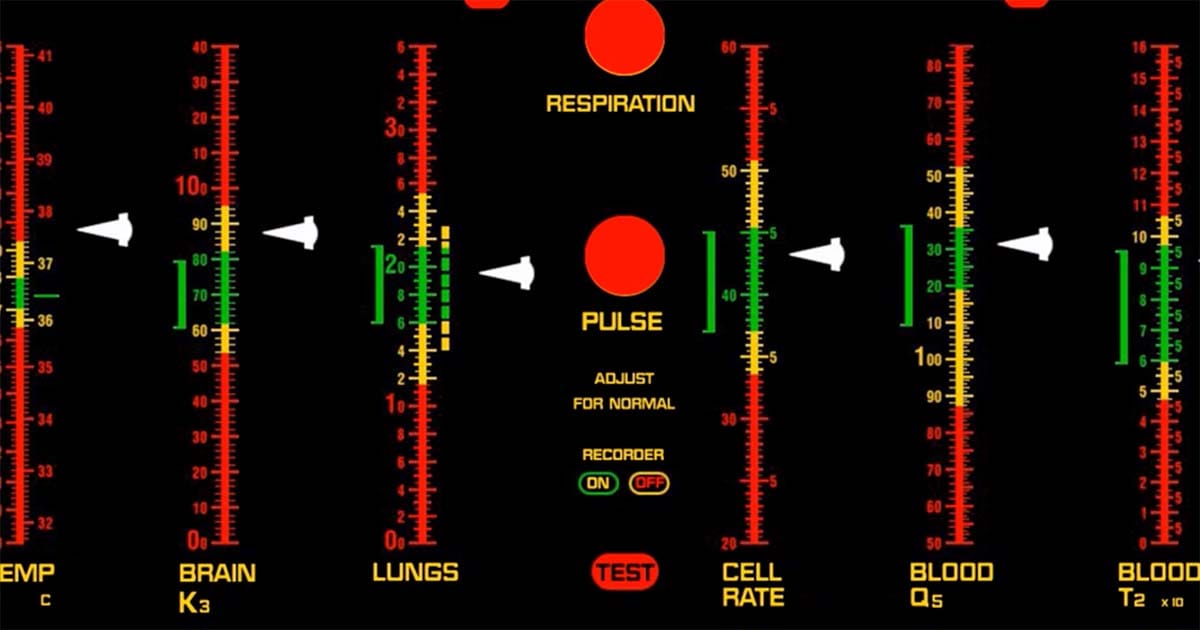
Diagnostic scanners presented similar challenges. Internal wiring and light elements shifted easily under hot studio lights. Tape kept components aligned while framing avoided unnecessary detail.
Sickbay scenes emphasize competence over spectacle. The tools appear advanced because they are secondary to disciplined behavior. The props support tone rather than compete with it.
The Bridge as a Maintained Illusion
The bridge consoles endured the most physical stress. Buttons, labels, and trim loosened under constant use. Tape functioned as an invisible stabilizer between takes.
The bridge reads as orderly because its layout is legible. Lighting isolates the important surfaces. The viewer perceives control rather than wear.

Blinking panels and readouts were built from light boxes, gels, and exposed wiring. These elements required constant adjustment. Tape held diffusion and wiring in place while preserving visual density.
The camera treats the bridge as an environment rather than a collection of objects. Symmetry and hierarchy guide the eye. Complexity is suggested rather than demonstrated.
What unites these seven props is not thrift but discipline. Tape supports function while design supports belief. Each object does exactly what the scene requires and nothing more.
"Star Trek" TOS endures because it understands readability. Strong shapes, consistent graphic language, and confident performance matter more than materials. Constraint sharpens judgment.
For collectors and builders, this history offers perspective. Authenticity includes repair, compromise, and adaptation. The illusion worked because everyone involved knew where to spend attention and where not to.