
Why Captain Kirk’s Chair Worked So Well
Captain Kirk’s iconic chair was not futuristic at all. Learn how a modified barber chair helped define authority, performance, and realism on the bridge of the Enterprise.

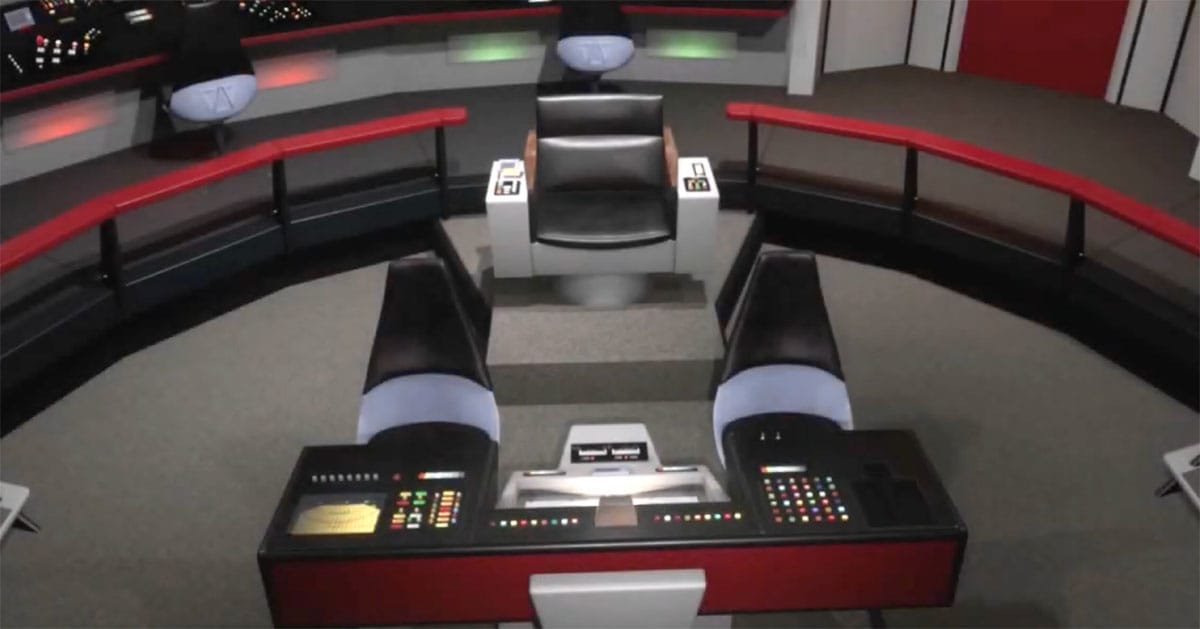
In popular memory, the future arrives padded, angular, and unfamiliar. The captain's chair on the bridge of the Enterprise appears to confirm that belief at a glance. It looks purpose-built for deep space command. The reality behind it tells a quieter and more instructive story.
When "Star Trek" premiered in 1966, it offered a future shaped by order rather than novelty. The bridge resembled a disciplined operations room more than a fantasy control deck. Consoles were fixed, stations were assigned, and hierarchy was visible. The captain's chair anchored that structure.
The seat used by Captain Kirk was not a futuristic invention. It was a heavily modified barber chair adapted for television production. Barber chairs were designed to swivel smoothly, lock securely, and elevate the occupant. Those practical qualities matched the needs of a commanding officer.
This choice was not accidental. The chair needed to move precisely during dialogue-heavy scenes. It needed to stop cleanly on camera and remain stable through repeated takes. Most of all, it needed to place the captain at the unquestioned center of the room.
Practical Design in a Television Future
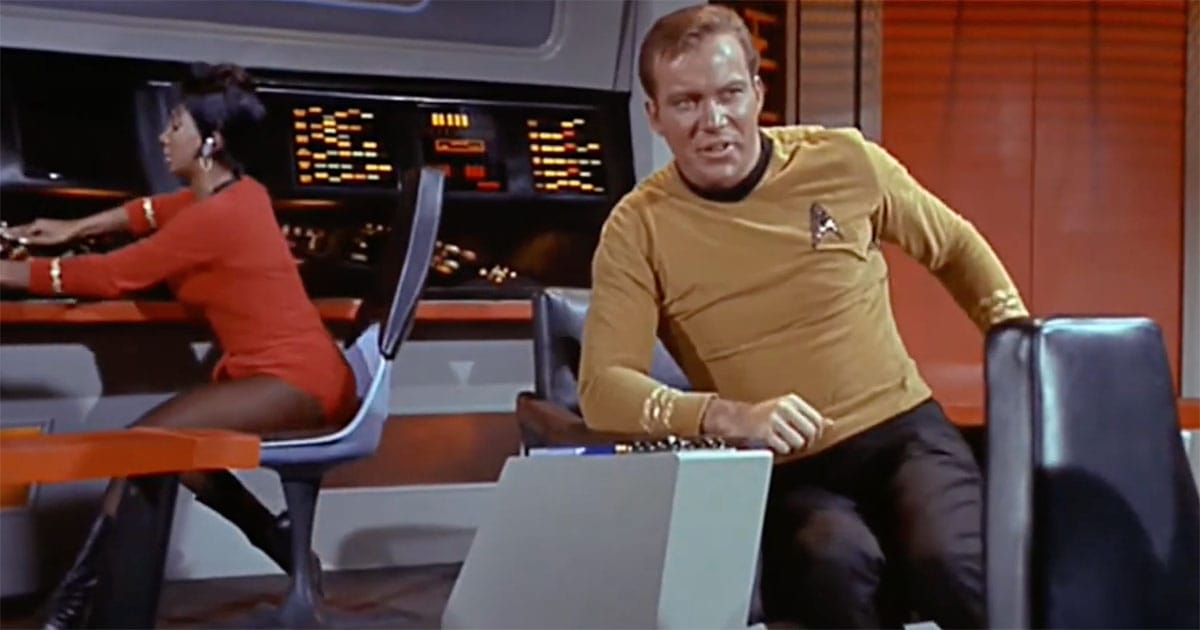
The decision reflected the realities of 1960s television production. Budgets discouraged custom fabrication, and schedules favored dependable solutions. Set designers relied on objects with proven mechanics. Familiar furniture reduced risk and reduced distraction.
Classic television science fiction relied more on suggestion than on detail. A flashing panel implied unseen systems. A uniform implied discipline and rank. In this context, a barber chair implied authority without explanation, and the audience accepted that implication immediately.
Performance, Blocking, and Authority
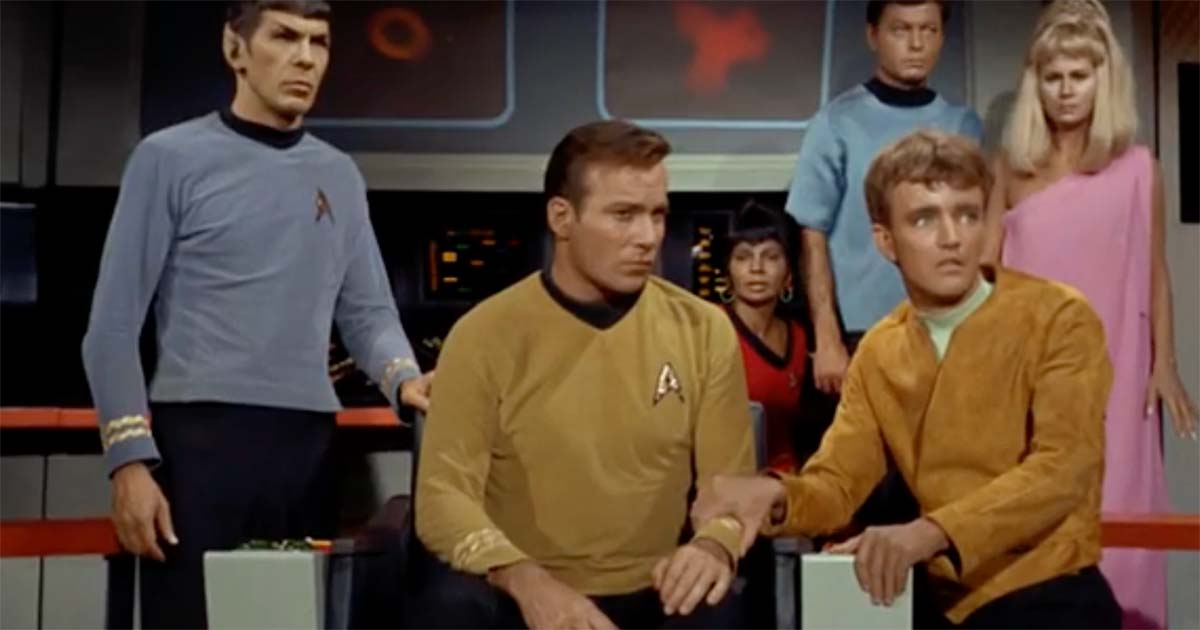
For William Shatner, the chair supported performance as much as image. A smooth swivel allowed Kirk to turn sharply toward a speaking officer. The elevated seat reinforced command without added dialogue. Authority emerged through posture and timing.
The chair also shaped how scenes were staged. Kirk often remained seated while others approached or stood. That visual arrangement reinforced hierarchy without comment. The camera understood the chair's role, and so did the audience.
Why the Illusion Holds
The chair reassured viewers because it looked understandable. It appeared solid, functional, and familiar. The future felt organized rather than chaotic. That familiarity helped viewers settle into the setting quickly.
This approach defined much of classic television science fiction. The future appeared as an extension of existing institutions rather than a rejection of them. Starships operated like disciplined vessels, and crews behaved like trained professionals. The furniture followed the same logic.
The barber chair fit that vision because it came from a world of routine and service. Barber shops were dependable civic spaces built on order and trust. Recasting that object for the bridge suggested continuity rather than disruption. Progress appeared as refinement in spite of novelty.
When fans later learned the chair's true origin, the revelation caused little harm. The illusion was never dependent on technical novelty. Meaning came from placement, framing, and performance. The audience remembered Kirk's decisions, not the mechanics beneath him.
The captain's chair reveals a central truth about classic science fiction. The future does not always require new machines. Sometimes it only asks that familiar ones be placed with confidence and intention. A barber chair became a seat of command, and the idea still works decades later.