
Building the Long Future in "The Fountains of Paradise"
A thoughtful review of "The Fountains of Paradise" examines Arthur C. Clarke’s vision of progress, engineering, and patience in classic hard science fiction.


A Novel Written Against the Current
"The Fountains of Paradise" appeared at a moment when science fiction was losing patience with optimism. The late 1970s favored anxiety, spectacle, and inward collapse. Arthur C. Clarke responded with a novel that looked outward and upward. It was a book about confidence in reason rather than fear of the future.
The novel does not attempt to dazzle the reader with constant motion. It assumes that careful attention is a virtue. Clarke writes as though the audience is capable of sustained thought and willing to follow a long argument. That assumption defines the entire reading experience.
This is science fiction that believes progress is possible. Not easy, not fast, and not guaranteed. Possible through discipline and knowledge. That belief alone sets the book apart from many of its contemporaries.
Clarke at a Moment of Authority
By the time this novel was published, Arthur C. Clarke was already an established figure. His career had moved beyond the need for reinvention or provocation. He was writing from a position of intellectual security. That confidence allows the novel to proceed without apology.
Clarke had always favored ideas over spectacle. He trusted that a strong concept could carry a narrative without excessive conflict. In this book, that philosophy reaches its clearest expression. The story advances through reasoning rather than confrontation.
There is no sense of trend chasing here. Clarke shows little interest in fashionable pessimism. His concern lies with what humanity can build if it chooses patience over impulse. That concern shapes every page.
The Engineering Idea at the Center
At the center of the novel is the idea of a space elevator. Clarke treats this concept as a natural extension of human engineering rather than a fantasy. The structure represents continuity with earlier great works of construction. It belongs to the same lineage as bridges, towers, and observatories.
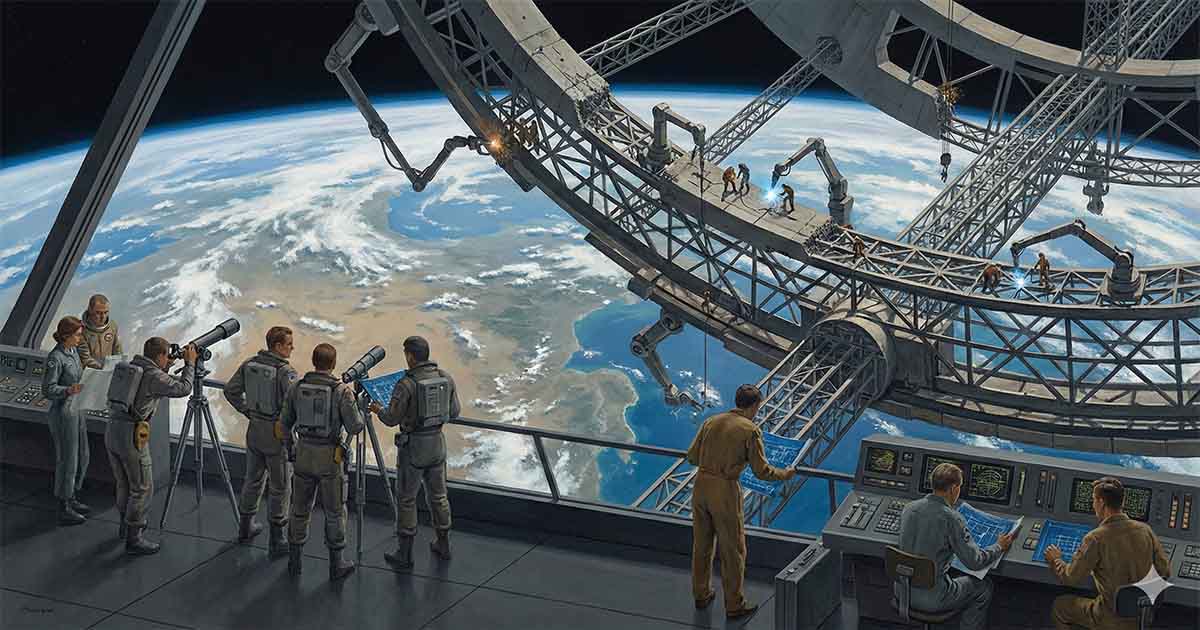
The emphasis remains on feasibility. Clarke focuses on how such a project would be planned and justified. He shows respect for limits and constraints. The challenge is not defying nature but understanding it.
This approach gives the book its seriousness. The space elevator functions as a test of maturity. It asks whether a society can commit to something larger than immediate reward. Clarke suggests that this capacity defines true advancement.
History as Context Rather Than Warning
The novel places modern ambition alongside historical memory. Clarke uses the past as a quiet counterpoint rather than a lecture. Earlier attempts to reach the heavens appear as echoes rather than warnings. The comparison invites reflection rather than judgment.
Human aspiration remains constant across time. What changes is the method. Clarke presents knowledge as the difference between tragedy and achievement. Faith alone no longer suffices.
This treatment gives the story depth without sentimentality. History is neither mocked nor romanticized. It is treated as accumulated experience. The future becomes possible because the past is remembered.

Progress as Incremental Labor
Clarke's view of progress is incremental. He shows little interest in sudden transformation. Advancement arrives through correction and refinement. Each step depends on understanding the one before it.
This perspective shapes the novel's tone. There is no urgency manufactured for excitement. The narrative unfolds at the pace of planning and construction. That pacing reinforces the theme.
Readers accustomed to rapid escalation may find this approach restrained. Others will find it reassuring. Clarke trusts that significance does not require noise.
Prose Built for Clarity
The prose style reflects the book's priorities. Clarke writes with clarity and economy. Sentences are designed to inform rather than impress. The language avoids flourish in favor of precision.
Emotion appears sparingly. When it does, it is tied to achievement rather than personal turmoil. Characters express satisfaction through competence. The effect is subdued but deliberate.
This style supports credibility. The world feels governed by logic rather than coincidence. Solutions arise from understanding rather than luck. That consistency anchors the novel.
Characters as Professionals
Characters serve the ideas more than themselves. They are defined by their roles and abilities. Clarke shows little interest in psychological introspection. Motivation is assumed rather than dissected.
This choice reflects an older tradition in science fiction. The emphasis lies on what people do rather than how they feel about it. Professionalism becomes a form of virtue. The result is a cast that feels functional and believable.
Some readers may wish for greater intimacy. Clarke appears unconcerned with that expectation. His focus remains fixed on the collective effort.
Conflict Without Villains
Conflict in the novel is understated. Obstacles arise from physical limits and institutional caution. There are no villains in the conventional sense. Resistance appears as hesitation rather than malice.
This treatment reinforces the book's realism. Large projects fail more often from inertia than sabotage. Clarke understands this dynamic. The story reflects it accurately.
The absence of melodrama allows the theme to remain clear. The challenge is not overcoming enemies. It is overcoming gravity and doubt.
Time as a Structural Element
The pacing mirrors the subject matter. Progress occurs in stages. Each advancement depends on preparation. Clarke allows the reader to feel the weight of time.
There is satisfaction in this method. Completion feels earned rather than contrived. The narrative rewards attention rather than impatience. That reward is intellectual rather than emotional.
This structure may frustrate readers seeking suspense. It will satisfy those interested in process. Clarke does not attempt to bridge that divide.
Reputation Earned and Retained
Upon publication, the novel received significant recognition. Its awards reflected respect within the science fiction community. Critics recognized its seriousness and ambition. The book was understood as a major statement rather than a diversion.
Over time, its reputation has remained stable. It is often cited as an example of classic hard science fiction. Readers return to it for ideas rather than thrills. That durability speaks to its foundation.
Modern audiences may approach it differently. Tastes have shifted toward character-driven narratives. Even so, the book retains authority.
A Mature Place in the Canon
Within Clarke's body of work, the novel occupies a mature position. It lacks the mystery of his cosmic stories. It lacks the playfulness of his early experiments. What it offers instead is confidence.
This confidence does not rely on prediction. Clarke is less concerned with being right than with being reasonable. The future he imagines grows from present knowledge. That restraint strengthens the vision.
The novel feels less like speculation and more like planning. That distinction defines its character. It invites the reader to think rather than escape.
The Moral Weight of Construction
"The Fountains of Paradise" ultimately concerns responsibility. It asks what humanity should attempt once it understands its limits. Clarke argues that knowledge brings obligation. Ambition must be matched by care.
The book presents optimism without naivety. Progress is possible but demanding. Success requires humility before reality. That balance gives the novel its moral weight.
For readers who value intelligence, patience, and confidence in human capability, this novel remains relevant. It offers a future built through understanding. That vision continues to matter.