
Darth Vader’s Breathing
Discover how Darth Vader’s iconic breathing was created using a scuba regulator, why it worked so well in Star Wars Episode IV A New Hope, and how a simple sound became lasting science fiction legend.

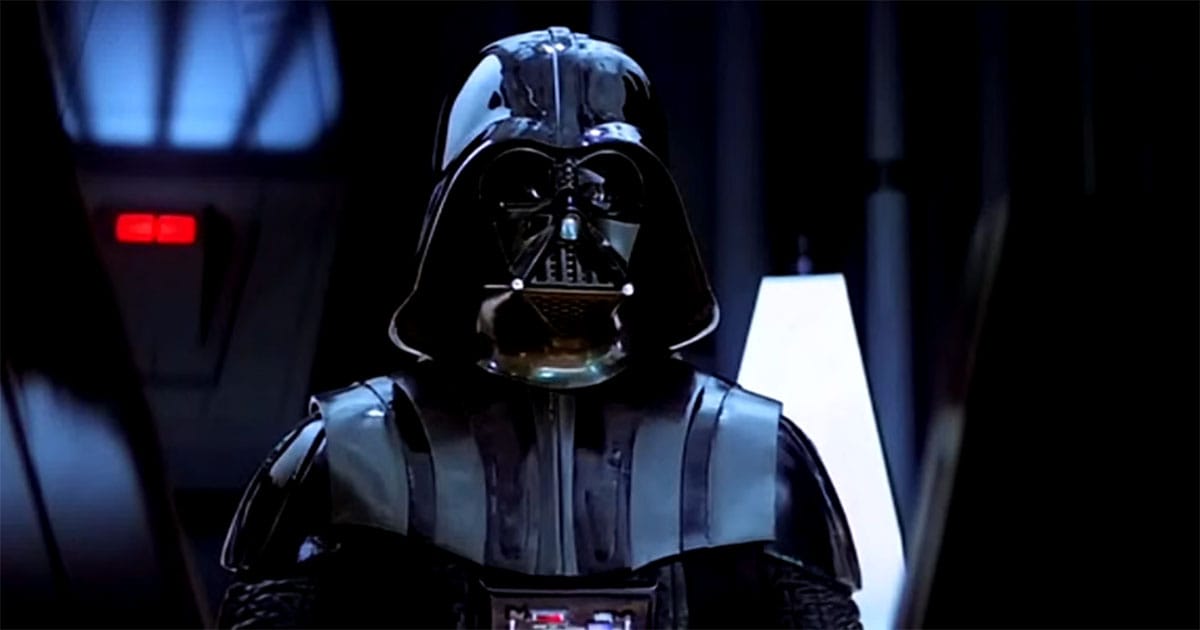
The first thing audiences truly meet in "Star Wars: Episode IV – A New Hope" is not a face, a weapon, or even a voice. It is a sound that suggests a body under strain, a body kept alive by machinery. Before Darth Vader speaks, his breathing announces him as something more than human and less than whole.
That sound has become one of the most recognizable audio signatures in popular cinema. It is often repeated as a piece of trivia that Vader's breathing was recorded in a scuba shop. Like many enduring production anecdotes, the truth is both simpler and more revealing than the shorthand suggests.
At its core, the story is about method rather than novelty. The breathing works because it is grounded in real hardware, performed by a human, and altered with restraint. It reflects a 1970s approach to science fiction that trusted physical reality more than abstraction.
A sound shaped by its era
The sound design of "A New Hope" emerges from a specific moment in American filmmaking. The mid-1970s favored practical effects, physical materials, and hands-on experimentation. This is a period when futuristic worlds are built from scrapyards, workshops, and garages rather than computers.
Ben Burtt approaches sound as a form of field recording rather than studio synthesis. He treats machines as instruments and treats his own body as part of the toolset. His work on "Star Wars" grows out of documentary practice, where authenticity carries more weight than polish.
The goal is not to invent sounds that have never existed. The goal is to reframe familiar sounds so they feel plausible in unfamiliar contexts. This philosophy explains why blasters resemble modified radio interference and why lightsabers carry the hum of electrical equipment.
Vader's breathing fits squarely within this approach. The character requires an audible system that explains his survival and reinforces his menace. Silence would have made him abstract, while a human breath alone would have made him ordinary.
The scuba regulator session
The core claim behind the anecdote is accurate in spirit. Breathing originates from a scuba regulator, the device divers use to control airflow from a tank. The regulator produces a distinctive combination of rush, resistance, and mechanical response that immediately reads as life support.
Burtt records himself breathing through the regulator with a microphone placed very close to the valve. This proximity captures not only the airflow but the subtle clicks and shifts that occur as the mechanism opens and closes. The result sounds regulated rather than panicked, which is essential to the character.
The idea that the sound was recorded in a scuba shop persists because it compresses several realities into one phrase. Dive shops are where regulators are serviced, tested, and demonstrated, often using water tanks. It is reasonable that such an environment becomes part of the story, even if the exact location matters less than the equipment.

Some accounts mention specific regulator brands, though these details vary and are rarely confirmed in primary sources. What matters is not the label but the function. The regulator enforces rhythm and resistance, turning breathing into labor.
Post-processing exists, but it is modest. The sound is slightly slowed and equalized to deepen its presence. It is not heavily distorted or layered with artificial effects, which preserves its credibility.
Just as important, the breathing is performed. Burtt controls pace and pressure to suggest a being who is both powerful and damaged. The menace comes from control, not from frenzy.
Breathing as narrative machinery
Inside the finished film, Vader's breathing functions as more than an effect. It operates as a constant reminder of the character's condition and authority. Even when he stands still, the sound fills the space.
The breathing often enters scenes before dialogue. It establishes dominance without requiring movement. In quiet moments, it replaces music, forcing the audience to share the room with the character.

James Earl Jones supplies Vader's voice, but the breathing supplies his physiology. The two elements rarely compete. Instead, they form a layered performance that separates intellect from survival.
Mixing decisions keep the breathing consistent in volume and tone. It does not swell for emphasis or fade for convenience. This steadiness makes it feel mechanical and unavoidable.
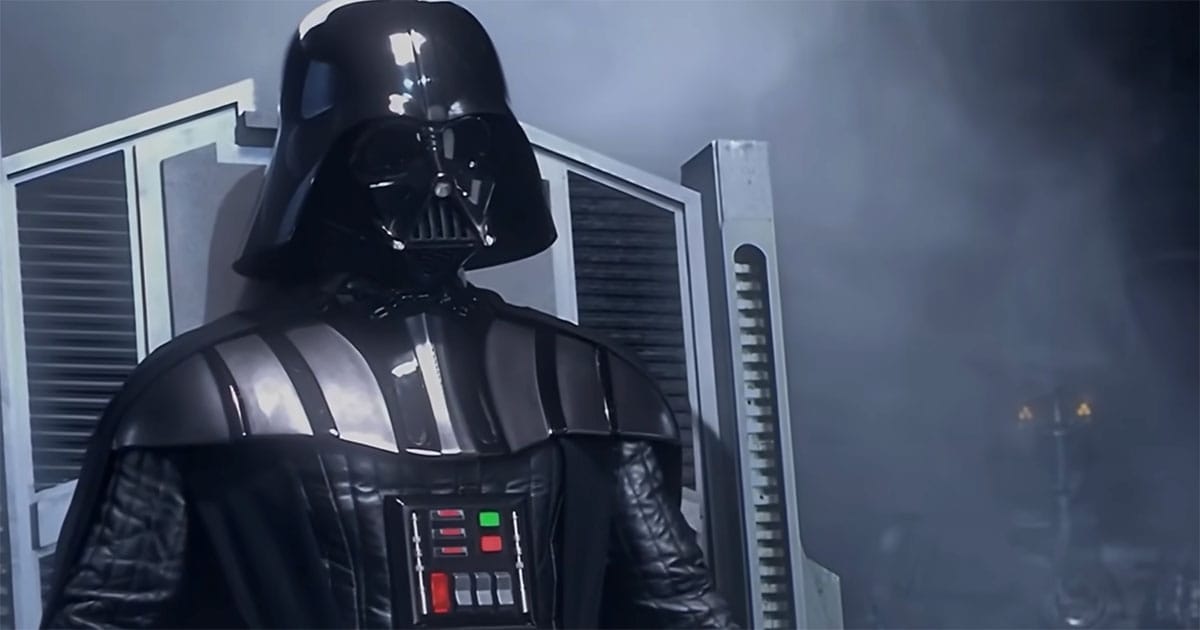
The sound also aligns perfectly with the costume design. The helmet, chest panel, and hoses resemble medical apparatus. The breathing makes those visual cues audible, completing the illusion of a man sustained by technology.
This is science fiction doing explanatory work through sensation rather than exposition. The audience understands Vader's condition without being told. The sound communicates limitation and threat at the same time.
A tradition of restraint
Vader's breathing stands apart from many later attempts to signal villainy through sound. It is not exaggerated or decorative. It does not call attention to itself through complexity.
This restraint reflects confidence. The filmmakers trust that a simple, honest sound will carry meaning if used consistently. They resist the temptation to embellish what already works.
The breathing also reflects a moral clarity common in classic science fiction. Technology is neither a miracle nor a curse on its own. It is a tool that preserves life at a cost.
Vader is terrifying not because he is unstoppable, but because he is sustained. His survival is audible, and it sounds uncomfortable. That discomfort is the point.
This approach aligns with a broader tradition in the genre. From space suits to airlocks, the mechanics of survival are treated seriously. Sound becomes a way to remind the audience that space is hostile and bodies are fragile.
Why the anecdote endures
The scuba shop story survives because it captures something true about how the sound was made. It suggests a practical, almost casual discovery rather than a grand design. That impression fits the ethos of early "Star Wars" production.
The anecdote also flatters the listener. It offers insider knowledge that feels concrete and repeatable. Anyone can imagine a regulator and a microphone.
More importantly, it conveys a lesson about craft. Effective science fiction often begins with ordinary objects used imaginatively. The future sounds convincing when it borrows from the present.
Vader's breathing becomes a template that is repeated and referenced across decades. Yet it is rarely improved upon. Its power lies in its simplicity and its honesty.
In the end, the sound succeeds because it is not trying to impress. It is trying to explain. A man is alive because a machine allows him to breathe, and that machine is never silent.
That idea, rendered audible, remains one of the clearest achievements of "Star Wars: Episode IV – A New Hope."