
“Demolition Man” and the Cost of a World Without Conflict
A clear and thoughtful review of “Demolition Man” examining its themes of control, order, and human nature, and why its vision of a conflict-free future remains relevant today.

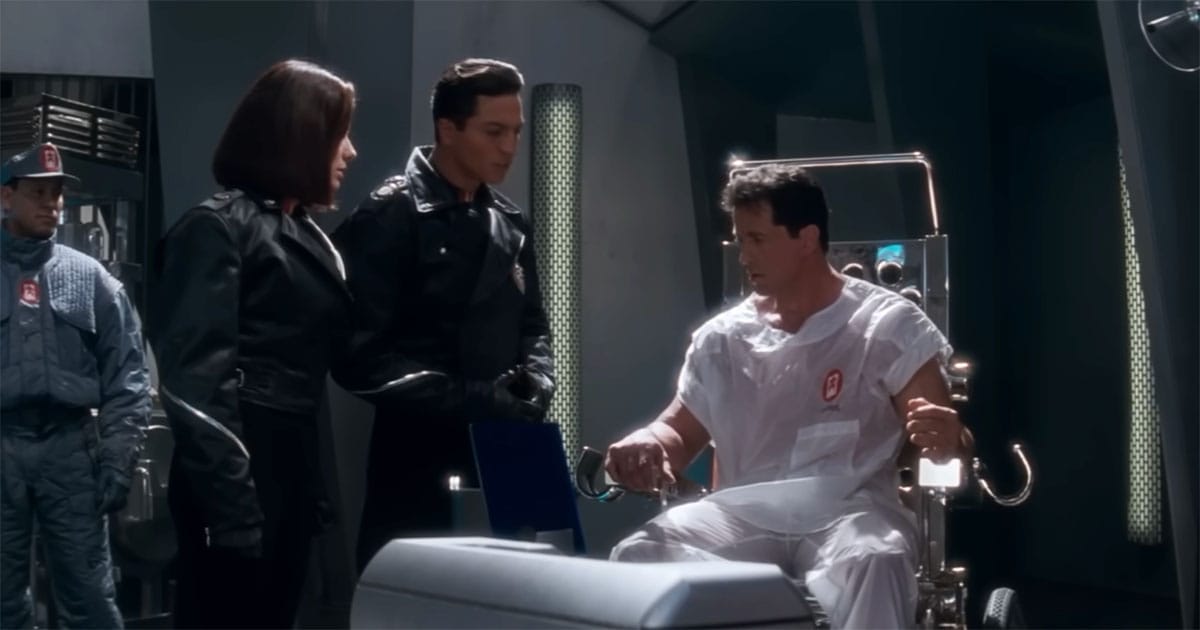
There is a persistent assumption in science fiction that removing disorder will produce a stable society. It is a reasonable belief, and one that appears often in speculative stories. Yet it leaves open an important question about what is lost when disorder disappears.
"Demolition Man" (1993), directed by Marco Brambilla and starring Sylvester Stallone, Wesley Snipes, and Sandra Bullock, examines this idea in a direct and practical way. The film presents itself as an action story, but it is built on a simple speculative premise. It asks what happens when society becomes too controlled to face danger.
The future world in the film has eliminated violence, conflict, and even minor friction. What remains is a society that is orderly, predictable, and comfortable. It is also a society that has not been tested.
When disorder returns, it does not arrive in a manageable form. It arrives in a way that exposes how little strength the system has retained. The film suggests that eliminating conflict does not remove danger, but instead delays it until the moment it can no longer be controlled.
| Attribute | Details |
|---|---|
| Title | Demolition Man |
| Director | Marco Brambilla |
| Writer | Daniel Waters, Robert Reneau |
| Actors or Actresses | Sylvester Stallone, Wesley Snipes, Sandra Bullock |
| Rated | R |
| Runtime | 115 min |
| Genre | Science Fiction, Action |
| Release Year | 1993 |
| Rating | 7.5/10 |
Synopsis
The film begins in a version of Los Angeles that reflects the anxieties of the early 1990s. Crime is widespread, violence is routine, and law enforcement operates with increasing desperation.
John Spartan, played by Sylvester Stallone, is introduced as a capable but destructive officer whose methods often cause as much damage as they prevent.
Spartan's pursuit of the criminal Simon Phoenix, played by Wesley Snipes, leads to a disastrous confrontation. A hostage situation ends with catastrophic destruction, and Spartan is blamed for the presumed deaths of innocent people. Phoenix is captured, but both men are sentenced to cryogenic imprisonment as punishment.
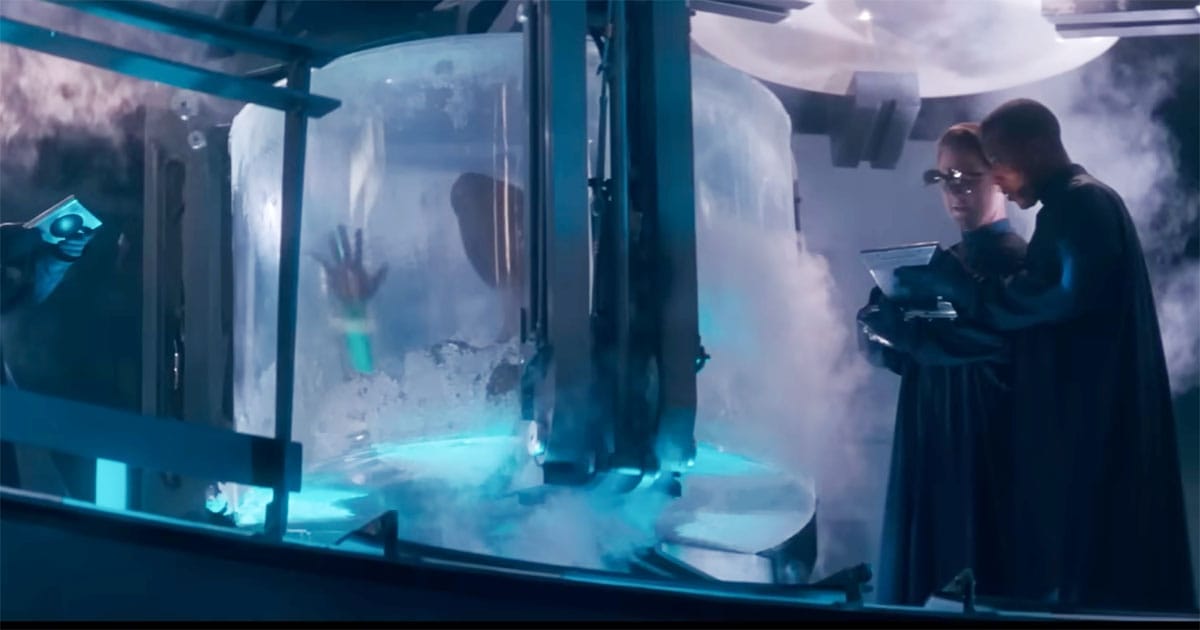
The cryo-prison system is presented as a technological solution to crime. Prisoners are frozen and subjected to subliminal conditioning designed to rehabilitate them. It is an attempt to eliminate criminal behavior without addressing its underlying causes.
The story then shifts to the year 2032. Los Angeles has become San Angeles, a unified city that has eliminated crime through strict regulation and social control. Everyday behavior is monitored, and even minor infractions are penalized through automated systems.
This new society is peaceful but highly structured. Citizens avoid conflict, rely on systems for guidance, and show little ability to respond to unexpected events. Law enforcement exists, but it functions more as administration than as a force capable of dealing with real danger.
Simon Phoenix is revived for a parole hearing, but the process fails. He escapes almost immediately, and it becomes clear that the rehabilitation system has not removed his violent tendencies. Instead, it has enhanced his abilities by implanting new skills during his imprisonment.

Phoenix begins to exploit the weaknesses of San Angeles. He encounters little resistance and quickly demonstrates that the system is unprepared for someone willing to act outside its rules. His presence introduces a level of unpredictability that society cannot manage.
In response, the authorities turn to an earlier solution. They revive John Spartan, hoping that his experience with violence will allow him to stop Phoenix.
Spartan enters a world that is orderly but unfamiliar, and he must adapt while confronting a threat that has evolved beyond its original form.
As Spartan pursues Phoenix, he begins to understand the nature of the society he now inhabits. Beneath its calm surface lies a system maintained through control and manipulation.
The conflict between Spartan and Phoenix becomes more than a simple pursuit. It reveals the limits of a society that has chosen comfort over resilience.
Themes
The central theme of "Demolition Man" concerns the balance between order and chaos. The society of San Angeles has removed violence and disorder with remarkable efficiency. In doing so, it has also removed its ability to respond when disorder inevitably returns.
Simon Phoenix represents chaos in its purest form. He acts without restraint and adapts quickly to his surroundings. The system cannot contain him because it no longer understands the behavior it seeks to control.
John Spartan represents a different kind of force. He is not chaotic, but he is not fully controlled either. His methods are direct and often excessive, yet they remain grounded in a practical understanding of danger.
The film suggests that a functioning society requires both restraint and strength. San Angeles has chosen restraint alone, and the result is fragility. When tested, the system depends on an individual it would otherwise reject.

A second theme involves the illusion of utopia. San Angeles appears to have solved the problems that plagued earlier societies. Crime is absent, and daily life is comfortable and predictable.
This appearance is misleading. The absence of visible conflict does not mean that underlying tensions have been resolved. Instead, they have been suppressed or redirected into controlled forms.
Citizens live within a narrow set of acceptable behaviors. They avoid risk and rely on systems to guide their actions. Over time, this produces a population that is stable but passive.
The film raises the question of whether comfort can replace resilience. A society that eliminates hardship may also eliminate the ability to confront it. When difficulty returns, the population is unprepared.
Another important theme is overregulation and social engineering. The world of San Angeles is governed by rules that extend into nearly every aspect of life. Language, diet, and personal habits are all subject to control.
These controls are enforced through automated systems rather than direct authority. This creates the impression of neutrality, even though the rules themselves reflect deliberate choices. The system feels impersonal, but it is carefully designed.

Dr. Cocteau, the architect of this society, represents the belief that human behavior can be perfected through structure. His approach assumes that disorder can be removed without consequence. The film presents this assumption as incomplete.
The persistence of human nature forms another key idea. Violence and unpredictability are not eliminated by technological intervention. They are delayed or transformed, but they remain present.
The cryogenic rehabilitation system illustrates this point. It attempts to rewrite behavior through conditioning. In the case of Phoenix, it fails and produces a more dangerous result.
This failure suggests that human tendencies cannot be fully engineered away. Attempts to do so may create new problems that are more difficult to control. The system solves one issue while introducing another.
The outsider figure provides a final theme. John Spartan exists outside the values of San Angeles. His behavior is considered outdated and excessive.
In spite of this, he becomes necessary. His ability to act decisively allows him to succeed where the system cannot. The qualities that make him unacceptable also make him effective.
The film presents this as a practical conclusion rather than a moral judgment. A society may reject certain traits, but it cannot eliminate the need for them. When those traits disappear, the society must eventually recover them or face failure.
Who Will Watch This
"Demolition Man" will appeal most to viewers who appreciate science fiction that explores ideas without becoming overly abstract. It presents its concepts in a clear and accessible way. The film allows the audience to consider its questions without requiring specialized knowledge.

Fans of 1980s and 1990s action films will find familiar elements. The structure is built around pursuit, confrontation, and resolution. At the same time, the speculative setting adds a layer of interest that separates it from more conventional action stories.
The film is also suited to viewers who enjoy satire in a restrained form. Its humor is not constant, but it appears in the details of the world and the behavior of its characters. These elements reward attention without interrupting the flow of the story.
Those interested in dystopian ideas will find value here, even if the film does not approach them with the seriousness of more formal works. It raises questions about control, comfort, and human behavior in a way that remains easy to follow. The ideas are present without dominating the narrative.
Some viewers may find the balance uneven. The film moves between action and speculation without fully committing to either. Those expecting a purely serious treatment of its themes may find it too light, while those seeking straightforward action may find the ideas more prominent than expected.
In practical terms, this is a film for the viewer who wants both entertainment and reflection. It does not demand careful study, but it benefits from it. Its value increases when considered not just as a story, but as a thought experiment about the limits of a controlled society.