
Dr. Who and the Mechanical Spirit of Classic Science Fiction
A classic science fiction look with quiet authority. Explore Doctor Who and the mechanical imagination of mid-century sci-fi, plus a subtle alien design made for fans who value restraint and style.


This Week in Classic Science Fiction
This week brings us to the middle of the 1960s, a period when science fiction was expanding its ambitions beyond the small screen. Television ideas were being tested for theatrical scale, and producers were learning how to translate familiar concepts into broader spectacle. Few examples illustrate this shift more clearly than Doctor Who and the Daleks in 1965.
Released as a color feature film, Doctor Who and the Daleks adapts the early BBC serial that introduced the Daleks to the public only a short time earlier. The film presents a noticeably different vision of the Doctor, now portrayed as a human inventor named Dr. Who rather than a mysterious alien traveler. The TARDIS becomes a workshop-built machine, reflecting a mid-century preference for mechanical explanations over cosmic mystery.
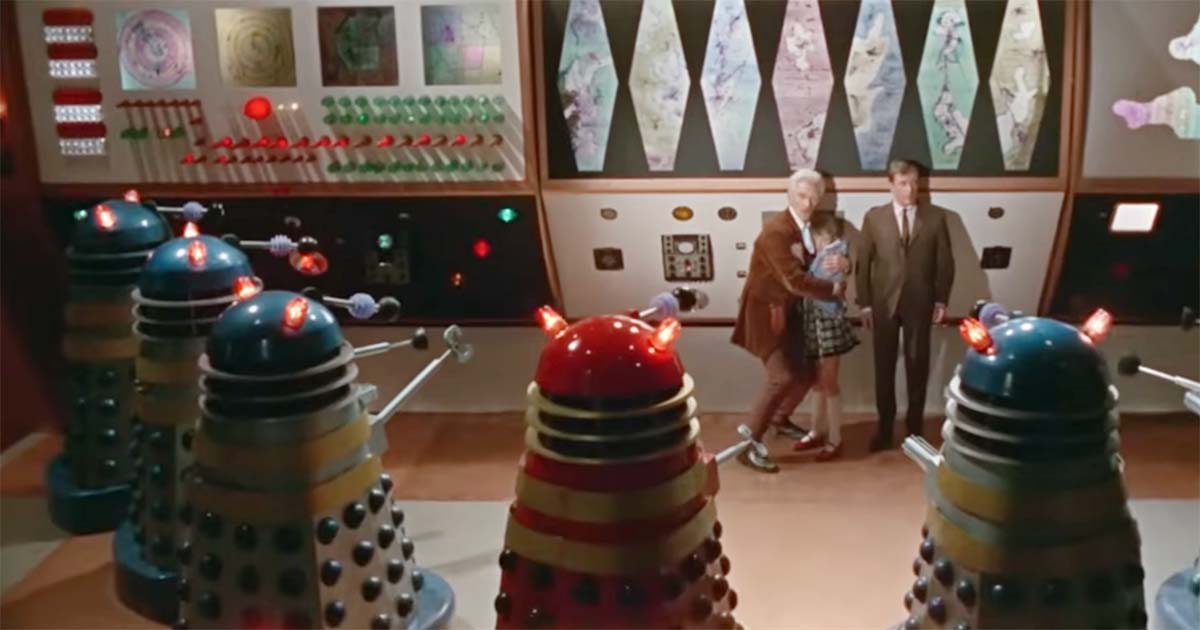
The Daleks themselves are the film's central attraction. Appearing in color for the first time, they trade the stark menace of black-and-white television for bright, stylized designs suited to cinema audiences. Their presence confirms how quickly they had become science fiction icons rather than merely villains.
Viewed today, Doctor Who and the Daleks feels like a snapshot of a genre still in flux. Continuity was flexible, ideas were adaptable, and spectacle mattered as much as myth. The film reminds us that classic science fiction often grew by experimentation rather than strict rules.
Sponsored By: The Boss Alien Head | باس ایلین ہیڈ Premium Sweatshirt

Some aliens invade. Some negotiate. This one already owns the room. It is a quiet nod to classic science fiction, where power was measured by control rather than noise. A good choice for fans who prefer authority to announce itself without saying a word.
The Mechanical Imagination of Mid-Century Science Fiction
A World Built by Hand
Mid-century science fiction emerges from a world shaped by factories, workshops, and visible labor. Technology in these stories feels assembled rather than summoned, built from parts that an attentive viewer can recognize. Wires run somewhere, panels open, and machines occupy real space. The future appears challenging but reachable because it is made from understandable materials.
This outlook reflects a broader confidence common to the period. Progress is not treated as accidental or automatic, but as the result of careful effort. Men solve problems by applying knowledge, patience, and discipline. Science fiction becomes a continuation of the industrial age rather than a rejection of it.
Stories from this era rarely hide how things function. Even speculative devices are introduced through demonstration and explanation. The audience is trusted to follow along. This creates a sense of participation rather than passive awe.
Cinema and television reinforce this worldview through deliberate pacing. Machines are shown warming up, powering down, or failing under stress. The audience sees that systems require maintenance and attention. This reinforces the idea that technology responds to human responsibility.
Dr. Who as the Mechanical Hero
In Doctor Who and the Daleks, Dr. Who is presented as a human inventor whose authority comes from understanding how things work. He is not distant or mystical, but actively engaged with his tools and surroundings. His confidence grows from knowledge rather than destiny. This places competence at the center of heroism.
Unlike later portrayals that emphasize mystery, this version of the character reflects mid-century expectations. A hero earns trust by demonstrating skill and calm judgment. His solutions come from observation and adjustment rather than sudden insight. The story rewards preparation over improvisation.
The film's version of the TARDIS reinforces this portrayal. It is introduced as a constructed device, not an ancient relic. Its interior suggests a workshop expanded to impossible scale. The machine depends on the care and judgment of its builder.
This depiction fits comfortably within mid-century science fiction traditions. Heroes are often engineers, scientists, or technicians who earn trust through results. Leadership is demonstrated through action rather than prophecy. Intelligence carries both authority and obligation.

The Daleks as Engineered Adversaries
The Daleks in the film are frightening precisely because they are engineered. Their menace comes from design, energy supply, and mechanical purpose. They are not supernatural beings, but the outcome of deliberate construction. This frames danger as something made rather than imagined.
Their rigid logic mirrors the era's concerns about systems built without restraint. The Daleks follow their programming flawlessly, yet without wisdom or mercy. They represent efficiency stripped of judgment. The threat lies not in chaos, but in order taken too far.
By emphasizing their mechanical nature, the story assigns responsibility. Someone designed their systems and shaped their goals. Violence is shown as the result of choices embedded into machines. Conflict becomes a matter of understanding structure and function.
This approach keeps the story grounded even when the stakes are high. Victory depends on insight rather than brute force. Knowledge becomes the primary weapon. The struggle is ultimately intellectual rather than mystical.
Seeing the Machine in Motion
Doctor Who and the Daleks places strong emphasis on showing machines at work. Control panels glow, switches are thrown, and mechanisms respond visibly. Color highlights structure and movement rather than hiding it. The audience is invited to observe the process as much as the outcome.
This visual clarity reflects a broader habit of classic science fiction cinema. Technology earns trust when its operation is visible. Fear diminishes when systems can be studied. Spectacle supports understanding rather than confusion.
Production design plays a quiet but important role here. Sets are arranged to reveal function rather than obscure it. Machines are positioned as tools, not idols. The camera lingers on interaction rather than mystery.

Such presentation encourages respect for complexity without surrendering comprehension. Machines may be powerful, but they are not unknowable. They obey rules that can be learned. This reinforces the period's confidence in rational order.
Why This Vision Endures
The mechanical imagination of mid-century science fiction continues to resonate because it affirms human capability. These stories suggest that problems yield to patience, skill, and reasoned effort. Tools remain servants rather than masters. This offers reassurance rather than anxiety.
In an era that often portrays technology as autonomous or uncontrollable, this earlier vision feels grounded. Responsibility remains with the user rather than the system. Failure follows neglect, not fate. Success follows understanding.
Doctor Who and the Daleks stands as a clear expression of this outlook. It presents invention as a moral activity shaped by intention and care. Understanding carries responsibility as well as power. The future depends on how machines are used.
Classic science fiction endures because it reflects confidence without arrogance. It trusts human ingenuity while acknowledging its limits. That balance remains appealing to audiences who value clarity and effort. The genre's lasting strength lies in its belief that the future can be built by steady hands.
Doctor Who and the Daleks Trivia Options
- The film's script simplifies the original television serial by removing political subplots, reflecting a belief that cinema audiences preferred direct conflict over extended debate.
- Several of the Dalek props used in the film were later refurbished and reused for promotional appearances rather than television production.
- The success of Doctor Who and the Daleks directly led to a second feature film the following year, confirming that the property could function outside weekly television schedules.