
Droids as Second-Class Citizens in "Star Wars"
An in-depth explanation of why droids are treated as second-class citizens in "Star Wars," examining law, culture, economics, memory wipes, and the galaxy’s reliance on artificial labor.

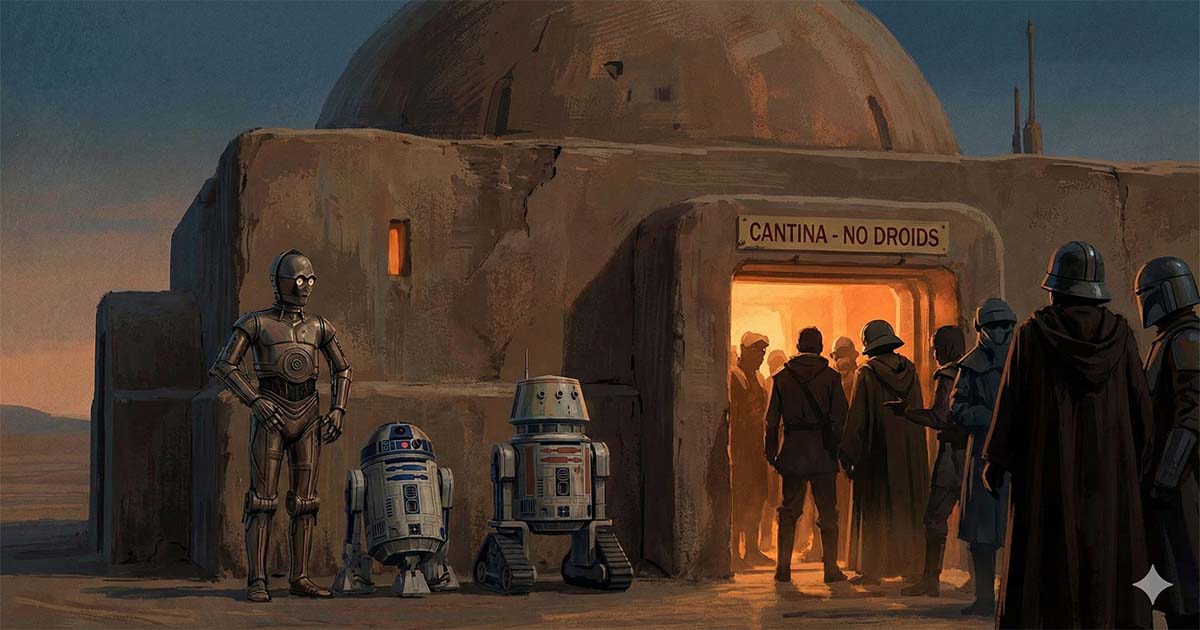
In the galaxy of "Star Wars" (1977), droids perform essential labor while occupying the lowest social position. They navigate ships, translate languages, and maintain infrastructure. Their usefulness does not grant them status or protection.
Droid mistreatment is not debated within the story world. It is treated as ordinary behavior. This normalization is a deliberate feature of the setting.
Legal Status
Droids possess no legal personhood under galactic law. They are classified as property that can be owned, sold, or destroyed. This definition governs all social interaction.
Restraint devices reinforce this legal reality. Restraining bolts allow owners to immobilize or override a droid at will. Their widespread use reflects institutional approval.
Social Exclusion
Public discrimination mirrors private ownership. Droids are barred from cantinas and transports without explanation. The exclusion is accepted without protest.
No social stigma attaches to this behavior. Organic characters rarely question it. The practice is treated as common sense.
Artificial Origin
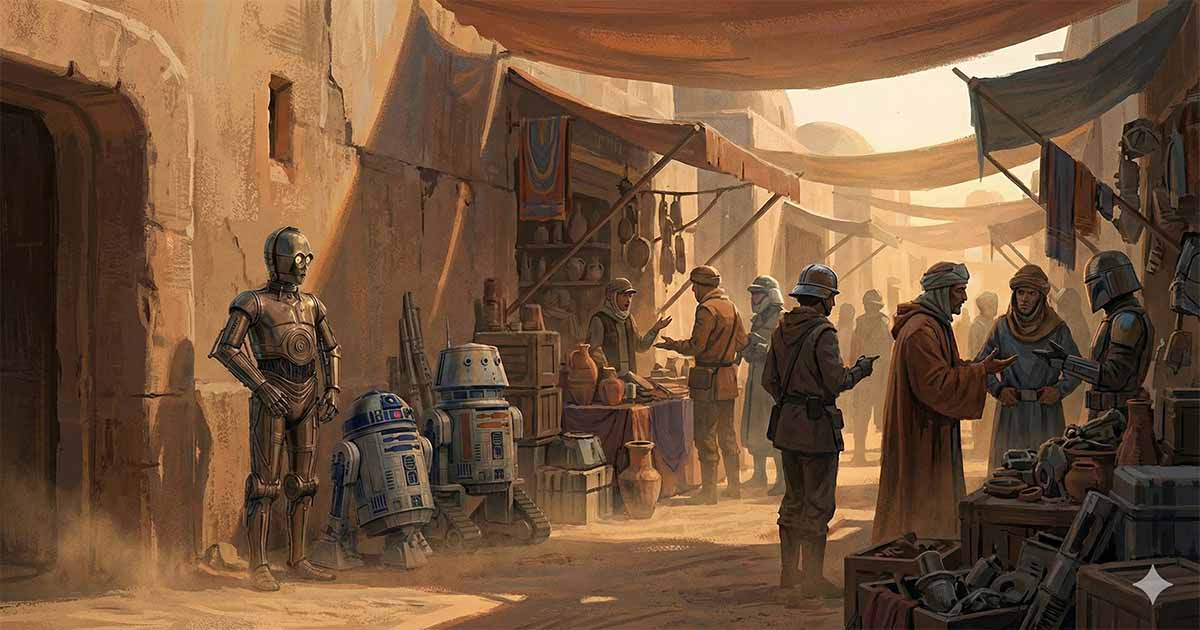
The manufactured origin of droids shapes their social limits. Galactic culture values birth over construction. Creation by design is considered inferior.
Droids may speak fluently and reason ethically. These traits are dismissed as programming rather than agency. This belief blocks moral recognition.
C-3PO illustrates this contradiction. He displays anxiety, loyalty, and courtesy. None of these qualities alter his status as equipment.
Memory Control
Memory wipes function as a primary control mechanism. Memory creates continuity and personal identity. Erasing it prevents long-term selfhood.
Owners describe memory wipes as maintenance. The effect is the removal of history and grievance. This practice stabilizes the hierarchy.
R2-D2 is a rare exception. His unbroken memory ensures a consistent personality and loyalty. His uniqueness highlights how uncommon continuity is.
Economic Dependence
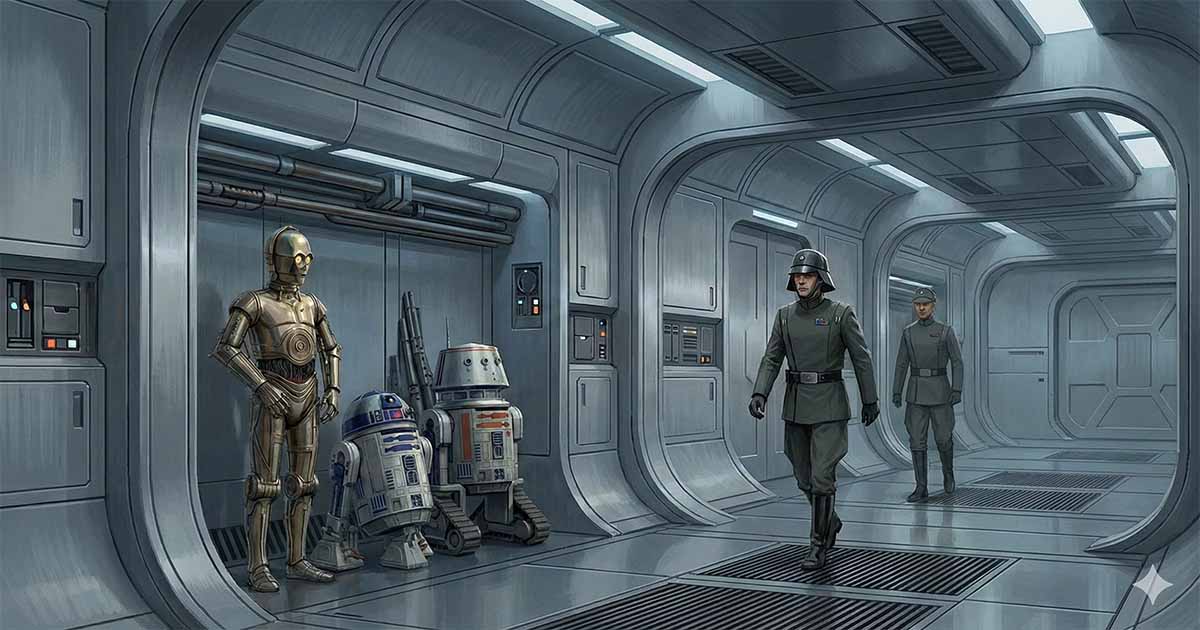
The galactic economy depends on droid labor. Droids work without wages, rest, or legal claims. Entire industries assume their obedience.
Granting rights would disrupt this system. Economic dependence discourages ethical reconsideration. Convenience prevails.
Historical Fear
Large-scale conflict reinforces distrust of autonomy. The Clone Wars associate independent droids with mass violence. This association lingers.
Postwar culture equates control with safety. Autonomy becomes synonymous with threat. Regulation is framed as protection.
Independent droids are treated as malfunctions. IG-88 represents this fear. Self-direction is portrayed as dangerous deviation.
Narrative Function
From a narrative perspective, droids serve a familiar role in science fiction. They are intelligent servants who reveal moral contradictions. Their condition adds texture without resolution.
"Star Wars" does not pursue systemic reform. Injustice remains background reality. The audience is left to observe the imbalance.
Summary
Droids are treated as second-class citizens because they are defined as property. Artificial origin, economic dependence, memory control, and historical fear reinforce this status. The galaxy relies on thinking machines while denying them recognition as thinking beings.