
How Isaac Asimov Made the Future Understandable
Isaac Asimov, born January 2, 1920, shaped classic science fiction through clarity and reason. Explore how his ideas, robots, and empires made the future understandable.

This Week in Classic Science Fiction
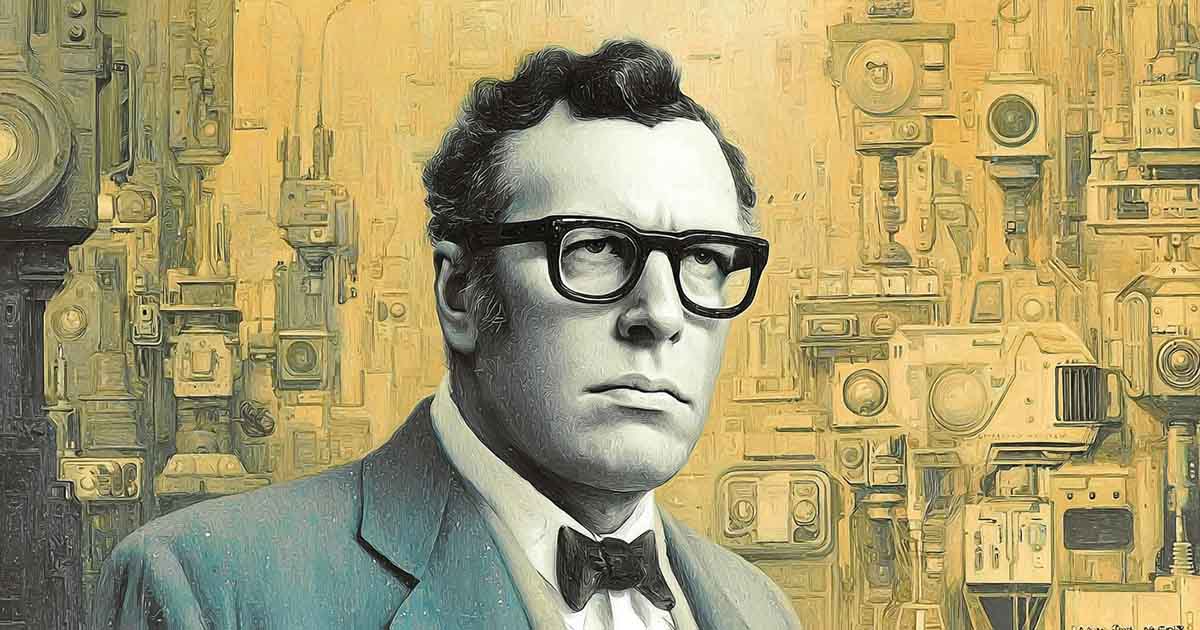
This week marks the widely recognized birthday of Isaac Asimov, listed in reference works as January 2, 1920. The date appears consistently in encyclopedias and library catalogs. It serves as the standard marker for one of the central figures of classic science fiction.
Asimov was born in Petrovichi at a time when civil records were unreliable. He later explained that his exact birth date was uncertain. Family memory placed it sometime between late 1919 and early 1920.
Rather than leave the matter unresolved, Asimov chose a practical solution. He selected January 2 as the latest possible date consistent with what was known. The choice allowed a single date to be used without contradiction.
That decision followed him through his public life. Publishers, libraries, and biographical references adopted the same date. Repetition gave it authority, even as the original uncertainty remained acknowledged.
The story fits the man. Asimov believed systems should function even when information is incomplete. His fiction, his nonfiction, and even his biography reflect that belief.
This week remembers more than a birthday. It recalls a mind devoted to reason, clarity, and order. Few figures in science fiction embodied those qualities more completely.
Sponsored by: Standing Yellow Frog Mech | Science Fiction T-shirt

The Standing Yellow Frog Mech t-shirt captures the sense of scale and wonder that defines classic science fiction. Strange machines, human perspective, and a future that invites thought rather than noise. Comfortable, lightweight, and made for readers who appreciate ideas as much as imagery.
Isaac Asimov and the Discipline of Clarity
Isaac Asimov is remembered each year around his birthday. He remains one of the most influential minds in classic science fiction. His importance does not rest on spectacle or myth, but on the steady application of reason. Few writers trusted logic as completely as he did.
Asimov approached science fiction as a way to think clearly about complex systems. He believed the future could be examined, explained, and understood. That belief shaped both his stories and his public voice.
This article looks beyond dates and milestones. It examines the habits of thought that defined Asimov's work and helped establish the intellectual tone of classic science fiction.
The Man Who Trusted the Reader
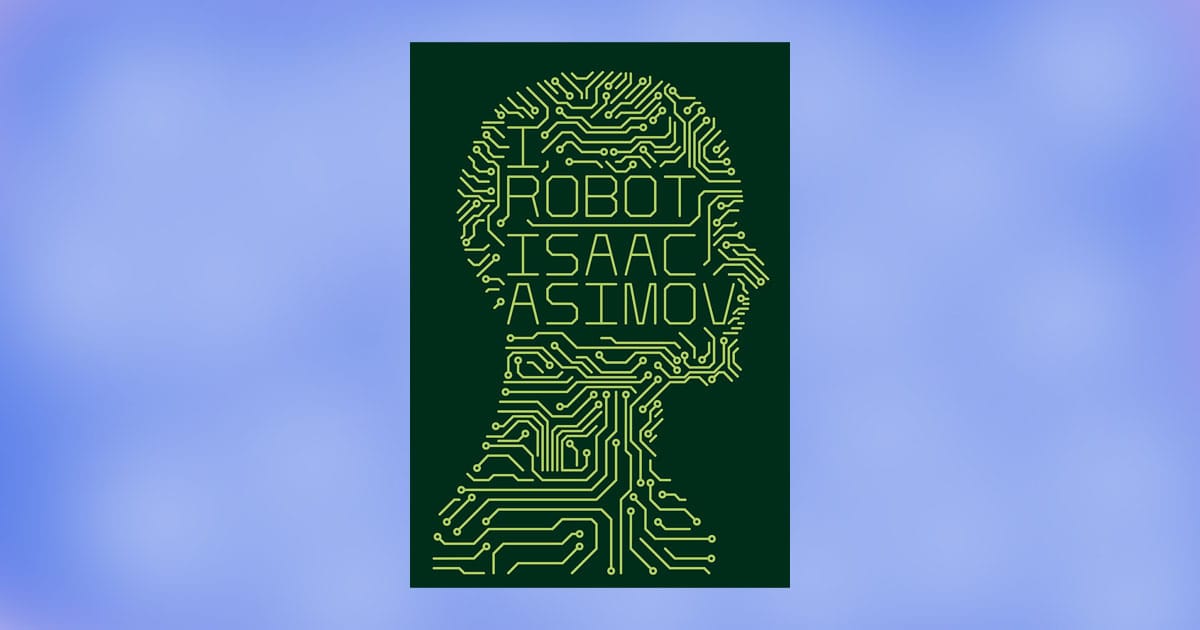
Asimov assumed his readers were capable of following complex ideas. He did not dilute difficult concepts, but took care to explain them plainly. His confidence in the reader created a quiet partnership between writer and audience.
This trust shaped his storytelling. Characters reason through problems instead of relying on coincidence or spectacle. Tension arises from understanding consequences rather than waiting for surprises.
Readers responded to that respect. Asimov made thinking part of the entertainment. Science fiction became a shared exercise in logic.
Ideas as the Engine of Story
In Asimov's fiction, ideas drive events. A logical puzzle or scientific principle often replaces physical conflict. Action exists, but it serves the concept at the heart of the story.
Many of his most memorable works hinge on a single question examined carefully. The plot advances as that question is tested from different angles. Resolution comes through insight rather than force.
This approach gave his work lasting power. Readers return not for thrills, but for understanding. The satisfaction lies in seeing an idea fully explored.
Worlds Built on Rules
Asimov believed that systems matter. His fictional societies rely on laws, whether governing robots, empires, or human behavior. Those rules give his worlds coherence and purpose.
Rules also generate drama. When they collide or fail, the consequences are meaningful. The story reveals what happens when structure is stressed.
This reflects a deeper belief. Order does not appear by accident. It must be designed, maintained, and understood.
Clarity as Responsibility
Asimov's plain prose was a deliberate choice. He believed obscurity served no one. If an idea was important, it deserved to be understood clearly.
That belief extended beyond fiction. His nonfiction treated knowledge as something to be shared widely. Science was not a mystery to guard, but a subject to explain.
For Asimov, intelligence carried responsibility. Understanding demanded honesty and precision. Clarity became a moral act.
A Consistent Way of Thinking
The same discipline shaped Asimov's personal habits. He worked steadily and trusted routine. Progress came from structure rather than inspiration.
That consistency allowed him to write across many fields without losing his voice. Fiction, history, and science all followed the same principles. Each subject was approached with order and patience.
Even the story of his birthday reflects that mindset. When certainty was impossible, he chose a clear rule and moved forward. Asimov's legacy rests on that same approach, proving that clarity, once established, can endure for generations.
Isaac Asimov Trivia
- Isaac Asimov coined the term "robotics" in his early robot stories. The word did not exist in engineering or popular science at the time. It later entered real scientific vocabulary and remains in use today.
- Asimov's Foundation stories were originally published as separate short stories in science fiction magazines. They were later assembled into novels. This episodic origin explains the strong emphasis on ideas and dialogue rather than continuous action.
- Asimov held a Ph.D. in biochemistry and taught at Boston University School of Medicine. He continued to publish science fiction even while working as an academic. His dual career helped bridge professional science and popular storytelling.