
Lady Margot Fenring in Dune
A close look at Lady Margot Fenring in “Dune,” examining her Bene Gesserit training, political placement, and quiet influence on imperial power and destiny in Frank Herbert’s classic novel.

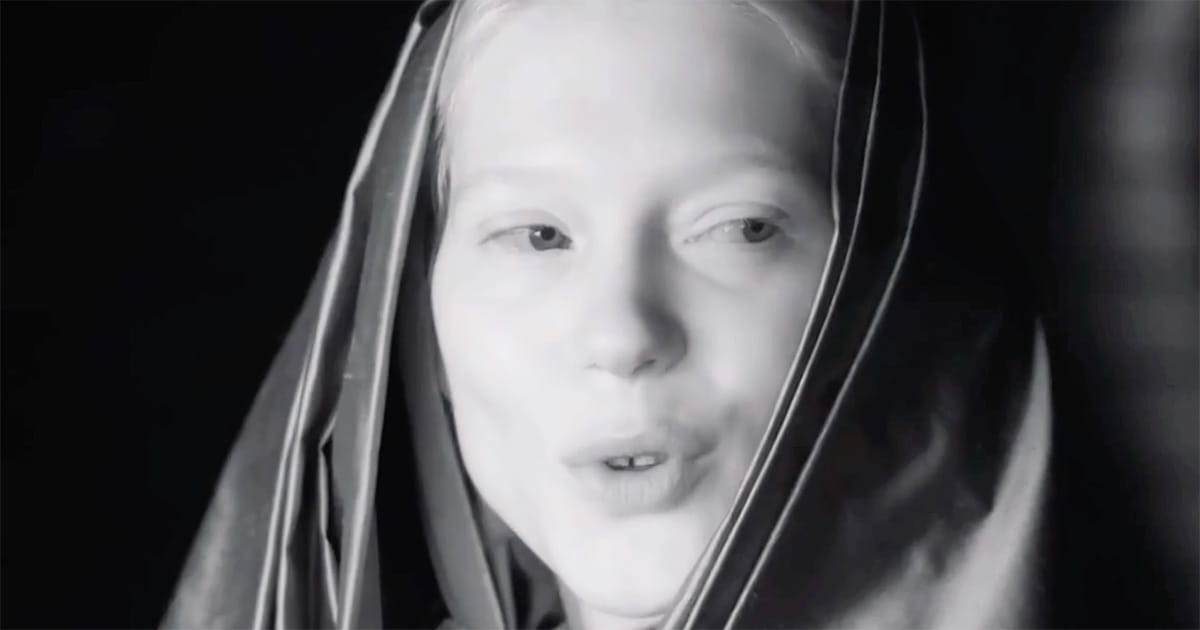
"Lady Margot Fenring"
Lady Margot Fenring occupies only a few pages in Frank Herbert's "Dune," yet her presence lingers far longer than her scenes. She represents the Bene Gesserit at their most efficient and most unsettling. Quiet, controlled, and strategically placed, she operates near the heart of imperial power without ever seeking authority for herself. For readers who return to "Dune" after many years, Margot often emerges as a reminder that Herbert's saga is shaped as much by planners and observers as by heroes and tyrants.
Origins and Context
Lady Margot Fenring is a fully trained Bene Gesserit Sister married to Count Hasimir Fenring, a close confidant and cousin of Emperor Shaddam IV. This marriage places her inside the Corrino imperial circle, where access matters more than rank. Herbert makes clear that this proximity is not accidental. The Bene Gesserit value placement above titles, and Margot's position, gives the Sisterhood eyes and ears where they matter most.
Her loyalty never wavers toward the throne. Like all Bene Gesserit, her first allegiance is to the institution rather than to the personal. She serves a plan measured in generations, not reigns, and her marriage functions as a tool within that design.
| Field | Details |
|---|---|
| Name | Lady Margot Fenring |
| Affiliation | Bene Gesserit Sisterhood; House Fenring; Corrino imperial court |
| First Appearance | “Dune” by Frank Herbert, 1965 |
| Description | A highly trained Bene Gesserit Sister married into the Emperor’s inner circle, Margot Fenring operates as an observer, political agent, and breeder whose quiet interventions shape bloodlines and power without public authority |
Bene Gesserit Training
Margot's abilities reflect the highest level of Bene Gesserit discipline described in "Dune." She displays extraordinary powers of observation, reading motives and weaknesses with clinical precision. Her control over her own body chemistry allows her to regulate fertility and conception, an ability essential to the Sisterhood's breeding program. These talents are presented without spectacle, which is typical of Herbert's approach.

The novel also implies her mastery of psychological influence through controlled intimacy. Herbert treats these skills as professional instruments rather than personal traits. Margot does not seduce out of desire. She acts because the Sisterhood requires it.
Role in the Story
Margot's first significant action in "Dune" is the delivery of a coded warning to Lady Jessica. The message signals the danger facing House Atreides on Arrakis and hints at betrayal within their ranks. It is a small moment, but it shows how information moves quietly through Bene Gesserit channels.
Later, Margot carries out a direct assignment involving Feyd-Rautha Harkonnen. This mission is not framed as a subplot. It is part of the same long-range strategy that shapes every Bene Gesserit decision. Herbert uses Margot to show that even as houses fall and wars erupt, deeper plans continue without interruption.
Feyd-Rautha Encounter
The encounter between Margot Fenring and Feyd-Rautha is one of the clearest illustrations of the Bene Gesserit breeding program in action. Under orders, Margot ensures the preservation of Harkonnen genetic material. She also conditions Feyd through sexual imprinting, leaving him susceptible to future influence. Herbert presents this event in a restrained, almost clinical manner.
This moment matters because it reinforces the impersonal nature of the Sisterhood's work. Individuals serve bloodlines. Desire serves strategy. Margot's calm execution of the task underscores how far removed the Bene Gesserit are from conventional morality.
Power Without Visibility

Lady Margot Fenring embodies Herbert's belief that the most enduring power operates out of sight. She commands no armies and rules no planets. Yet her actions influence the future as surely as any emperor's decree. Through her, Herbert argues that institutions outlast individuals and that careful planning reshapes history more reliably than heroics.
She also stands in contrast to the Atreides ideal of visible leadership. Margot survives by adaptation and restraint. In a universe obsessed with prophecy and destiny, she represents design rather than revelation.
Adaptation Interpretations
Margot Fenring's absence from David Lynch's 1984 film removes one of the novel's subtler power brokers. The 2000 Sci-Fi Channel miniseries reassigns parts of her function to other characters, reducing her thematic impact. Denis Villeneuve's "Dune Part Two" restores her presence, portrayed by Léa Seydoux with deliberate reserve.
Villeneuve's interpretation emphasizes stillness and observation over exposition. Margot is framed as someone who watches more than she speaks. This approach aligns closely with Herbert's intent and helps modern audiences recognize her importance without overstating it.
Legacy and Meaning
Lady Margot Fenring endures because she clarifies what "Dune" is truly about. She reminds readers that history often turns on quiet decisions made far from battlefields. In a saga crowded with messiahs and emperors, Margot represents the planners who shape the future without ever claiming it.