
Liet-Kynes And The Ecology Behind Dune
Liet-Kynes bridges empire, Fremen, and ecology in "Dune." Learn how the planetologist and Judge of the Change reveals the hidden system of Arrakis and why it shapes the story’s outcome.


Liet-Kynes is often treated as a secondary figure in "Dune," yet that view does not hold up under close reading. He occupies three roles at once. He is the Imperial Planetologist, the Judge of the Change, and a trusted leader among the Fremen. Each role places him in a different layer of life on Arrakis.
What makes Kynes important is not authority in the usual sense. It is understanding. He sees patterns where others see profit, and consequences where others see opportunity. This allows him to anticipate outcomes that others only recognize when it is too late.
This distinction gives him a quiet influence over the story. While others compete for control of the planet, Kynes studies how the planet itself operates. In doing so, he becomes the one character who understands that Arrakis sets its own terms.
| Field | Information |
|---|---|
| Name | Arrakis |
| Aliases | Dune; later Rakis |
| Affiliation | Imperium; House Atreides; House Harkonnen; Fremen; Spacing Guild; Bene Gesserit |
| First Appearance | "Dune" (1965) by Frank Herbert |
| Description | Desert planet and sole source of spice melange. A harsh, water-scarce world whose extreme environment shapes its people, controls interstellar travel, and determines the balance of power across the Imperium. |
Origins And Context
Liet-Kynes inherits more than a title. He is the son of Pardot Kynes, the earlier Planetologist who began a long-term effort to understand and reshape Arrakis. This places him inside a project that extends beyond a single lifetime, one built on patience rather than immediate results.
He grows up between two worlds. One is the structured, scientific culture of the Imperium. The other is the harsh, disciplined life of the Fremen. This dual upbringing explains his ability to move between groups that rarely trust each other, and it gives him a perspective that neither side fully shares.
His official position defines him as a scientist and observer. His lived experience makes him something else. He understands Arrakis as a system, not a wasteland, and he approaches it with respect rather than ambition.
Before the arrival of House Atreides, he already stands between competing forces. The Harkonnens extract wealth from the desert, while the Fremen survive within it. Kynes sees the limits of both approaches and understands that neither one alone can sustain the future of the planet.

Judge Of The Change
The title Judge of the Change appears formal and distant. In practice, it places Kynes at the center of a critical moment. He oversees the transfer of Arrakis from one ruling House to another, and his presence ensures that the process appears legitimate.
This role involves more than procedure. Kynes observes how power is exercised in real situations. He watches how leaders respond to danger, responsibility, and human cost, especially when those pressures reveal true priorities.
His judgment is quiet but decisive. A ruler who cannot understand Arrakis will fail, no matter how strong he appears. Kynes measures that understanding through actions, not claims, and he draws conclusions quickly when those actions reveal weakness.
This transforms the role from a ceremonial duty into a test grounded in reality. The title suggests neutrality, but in practice, it allows Kynes to evaluate whether a ruling House can survive the planet it seeks to control.
Ecological Vision Of Arrakis
Kynes' long-term goal is often described in simple terms as transforming Arrakis. The reality is more complex. His plan is based on gradual ecological change carried out over generations, with careful attention to balance and unintended consequences.
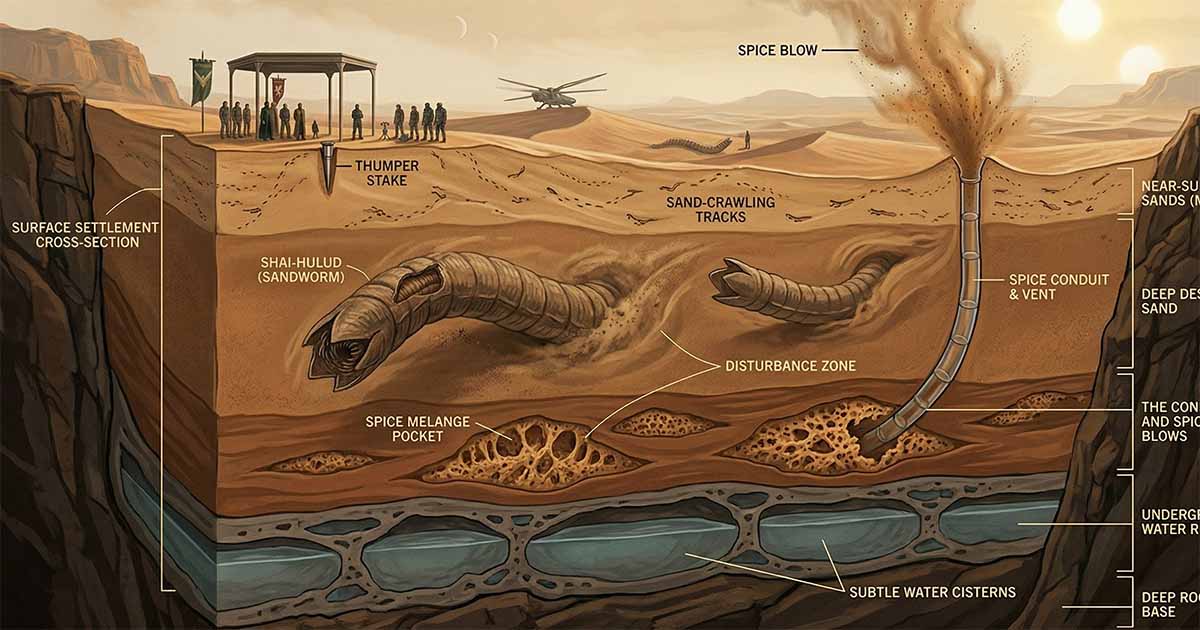
He understands that the desert is part of a larger system. The sandworms, the spice, and the climate all depend on each other. Any attempt to alter one element affects the rest, often in ways that are not immediately visible.
The central challenge lies in water. Introducing it in large amounts could disrupt the cycle that produces spice. Kynes does not ignore this risk. He approaches it with patience and restraint, knowing that rapid change would likely destroy the very system he hopes to improve.
His vision combines science and culture. It depends on the Fremen's discipline as much as on environmental knowledge. Without that discipline, even the most careful plan would fail.

Role In The Story
Kynes enters the story as an observer during the transfer of power to House Atreides. His position allows him to witness decisions that reveal character, and he pays close attention to moments where those decisions carry real consequences.
A key moment occurs during the sandcrawler incident. Duke Leto chooses to save the workers rather than protect spice production. Kynes recognizes the importance of that decision and begins to reassess the new rulers, seeing in Leto a willingness to value people over profit.
He also studies Paul Atreides. His response is measured and grounded. He notices Paul's ability to adapt to desert life and considers what that might mean, not in terms of prophecy alone, but in terms of practical survival and leadership.
Over time, Kynes shifts from neutral observer to quiet participant. His actions begin to align with those who respect the limits of Arrakis, and he becomes more willing to support outcomes that protect the planet's balance.
Light spoiler for "Dune"
Kynes is eventually captured and left in the desert. His final thoughts return to the system he has spent his life studying, reinforcing that his true focus has always been the planet itself and the consequences of human action upon it.

Why The Fremen Trust Him
The trust Kynes holds among the Fremen is earned, not granted. It comes from living by their rules and sharing their risks over time, rather than claiming authority from outside their culture.
He follows their water discipline and respects their customs. He contributes to their long-term survival rather than imposing outside ideas, and he proves through action that he understands what is required to live on Arrakis.
This behavior gives him legitimacy that no Imperial title can provide. Among the Fremen, authority comes from action and consistency, and Kynes meets that standard in ways few outsiders ever do.
In a story driven by power struggles, Kynes represents a different standard. He understands that Arrakis cannot be mastered through force alone. It must be studied, respected, and approached with patience, and that understanding is what earns him lasting trust.