
Reverend Mother Gaius Helen Mohiam and the Power of Discipline
Reverend Mother Gaius Helen Mohiam is one of Dune’s most formidable figures, embodying Bene Gesserit discipline, institutional power, and the dangers of certainty in Frank Herbert’s universe.


Reverend Mother Gaius Helen Mohiam enters Frank Herbert's "Dune" with quiet certainty and immediate gravity. She does not need an army, a title parade, or a threat spoken twice. Her authority is felt in the way others tense when she arrives.
Mohiam is not built like a conventional antagonist. She is closer to a living instrument of an institution that predates the story's political struggle. Her scenes establish that the Imperium's most decisive forces often work behind the curtain.
Origins and Context
Mohiam belongs to the Bene Gesserit, an order that shapes events through training, observation, and long-range planning. The Sisterhood values continuity and method over charisma. It prefers the slow pressure of influence to the blunt shock of conquest.
Her role as Imperial Truthsayer places her near Padishah Emperor Shaddam IV in both book canon and the major adaptations in scope. The position grants access to the court's private motives and public lies. Herbert uses that proximity to show how ancient institutions survive by nesting inside power.
| Field | Details |
|---|---|
| Name | Reverend Mother Gaius Helen Mohiam |
| Affiliation | Bene Gesserit Sisterhood; Imperial court of House Corrino |
| Rank or Role | Bene Gesserit Reverend Mother; Imperial Truthsayer |
| First Appearance | “Dune” by Frank Herbert, 1965 |
| Description | A senior Bene Gesserit authority and Imperial Truthsayer, Reverend Mother Gaius Helen Mohiam operates as an institutional enforcer whose discipline, inherited memory, and loyalty to Bene Gesserit doctrine shape key judgments in “Dune,” most notably through the gom jabbar test that defines humanity by self-control rather than instinct |
Bene Gesserit Authority
The title of Reverend Mother signals survival of the Spice Agony. It also signals access to Other Memory, the accumulated consciousness of female ancestors. Mohiam's perspective is therefore shaped by more than a single lifetime.
Her authority is formidable, yet it is not personal sovereignty. She enforces Bene Gesserit doctrine and protects institutional continuity. That distinction explains why she can seem merciless without seeming self-indulgent.
Discipline as a Worldview
Mohiam's defining trait is discipline, practiced and demanded. She assumes that instinct is the enemy of civilization. Self-control is treated as the only reliable proof of humanity.
This belief does not appear as a private quirk. It appears as a professional creed, reinforced by the Sisterhood's training and rituals. Herbert frames it as both impressive and dangerous.

The Gom Jabbar Test
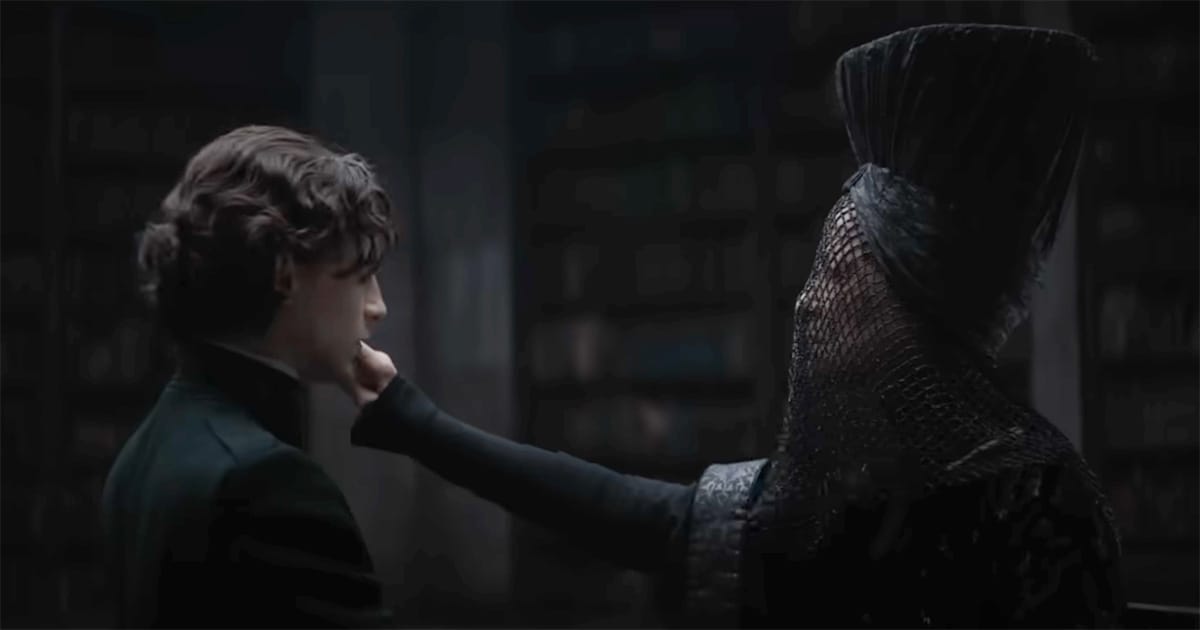
Mohiam's most famous appearance is the Gom Jabbar test administered to Paul Atreides. The test measures whether reason can hold steady while the body panics. Pain is the tool, and control is the standard.
Mohiam performs the rite with composure that borders on the clinical. She does not plead, bargain, or soften the terms. The scene makes her the story's early voice for institutions that claim the right to judge life.
Why the Test Matters
The test matters because it defines the moral logic the Bene Gesserit carry into politics. Humanity is treated as a category earned through self-mastery rather than as a birthright. That standard justifies harsh selection in the name of a larger future.
Mohiam's calm is part of the argument. If she trembled, the system would look like cruelty. Because she is steady, the system looks like law.
Relationship With Lady Jessica
Mohiam trained Lady Jessica within the Bene Gesserit program, and the relationship is shaped by expectation. Jessica is both a student and an instrument, prepared for political placement. Mohiam's investment is therefore both institutional and personal.
Jessica's decision to bear a son disrupts a plan built on precision. Mohiam's displeasure reflects a breach of discipline and timetable. The anger is less about emotion than about control slipping.
Relationship With Paul Atreides
Mohiam meets Paul as an examiner, yet she quickly becomes an uneasy witness to his potential. He is the kind of outcome the Bene Gesserit pursue, but not in the form they intended. That mismatch gives her scenes an edge of dread.
Her attitude toward Paul is not simple hatred. It is the alarm of an institution facing its own success. Herbert allows her to sense the danger without granting her the power to stop it.
The Emperor's Truthsayer
As Truthsayer, Mohiam embodies the Bene Gesserit strategy of influence through proximity. She stands within the formal structure of the Empire while serving a separate, older agenda. The arrangement highlights the Imperium's reliance on forces it cannot fully command.
In story terms, the office is a reminder that political authority is layered. The throne can rule, but it is not the only power that endures. Mohiam's presence makes that reality visible.
Alia and the Bene Gesserit Line
Mohiam's response to Alia Atreides, whom she calls an Abomination, reveals the Bene Gesserit fear of uncontrolled inner inheritance. Pre-born awareness breaks the Sisterhood's rules about development and containment. It threatens their model of disciplined ascent.
Her judgment is not merely a personal insult. It is a boundary marker for what the institution cannot accept. The term carries the weight of doctrine and dread.
Role in the Story
Within "Dune," Mohiam serves as a gatekeeper who tests, labels, and warns. She frames the Atreides' rise as a problem for the old order rather than a triumph. Her scenes function like pressure points that reveal the bones of the setting.
She also serves as a measure of consequence. When Mohiam reacts with seriousness, the reader understands the stakes have crossed into institutional panic. Herbert uses her to signal that history is bending.
From "Dune" to "Dune Messiah"
In "Dune," Mohiam watches the Bene Gesserit plan unravel into something larger than their design. The methods remain the same, but the outcomes refuse to stay obedient. Her authority becomes increasingly reactive.
SPOILER
In "Dune Messiah," Mohiam participates in the conspiracy against Paul. The act reads as institutional self-preservation, not personal revenge. Herbert presents her consistency as tragic, because it keeps her from learning.
Screen Interpretations
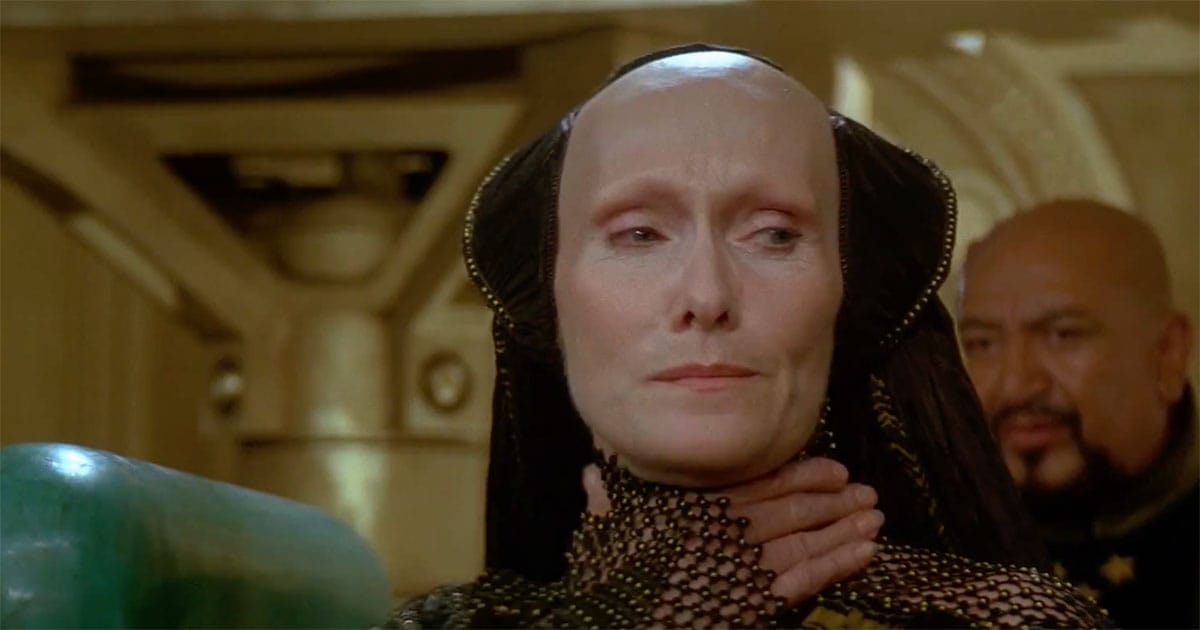
In David Lynch's 1984 "Dune," Mohiam's presence is overtly ritualized and severe. The performance by Siân Phillips emphasizes menace through costume, cadence, and ceremony. It matches the film's heightened, almost operatic approach.
In the Sci Fi Channel miniseries "Frank Herbert's Dune," Mohiam appears more embedded in court maneuvering. The portrayal by Zuzana Geislerová fits a version of the story that leans on dialogue and political texture. Her authority reads as institutional and practical.
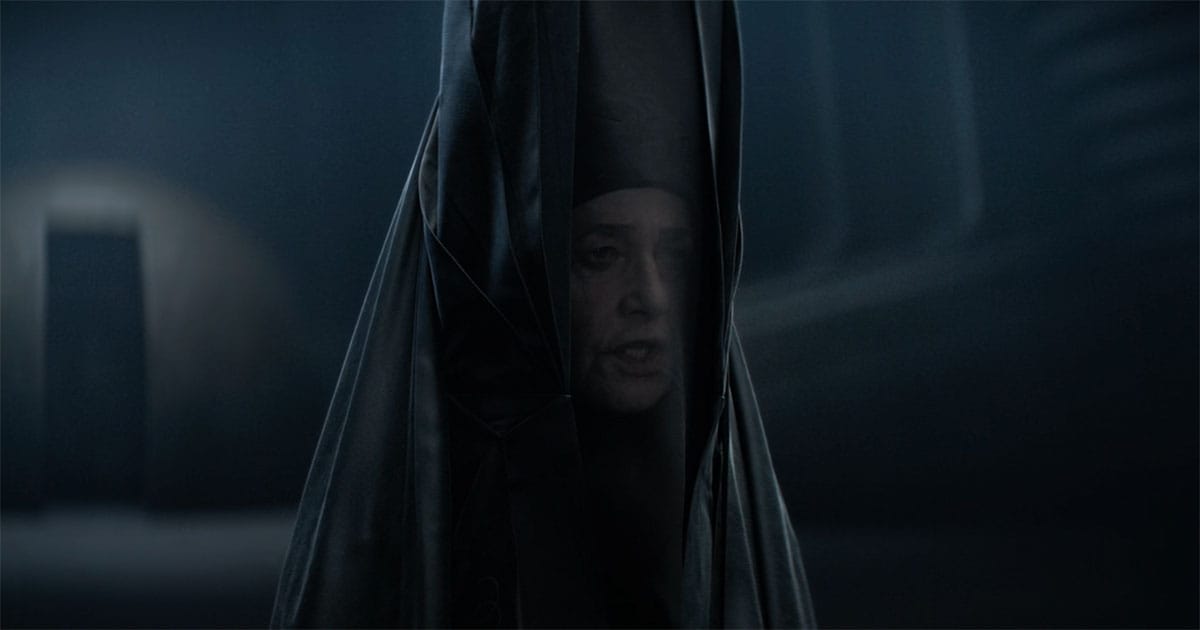
In Denis Villeneuve's "Dune" films, Mohiam is played by Charlotte Rampling with restraint and gravity. The menace is quieter, carried in stillness and certainty. This interpretation presents the Bene Gesserit as an ancient bureaucracy of ritual and control.

Themes and Meaning
Mohiam embodies Herbert's skepticism toward certainty. Intelligence and foresight do not guarantee wisdom. Institutions can be rational, disciplined, and still destructive.
She also embodies the tension between prophecy and management. The Bene Gesserit cultivate belief as a tool, yet belief can outgrow the hand that planted it. Mohiam stands at the moment when planned myth becomes lived reality.
Why Mohiam Endures
Mohiam endures because she feels plausible in the way great science fiction often does. She does not seek power for spectacle. She believes in a system that makes cruelty look like duty.
Her calm conviction leaves little room for mercy or doubt. Through her, "Dune" offers a warning about institutions that outlive their capacity for moral flexibility. That warning remains sharp for readers who remember the genre's great bureaucratic nightmares.