
Who are the Fremen
Who are the Fremen in Frank Herbert’s "Dune"? Explore their origins, desert survival culture, ecological vision, and crucial role in the struggle for Arrakis and the rise of Paul Atreides.


"The Fremen Of Arrakis"
Among the many memorable cultures in Frank Herbert's "Dune," none command the imagination quite like the Fremen, the desert people of Arrakis.
Readers occasionally misremember the name as "Freeman," but Herbert's original spelling reflects something more elemental. The Fremen are a society shaped by sand, scarcity, and survival.
To the ruling powers of the Imperium, they appear to be scattered nomads inhabiting the wastelands of a spice-rich world. Yet this assumption proves disastrously wrong. Beneath the dunes lies a disciplined civilization built around water conservation, strict tribal codes, and a long-term vision for their planet.
For more than half a century, the Fremen have been among science fiction's most compelling creations. They are survivors first, warriors second, and custodians of a planetary destiny that outsiders rarely understand.
| Field | Details |
|---|---|
| Name | The Fremen |
| Affiliation | Indigenous tribes of Arrakis; sietch communities such as Sietch Tabr |
| First Appearance | “Dune” by Frank Herbert, 1965 |
| Portrayed In Film By | Various actors portraying Fremen tribespeople in “Dune” (1984), “Dune” (2021), and “Dune Part Two” (2024) |
| Portrayed In Miniseries By | Ensemble cast in “Frank Herbert’s Dune” (2000) and “Children of Dune” (2003) |
| Role | Desert survival culture and resistance force that ultimately becomes the decisive power on Arrakis |
| Description | The Fremen are the desert-adapted people of Arrakis, masters of stillsuit survival, sandworm riding, and guerrilla warfare. Living in hidden sietches, they preserve a strict water discipline and pursue a generations-long ecological plan to transform their harsh world. Their alliance with Paul Atreides reshapes the balance of power across the Imperium. |
Origins And Cultural Roots
The Fremen did not originate on Arrakis. According to Herbert's fictional history, they descend from the Zensunni wanderers, a persecuted religious people who spent generations migrating across the Imperium before eventually settling on the desert planet.
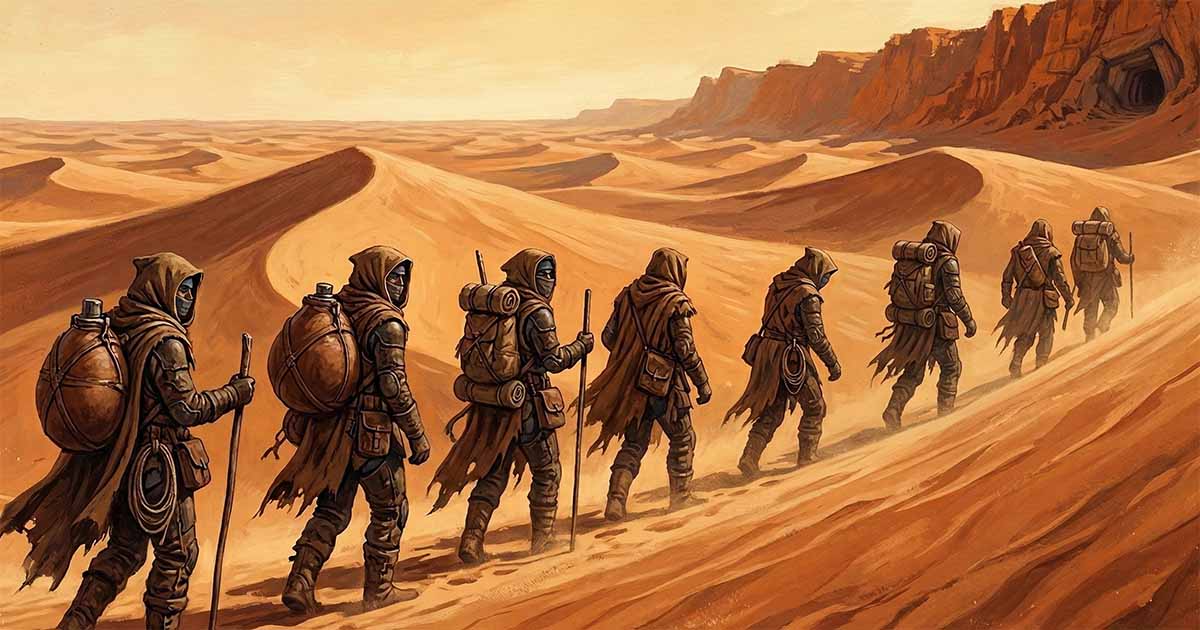
Arrakis was no welcoming refuge. It is a world of burning heat, constant sandstorms, and the colossal sandworms that roam beneath the dunes. Yet over centuries, the Zensunni settlers transformed themselves into the Fremen, adapting their beliefs and survival methods to the harshest environment known in the Imperium.
Out of necessity came innovation. The most famous example is the stillsuit, a survival garment that captures and recycles the body's moisture. Properly worn, it allows a person to survive in the deep desert with minimal water loss.
Equally important is the communal ethic surrounding water itself. Among the Fremen, water is not merely a resource. It is sacred property belonging to the tribe. Even in death, the water of a body is reclaimed for the community. This ritualized discipline shapes every aspect of Fremen life.
The result is a culture that regards endurance as virtue and waste as moral failure. On Arrakis, survival is not an individual achievement. It is a collective responsibility.
Desert Life And Society
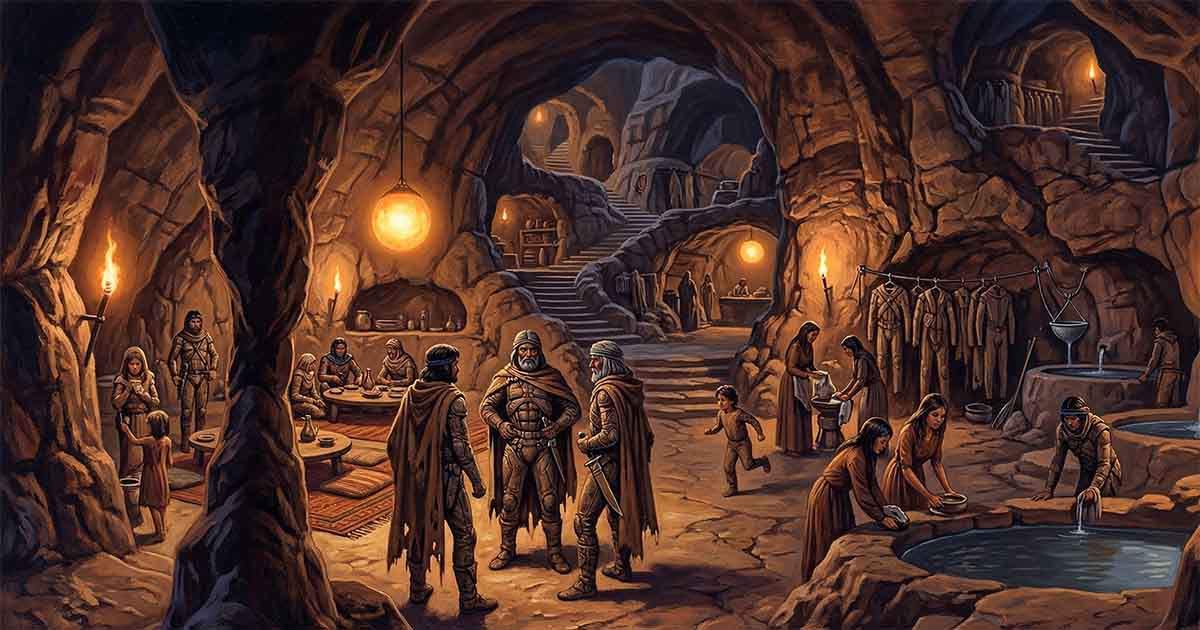
Fremen communities live in hidden settlements called sietches, usually carved into the rock formations that rise above the desert seas. These underground strongholds provide shelter from storms and concealment from outsiders.
Leadership typically falls to experienced warriors such as Stilgar, whose authority combines practical survival knowledge with deep respect for tradition. Decisions are guided by tribal law, ritual, and the shared goal of protecting the community.
Several cultural practices define Fremen identity. The crysknife, carved from the tooth of a sandworm, serves as both weapon and sacred symbol. It must never be drawn without purpose.
Another distinctive trait is the famous blue-within-blue eyes seen among desert dwellers. This striking appearance results from prolonged exposure to the spice melange, which saturates the environment of Arrakis.
Despite their austere reputation, the Fremen are far from primitive. Their society is highly organized, with disciplined fighters, complex religious traditions, and deep knowledge of the desert ecosystem.
The Ecological Vision
One of Frank Herbert's most intriguing ideas lies in the Fremen plan to transform their world.
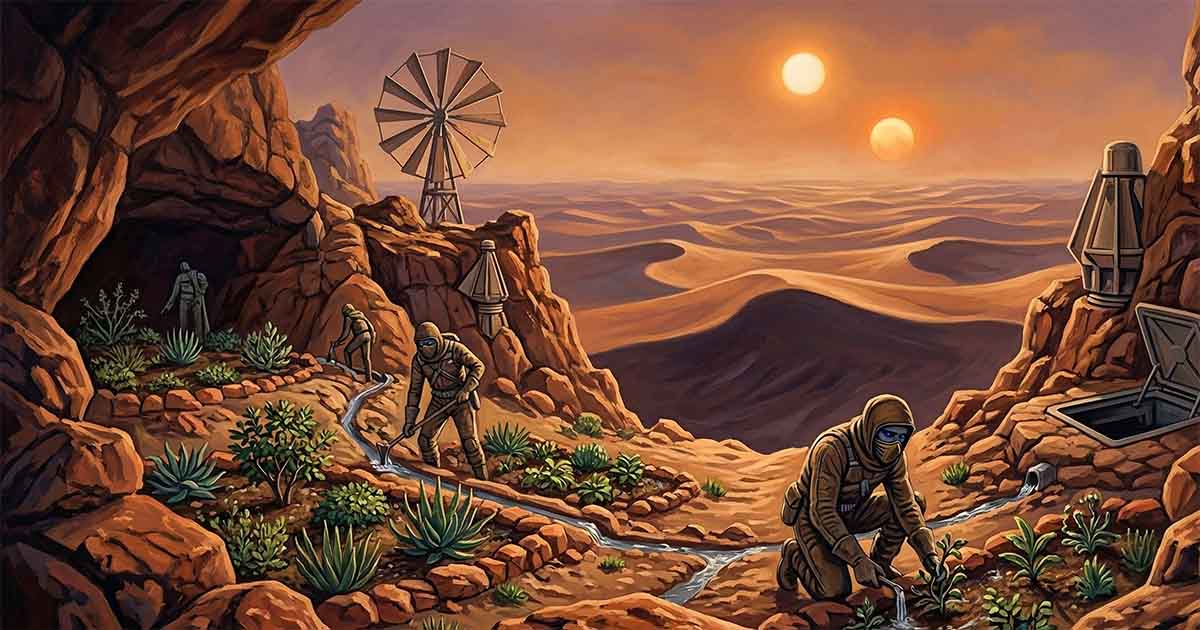
Guided by the planetologist Liet-Kynes and his father before him, the Fremen pursue a long-term ecological project. Over generations, they secretly store water, plant hardy vegetation, and slowly alter the balance of Arrakis.
The ultimate goal is nothing less than planetary change. The Fremen dream of turning Arrakis into a world capable of supporting open water, clouds, and sustainable life.
To outside observers, this ambition seems impossible. Yet the Fremen possess what imperial authorities lack. They understand the planet intimately. Every dune, storm pattern, and worm migration forms part of a larger ecological puzzle.
Herbert used this vision to explore one of his central themes. A culture that learns to respect its environment may ultimately reshape it.
Role In The Story
When Paul Atreides and his mother Jessica flee into the desert after the fall of House Atreides, the Fremen become their unlikely allies.
Under the leadership of Stilgar, the tribe offers protection and gradually accepts Paul as one of their own. His survival skills, prophetic reputation, and strategic insight earn him growing influence among the desert people.
Many Fremen believe Paul may fulfill a prophecy known as the Lisan al-Gaib, a messianic figure who will lead them to greatness. Whether this belief represents genuine faith or something more complicated remains one of Herbert's most fascinating narrative tensions.
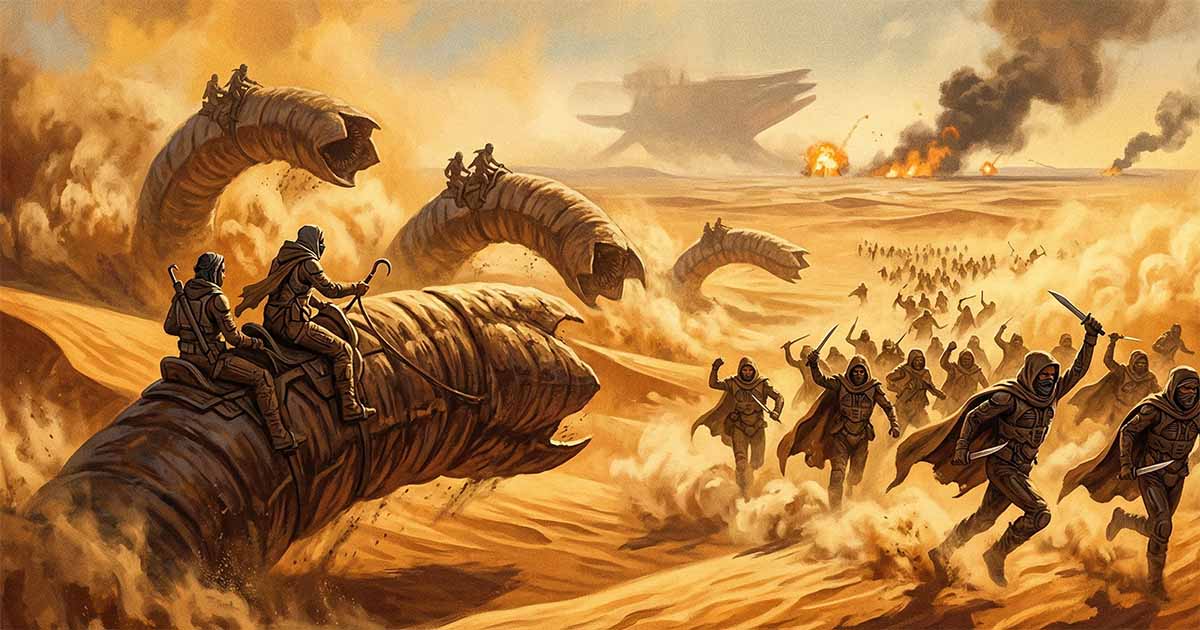
As Paul rises under the name Muad'Dib, the Fremen transform from overlooked tribes into the most formidable fighting force on Arrakis. Their knowledge of the desert allows them to wage an effective campaign against the occupying House Harkonnen.
The empire's greatest mistake is underestimating them. What outsiders saw as scattered nomads proves to be a unified culture capable of altering the balance of power across the Imperium.
Adaptations And Screen Portrayals
The Fremen have appeared in several screen versions of "Dune," each presenting a different interpretation.
David Lynch's 1984 film emphasized their mysticism and introduced visual elements such as sonic weapons not found in Herbert's novel. The Sci-Fi Channel miniseries of 2000 offered a more faithful look at their society and political role.
Denis Villeneuve's recent films present perhaps the most grounded portrayal yet. The harsh realities of desert life receive careful attention, and characters such as Chani and Stilgar reveal the internal debates within Fremen culture.
These adaptations demonstrate how Herbert's creation continues to evolve while remaining recognizable.

Why Fans Still Ask
After decades of discussion, readers and viewers still return to the same questions. How powerful are the Fremen compared with the Emperor's Sardaukar? Are their prophecies genuine or manipulated? Could their ecological dream truly transform Arrakis?
Such questions endure because the Fremen are more than background characters. They represent one of the richest societies ever imagined in science fiction.