
Why Classic Science Fiction Took Love Seriously
A Valentine’s Day look at how classic science fiction treated love with seriousness, restraint, and purpose, from Star Trek to Quantum Leap and beyond.


This Week in Classic Science Fiction — Love That Endures
Valentine's Day often celebrates emotion in the moment, but classic science fiction has always taken a longer view. The genre looks past flowers and slogans and asks what love becomes when tested by time, danger, and responsibility. In that sense, Valentine's Day fits science fiction better than it first appears.
In classic television, love is rarely treated as an escape from duty. In "Star Trek: The Original Series", episodes like "This Side of Paradise" present affection as meaningful only when it strengthens character and purpose. Romance matters, but it must coexist with discipline and service, not replace them.
Later series refined this idea rather than abandoning it. "Star Trek: The Next Generation" explores love through ethics and restraint in episodes like "The Perfect Mate". Captain Picard's most significant romantic moments are defined not by fulfillment, but by respect and moral clarity.
Other shows carried the same conviction into different settings. In "Quantum Leap", episodes like "Another Mother" present love through reconciliation and quiet repair. The affection shown is temporary in form but lasting in effect.
Classic science fiction does not dismiss love, but treats it as something serious enough to endure hardship, distance, responsibility, and the steady passage of time.
Sponsored by: The Wedding at Red Meridian Science Fiction T-shirt

The Wedding at Red Meridian is not a love story about escape, but about commitment made under pressure. Set beneath burning twin suns and watched by armies, it captures the rare science fiction idea that peace, honor, and affection can exist in the same moment. This shirt carries that image quietly, for readers who understand that the most serious romances in science fiction are forged where duty and devotion meet.
Love Protected by Purpose
One of the clearest examples appears in "Star Trek: The Original Series". In episodes like "This Side of Paradise", love offers comfort and escape, but only temporarily. The story ultimately affirms that affection must coexist with purpose.
The message is not that love is false. It is that love, detached from responsibility, becomes hollow. When duty and affection are aligned, both are strengthened.
This balance recurs in quieter moments throughout the series. Characters form bonds that are acknowledged but rarely indulged. The relationships matter because they endure within limits.
Classic science fiction treated love as something that should support character rather than replace it. That choice shaped the genre's tone for decades.
Love Guided by Responsibility and Choice
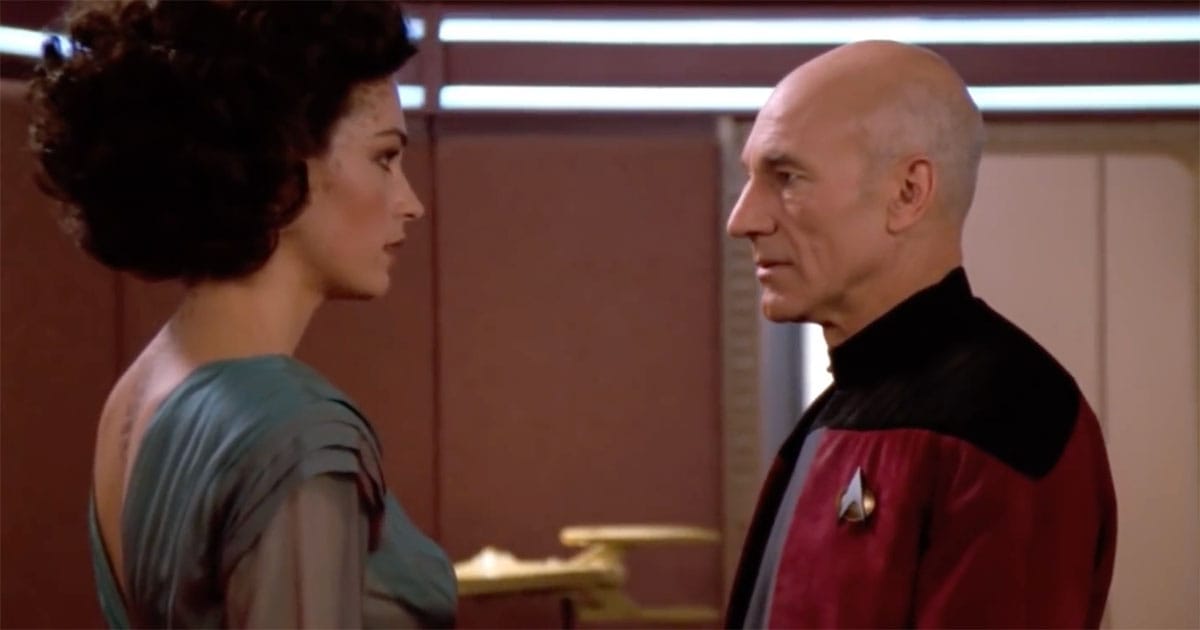
In "Star Trek: The Next Generation", this philosophy becomes even more refined. Captain Picard's relationships are defined less by fulfillment than by restraint. Episodes like "The Perfect Mate" present love as something that demands ethical clarity.
Picard does not reject affection because it lacks value. He restrains it because it deserves respect. The choice affirms love's seriousness rather than diminishing it.
This portrayal assumes that adult relationships require judgment. Love is not weakened by restraint. It is strengthened by it.
Other episodes reinforce the same idea. Romantic connections exist, but they never override command responsibility. The story affirms that leadership and affection can coexist without one consuming the other.
Love as Restoration Rather Than Possession
"Quantum Leap" presents a different but complementary view. Because Sam Beckett can never remain, love appears as restoration rather than possession. Episodes like "Another Mother" focus on repairing families rather than forming new attachments.
Sam's role is not to claim love for himself. It is to help others reclaim what has been damaged. That approach treats love as constructive and outward-facing.
The affection in "Quantum Leap" is often quiet. It appears through forgiveness, reconciliation, and renewed commitment. Those moments carry weight because they change lives.
The absence of permanence does not weaken the theme. It reinforces the idea that love matters because it heals rather than because it lasts forever in one form.
Love That Changes Those It Touches

Science fiction films also reflect this perspective. In "Starman", love grows through care, patience, and shared vulnerability. The relationship matters not because it endures unchanged, but because it transforms both characters.
The film treats affection as a teacher. Love reveals humanity through sacrifice and responsibility. When separation comes, the loss does not negate the relationship's value.
That approach affirms love without promising comfort. The experience itself matters. The growth remains.
Love Enduring Across Time and Change
Science fiction often stretches love across time, not to test it harshly, but to show its durability. In stories of long journeys or distant futures, affection becomes part of a character's identity. Love travels with them.
In "Star Trek", characters frequently reference relationships that exist beyond the present episode. These bonds shape decisions even when the loved person is absent. Love remains active through memory and loyalty.
This continuity affirms affection as something stable. It does not depend on constant presence. It influences behavior over time.
In "The Empire Strikes Back", the bond between Han Solo and Princess Leia is defined by commitment under pressure. The famous exchange before Han's capture is brief and restrained. Its power comes from context rather than display.

The moment works because the story has earned it. Love appears as courage and acceptance. It strengthens resolve rather than distracting from danger.
Science fiction understands that time refines affection. Love that survives uncertainty gains depth. It becomes part of a character's moral foundation.
Even when relationships change, their influence remains. Characters carry the imprint of love forward. That continuity gives romance lasting significance.
Classic science fiction also presents love as something that supports community. Relationships reinforce families, crews, and shared purpose. Affection binds people together rather than isolating them.
This vision feels hopeful without being sentimental. Love is not perfect, but it is reliable. It contributes to stability in unstable worlds.
The genre's futures are demanding. They require resilience, cooperation, and trust. Love belongs there because it strengthens those qualities.
Classic science fiction did not exaggerate romance because it did not need to. It trusted love to endure quietly. That confidence remains one of the genre's enduring strengths.
Trivia — Valentine’s Day and Love in Sci-Fi
• Somewhere in Time became a frequent Valentine’s Day television staple in the 1980s due to its focus on love transcending time.
• Eternal Sunshine of the Spotless Mind emerged as a popular Valentine’s rental in the mid-2000s, often cited as a science fiction alternative to traditional romantic comedies.
• Several February broadcasts of The Twilight Zone featured stories centered on companionship, longing, or reconciliation rather than horror or suspense.
• The Time Traveler’s Wife was explicitly marketed as a Valentine’s Day science fiction romance, highlighting the genre’s recurring connection to love and time.