
Why "The Forever War" Still Defines Military Science Fiction
Joe Haldeman’s “The Forever War” remains a cornerstone of military science fiction, blending real physics with timeless questions about courage, duty, and the cost of progress across the stars.


War Without End
Joe Haldeman's "The Forever War" appeared in 1974, a time when the United States was still reckoning with the Vietnam conflict and its long shadow.
Science fiction had always reflected the concerns of its age, and Haldeman, who had served as a combat engineer in Vietnam, used the genre to express truths that traditional war novels could not reach. His story spoke to readers who understood that technological progress does not necessarily bring moral advancement.
The book tells of soldiers drawn into a distant interstellar war that stretches beyond human understanding. Each battle is separated by years, even centuries, as time itself becomes the enemy through the laws of relativity. Haldeman built a narrative that joined military realism with cosmic scale, yet his voice remained calm and exacting, the voice of a man who had seen too much to exaggerate.
"The Forever War" was recognized immediately as a major work. It won the Hugo, Nebula, and Locus Awards, earning a place beside "Starship Troopers" and "Dune" in the conversation about the meaning of conflict in science fiction. Critics praised its scientific precision and its moral restraint. Readers found in it not the glory of conquest but the weight of endurance.
Haldeman's achievement was to transform the machinery of war into a meditation on time, loss, and human constancy. His soldiers do not fight for glory but to survive the emptiness between stars. The result is a story that feels both futuristic and ancient, a reflection of every generation that has gone to war and returned to find the world forever changed.
The Machinery of War and the Physics of Time
Haldeman built his universe on real physics. The soldiers in "The Forever War" travel near the speed of light, and as they move through collapsars and deep space, time slows for them. What feels like months in the field becomes decades back home. This detail does more than serve the plot. It turns Einstein's equations into a source of tragedy. The farther the troops go, the more distant their connection to Earth becomes.
The war itself is not a grand crusade but a long chain of miscommunications and accidents. Haldeman presents combat as cold and procedural. The soldiers fight in powered armor, but their most dangerous enemies are the void, their own command, and the unyielding laws of nature. His attention to process—the boarding of ships, the grind of drills, the quiet before battle—gives the novel a sense of reality uncommon in the genre.
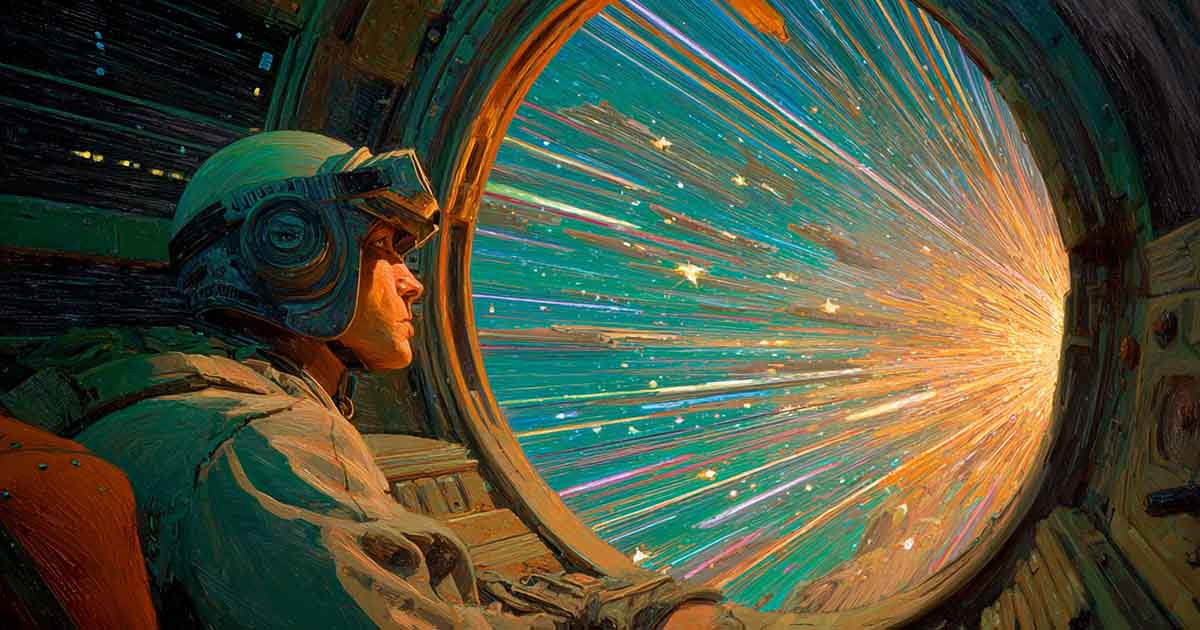
The tone throughout is matter-of-fact. Haldeman writes with the precision of a technician and the reserve of a witness. There is no sweeping rhetoric, only observation and endurance. This approach keeps the reader grounded even when the action spans galaxies. It mirrors the military's own logic, where survival depends on clear thinking and obedience rather than grand ideals.
The physics of time dilation becomes the novel's central metaphor. Each deployment further isolates the soldiers from the civilization they defend. The faster they travel, the slower their lives progress, and the more meaningless their sacrifices appear. Haldeman turns a scientific principle into a commentary on alienation. The result is a war that no side truly understands, fought by men and women who can never return to the same world they left.
The Soldier Out of Time
At the heart of "The Forever War" is the figure of the soldier cut loose from his own era. William Mandella begins as an intelligent young man drawn into a conflict he barely understands.
With each campaign, the distance between him and the Earth he remembers grows wider. When he finally returns home, the world has aged beyond recognition, and the customs, language, and values he once knew have vanished.
This estrangement gives the novel its emotional weight. Mandella's struggle is not only against an alien enemy but against time itself. He represents every veteran who comes home to find his country changed, his sacrifice unrecognized, and his purpose uncertain. Haldeman captures this experience with restraint. There are no speeches, only quiet observations of what it means to be left behind by history.
The narrative's rhythm reflects that same dislocation. The story moves in bursts of activity followed by long stretches of waiting. The reader feels the same suspension the soldiers endure, trapped in a cycle of duty and drift. Haldeman uses this structure to emphasize the cost of progress. The faster the engines of civilization move, the less room they leave for the individual.
Through Mandela's eyes, the war becomes less about victory and more about endurance. Each new posting, each new century, erases something of the man he once was. The theme is not despair but persistence. In a universe governed by relativity and bureaucracy, the simple act of remaining human becomes an act of defiance. Haldeman's restraint makes the emotion all the more genuine. It is the quiet heartbreak of a man who has seen too much and learned that time, not the enemy, is the final victor.
Tradition, Technology, and the Cost of Civilization
"The Forever War" observes the march of progress with a wary eye. Each leap forward in technology brings new efficiency but less humanity. Haldeman's future is orderly, advanced, and strangely empty. The soldiers depend on machines that think faster than they do, and the war's conduct becomes an equation rather than a cause. What was once fought by men of conviction is now managed by systems that do not feel.
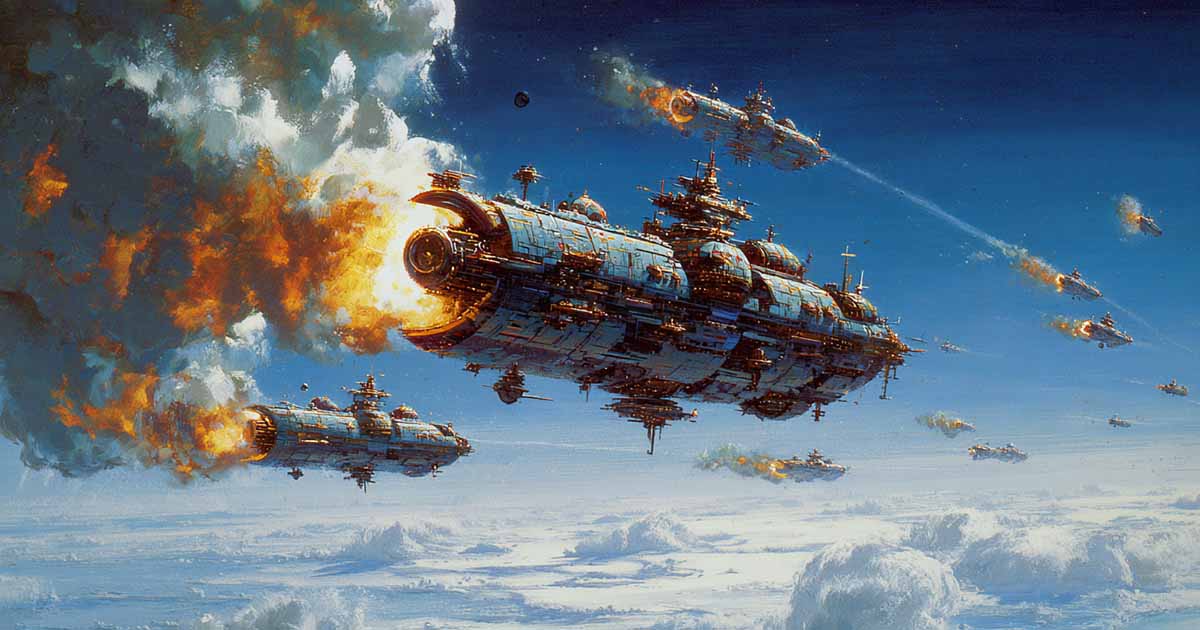
Haldeman's vision of technological mastery carries a moral question. When everything is automated, what remains of courage or sacrifice? The soldiers in his story are not heroes in the traditional sense. They are professionals bound by duty.
Their courage lies in continuing to serve even when the meaning of their service fades. This idea gives the book its lasting strength. It honors endurance over victory and duty over recognition.
There is also a quiet warning within the story. The same forces that expand civilization can strip it of purpose. The world that the soldiers defend keeps changing until it no longer resembles the one that sent them off to fight.
Haldeman shows how a culture obsessed with progress can lose sight of the human beings who make progress possible. The machines may function perfectly, but the people who operate them begin to lose their way.
Haldeman's approach contrasts with the martial confidence of "Starship Troopers." Where Heinlein saw military order as a path to virtue, Haldeman treats it as a burden.
His soldiers obey not because they believe, but because they have been trained to survive. The difference defines two sides of the same American tradition—the desire for discipline and the suspicion of authority. In Haldeman's world, technology magnifies both impulses until they consume each other.
What remains is the human heart, battered but not erased. Haldeman never abandons the idea that courage and loyalty still matter. His soldiers hold fast to one another even as civilization evolves beyond recognition. In that loyalty, the reader finds the trace of faith and decency that outlasts every machine and every war.
Enduring Relevance
Half a century after its publication, "The Forever War" remains a defining story of science fiction's human side. Its ships and battles belong to the future, but its truths are timeless.
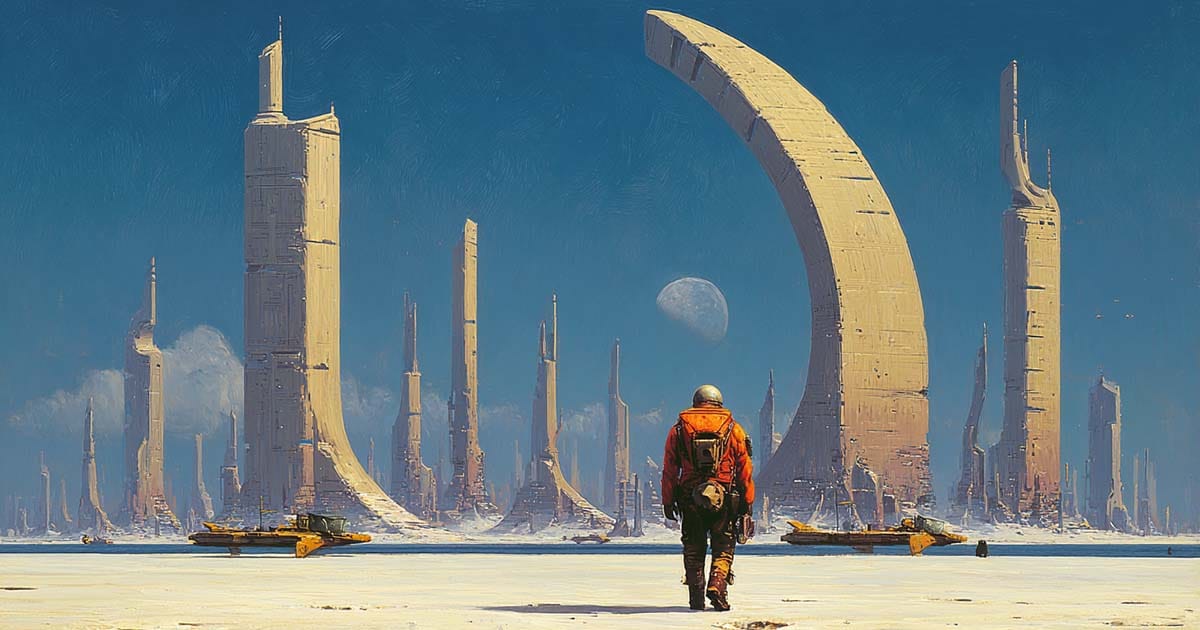
Readers still recognize the loneliness of the soldier who cannot return home, the frustration of a war with no clear purpose, and the hope that endurance itself can be a form of victory.
Haldeman's style gives the novel its strength. He writes with a craftsman's care, building emotion through understatement. The power of the book lies not in its spectacle but in its honesty. Every chapter reflects the experience of a man who has seen war and understands that its greatest enemy is forgetfulness. His calm tone gives authority to his message.
The novel's science has aged well, but its moral vision matters more. Haldeman shows that even in an age of perfect machines, it is the soul of man that carries the story forward. His characters endure not because of technology but in spite of it. That lesson, simple and steady, gives "The Forever War" its lasting relevance.
When the reader closes the book, what remains is not despair but recognition. The universe may change, the weapons may evolve, but courage, faith, and loyalty remain the same.
Haldeman's war may stretch across centuries, yet his story points toward something permanent. In a world that measures time by light years, he reminds us that the human heart keeps its own clock.