
James Doohan, D-Day Veteran Who Became Star Trek's Beloved Engineer
On James Doohan’s birthday, we remember the man who made Scotty a symbol of steadiness, loyalty, and engineering heroism in "Star Trek," inspiring generations to respect skill and responsibility.

This Week in Science Fiction
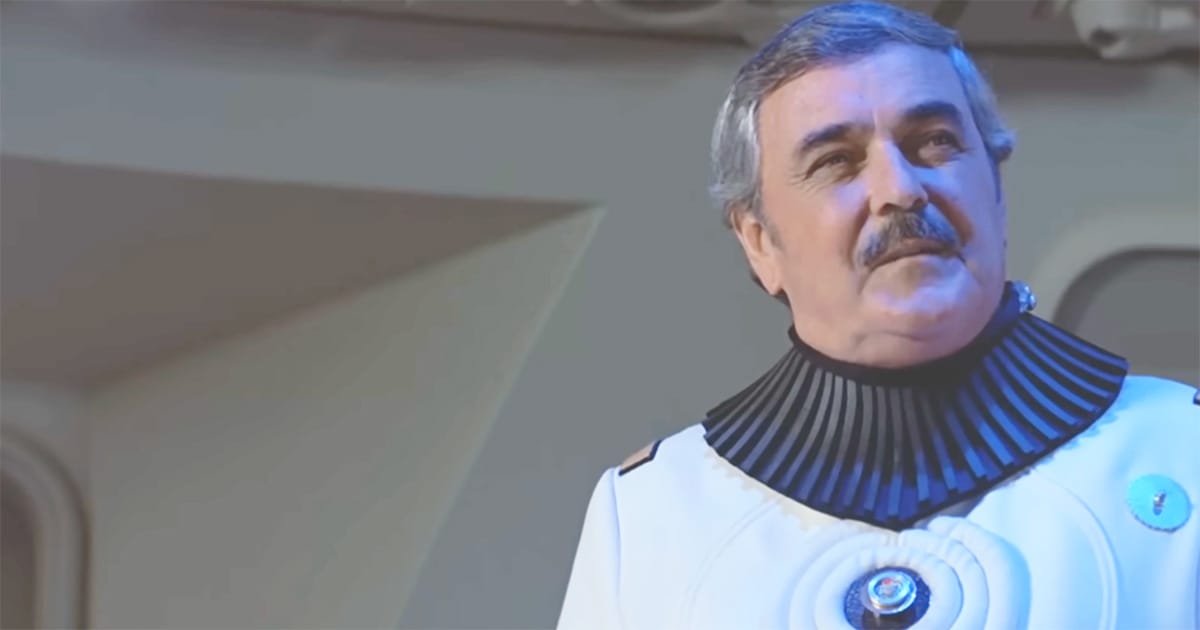
On March 3, 1920, James Doohan was born in Vancouver, British Columbia. He would grow up to portray Chief Engineer Montgomery Scott in "Star Trek," a character who helped define televised science fiction for a generation.
Doohan's life before Hollywood was marked by real combat. He served as a lieutenant in the Royal Canadian Artillery during World War II and landed at Juno Beach on D-Day.
That night, he was gravely wounded by friendly fire, losing the middle finger of his right hand. In spite of his injuries, he later returned to service as an artillery observer.
After the war, Doohan trained at the Neighborhood Playhouse in New York and built a career in radio and early television. His talent for accents and vocal control set him apart. When "Star Trek" premiered in 1966, his Scottish engineer quickly became indispensable to the Enterprise and to the audience.
Scotty was not the captain, nor the face of command. He was the man who kept the ship running. In an age that respected craftsmanship and technical skill, that role carried weight. This week, we remember the birth of the actor who made engineering heroic and gave science fiction one of its most enduring figures.
Sponsored by: Zero Hour Arrival Retro

Zero Hour Arrival captures the moment every great 1950s invasion film promised but never fully explained. The signal cuts through the static. The alien does not attack. He observes. With glowing eyes and a geometric collar that hints at impossible technology, the Kryll emissary embodies the quiet dread of classic science fiction. Printed in bold retro tones, this shirt feels like a lost movie poster from the drive-in era. Wear it like a transmission from another world.
The Engineer Who Would Not Panic
In "Star Trek," Montgomery Scott does not command the bridge. He does not deliver sweeping speeches about destiny. Yet without him, the Enterprise goes nowhere. His defining trait is steadiness.
Scotty's calm is not softness. It is disciplined control. When the ship trembles and warning lights flash, he narrows his focus. He studies the problem, allocates power, and makes precise adjustments. In a dramatic form that rewards emotional display, he models restraint.
This restraint carries moral authority. It tells the audience that maturity keeps chaos at bay. The future in "Star Trek" rests not only on bold exploration but on technical competence. Someone must know how the ship works when others are debating what to do next.
Respect for Limits
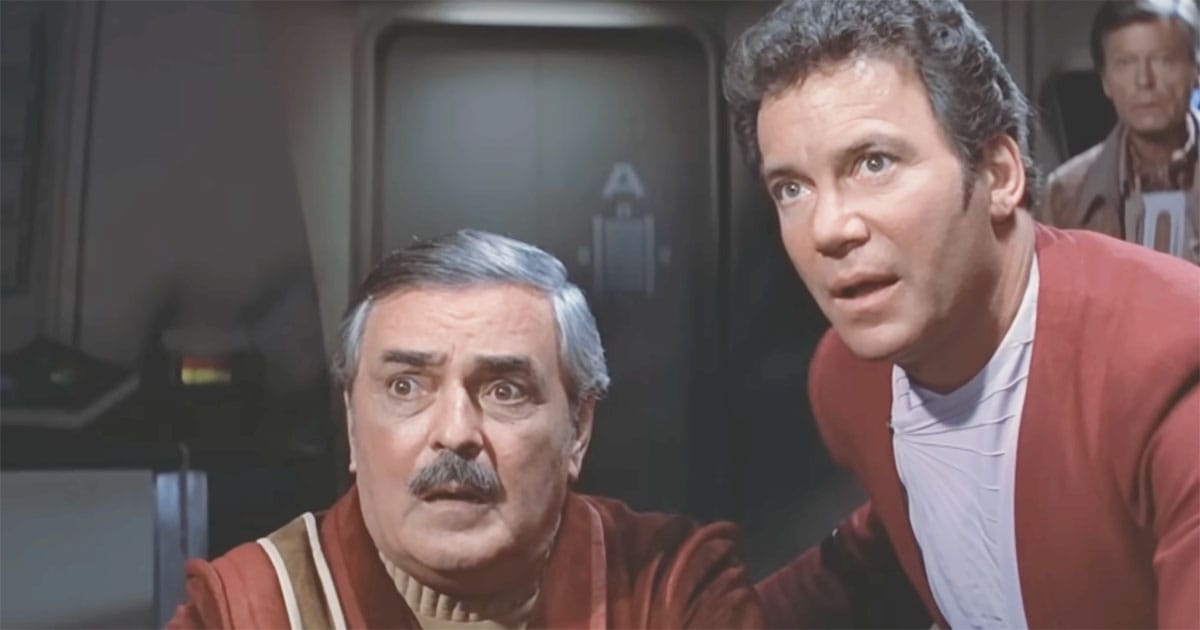
Scotty's second great quality is his respect for limits. He understands that every system has a breaking point. Warp engines can be pushed, but not indefinitely. Shields can absorb punishment, but not without cost.
This awareness grounds the series in physical reality. The Enterprise survives because someone respects tolerances. Scotty frequently reminds Captain Kirk how much time remains before systems fail. Those warnings are not pessimism. They are discipline.
Classic science fiction often assumed the universe operates according to knowable laws. Technology can expand human reach, but it does not abolish consequence. Scotty embodies that worldview. He acknowledges danger without surrendering to it.
In many episodes, he performs what looks like a miracle. Yet the miracle is never mystical. It is the result of knowledge applied under pressure. That distinction matters. It reinforces the idea that progress comes through study and effort rather than wishful thinking.
The Working Man in Orbit
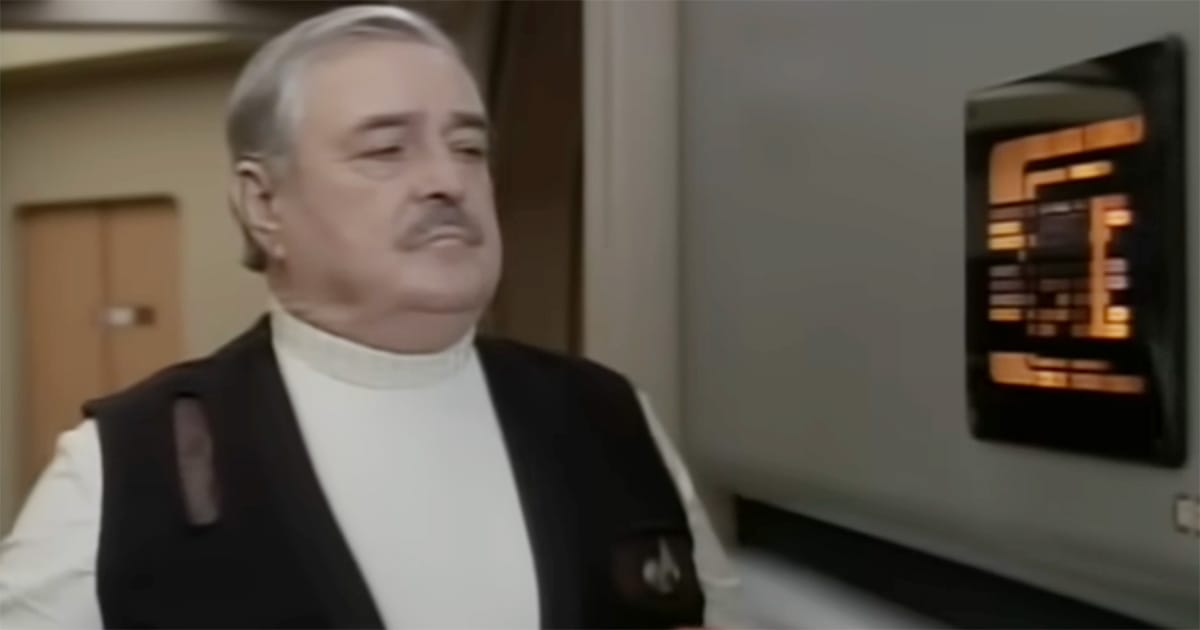
Scotty also represents the skilled tradesman elevated to cosmic importance. He is a senior officer, yet his temperament resembles that of a master mechanic. He takes pride in engines, wiring, and structural integrity.
When he speaks of the Enterprise, he speaks as a craftsman speaks of his tools. He defends the ship's capabilities and warns against reckless strain. That attitude reflects a culture that once honored workmanship.
In the 1960s, industrial confidence shaped the American imagination. Rockets rose from launch pads. Engineers calculated trajectories by hand. Viewers understood that exploration depended on technical skill. Scotty translated that real-world respect for engineering into weekly drama.
His presence also affirmed that technical labor is honorable. The future is not sustained by theory alone. It requires maintenance. It requires men willing to spend long hours below decks, adjusting systems that others take for granted.
Loyalty Without Spotlight
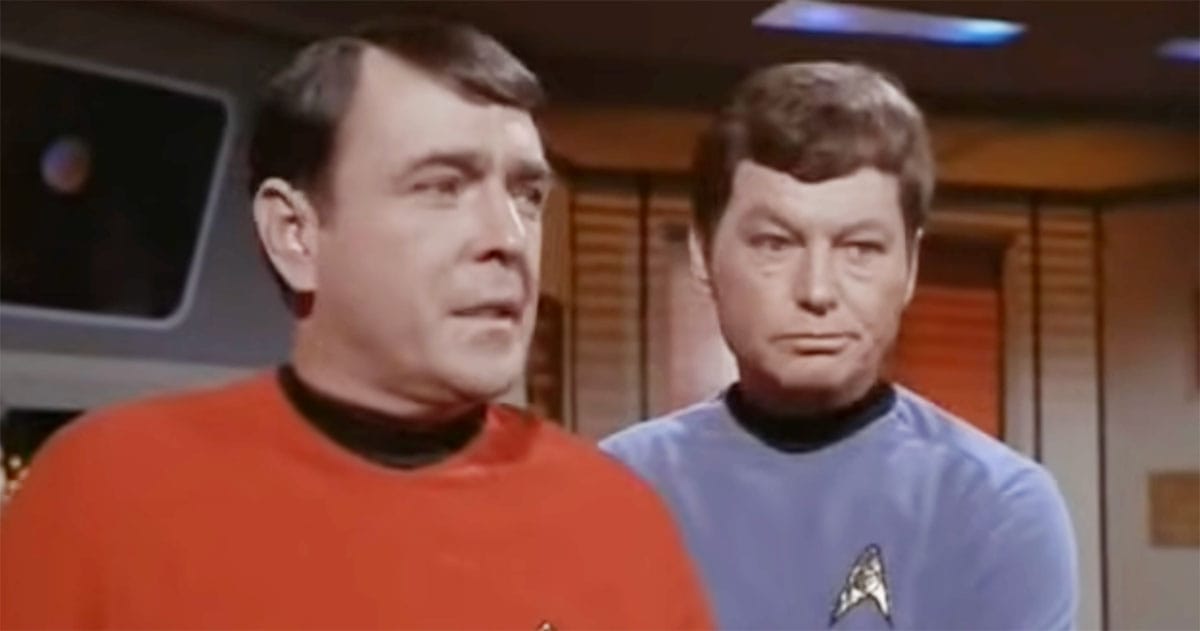
Another enduring trait is loyalty. Scotty is loyal to his captain and loyal to his ship. He does not compete for command. He supports it.
This loyalty stabilizes the narrative. The bridge crew can debate tactics because the engine room remains steady. Scotty provides the confidence that decisions can be executed.
He rarely seeks recognition. When crises pass, the captain receives public credit. Scotty returns to his engines. That quiet professionalism speaks to an older ethic of service.
The series suggests that leadership depends on trust. Kirk trusts Scotty's judgment because it is grounded in expertise. Scotty trusts Kirk's command because it is grounded in responsibility. That reciprocal trust strengthens the Enterprise as surely as reinforced hull plating.
Humor Under Pressure
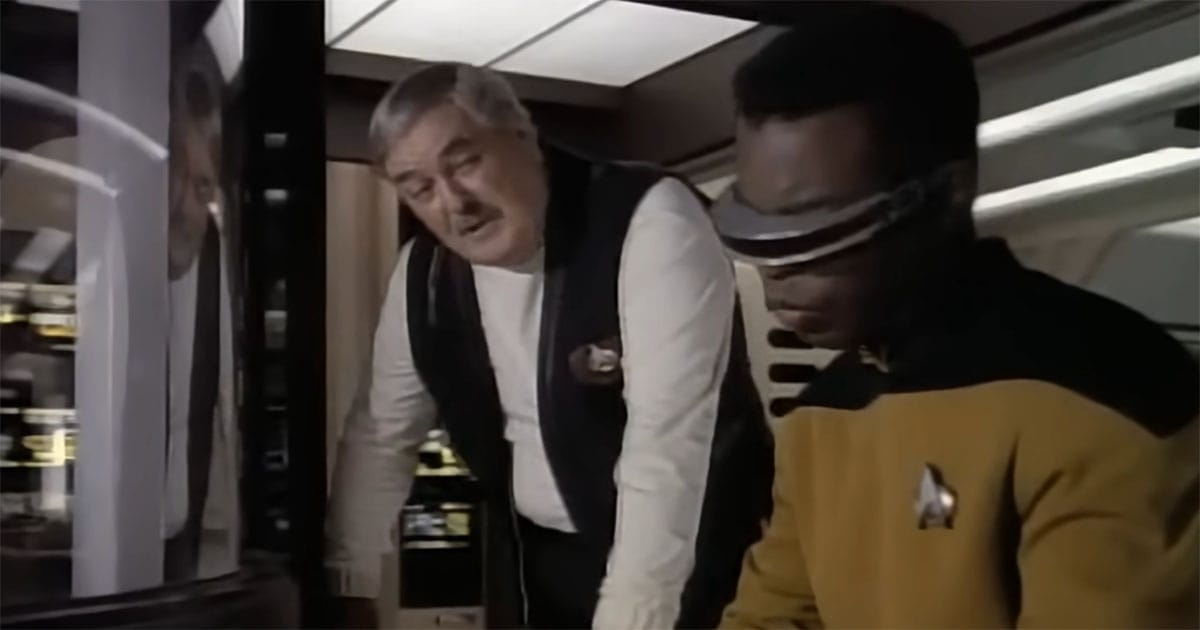
Scotty's dry humor further humanizes him. His protests about overworked engines often carry a wry edge. He understands the strain placed on his systems, yet he rarely succumbs to despair.
This balance keeps the tone grounded. Technology never feels cold or abstract. It exists in the hands of men who care about it. Scotty's exasperation is affectionate, not cynical.
That humanity prevents the series from becoming sterile. The Enterprise is advanced, but it is not impersonal. It hums because someone takes responsibility for it.
Recognition Beyond Fiction
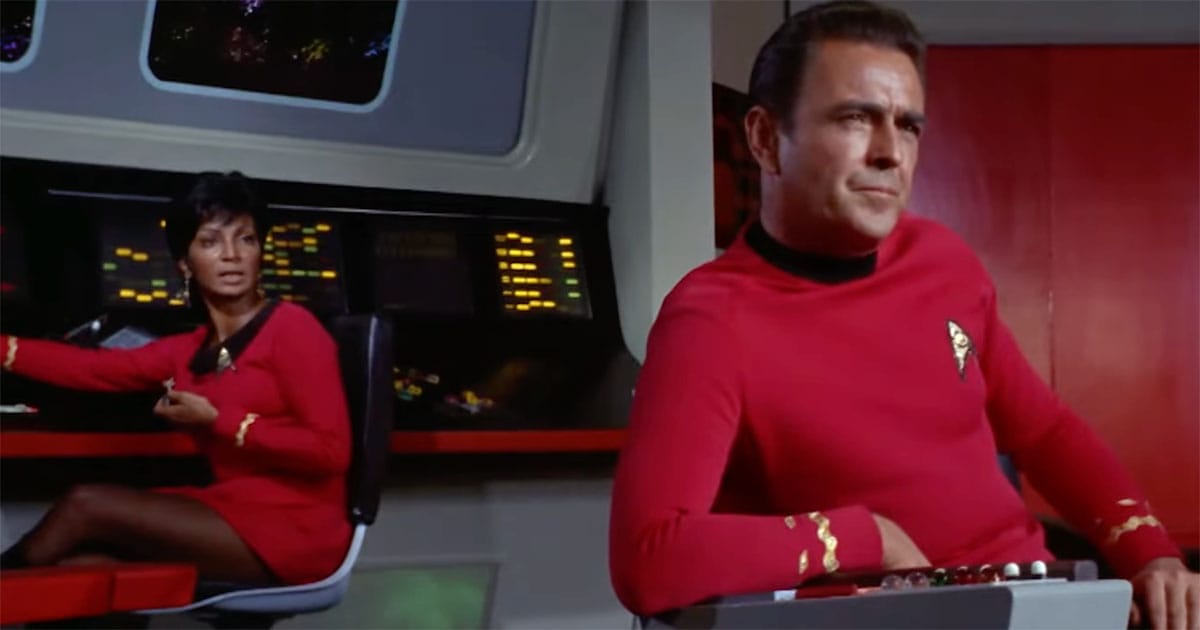
The influence of this portrayal extended into real institutions. In 1992, the Milwaukee School of Engineering awarded James Doohan an honorary Doctor of Engineering degree. Faculty and graduates acknowledged that his performance encouraged interest in technical careers.
This recognition confirmed what many suspected. Popular culture can shape ambition. Scotty presented engineering as honorable work carried out with courage and precision.
Few fictional characters receive validation from professional communities. Scotty did. His example suggested that the man who maintains the engines deserves as much respect as the man who charts the course.
An Enduring Archetype
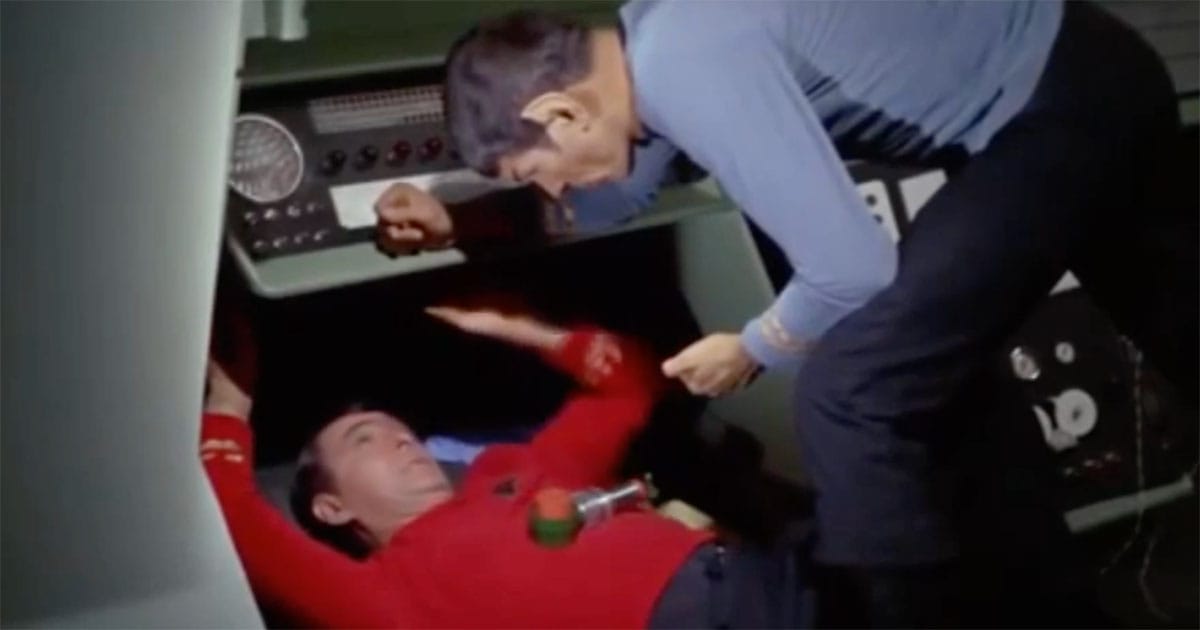
Science fiction is rich with archetypes. There is the explorer who seeks new frontiers. There is the warrior who confronts hostile forces. There is the scientist who theorizes about distant possibilities. Scotty refined another essential type. He made the engineer heroic.
He showed that progress depends on infrastructure. Exploration collapses without power. Vision fails without execution. The engineer bridges aspiration and reality.
This lesson remains timely. Modern civilization rests on networks, grids, and machines that few fully understand. Behind each system stands a professional who monitors strain and prevents failure. Scotty anticipated that hidden guardianship.
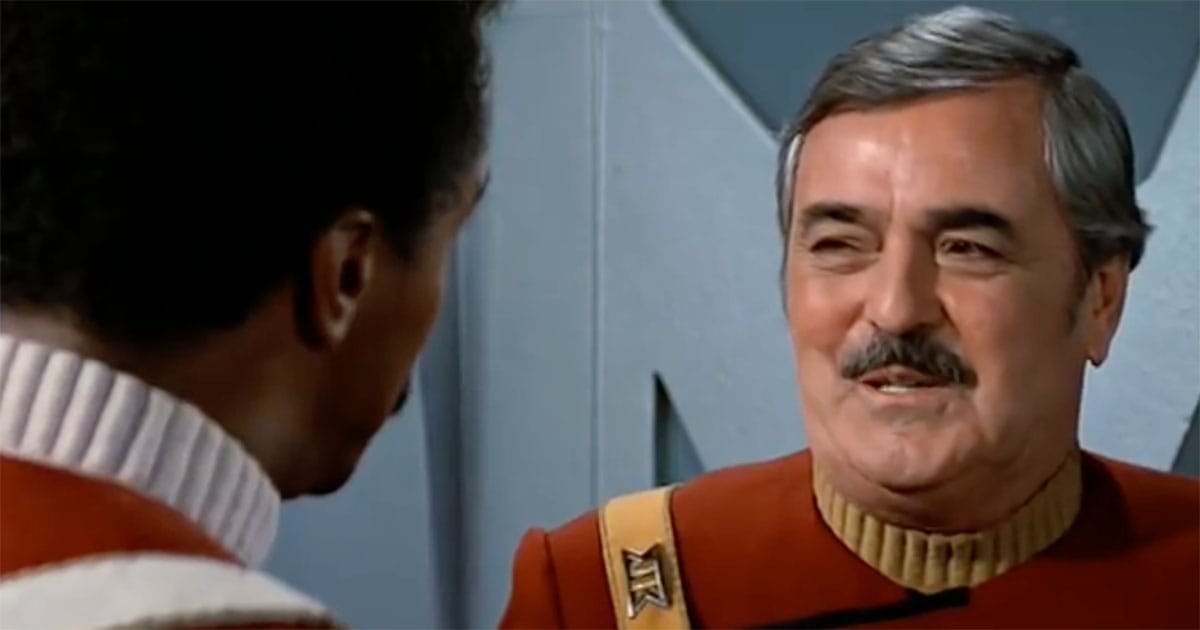
A Model Worth Remembering
When we reflect on the legacy of James Doohan, we see more than a familiar brogue and a set of memorable lines. We see a standard of conduct. Steadiness in crisis. Respect for limits. Loyalty to craft.
Classic science fiction once presented the future as a realm shaped by disciplined men applying knowledge to challenge. That optimism was practical, not naive. It assumed that human beings could master complexity through study and responsibility.
Scotty embodied that confidence. He did not dominate the spotlight. He maintained the foundation. The Enterprise moved forward because someone below decks refused to panic and refused to cut corners.
In a culture often distracted by spectacle, that example remains bracing. The engines of civilization require guardians. They require men who understand that power must be managed and that limits must be respected.
Montgomery Scott may be fictional. The virtues he represents are not.
"Scotty" Trivia
- James Doohan was missing the middle finger on his right hand, a World War II injury that camera angles carefully concealed throughout "Star Trek." Most viewers never noticed it during the original broadcast run.
- Doohan created Scotty's accent himself. During his audition, he reportedly performed several regional dialects before producers agreed that a Scottish engineer sounded both distinctive and trustworthy.
- Doohan provided the first on-screen Klingon dialogue in "Star Trek." While later productions developed the language extensively, the earliest rough sounds heard in the original series came from him.
- In one episode, Scotty deliberately exaggerated repair estimates to Captain Kirk so he could later appear to work miracles. Doohan said this detail reflected real engineering practice, in which cautious projections allow for error and recovery.