
Jamis And The Price Of Entry
Jamis in Dune is more than the Fremen warrior Paul kills. Discover how his duel shapes Paul’s rise, Fremen law, and the moral cost of destiny in Herbert’s classic novel.

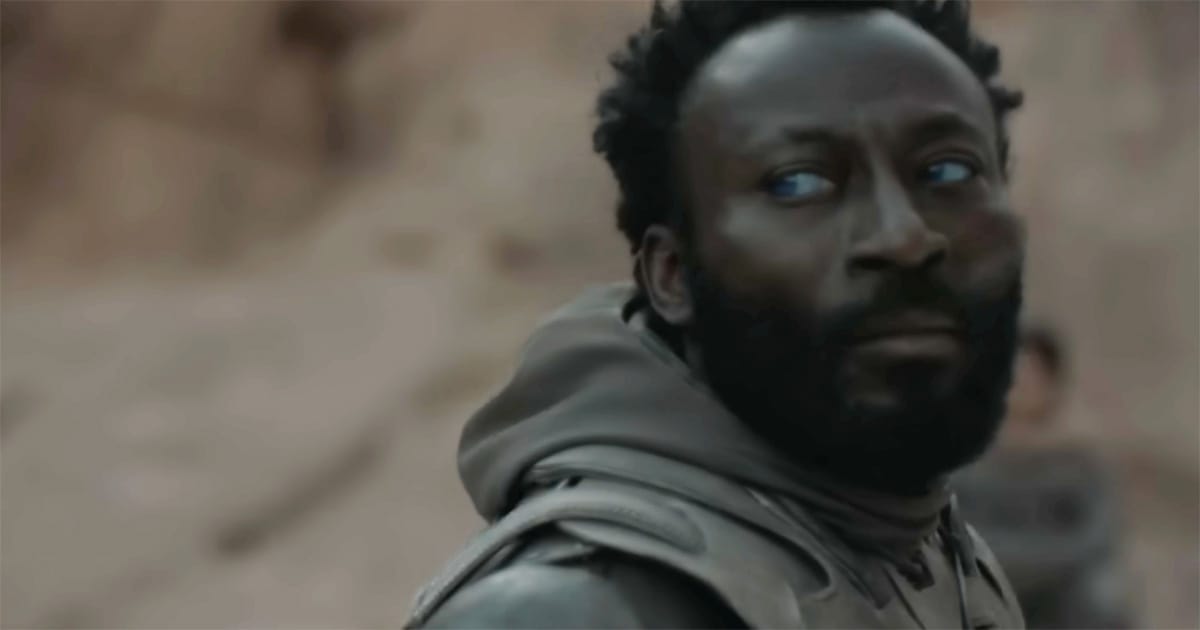
Jamis is often reduced to a single line in summaries of Dune, the Fremen warrior killed by Paul Atreides in a ritual knife duel. That description is accurate, yet incomplete. In Frank Herbert's 1965 novel, Jamis serves as the cultural and moral threshold through which Paul must pass if he is to survive among the Fremen.
His importance lies in consequence rather than duration. Jamis appears briefly, but his challenge forces Paul into the binding legal structure of desert society. The duel is not a detour in the narrative. It is a test of legitimacy.
Without Jamis, Paul remains an outsider protected by prophecy and circumstance. With Jamis' death, Paul becomes accountable to Fremen law.
Origins And Context
Jamis is a Fremen warrior in Stilgar's Sietch Tabr. He is competent, proud, and loyal to the traditions that have preserved his people on Arrakis. Nothing in the novel suggests recklessness. His instincts align with caution and tribal survival.
When Paul and Lady Jessica encounter Stilgar's troop after the fall of House Atreides, Jamis interprets events through a survivalist lens. Two off world fugitives, unproven in the deep desert, represent risk. Fremen culture does not indulge in sentimentality when it comes to water and security.
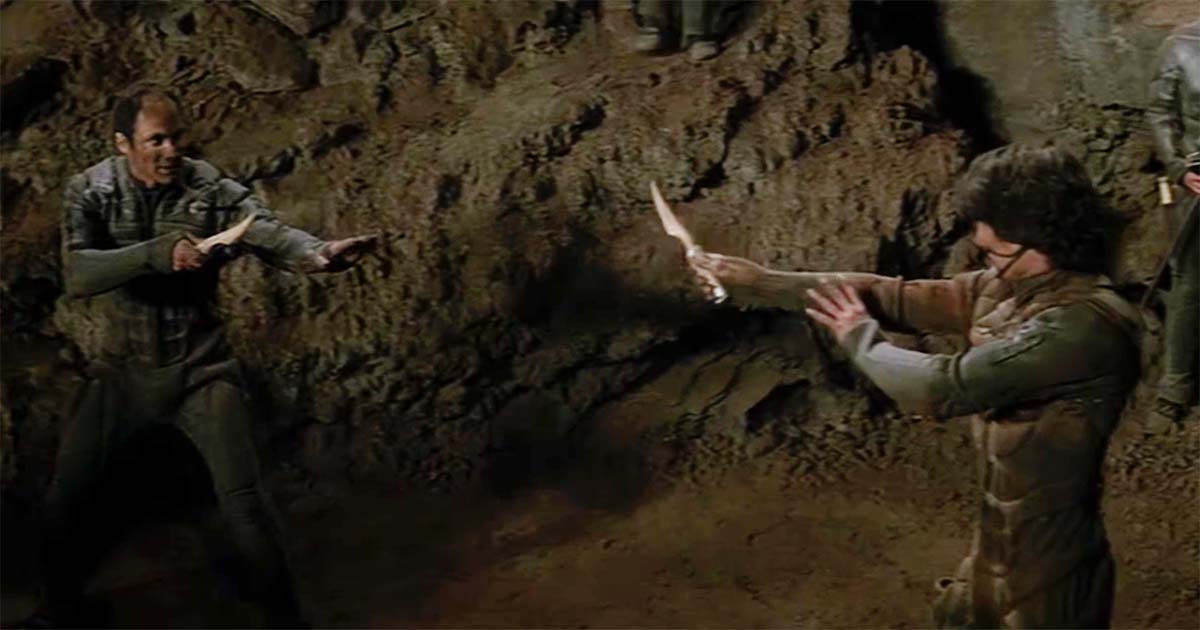
A brief scuffle alters the dynamic. Paul disarms Jamis using techniques drawn from Bene Gesserit training and Atreides combat discipline. The humiliation is public. In a culture where competence equals status, this moment carries weight beyond personal pride.
Herbert frames what follows within Fremen law. Under the Amtal rule and Tahaddi challenge, disputes over fitness and standing may be settled in ritual combat to the death. This is not spontaneous violence. It is a recognized civic mechanism. Jamis invokes that law to test the newcomer and to restore order.
Within his cultural framework, Jamis acts reasonably. He challenges uncertainty in the only way his society deems decisive.
| Field | Details |
|---|---|
| Name | Jamis |
| Affiliation | Fremen of Sietch Tabr |
| First Appearance | “Dune” by Frank Herbert, 1965 |
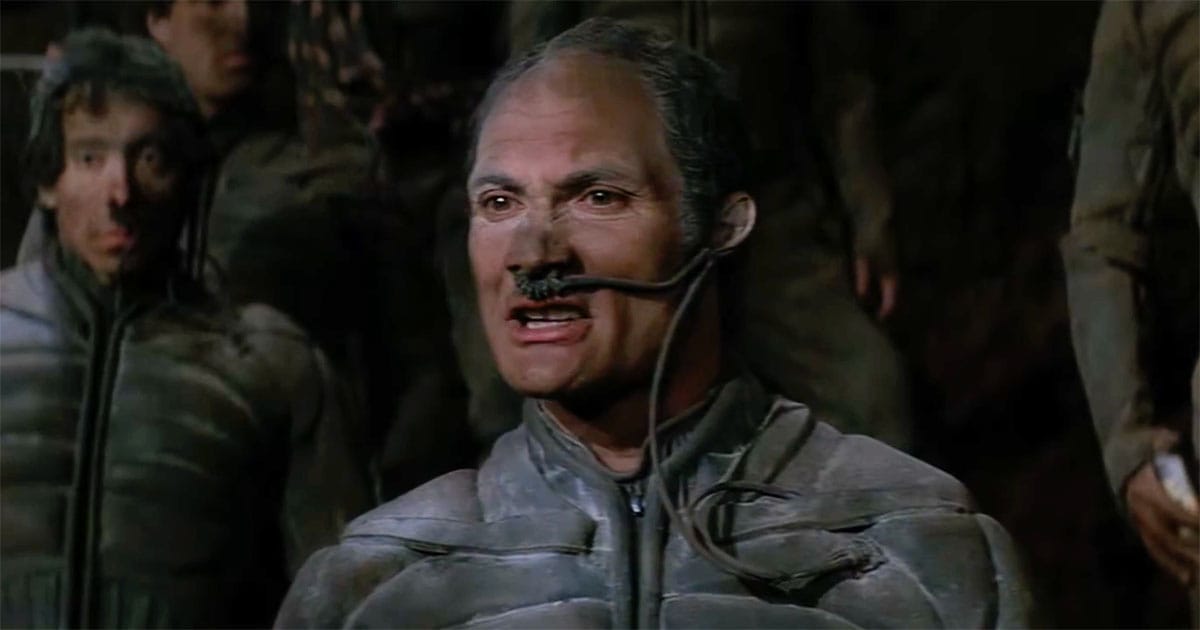
| Portrayed In Film By | Judd Omen (1984); Babs Olusanmokun (2021–2024) |
| Portrayed In Miniseries By | Christopher Lee Brown (2000) |
| Role | Fremen warrior who invokes the Tahaddi challenge against Paul Atreides |
| Description | A traditionalist warrior of Arrakis whose ritual duel with Paul becomes the young Atreides’ first sanctioned killing, sealing his acceptance among the Fremen and marking the moral threshold of his rise. |
Role In The Story
Paul cannot refuse the challenge without forfeiting any claim to respect among the Fremen. The duel is conducted before witnesses and governed by custom. Its outcome will determine not only personal survival but also social standing.
During the fight, Paul hesitates. He disarms Jamis more than once and asks him to yield. These gestures reflect the ethics of House Atreides, where restraint can be honorable. Under Fremen custom, they reveal ignorance. A Tahaddi duel does not end at first blood. It ends only in death.
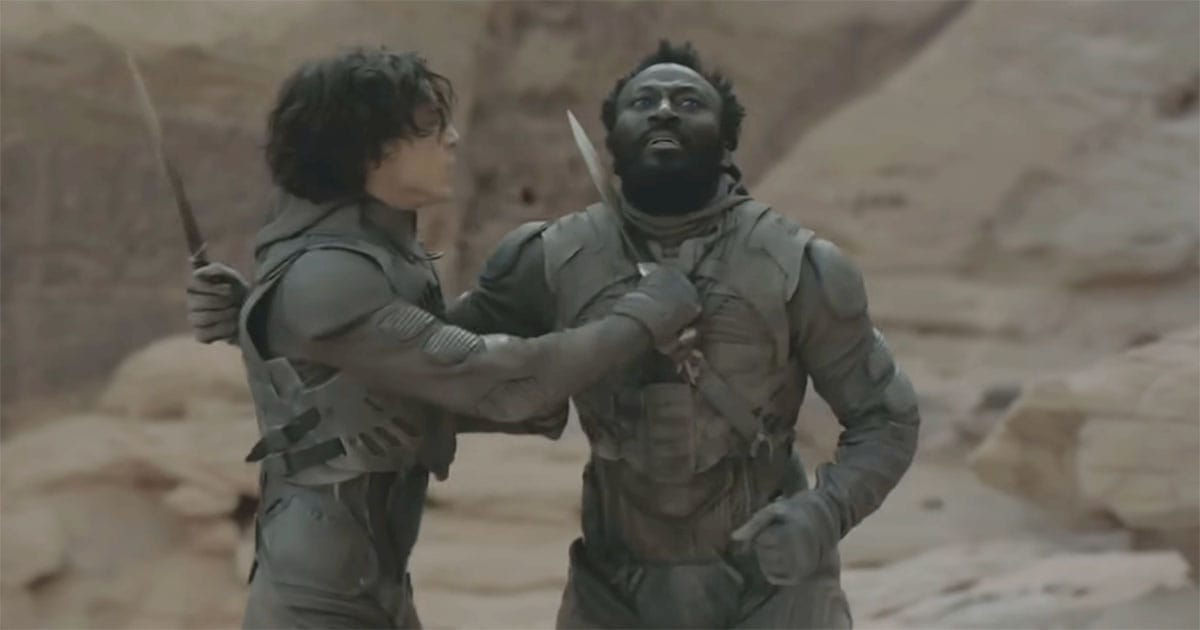
The cultural divide sharpens in that moment. Paul must adapt or perish. Mercy becomes incompatible with legitimacy.
When Paul finally kills Jamis with a crysknife, it is his first deliberate, face-to-face killing. Herbert does not present the act as a triumph. Paul is shaken. A psychological boundary has been crossed, and the reader is invited to register the cost.
The aftermath carries equal significance. By Fremen custom, Paul inherits Jamis' water and assumes responsibility for his household. Jamis' wife Harah and his children become part of Paul's obligations. Victory is inseparable from duty. The killer is bound to the community through material and domestic ties.
At Jamis' funeral rite, Paul declares that he was a friend of the man he killed. The statement reflects an emerging understanding of Fremen values. To take a life under law is to assume the place that life occupied. Jamis becomes a foundation stone in Paul's new identity.
In structural terms, Jamis functions as a threshold guardian in mythic narrative. Paul's rise among the Fremen would lack legitimacy without a sanctioned test. Prophecy alone cannot secure authority. Blood under law can.
Themes And Meanings
Jamis embodies Herbert's ecological thesis. Arrakis shapes its people with unforgiving precision. Water governs ethics, economics, and ritual. Jamis' challenge defends a system calibrated to scarcity.
He also stands at the intersection of prophecy and proof. Legends of a coming leader circulate among the Fremen, yet Jamis demands evidence in action. His skepticism grounds the mythic arc in lived reality.

The duel reinforces Herbert's view of power as something that must be costly and visible. Authority on Arrakis is not abstract. It is contested, witnessed, and paid for in the most literal sense. Jamis ensures that Paul's ascent begins with a measurable sacrifice.
Within the first novel, the scene carries a faint echo of future consequences. One necessary death opens the path to greater upheaval. The scale will expand, but the pattern is established here.
Adaptations Across Decades
David Lynch's 1984 film retains the duel and emphasizes its intensity. The ritual elements are present, though compressed for pacing. The scene underscores shock and immediacy.
The 2000 miniseries presents the challenge with procedural clarity. The legal framework of Fremen custom is carefully articulated, preserving the civic dimension of the event.
Denis Villeneuve's films introduce a notable interpretive layer. Jamis appears in Paul's visions as a potential mentor, instructing him in desert survival. This choice underscores that prescience in Dune reveals possible futures rather than fixed outcomes. The tragedy deepens. The man Paul kills is one he might have learned from under different circumstances.
Across adaptations, the core function remains unchanged. Jamis is the test that confirms belonging.
Enduring Significance
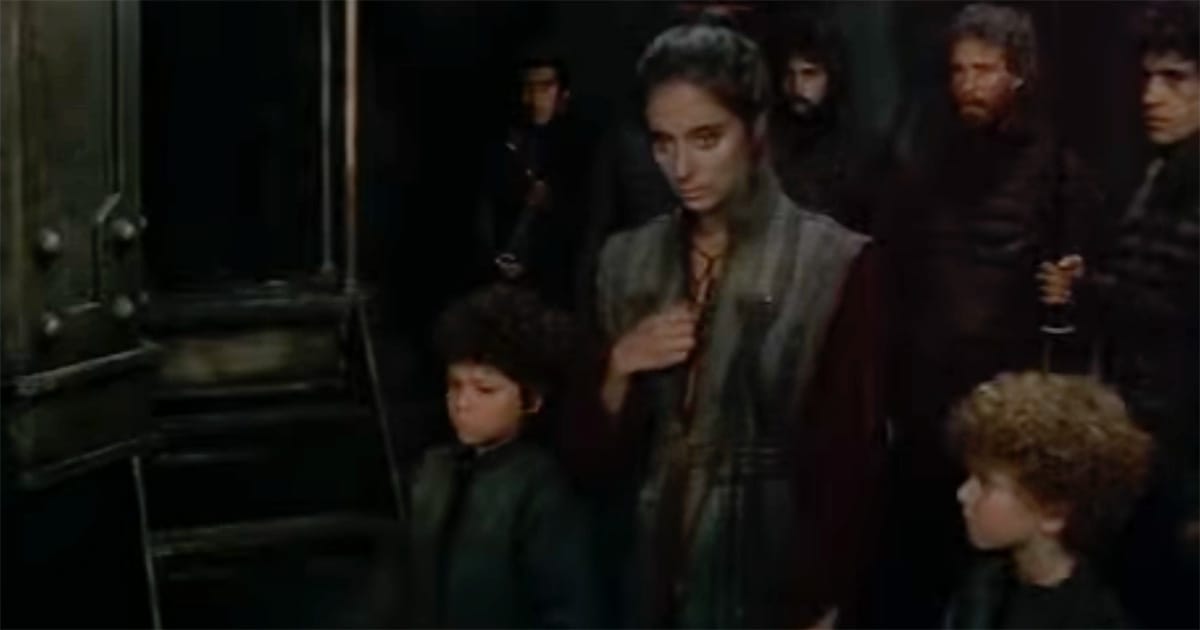
Jamis endures in memory because he feels complete despite limited page time. He is skilled, loyal, and culturally coherent. Within his world, he is not wrong.
In a saga populated by emperors, witches, and messianic figures, Jamis represents the grounded reality of desert life. One duel in a cavern on Arrakis establishes the moral grammar of the epic. Paul's destiny begins not with coronation, but with a blade and a body at his feet.
Source List
Dune directed by David Lynch 1984
Frank Herbert’s Dune miniseries directed by John Harrison 2000
Dune directed by Denis Villeneuve 2021