
Shai-Hulud The Sandworms Of Arrakis
Shai-Hulud are the giant sandworms of Arrakis in Dune, central to spice production, Fremen belief, and imperial power. Learn how they shape the desert, religion, and the fate of the Imperium.

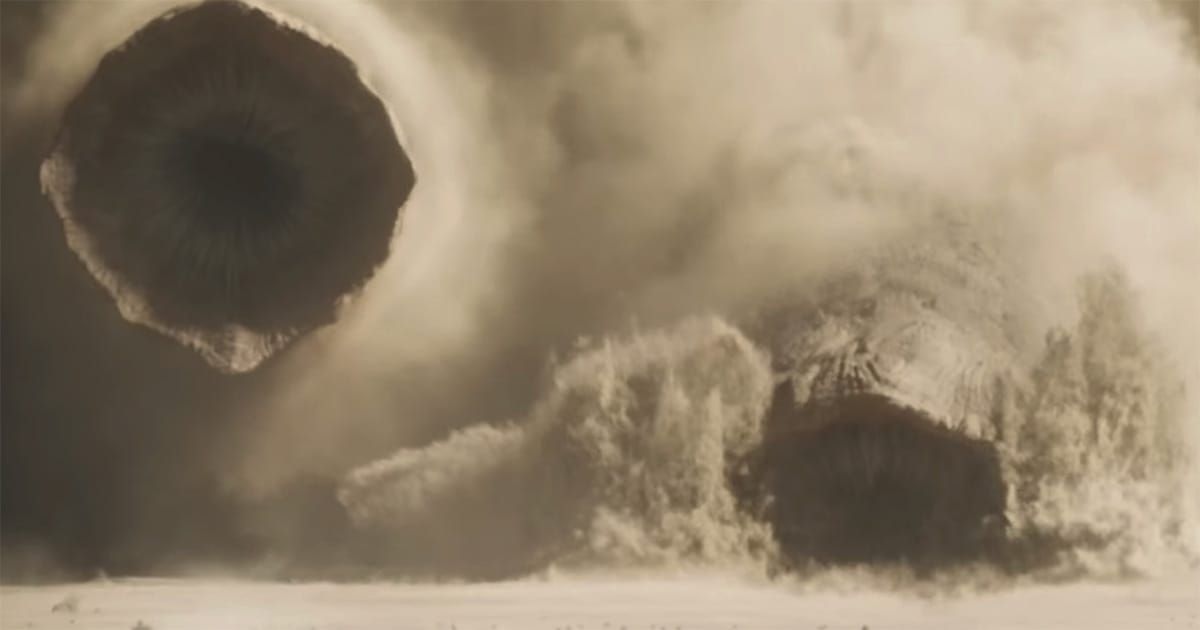
On Arrakis, nothing matters more than the sandworms. Known to the Fremen as Shai-Hulud, these vast desert creatures are at once predator, resource, and sacred presence. They make spice possible, enforce the planet's harsh logic, and stand behind the economic power of the Imperium.
Yet Shai-Hulud is not merely a biological label. It is a word shaped by experience. The Fremen use it with a kind of reverence that outsiders rarely understand. To them, the worm is not just part of the desert. It is the desert, expressed in living form. Frank Herbert built the sandworm to carry weight. It explains how Arrakis works, and why no empire can ever fully control it.
| FIELD | DETAILS |
|---|---|
| Name | Shai-Hulud |
| Aliases | Sandworms of Arrakis; Makers; Old Man of the Desert; Old Father Eternity |
| Affiliation | Arrakis; Fremen culture; spice cycle; ecological system of the planet |
| First Appearance | "Dune" by Frank Herbert, 1965 |
| Portrayed In Film By | Practical and mechanical effects in "Dune" (1984); CGI representations in "Dune" (2021) and "Dune Part Two" (2024) |
| Portrayed In Miniseries By | CGI depictions in "Frank Herbert’s Dune" (2000) and "Frank Herbert’s Children of Dune" (2003) |
| Role | Keystone species of Arrakis; producers of melange; apex desert organism; sacred symbol within Fremen religion |
| Description | Shai-Hulud refers to the massive sandworms native to Arrakis, whose life cycle produces the spice melange, the most valuable substance in the Imperium. Drawn to rhythmic vibration, they dominate the open desert and make large-scale industrial activity dangerous. To the Fremen, they are not merely creatures but manifestations of a deeper order, embodying both the danger and necessity of the desert. Their presence enforces the ecological balance of Arrakis, ensuring that water remains scarce and the spice cycle continues, binding together environment, belief, and imperial power. |
Origins And Context
Herbert introduced Shai-Hulud in "Dune" (1965), but he did not present it as a simple monster. He wrote during a period when ecological thinking was becoming more systematic. His key insight was that environments are networks, not collections of parts. Arrakis reflects that idea.
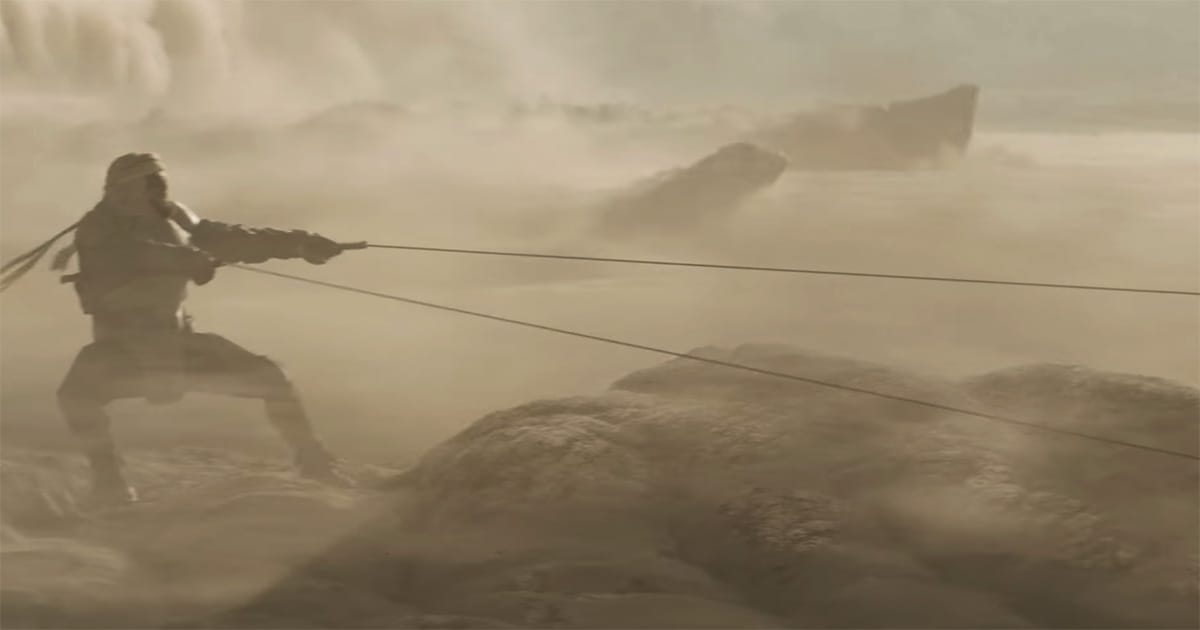
The sandworm is the central node in that network. Remove it, and the system collapses. Keep it, and the desert persists.
The Fremen name captures this perspective. "Shai-Hulud" suggests something ancient and enduring, but also something ordered. It is not chaos. It is structure. The desert has rules, and the worm enforces them.
Off-world powers misunderstand this. They approach Arrakis as a problem to be managed. They bring machines, schedules, and extraction plans. The Fremen approach it as a reality to be lived within. They observe, adapt, and survive.
That difference is not philosophical decoration. It determines who thrives and who fails.
The Worm And The Desert
The sandworm's life cycle is one of Herbert's most disciplined ideas. It is not decorative science fiction. It is a functional system.
At the smallest scale are sandtrout. These organisms seek out and encapsulate water. Over time, they lock moisture away beneath the surface. This process builds pressure in the deep desert. That pressure produces pre-spice mass, a volatile stage that eventually erupts in a spice blow. Melange spreads across the sand. The desert renews itself.
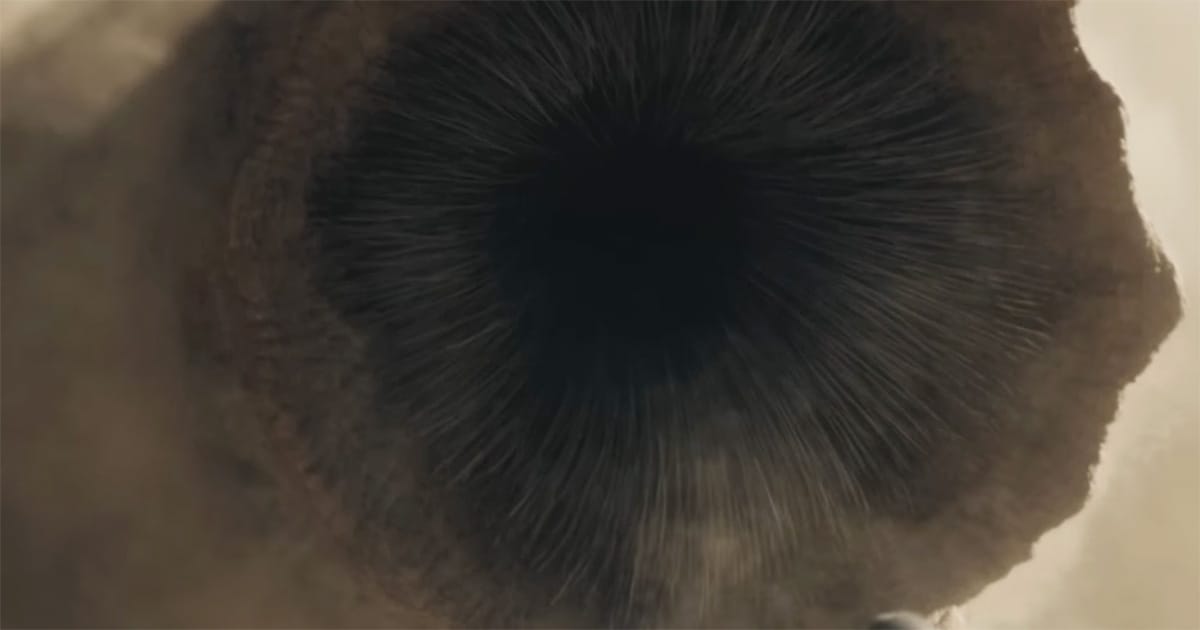
The mature worm follows later. It is both the result of the cycle and the mechanism that protects it. By destroying sources of surface disturbance and reacting to vibration, the worm maintains the conditions the cycle requires.
Water breaks the system. It kills the worm and disrupts the balance that the sandtrout create. This is why Arrakis resists transformation. Attempts to "improve" the planet carry consequences. Alter the environment, and you alter the entire chain.
The Imperium depends on spice, but it does not control the conditions that produce it. That is the tension Herbert builds into the story. Power rests on something no one fully commands.
Role In The Story
The first function of Shai-Hulud in "Dune" is to establish risk. Spice harvesting is not a routine industrial process. It is a race against time. Equipment must be deployed, used, and withdrawn before a worm arrives. The desert is never passive.
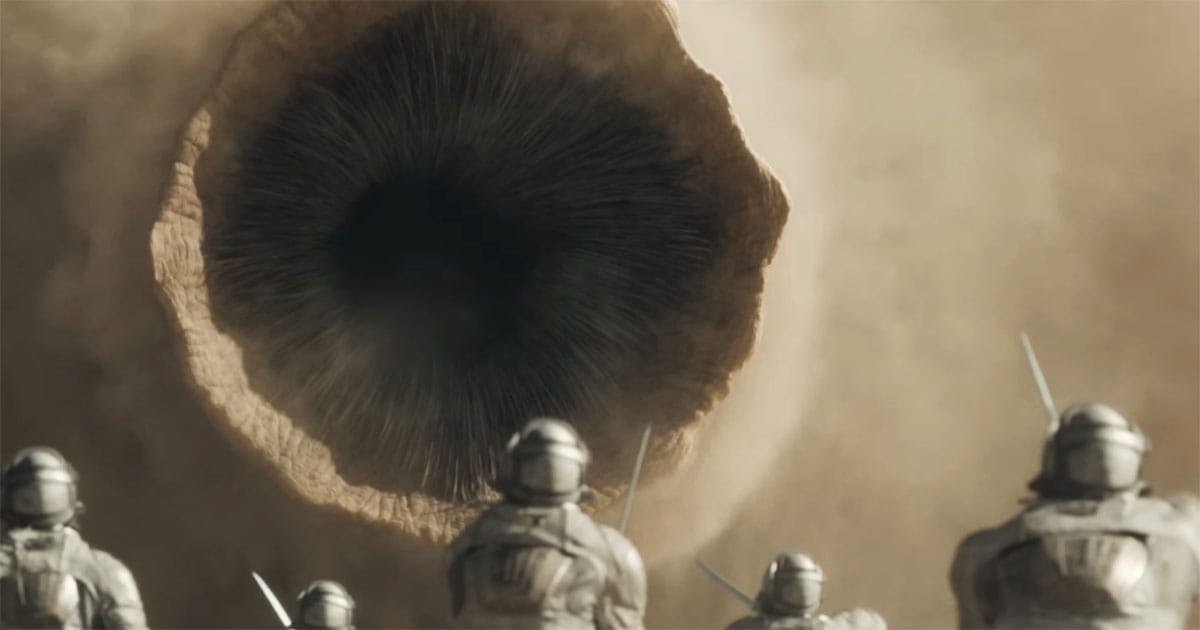
This rule gives Arrakis its character. It is not hostile in the sense of malice. It is hostile in the sense of indifference. The worm responds to vibration because that is what it does. Men who ignore that fact do not last.
Paul Atreides' arc is tied to this reality. His early understanding is incomplete. He sees the worm as a danger. Over time, he learns its place in the system. That shift marks his transition from outsider to participant.
Worm riding makes this visible. The technique itself is practical. Hooks are used to pry open a segment of the worm's ring, forcing it to rotate and carry the rider. But the meaning runs deeper. Riding Shai-Hulud signals that a man has accepted the terms of the desert. He does not stand apart from it. He works within it.
This is where Herbert's themes converge. Ecology informs religion. Religion informs identity. Identity informs power. Paul's authority among the Fremen is not granted by title. It is earned through alignment with the desert and its rules.
Meaning And Enduring Appeal
Shai-Hulud endures because it resolves a difficult balance. It is believable without being ordinary. It is symbolic without becoming vague.
The Fremen relationship to the worm is key. They neither romanticize nor dismiss it. They fear it because it can destroy them. They honor it because it sustains them. That dual posture feels grounded. It reflects how real cultures respond to environments that both give and take.
Herbert also uses the worm to place limits on human ambition. The Imperium is vast. Its technology is advanced. Its political reach is wide. Yet all of it depends on a creature that cannot be domesticated or reproduced elsewhere. That constraint gives the story weight.
Adaptations have approached this in different ways. Some emphasize the spectacle of the worm. Others lean into its scale. The most effective portrayals recover the sense that the worm is not simply large. It is fundamental. It belongs to Arrakis in a way that resists translation.
In the end, Shai-Hulud is not just memorable because of its size or design. It matters because it connects the visible and the invisible. It shows how environment, belief, and power operate together. That is why it remains one of the most enduring creations in science fiction.