
The Limits of Authority in Classic Sci-Fi and "Invaders from Mars"
Classic science fiction explores how authority confronts the unknown. From careful observation to evolving understanding, these stories reveal the limits of knowledge and the persistence of reason.

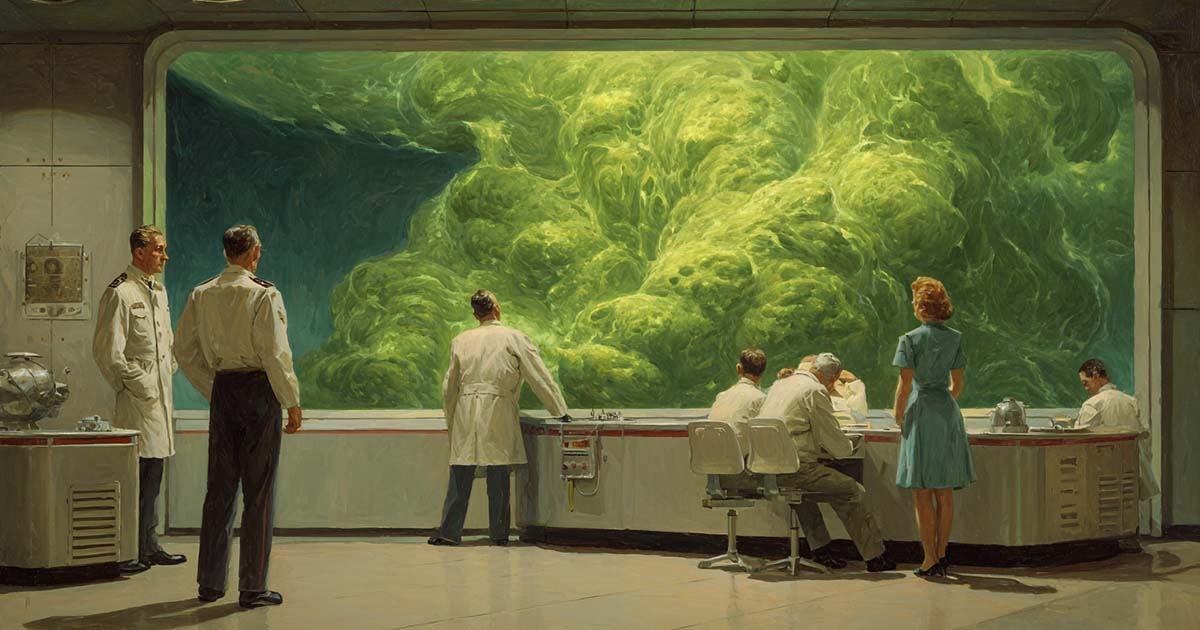
On April 9, 1953, "Invaders from Mars" premiered in Detroit, presenting one of the most unsettling visions of invasion in American cinema. Told through the eyes of a child, the film transforms a simple suburban setting into a landscape of suspicion, where parents and authority figures become subtly altered and untrustworthy.
Its emphasis on infiltration rather than destruction gives the narrative a lingering unease, suggesting that the true danger lies not in attack but in replacement. The film's restrained imagery and dreamlike tone allow it to operate as both science fiction and quiet psychological horror.
What gives the film its lasting power is the way it confines its terror to the ordinary. The invasion does not arrive with spectacle or overwhelming force, but through small distortions in behavior and perception. Authority becomes suspect, and the stability of the home is quietly undermined. In this way, the film reflects a broader anxiety of its era, where threats were imagined not only as external, but already present and unseen.
Elsewhere in the week, April 6, 1953, saw the release of "Abbott and Costello Go to Mars," which approached space travel with a lightness that contrasts sharply with the unease of contemporary invasion narratives. More than a decade later, April 6, 1967, brought the broadcast of "The City on the Edge of Forever" on "Star Trek," demonstrating how television could elevate speculative ideas into something approaching tragedy.
Taken together, these moments suggest a genre exploring both the absurd and the profound, moving easily between humor and dread while deepening its concern with the instability of human experience.
Sponsored by: Water Alien Elf | जल एलियन एल्फ T-shirt

Science fiction has always found meaning at the boundary between the known and the unfamiliar. This Water Alien Elf design reflects that tradition, presenting a figure that feels at once otherworldly and quietly expressive, as though it belongs to a story only partially told. It is an image that invites observation rather than explanation, much like the genre itself.
The Limits of Authority in Classic Science Fiction
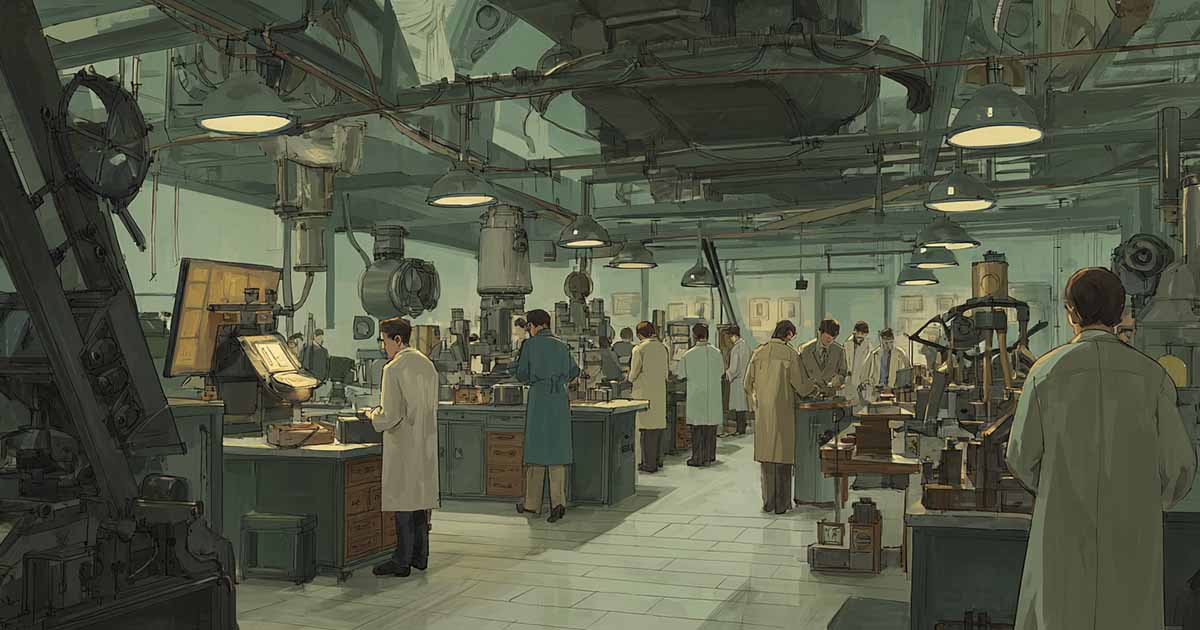
In its classic form, science fiction proceeds from a position of confidence. The institutions that populate these stories are composed of individuals trained to observe, measure, and respond with precision.
Scientists, military leaders, and officials are presented not as figures of excess, but as representatives of a structured and rational worldview. The assumption underlying their presence is that the unknown, once encountered, can be understood.
This confidence reflects a broader cultural faith in systems of knowledge. The mid-century period, in particular, regarded science and organization as reliable tools for navigating complexity.
Authority, in this sense, is not imposed but earned through discipline and experience. It stands as a natural extension of humanity's effort to comprehend its surroundings.
Authority as a Framework for Understanding
Within this framework, authority functions less as a force of control than as a means of interpretation. It provides a method for organizing experience and assigning meaning to unfamiliar events.
Procedures, hierarchies, and disciplines exist to reduce uncertainty and bring the unexpected into alignment with what is already known. The presence of authority signals that a situation can be approached systematically.
This approach gives early science fiction its distinctive tone of measured inquiry. Even when confronted with extraordinary developments, characters proceed with deliberation rather than panic.
Observation precedes conclusion, and explanation is treated as attainable. This can be seen in films such as "The Day the Earth Stood Still," where scientific and governmental figures respond to the unknown with calm analysis rather than immediate escalation.
The Boundary of Understanding
Yet the genre derives much of its lasting interest from the moment when this assurance is tested. There are encounters that do not conform to expectation, not because they are chaotic, but because they operate according to principles not yet recognized.
In such moments, authority does not collapse, but pauses. The delay between observation and understanding becomes the central tension.
This tension can be seen in works such as "Invaders from Mars" (1953), where established structures remain, yet their capacity to interpret events begins to lag behind what is unfolding.
The difficulty lies not in action, but in recognition, as familiar systems attempt to account for something that does not readily fit within them. The result is not disorder, but a temporary misalignment between reality and explanation.
A similar boundary appears in "The Thing from Another World," where investigators initially approach the discovery with confidence, only to find that their assumptions do not fully apply.
The challenge is not a lack of structure, but the realization that existing knowledge is insufficient to explain what has been found. In each case, the unknown does not negate authority, but exposes the limits of its current reach.
Adaptation and Expansion
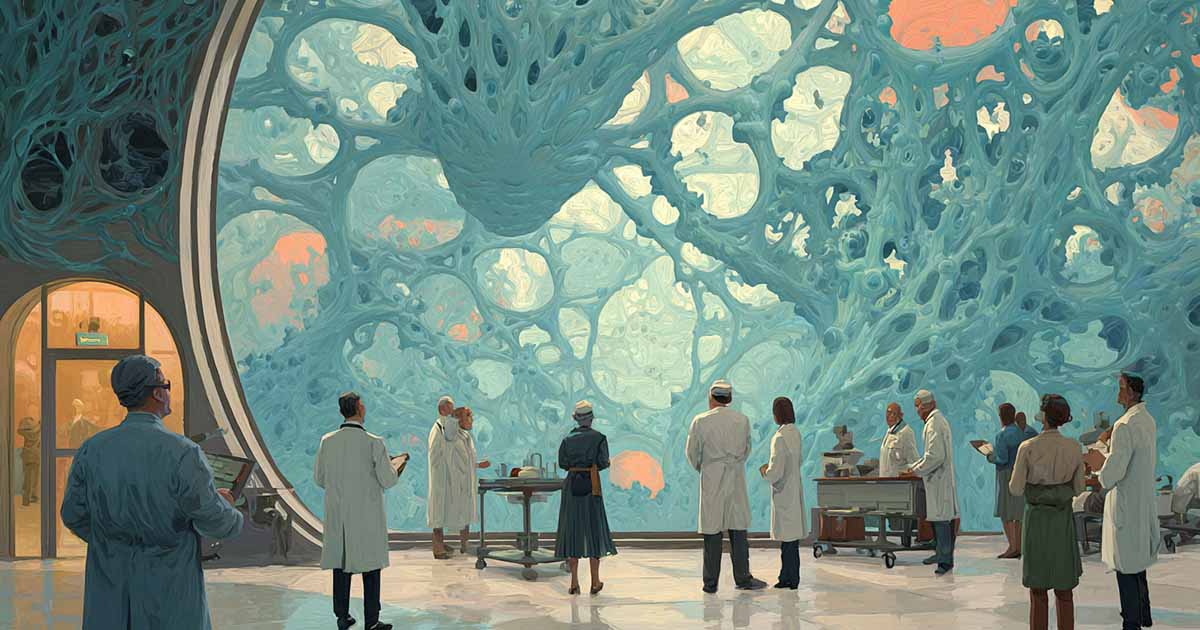
From this point, science fiction often turns toward adaptation. The initial gap in understanding does not remain fixed, but gradually narrows as new information is incorporated. Authority adjusts its framework, refining its assumptions to better match observed reality. This process is rarely dramatic, but it is central to the genre's enduring logic.
What emerges is not the abandonment of structure, but its expansion. Systems of knowledge grow to accommodate what was once unfamiliar, and the unknown becomes part of the known.
In "Close Encounters of the Third Kind," meaning develops through sustained observation and reinterpretation, as understanding forms gradually rather than appearing all at once. Authority retains its relevance by evolving, demonstrating that its strength lies in its capacity to learn.
A Recurring Pattern Across the Genre
This pattern appears repeatedly across decades of science fiction. Each new encounter introduces elements that challenge existing interpretations, yet the response follows a familiar course. Observation leads to uncertainty, uncertainty to revision, and revision to a broader understanding of the world. The cycle reinforces the idea that knowledge is cumulative rather than fixed.
Even in later works such as "Contact," the effort to interpret an unfamiliar signal reflects the same disciplined attempt to extend human understanding beyond its previous limits. The tools may become more advanced, but the underlying process remains consistent. Authority continues to function as a method for engaging with what is not yet fully understood.
A Measured Perspective
In this light, authority in classic science fiction is neither overstated nor diminished. It is presented as a necessary instrument, grounded in human effort and subject to human limits.
Its challenges arise not from internal weakness, but from the scale and complexity of the unknown. The tension that defines the genre emerges from this encounter between established understanding and what lies beyond it.
The enduring appeal of science fiction rests in this balance. It acknowledges the value of structure and reason while recognizing that they exist within a larger, still-unfolding reality. Authority persists, not as a fixed solution, but as a continuing response to a world that remains only partially understood.
"Invaders from Mars" Trivia
- "Invaders from Mars" was one of the first science fiction films shot in SuperCinecolor, giving it a distinctive visual palette compared to other films of its era.
- The film was later remade in 1986, but the original 1953 version remained notable for its unusual narrative framing involving a dream.
- The Martian leader in the film is revealed to be a humanoid figure controlled by a separate, more grotesque alien intelligence.