
The Quiet Earth Analysis
A thoughtful analysis of The Quiet Earth 1985, exploring isolation, scientific ambition, and its haunting ending in one of science fiction’s most enduring last man on Earth films.

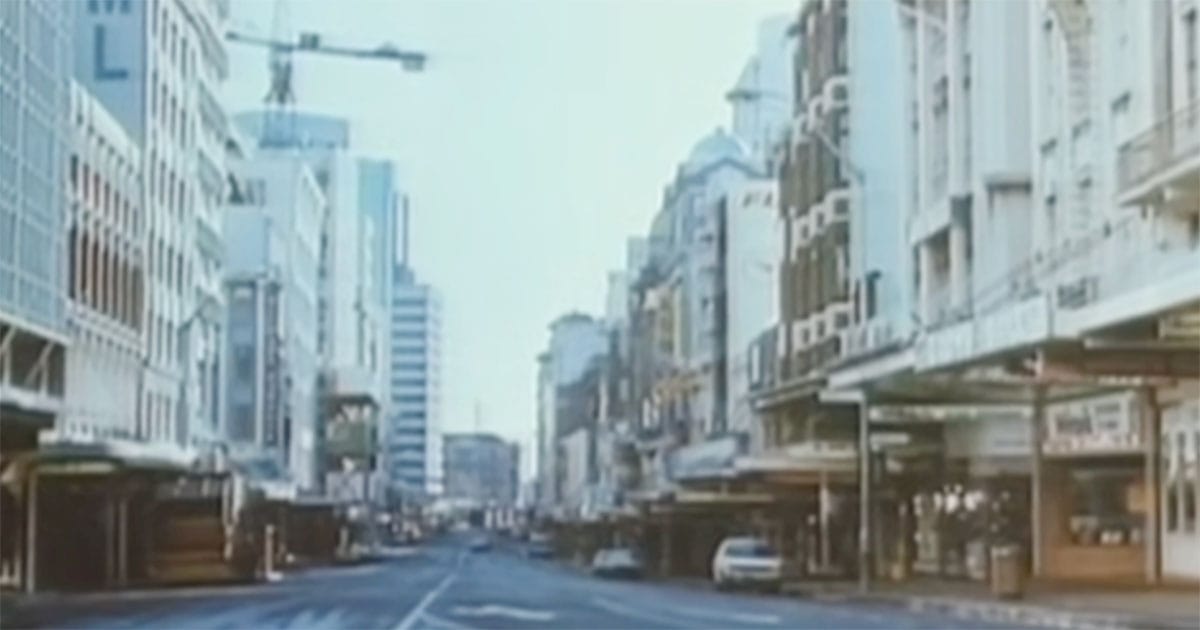
"The Quiet Earth" is a 1985 science fiction film directed by Geoff Murphy and based loosely on the novel by Craig Harrison. It enters a familiar tradition, that of the last man on Earth, yet it does so with uncommon sobriety. Where many films treat apocalypse as spectacle, this one treats it as a problem in logic and conscience. The result is a work that feels less like a disaster picture and more like a philosophical inquiry.
The story begins with Zac Hobson, played by Bruno Lawrence, awakening to an empty New Zealand city. There are no ruins, no invading armies, and no plague-ridden mobs. There is only silence. That silence becomes the central fact of the film, pressing in on the mind of a man who suspects he helped cause the catastrophe.
In spite of its modest budget, the film achieves a rare gravity. It asks what happens when a scientist is forced to confront the consequences of his own ambition. In doing so, "The Quiet Earth" becomes not merely a tale of survival, but a meditation on responsibility, isolation, and the unsettling possibility that reality itself is less stable than we suppose.
| Attribute | Details |
|---|---|
| Title | The Quiet Earth |
| Director | Geoff Murphy |
| Writer | Bill Baer, Bruno Lawrence, Sam Pillsbury, based on the novel by Craig Harrison |
| Actors or Actresses | Bruno Lawrence, Alison Routledge, Pete Smith |
| Rated | R |
| Runtime | 91 min |
| Box Office | Approx. $4,000,000 (international gross) |
| U.S. Release Date | September 8, 1985 |
| Quality Score | 8.5/10 |
Synopsis
Zac Hobson is a scientist working on a global energy project known as Project Flashlight. One morning, he awakens in his home in Hamilton, New Zealand, to discover that every other human being has vanished.
There is no sign of struggle, no wreckage, and no explanation. He eventually refers to the event simply as the Effect, a term that suggests both scientific detachment and personal dread.
At first, Zac treats his condition like an unexpected inheritance. He wanders through empty streets, helps himself to fine homes, and indulges in small acts of theatrical authority.
In one memorable moment, he declares himself president of the quiet Earth, delivering a speech to a city that cannot hear him. These gestures begin in irony but end in instability, as the weight of isolation presses against his reason.
As days pass, Zac uncovers evidence that Project Flashlight reached full power shortly before the Effect. He comes to suspect that the experiment disrupted the fabric of reality itself.
His guilt grows as his certainty grows, and the empty world becomes less a playground and more a courtroom.
Relief arrives when Zac encounters Joanne, another survivor who experienced the Effect while near death. Soon after, they meet Api, a third survivor with his own suspicions about Zac and the experiment.
The three form a fragile community, bound together by necessity and mistrust. They theorize that only those on the brink of death at the moment of the Effect were spared, as if suspended between states of existence.
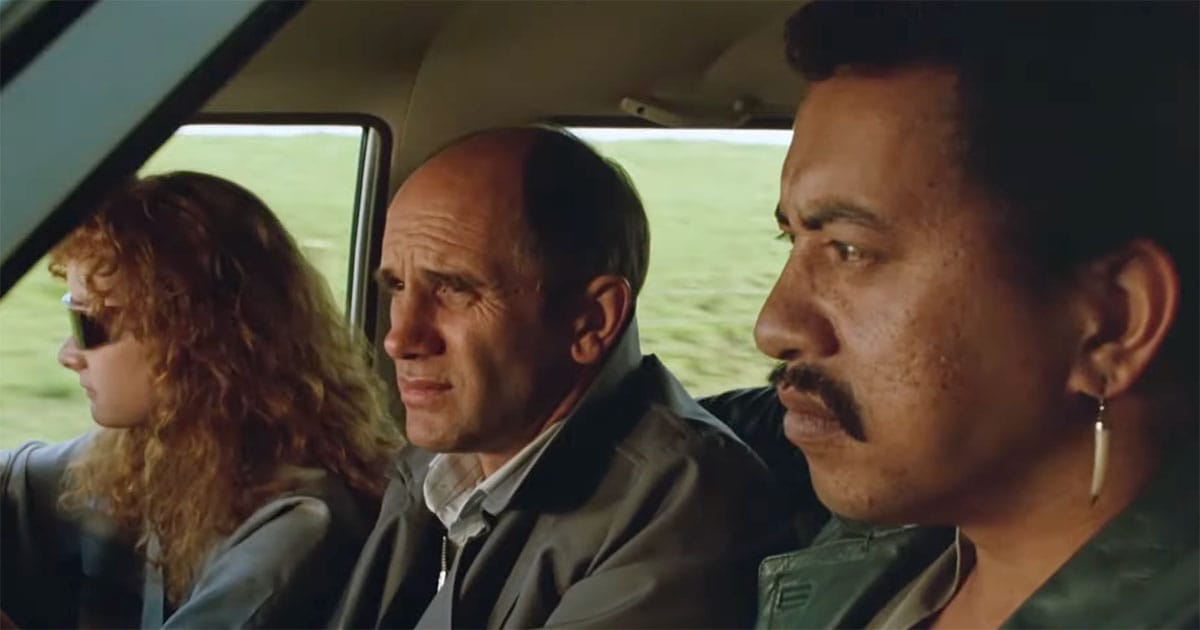
Their uneasy alliance centers on a single question. Should they attempt to reverse the experiment and restore the world, or accept their strange survival as final?
Zac believes he can correct the mistake, while Api doubts the wisdom of repeating the same ambition that may have destroyed humanity. Joanne stands between them, seeking stability in a world that has lost its foundation.
The film moves toward a tense confrontation at the site of the original experiment. Zac attempts to trigger another surge of energy in hopes of undoing the catastrophe.
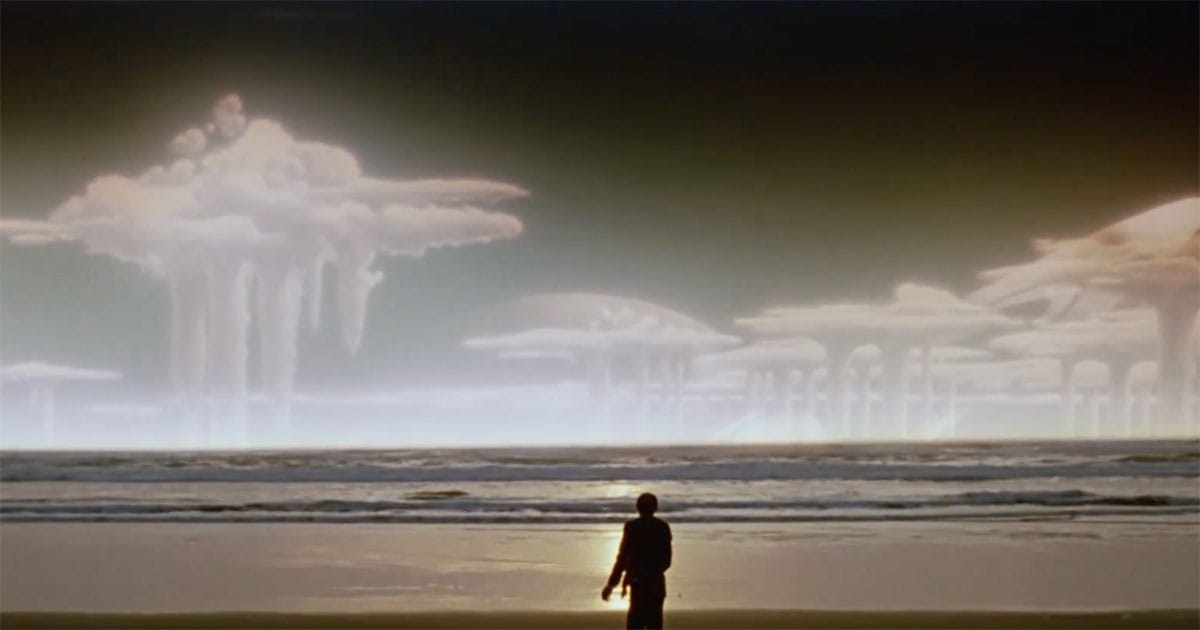
The effort culminates in a blinding release, after which Zac awakens alone once more. This time, he stands on a silent shore beneath an unfamiliar sky, watching a vast ringed planet rise above the horizon.The story ends there, without explanation. The quiet Earth remains quiet, but it may no longer be Earth at all.
Theme
The central theme of "The Quiet Earth" is isolation as a test of identity. Zac Hobson believes himself to be a rational man shaped by science and discipline.
When society vanishes, he discovers that reason requires an audience. His brief claim to rule the empty planet reveals that authority without responsibility collapses into absurdity.
Isolation in the film is not merely physical. It is intellectual and spiritual. Zac cannot confirm his theories, confess his guilt, or justify his choices to anyone who was present at the catastrophe. The silence of the world becomes a mirror, reflecting his own uncertainty back at him.
Closely tied to isolation is the question of scientific ambition. Project Flashlight represents mankind's desire to command nature through intellect and machinery.
The experiment is conceived as progress, yet it produces annihilation or something very close to it. The film suggests that knowledge pursued without moral restraint may lead not to mastery, but to erasure.
The story does not condemn science itself. Instead, it questions the spirit in which science is conducted. Zac's error lies not in curiosity, but in confidence that complex systems can be controlled without unforeseen consequence.
A third theme concerns the instability of reality itself. The Effect does not leave ruins behind, which makes it more troubling. The world remains intact, yet its population disappears as if switched off.
By the final scene, even physical law seems uncertain. The strange shoreline and alien sky imply that the universe may be layered or fragile. Human beings may not inhabit a single, secure world, but a structure more delicate than they imagined.
Finally, the film explores responsibility in a stripped down society. With only three survivors, every decision carries enormous weight. Zac's desire to reverse the catastrophe reflects both courage and pride.
The quiet Earth becomes a proving ground where character, not technology, determines the future. In that barren setting, the essential question is not how to rebuild civilization, but whether mankind has earned the right to do so.
Who Will Watch This
"The Quiet Earth" will find its strongest audience among viewers who believe science fiction should examine ideas rather than merely display events. It moves at the pace of thought, not at the pace of gunfire. Those who enjoy reflection will feel rewarded.
It will also appeal to the mature viewer who understands that catastrophe need not be loud to be profound. The film asks what becomes of a man when the structures around him vanish. That question carries more weight than any collapsing building.
Students of classic speculative cinema will recognize its lineage. Like the serious films of the late twentieth century, it treats the unknown with gravity and restraint. It assumes the viewer is capable of patience and willing to wrestle with ambiguity.
The film may particularly resonate with men who appreciate moral consequence in storytelling. Zac's struggle is not against monsters, but against his own decisions. The drama unfolds within conscience as much as within the physical world.
Younger viewers raised on rapid editing and constant explanation may find it slow. The narrative withholds answers and declines to resolve every uncertainty. For those willing to sit with silence, however, the experience proves quietly unsettling and intellectually durable.
In the end, this is a film for the thoughtful observer. He does not require noise to sustain attention. He requires a problem worth considering, and "The Quiet Earth" provides one that lingers long after the screen goes dark.