
Where Speculation Ends, and Terror Begins: The Boundary Between Sci-Fi and Horror
From Frankenstein and Mr. Hyde to Alien and The Thing, explore how science fiction becomes horror when experiments escape control, bodies betray their owners, and human reason gives way to pure terror.

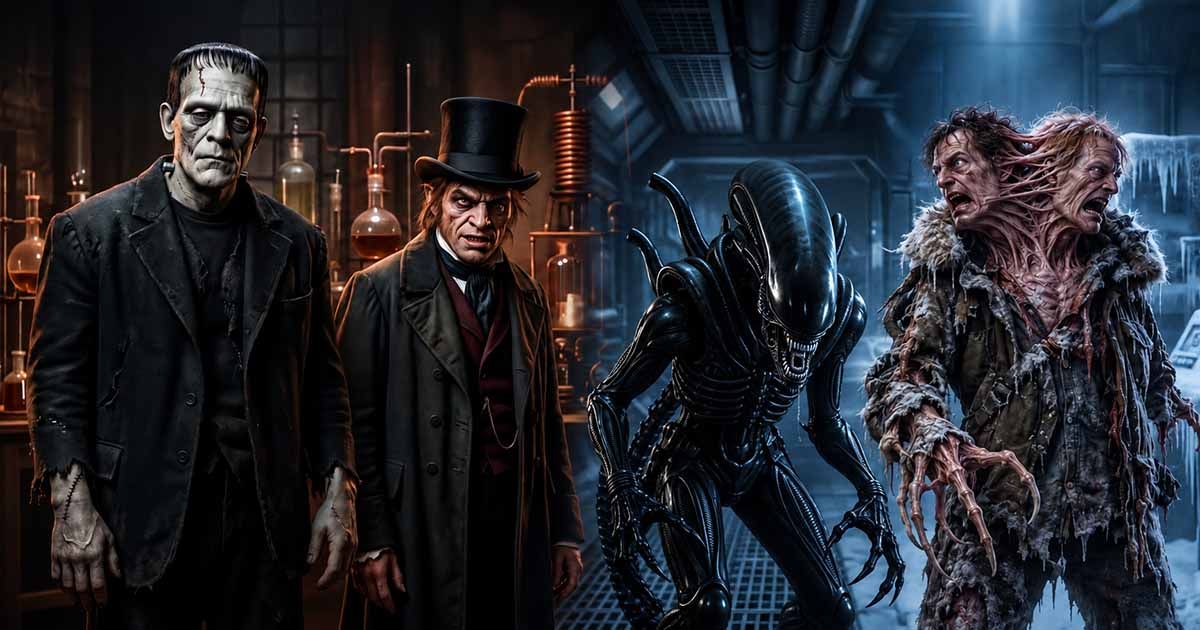
Science fiction and horror frequently overlap, yet their underlying narrative engines operate on distinct principles. Dissecting where rational speculation ends and existential dread begins reveals how creators manipulate tension.
Mary Shelley's "Frankenstein" and Robert Louis Stevenson's "Dr. Jekyll and Mr. Hyde" established the foundational mechanics of sci-fi horror. Modern cinema refined these principles, producing terrifying masterworks like Ridley Scott's "Alien" and John Carpenter's "The Thing."
Core Mechanics
Science fiction centers on human agency, technological advancement, and natural law. It presents a structured universe where cause and effect govern outcomes. The core narrative engine poses a rational query regarding potential breakthroughs.
Horror focuses on vulnerability, paranoia, and the disruption of safety. The threat stems from malice, loss of control, or moral failure. Ultimately, it explores the psychological fallout when human structures collapse.
Scientific Hubris
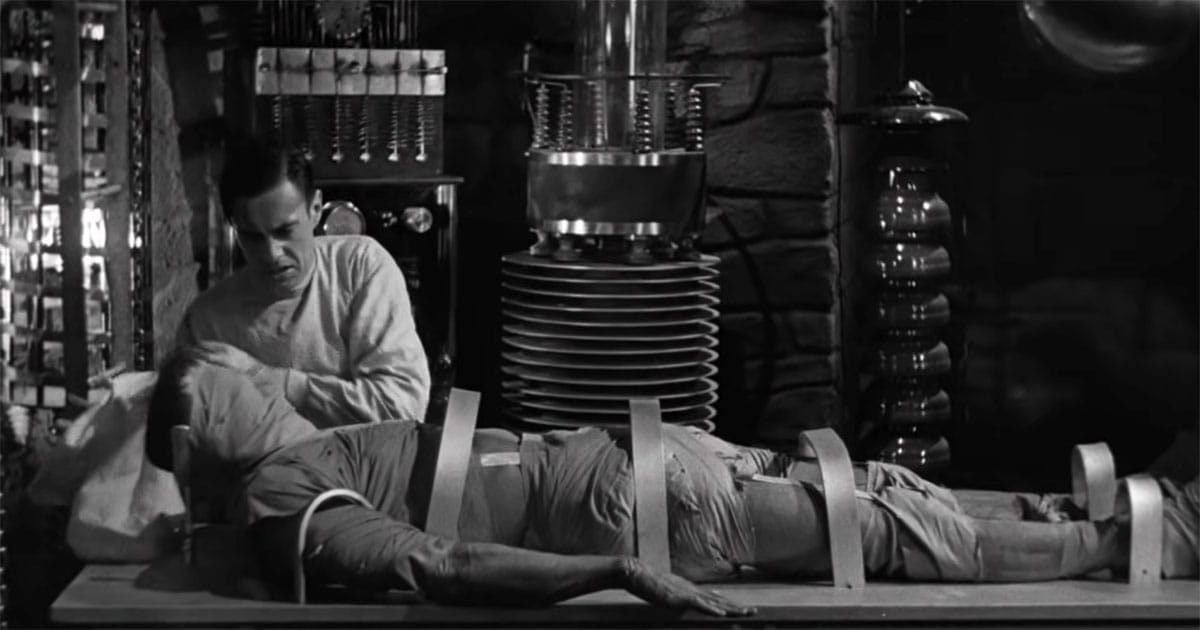
Mary Shelley's "Frankenstein" uses chemistry, biology, and galvanism to drive its plot. Victor Frankenstein does not rely on mystical rituals to reanimate flesh. His breakthrough stems entirely from laboratory research.
The horror emerges from the fallout of Victor's experiment. His refusal to accept responsibility for the creature triggers relentless isolation and violence. Thus, science fiction provides the mechanism of creation, while horror delivers the nightmare of abandonment.

Moral Decay
Robert Louis Stevenson's "Dr. Jekyll and Mr. Hyde" employs a chemical tincture to launch its narrative. Dr. Jekyll devises a formula to isolate his darkest impulses from his civilized self. The premise relies on medical experimentation.
The narrative transitions into psychological body horror as control slips away. Dread arises from the realization that the monster is an internal entity taking over. Science serves as the initial doorway, but psychological terror occupies the room.
Cosmic Isolation
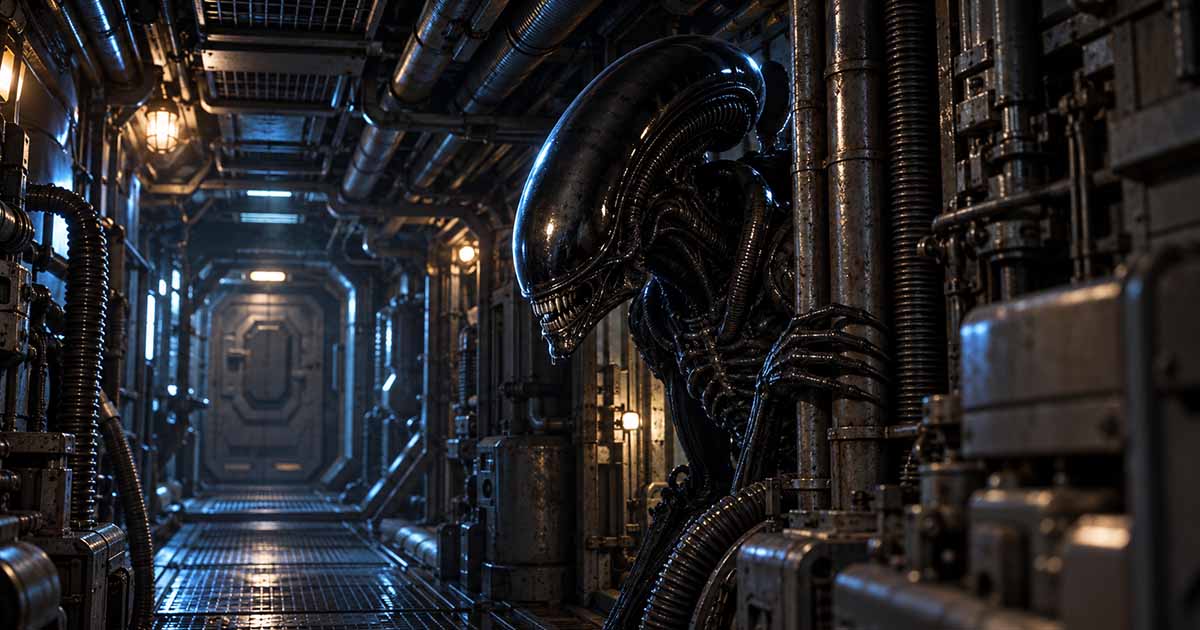
Ridley Scott's 1979 film "Alien" shifts the location from Victorian laboratories to deep space. The commercial vessel Nostromo provides an industrial sci-fi setting filled with hyper-sleep chambers, corporate directives, and synthetic life forms. Rational protocol governs the crew's daily routine.
The Xenomorph's arrival turns the starship into a claustrophobic haunted house. Horror takes over as commercial workers face an apex predator that defies human logic. The creature's parasitic life cycle enforces visceral body horror.
Scott uses corporate cynicism to heighten the nightmare. Science fiction supplies the deep-space setting, while horror exposes human fragility against an indifferent cosmos.

Biological Paranoia
John Carpenter's 1982 film "The Thing" examines sci-fi horror through cellular biology and paranoia. An American research station in Antarctica discovers an extraterrestrial organism buried in the ice. The premise rests on biological assimilation and cellular replication.
The horror stems from the total erasure of identity and trust. The organism imitates its host perfectly, forcing scientists to turn on one another. Gore and grotesque body transformations emphasize the horror of losing physical autonomy.
Carpenter relies on practical effects to make the biological mutation feel real. As a result, the film shows how speculative biology can trigger profound psychological dread.
Genre Synthesis
Science fiction provides the rational framework that makes the impossible believable. Horror supplies the emotional stakes that make the consequences matter.
Blending both genres allows writers and directors to probe the limits of human achievement while exposing our deepest vulnerabilities. The result is a durable subgenre that continues to captivate audiences.