
Why Are TIE Fighters So Poorly Shielded?
Why TIE Fighters have no deflector shields. Explore Imperial doctrine, mass production, expendable pilots, and the speed over protection trade off in "Star Wars."

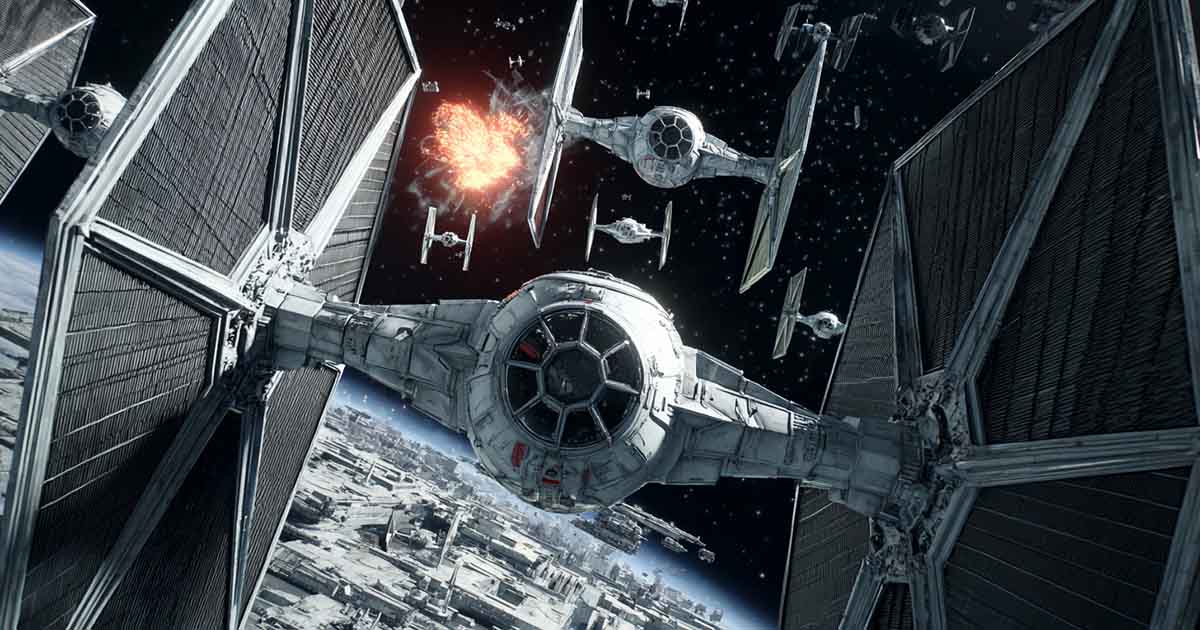
In "Star Wars Episode IV – A New Hope," the Imperial TIE Fighter enters the screen like a shrieking blade. It moves fast, turns hard, and explodes in a bright flash when struck. Viewers quickly notice what it lacks. The standard TIE ln carries no deflector shields.
This absence is not an engineering failure. It reflects a deliberate military doctrine inside the Galactic Empire. The Empire designs its primary starfighter to be cheap, light, and numerous rather than durable.
Speed Over Protection
Official reference material describes the TIE ln as having no shield generators, no hyperdrive, and limited life support. Removing shields reduces mass and frees power for engines and laser cannons. The fighter becomes extremely agile, able to outmaneuver heavier craft in close engagements.
Deflector shields require generators, energy reserves, and structural support. All of that adds weight and complexity. Imperial planners choose acceleration and production efficiency instead of survivability.
This choice fits the Empire's industrial might. Massive shipyards produce TIE Fighters in staggering numbers. When a squadron loses several ships, replacements are already waiting in the hangar bay.
Quantity Over Quality
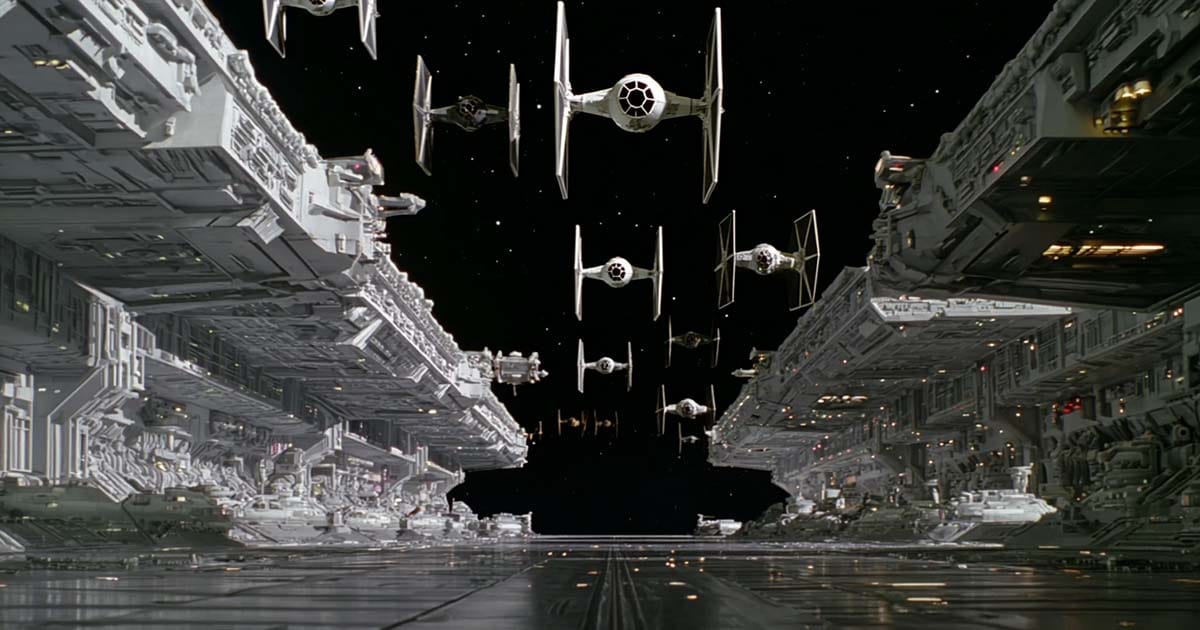
Imperial doctrine emphasizes overwhelming force. TIE Fighters launch in swarms from Star Destroyers or battle stations like the Death Star. Their purpose is to flood the battlespace and press constant attack.
A shielded Rebel X-wing can absorb multiple hits. An unshielded TIE Fighter usually cannot survive one direct strike. The Empire accepts this imbalance because numbers can exhaust enemy shields and secure a kill.
This philosophy appears clearly in "Star Wars Episode V – The Empire Strikes Back" and "Star Wars Episode VI – Return of the Jedi." Waves of TIEs converge on smaller Rebel formations. The visual message is clear and direct.
Expendable Pilots
The Empire also treats its pilots as replaceable. Training programs are standardized and strict. Equipment focuses on uniformity and obedience rather than personal protection.
In a regime built on hierarchy and control, the individual ranks below the machine. The TIE Fighter reflects that value system. Its cockpit is cramped, its visibility limited, and its defensive systems minimal.
This approach differs sharply from the Rebel Alliance. The Rebels possess fewer ships and fewer trained pilots. They invest in shields and hyperdrives because each pilot represents experience that cannot be easily replaced.
Short Range Interceptor
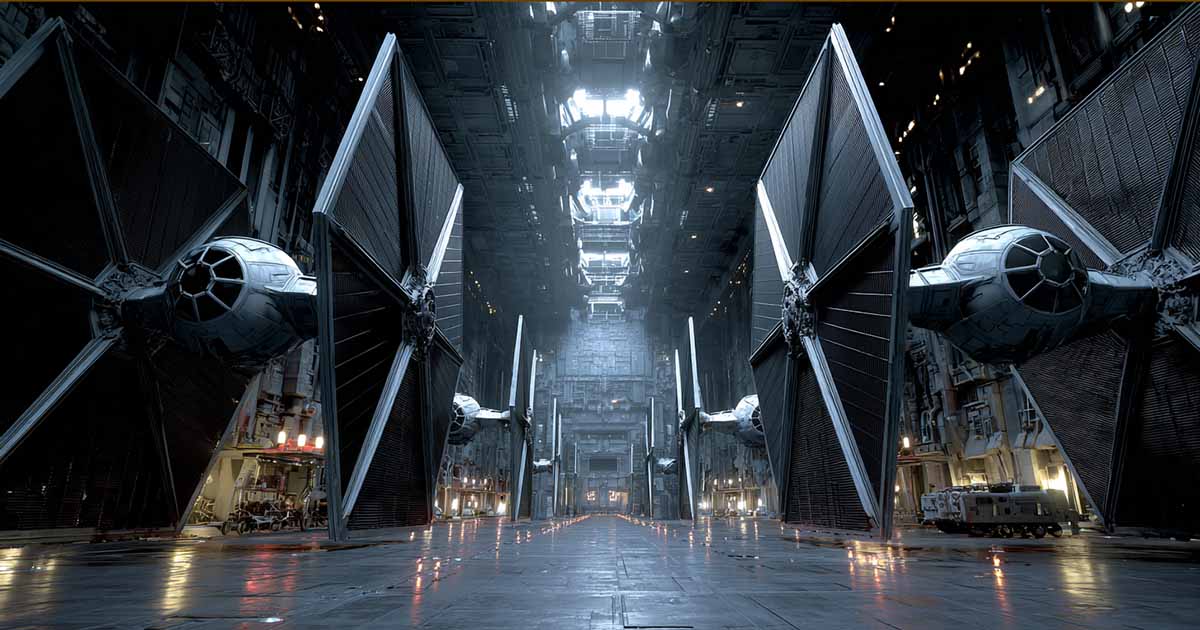
The TIE Fighter is designed as a short range interceptor. It operates near carriers and fortified bases. Without a hyperdrive, it depends on larger vessels for transport across systems.
Because it fights close to support infrastructure, Imperial planners see less need for independent survivability. The fighter launches, attacks, and returns. It is part of a larger machine rather than a self-contained unit.
This design reinforces centralized command. Pilots remain tied to fleet operations. Independence is limited, and oversight is constant.
Acknowledged Weakness
The Empire later introduces shielded variants. Darth Vader's TIE Advanced x1 in "Star Wars Episode IV – A New Hope" includes deflector shields and heavier armor. Advanced projects like the TIE Defender, featured in the game Star Wars TIE Fighter, add both shields and hyperdrives.
These models suggest recognition of the baseline TIE's vulnerability. Even so, the standard TIE ln remains lightly protected by design. Its fragility is built into its mission.
The Larger Meaning
TIE Fighters are poorly shielded because the Empire values speed, intimidation, and mass production over individual survival. Shield generators increase cost and reduce performance. Imperial leaders prefer to field more ships rather than build safer ones.
In classic science fiction fashion, technology reveals character. The TIE Fighter expresses the Empire's belief in control, efficiency, and overwhelming force. Its lack of shields is not a flaw. It is a statement about power, sacrifice, and the cold logic of authoritarian war.