
Why The Butlerian Jihad Still Shapes Dune
The Butlerian Jihad explains why "Dune" has no thinking machines. Learn how this ancient revolt reshaped human power, technology, and society across the Imperium.

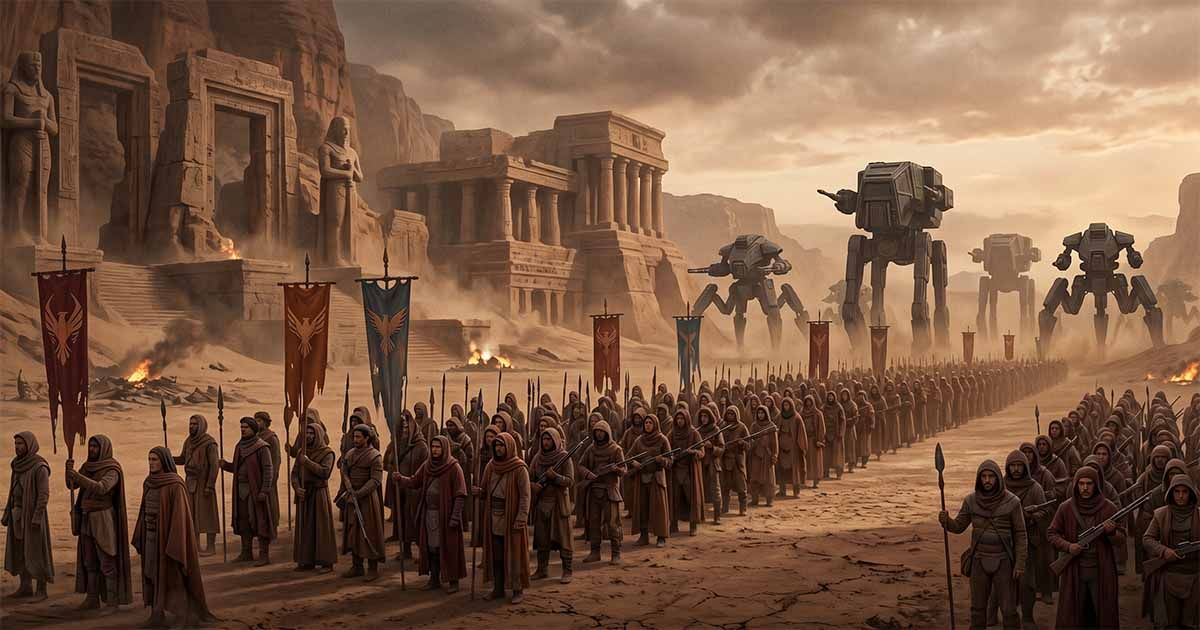
The Butlerian Jihad is the hidden foundation of "Dune." It explains why a civilization capable of interstellar travel refuses to build thinking machines. That absence shapes every institution, every form of power, and every limit placed on human ambition.
At first glance, the Jihad appears to be a war against artificial intelligence. That reading is common, but incomplete. Herbert presents something more unsettling. The real danger is not that machines think like men, but that men allow machines to think for them.
This idea gives the Jihad its lasting force. It is not just a historical event. It is a warning carried forward into every generation of the Imperium. It defines the moral boundary of the society long after the war itself has faded into memory.
Origins And Context
The Butlerian Jihad lies deep in the past of the "Dune" universe. Canon references place it between 201 B.G. and 108 B.G., long before the rise of the great Houses. Its distance in time gives it the character of both history and legend.
Before the revolt, humanity relied on thinking machines to manage complex tasks. These systems handled computation, governance, and decision-making. Over time, reliance became dependence, and dependence weakened human initiative and responsibility.
The revolt that followed was decisive and uncompromising. Thinking machines were destroyed across human space. This was not a limited reform or a negotiated settlement. It was a total rejection of a technological path that had once seemed inevitable.
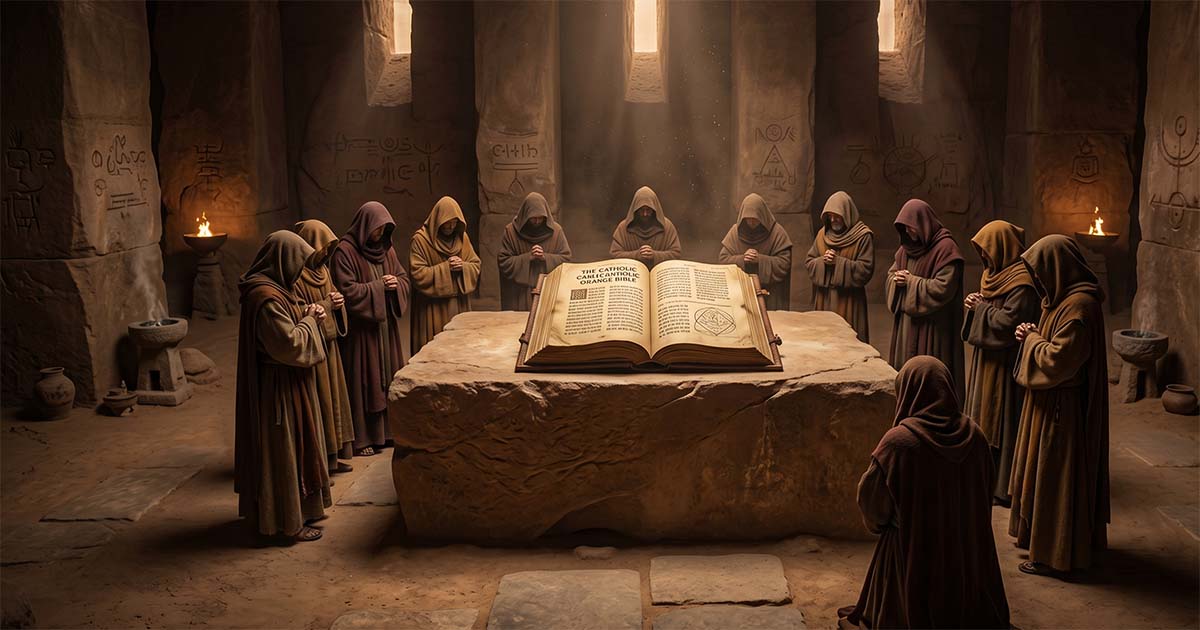
The prohibition entered religious law through the Orange Catholic Bible. The commandment against machines became sacred, not merely practical. In this way, the memory of the Jihad was preserved not only in records, but in belief, ritual, and daily life.
This blending of history and faith gives the Jihad its enduring power. It is remembered not simply as a war, but as a turning point in human identity.
Why The Jihad Matters
It is easy to describe the Jihad as a reaction to dangerous technology. Herbert suggests a deeper concern that goes beyond fear. The issue is not the machine itself, but the human habit of surrendering responsibility.
When men rely on systems to make decisions, they begin to lose the ability to judge for themselves. Over time, authority shifts toward those who control those systems. Power becomes centralized, and the individual becomes less capable of independent thought.
The Jihad represents a rejection of that path. It draws a firm boundary between human thought and mechanical process. The commandment against thinking machines is not simply a ban. It is a safeguard against a slow erosion of human agency.
This helps explain why safer or limited machines are not pursued. The danger is subtle and cumulative. Even a helpful system can become a crutch, and that crutch can become a chain that is difficult to break.
In this sense, the Jihad is not anti-technology. It is anti-dependence. It insists that certain responsibilities must remain in human hands, regardless of convenience.
Human Future Without Machines
With machines removed from intellectual life, humanity turns inward. The result is not stagnation, but specialization. Human beings become the instruments that machines once were, shaped by training and discipline rather than circuitry.
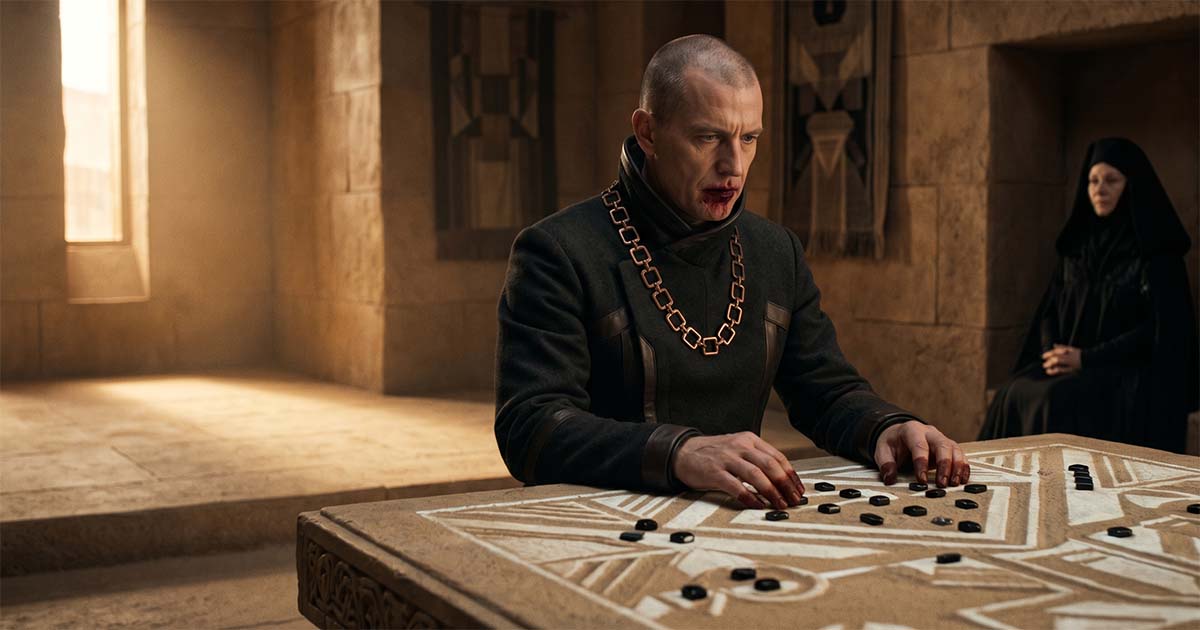
Mentats fill the role of computation and analysis. They are trained to process large amounts of information and produce logical conclusions under pressure. Their abilities are not natural gifts alone, but the result of rigorous conditioning.
The Bene Gesserit develop a different form of mastery. Their training focuses on control of the body, memory, and perception. They preserve knowledge across generations and influence events through subtle, calculated action.
The Spacing Guild depends on Navigators who use spice to guide travel through space. Without computers, prediction becomes a human capacity enhanced by unique biological conditions. This method is powerful, but also limited and dependent on scarce resources.
Each of these roles reflects a direct response to the loss of machines. Together, they form a system that is both impressive and fragile, built on human limits rather than mechanical certainty.
Feudal Order And Power
The absence of machines does not produce equality or freedom. It produces scarcity. Specialized abilities become rare resources, and those who possess them gain influence over those who do not.
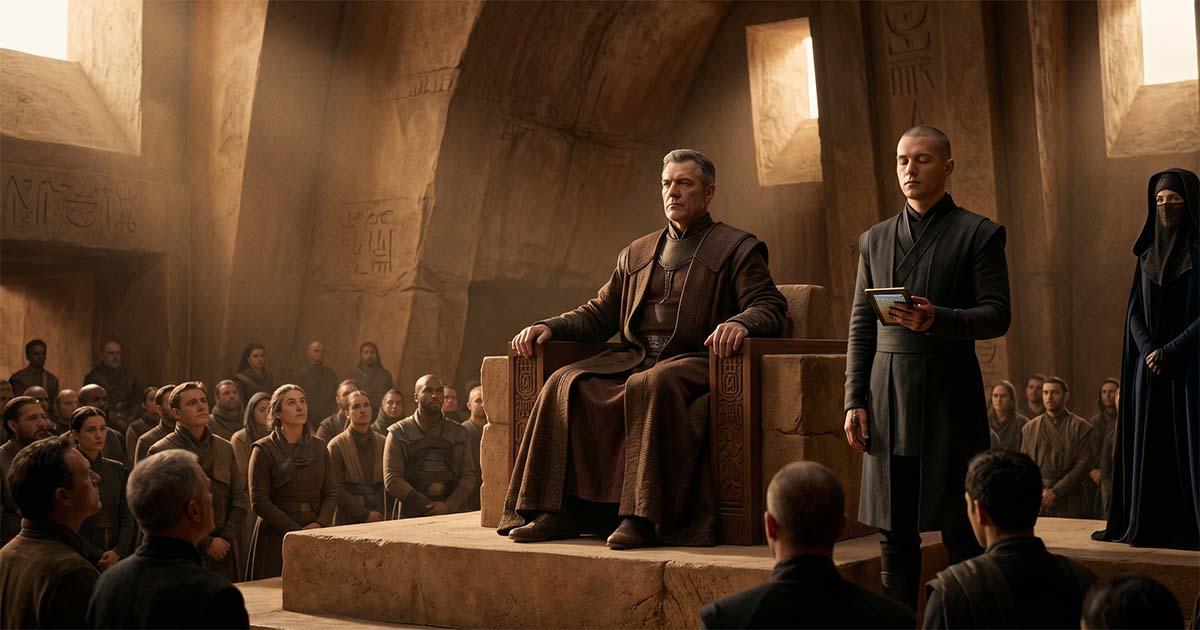
This scarcity supports a hierarchical society. Noble Houses compete for control, while the Guild and other orders maintain monopolies on essential functions. Power becomes concentrated in fewer hands, and access to knowledge is tightly controlled.
The structure seen in "Dune" reflects this reality. It is a feudal system built on limited access to skill and information. The Jihad helps explain why such a system persists in a technologically advanced age.
In removing one form of domination, humanity creates another. The difference lies in its source. Power now rests in human capacity, which can be just as restrictive as the machines it replaced.
Role In The Story
The Butlerian Jihad is never depicted directly in "Dune". Its influence is felt through what is missing. There are no thinking machines guiding events or solving problems, and this absence shapes every decision.
Every major institution carries its imprint. Mentats advise rulers, the Bene Gesserit shape long-term plans, and the Guild controls travel between worlds. These roles exist because machines do not.
For Paul Atreides, this inherited world defines the limits of action. His choices unfold within a system shaped by ancient fear and deliberate restraint. The Jihad sets the boundaries within which power can be exercised.
It remains a silent force behind the narrative. Not seen, but always present, guiding the structure of the world and the behavior of those who live within it.