
Why Twi'leks and Diva Plavalaguna Became Alien Icons
Twi'leks from "Star Wars" and Diva Plavalaguna from "The Fifth Element" reveal how music, dance, and performance create believable alien civilizations in science fiction.

Science fiction has never lacked memorable alien races. Some arrive aboard enormous warships with conquest on their minds. Others emerge from the shadows as monsters, invaders, or mysterious strangers whose first instinct is to fight. Conflict is often the quickest way to capture an audience's attention, but it is far from the only way to introduce an alien civilization.
The Twi'leks from "Star Wars" and Diva Plavalaguna from "The Fifth Element" took a very different path. Their first lasting impressions came through performance rather than violence. One danced before a ruthless crime lord, while the other captivated an audience with an unforgettable operatic performance. Those scenes revealed something far more important than physical appearance. They suggested that these were not simply exotic creatures, but members of civilizations with history, traditions, and artistic expression.
George Lucas and Luc Besson understood a simple truth about worldbuilding. Audiences accept an alien culture much faster when they experience its art instead of its arsenal. Music, dance, and performance communicate sophistication without lengthy explanations, making an unfamiliar species feel believable within moments. A civilization capable of creating beauty seems older, richer, and more authentic than one defined only by military strength.
That storytelling technique helped transform both the Twi'leks and Diva Plavalaguna into some of the most recognizable alien creations in modern science fiction. Their performances accomplished more than entertaining the characters on screen. They quietly convinced moviegoers that these fictional worlds extended far beyond the story unfolding before them.
The Twi'leks accomplished that feat first. Although they eventually became one of the most developed species in the "Star Wars" galaxy, their earliest appearances left audiences with an image that still shapes how many fans think about them today.
Twi'leks Arrive on Stage
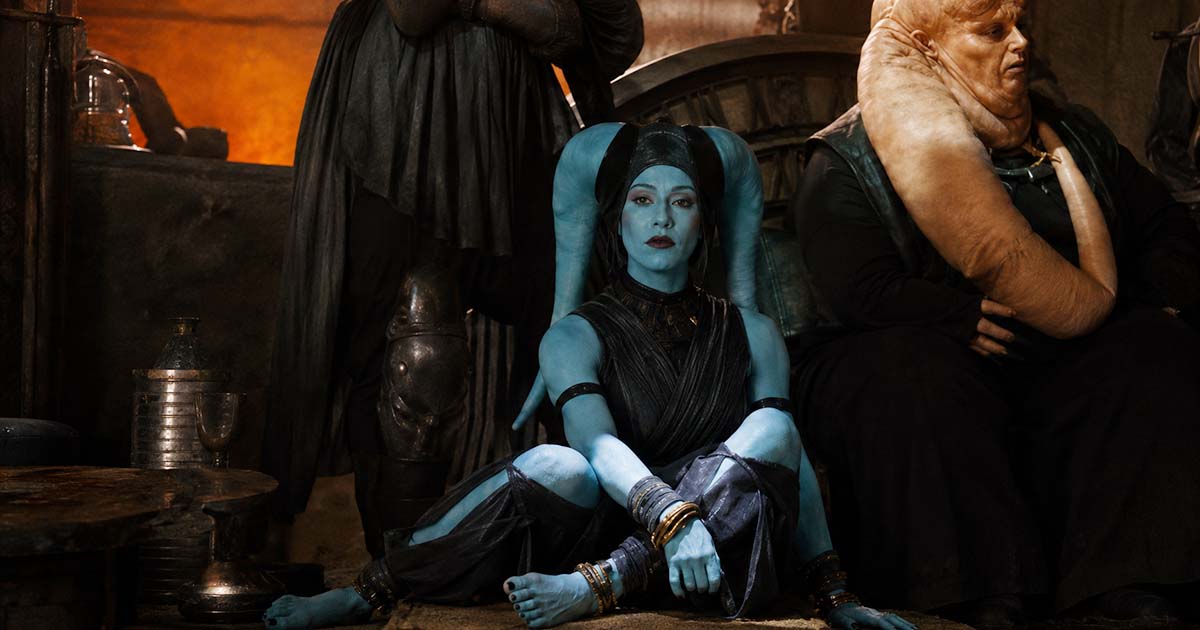
When audiences first encountered the Twi'leks in "Return of the Jedi," they stepped into one of the most unusual settings in the "Star Wars" saga. Jabba's Palace was more than a criminal hideout. It was a gathering place for smugglers, bounty hunters, musicians, gamblers, and aliens from every corner of the galaxy. Every room suggested that life in the galaxy continued far beyond the adventures of Luke Skywalker and the Rebel Alliance.
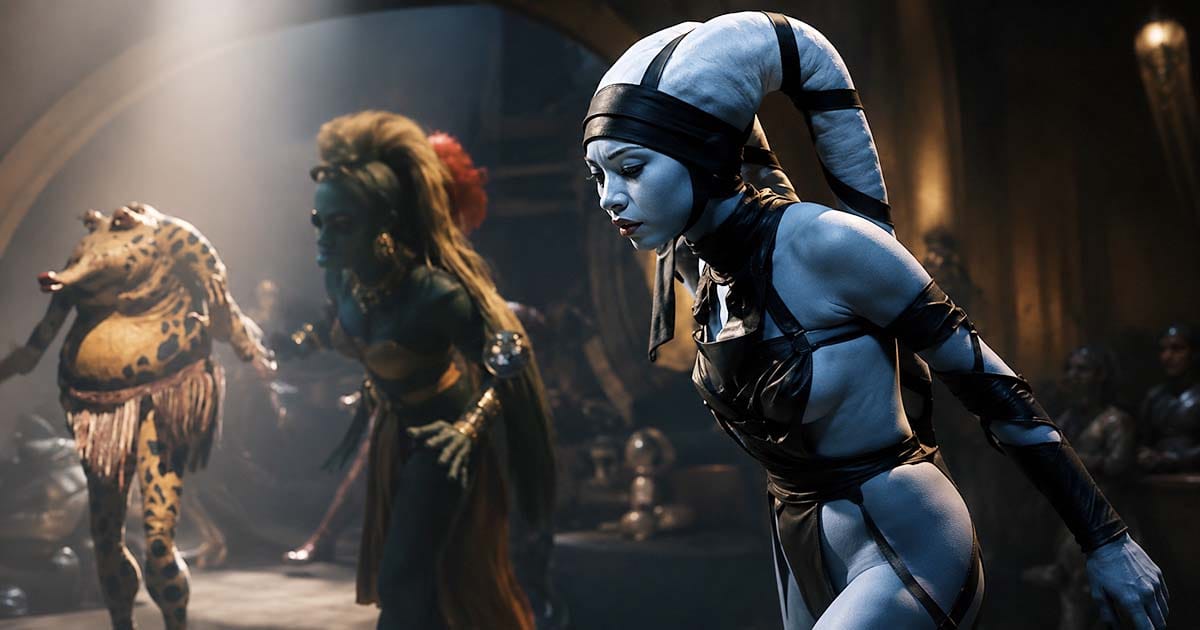
Among that colorful collection of creatures, the Twi'leks immediately drew attention. Oola became the most recognizable face of the species as she danced before Jabba the Hutt, while Lyn Me later appeared as both a singer and performer inside the Palace. Their scenes were brief, yet they left a lasting impression because they blended beauty, mystery, and tragedy into a single unforgettable image.
The Twi'lek design also helped them stand out among the dozens of other aliens in Jabba's court. Their vibrant blue and green skin contrasted sharply with the Palace's warm earth tones, making them impossible to overlook. Even more distinctive were their long, flowing lekku, which gave every movement an elegance that no human performer could naturally duplicate.
Just as important, the makeup never buried the actors beneath heavy prosthetics. Audiences could still see subtle smiles, worried glances, and fearful expressions beneath the colorful makeup. That balance between the familiar and the alien made the Twi'leks feel like believable people rather than elaborate special effects.
Not every Twi'lek in the Palace was an entertainer. Bib Fortuna served as Jabba's majordomo, greeting visitors, managing palace affairs, and acting as the crime lord's trusted advisor. His presence quietly suggested that the species occupied many different roles, even if audiences remembered the dancers far more readily.
That imbalance shaped public perception for decades. Although later films and television series expanded the Twi'leks into pilots, soldiers, politicians, and freedom fighters, many fans still picture Oola and Jabba's Palace first. A handful of scenes lasting only a few minutes became the defining image of an entire alien civilization, proving how powerful a first impression can be.

The Diva's Grand Entrance
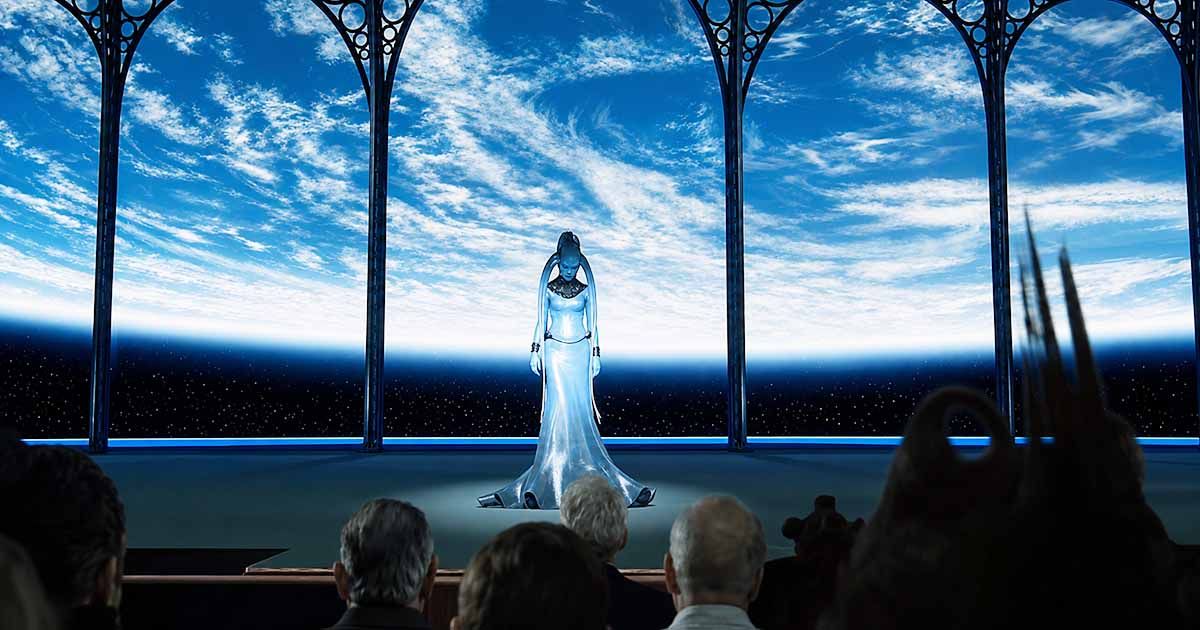
Fifteen years after "Return of the Jedi," Luc Besson introduced another unforgettable blue alien, but under dramatically different circumstances. Instead of a dimly lit palace ruled by a crime lord, Diva Plavalaguna appeared aboard the luxurious Fhloston Paradise. The setting immediately conveyed elegance, wealth, and sophistication, preparing the audience for a performance unlike anything they had seen before.
The Diva's entrance carried an air of quiet authority. Her flowing white costume, organic head crest, and slender blue form made her look both graceful and unmistakably alien. Every movement appeared deliberate and controlled, as though years of discipline had shaped not only her voice, but also the way she carried herself before an audience.
Lighting played an equally important role. Soft blues and brilliant whites surrounded the stage, creating an almost heavenly atmosphere that contrasted sharply with the darker, industrial environments seen throughout much of the film. Rather than presenting the Diva as strange or intimidating, the cinematography encouraged viewers to see her as someone worthy of admiration.
The audience inside the theater completed the illusion. Distinguished guests watched with complete attention, responding to the performance with respect rather than curiosity. No one questioned her appearance or treated her like an exotic novelty. Their reactions told viewers everything they needed to know. This was not an unusual creature performing for entertainment. She was one of the galaxy's most celebrated artists.
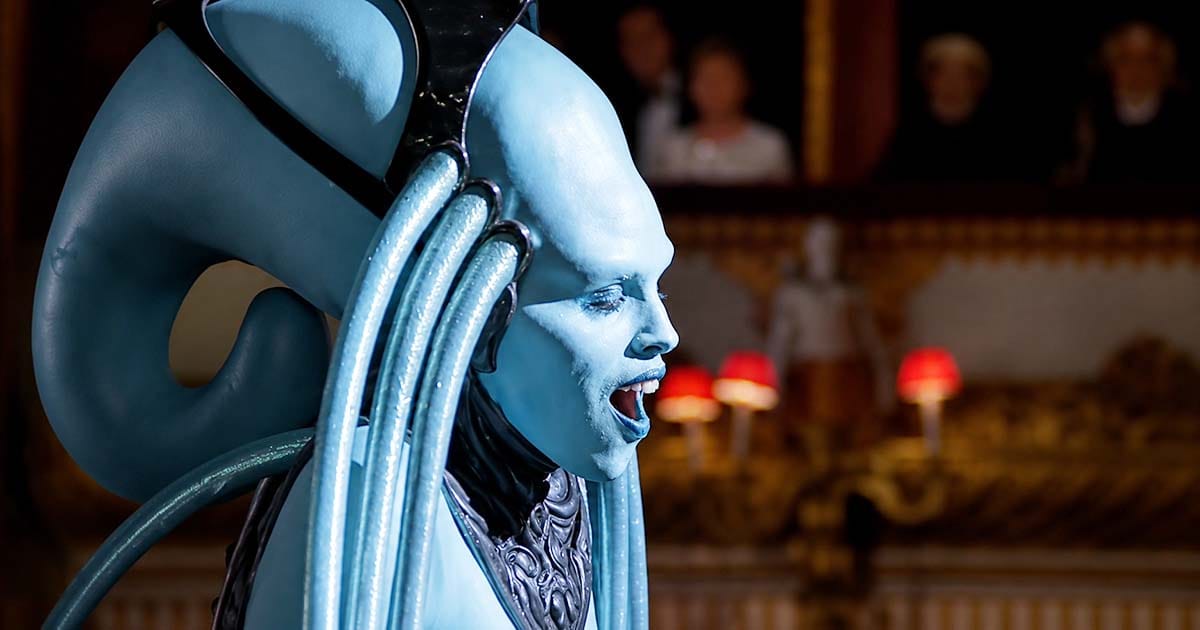
Then came the famous opera sequence. As the Diva's soaring vocals blended classical music with futuristic rhythms, the film intercut her performance with Leeloo's desperate fight against armed attackers. The contrast between beauty and violence became one of the movie's most memorable moments, reminding audiences that civilizations are defined as much by the art they create as the battles they fight.
Remarkably, "The Fifth Element" never identifies the Diva's species or explains her homeworld. It does not need to. Her appearance, her performance, and the reverence shown by everyone around her convince the audience that she belongs to an ancient, accomplished civilization. In only a few minutes of screen time, Luc Besson creates an entire culture without pausing the story to explain it.
Why Performance Matters
Science fiction often introduces new alien races through conflict. A warship appears in orbit, soldiers march into battle, or a terrifying creature emerges from the darkness. Those introductions quickly establish danger and create excitement, but they reveal very little about the civilization behind the characters. Audiences learn what these aliens can destroy long before they learn what they have built.
Performance tells a completely different story. Music, dance, and theater suggest a society that has progressed beyond simple survival. A civilization does not produce accomplished musicians or celebrated performers unless it has history, traditions, teachers, and audiences who value artistic achievement. Those details may never be spoken aloud, yet viewers understand them almost instinctively.
That is exactly what George Lucas and Luc Besson accomplished with the Twi'leks and Diva Plavalaguna. Before either film explains the culture behind these characters, the audience already senses that they belong to societies with rich traditions. Their performances hint at customs passed from one generation to the next, giving the impression of civilizations that existed long before the events of either film.
Performance also suggests stability. Throughout history, societies struggling merely to survive rarely devote significant time to developing opera, dance, or other refined arts. Artistic expression flourishes when a culture has enough security to invest in creativity alongside commerce, government, and daily life. That simple idea makes an alien civilization feel more profound and believable.
Perhaps most importantly, music creates an emotional connection faster than exposition ever could. A lengthy speech about an alien world's customs appeals to the intellect, but a powerful performance reaches the emotions almost immediately. Audiences may forget the details of fictional governments or political alliances, yet they remember how a song, a dance, or a remarkable stage performance made them feel. That emotional connection helps transform an unusual-looking alien into someone worth remembering long after the closing credits have rolled.
Music Is a Universal Language
Music has accompanied human civilization since the earliest days of recorded history. Every culture has developed its own songs, instruments, rhythms, and ceremonies, even when separated by oceans, languages, and centuries. Dance has evolved alongside music, giving people another way to celebrate victories, honor traditions, mourn losses, and tell stories that words alone cannot capture.
That shared experience makes music one of the most effective storytelling tools in science fiction. Audiences do not need to understand an alien language to recognize joy in a dance or emotion in a song. The performance itself becomes the translation, allowing viewers to connect with unfamiliar characters without the need for lengthy explanations.
George Lucas took advantage of that connection in "Return of the Jedi." Oola's graceful movements communicate far more than dialogue ever could. Even without knowing her history or understanding the customs of the Twi'leks, audiences recognize both her talent and the sadness beneath her performance.
Luc Besson reached the same destination through a different art form. Diva Plavalaguna's operatic performance contains lyrics most viewers cannot understand, yet the meaning remains unmistakable. Her voice conveys beauty, confidence, and emotion with a power that rises above language itself.
That is why both scenes remain so memorable. The audience responds first to what it feels and only later to what it knows. Long before viewers learn anything about Twi'lek society or begin wondering where the Diva came from, they have already accepted both characters as members of sophisticated civilizations. Music and movement accomplish in a few unforgettable minutes what pages of dialogue often struggle to achieve.

Entertainment Versus Art
Although the Twi'leks and Diva Plavalaguna both make unforgettable entrances through performance, the worlds around them could not be more different. Their dances and songs serve entirely different purposes, revealing as much about their societies as they do about the performers themselves. The contrast helps explain why each scene leaves such a lasting impression.
For the Twi'leks, performance is closely tied to survival. Inside Jabba's Palace, entertainers exist to satisfy the whims of a powerful crime lord and his guests. Music, dance, and spectacle are not celebrations of culture. They are another display of wealth and power, reminding everyone in the room that Jabba controls not only lives, but also beauty itself.
Oola embodies that harsh reality. Her dance is graceful and captivating, yet it is never truly her own. Every movement reflects Jabba's authority rather than her freedom, turning her remarkable talent into another possession within his palace. The audience admires her performance while recognizing that she has little control over her own fate.
That setting changes the way viewers interpret the Twi'leks. Their elegance becomes inseparable from the dangerous world they inhabit, creating an image of beauty that exists alongside exploitation. Although later stories reveal Twi'leks serving as pilots, senators, soldiers, and resistance leaders, Oola's performance remains one of the defining images of the species because it is emotionally impossible to forget.
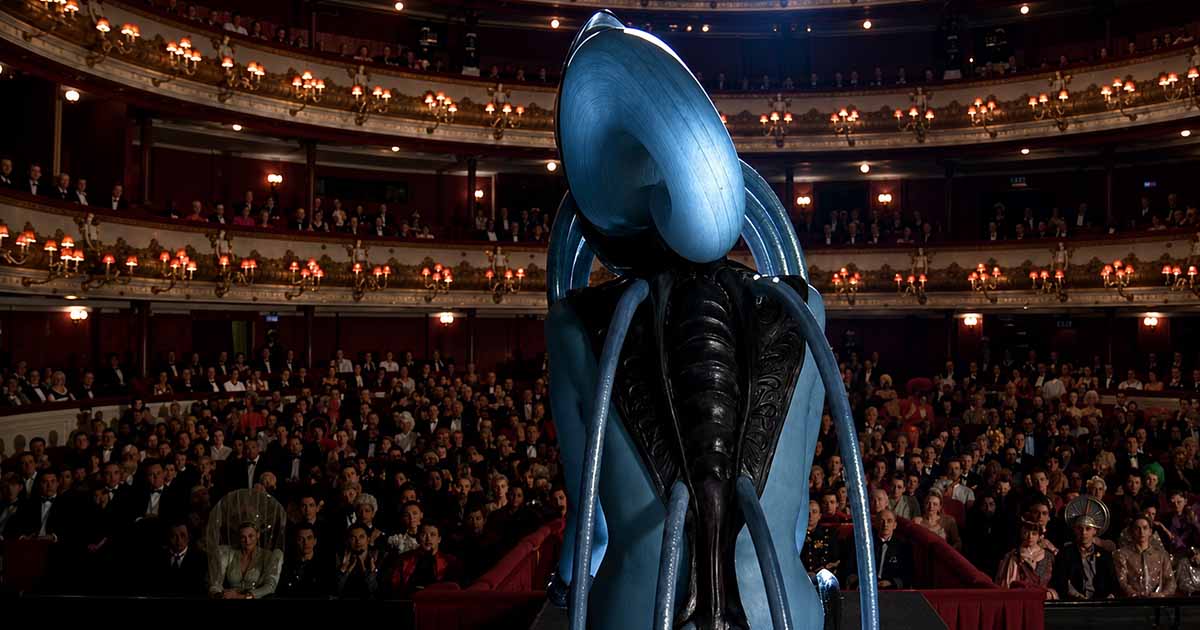
Diva Plavalaguna occupies the opposite end of the cultural spectrum. She performs in a magnificent concert hall before an audience that values artistic achievement above spectacle. Her opera is not background entertainment for the powerful. It is the reason distinguished guests have gathered in the first place.
Everyone who encounters the Diva treats her with genuine respect. Security personnel protect her, dignitaries admire her, and the audience waits in silence for her performance to begin. She is recognized as an artist whose gifts deserve celebration rather than ownership.
That difference reveals two very different visions of civilization. In "Return of the Jedi," performance reflects the corruption of the criminal underworld. In "The Fifth Element," performance reflects the highest achievements of a sophisticated society. Both scenes rely on extraordinary talent, but only one performer takes the stage from a position of honor.
Building a Civilization Without Exposition
One of George Lucas' greatest strengths as a filmmaker is his willingness to let the audience discover the "Star Wars" galaxy on its own. Rather than interrupt the story with lengthy explanations, he fills the screen with details that invite viewers to ask questions. The bustling Mos Eisley Cantina, the crowded corridors of Jabba's Palace, and the countless background aliens all suggest a living galaxy that extends far beyond the main characters.
That approach rewards curiosity. Audiences never receive a lecture explaining where every species comes from or how each civilization developed. Instead, Lucas trusts viewers to accept that every alien has a story, even if it remains untold. The result is a universe that feels larger than any single film could possibly explore.
Luc Besson follows the same philosophy in "The Fifth Element." The film never identifies Diva Plavalaguna's species, names her homeworld, or explains her history. Those details are simply left to the audience's imagination, allowing the mystery surrounding her to become part of her appeal.
Remarkably, most viewers never question those missing pieces. The Diva's appearance, the respect she receives, and the elegance of her performance convince audiences that an entire civilization exists somewhere beyond the edges of the screen. Sometimes the strongest worldbuilding comes not from answering every question, but from leaving just enough unanswered that the audience begins creating the rest of the story for itself.
Practical Effects Made Them Believable
Part of the enduring appeal of both the Twi'leks and Diva Plavalaguna comes from the craftsmanship behind their creation. Neither character depended on computer-generated imagery to convince audiences they were real. Instead, talented makeup artists, costume designers, and performers worked together to create aliens that occupied the same physical space as the human cast.
The Twi'leks relied on colorful makeup, carefully sculpted prosthetics, and the now-iconic lekku to establish their distinctive appearance. Just as important, the actors' faces remained clearly visible beneath the makeup. Audiences could recognize fear in Oola's eyes, confidence in Bib Fortuna's expression, or determination in later Twi'lek characters because the performances were never hidden beneath layers of special effects.
Diva Plavalaguna followed the same philosophy. Her elaborate costume, striking head crest, and elegant makeup created an unmistakably alien silhouette, yet her facial expressions remained the emotional center of every scene. The audience believed in the character because they could still connect with the performer beneath the prosthetics.
That balance helps explain why both designs have aged so well. Practical effects interact naturally with light, costumes, and the actors sharing the screen, creating a sense of realism that many early digital effects struggled to achieve. Technology continues to improve, but expressive performances remain timeless. George Lucas and Luc Besson understood that audiences remember believable characters, not simply impressive effects, and both filmmakers wisely allowed the human performance beneath the makeup to carry the illusion.
Why We Still Remember Them
Science fiction has introduced audiences to thousands of alien races over the past century. Many appeared for only a scene or two before fading into obscurity, while others were remembered only by the most devoted fans. The Twi'leks and Diva Plavalaguna have enjoyed a very different legacy because they offered something more than unusual appearances or imaginative makeup.
Their performances made them feel human without making them seem ordinary. Audiences recognized emotions expressed through movement, music, and body language long before they learned anything about these characters' backgrounds. That emotional connection transformed them from interesting visual creations into memorable personalities who seemed to belong in fully realized civilizations.
Art also communicates something that technology alone never can. A civilization capable of producing accomplished dancers, gifted musicians, and celebrated performers has history, traditions, and values worth preserving. Those qualities make an imaginary society feel authentic because they reflect the same creative spirit found throughout human history.
That is why these scenes continue to resonate decades after both films premiered. Viewers may not remember every spaceship, every battle, or every line of dialogue. Still, they remember Oola dancing before Jabba the Hutt and Diva Plavalaguna filling a concert hall with music. Those performances created emotional memories that have outlasted countless action sequences.
The greatest science fiction does not simply imagine creatures with different faces or unfamiliar biology. It imagines cultures that feel rich enough to exist beyond the edges of the screen. The Twi'leks danced, and the Diva sang, but both accomplished the same remarkable feat. They convinced audiences they belonged to civilizations that had flourished for centuries before the cameras ever arrived, making their worlds feel larger, older, and wonderfully alive.