
"Starship Troopers" and the Rise of the Space Marine
"Starship Troopers" turns 29 as we trace the evolution of the space marine from Heinlein's Mobile Infantry to "Aliens" and the battlefields of science fiction.

This Week in Classic Science Fiction
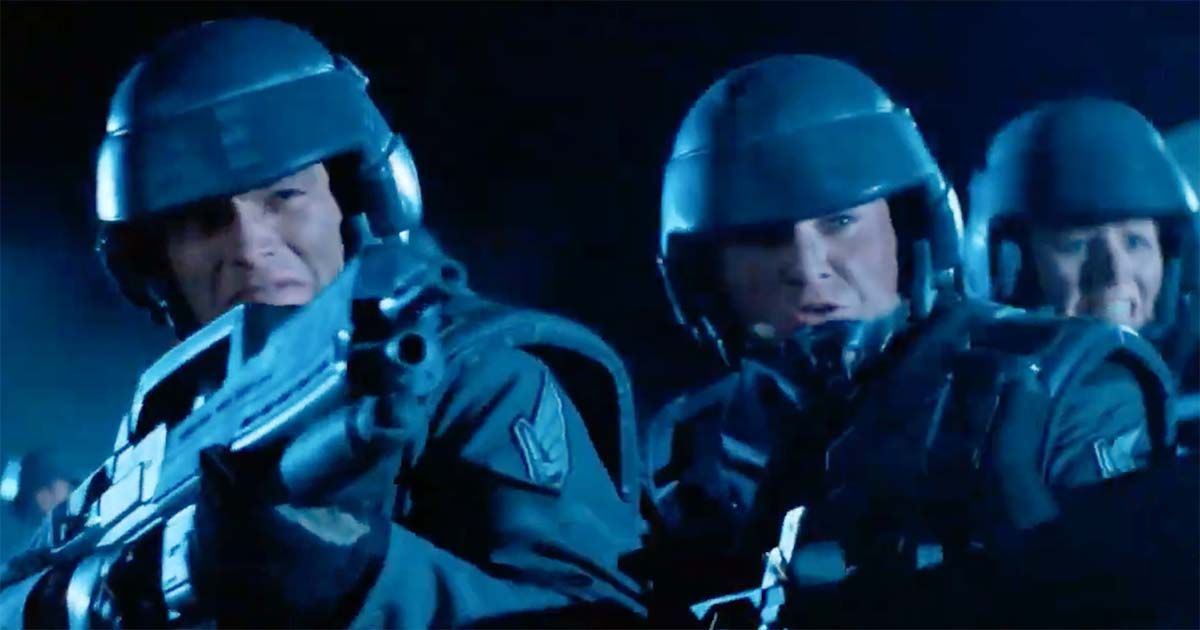
On Nov. 7, 1997, "Starship Troopers" opened in theaters across the United States. Directed by Paul Verhoeven, the film was loosely based on Robert A. Heinlein's 1959 novel of the same name. What audiences got was a strange mixture of military science fiction, enormous alien insects, brutal combat, and dark humor.
"Starship Troopers" follows Johnny Rico and his friends as they leave school and enter military service in a future society at war with the Arachnids. Rico joins the Mobile Infantry and soon discovers that fighting giant Bugs is considerably less glamorous than the recruiting films suggest. The movie punctuates the carnage with cheerful propaganda broadcasts and the recurring question, "Would you like to know more?"
Verhoeven's movie differs considerably from Heinlein's novel, particularly in its treatment of the military society at the center of the story. The movie exaggerates that world through propaganda, handsome young recruits, patriotic speeches, and spectacular violence. That approach confused some viewers in 1997, but it also helped "Starship Troopers" develop a lasting following.
More than two decades later, the Bugs, battles, dropships, and propaganda broadcasts remain hard to forget. "Starship Troopers" also belongs to a much older science fiction tradition in which mankind carries its wars beyond Earth. That tradition has given the genre some of its most memorable visions of warfare among the stars.
Sponsored by: Troopers on Mars | मंगल पर ट्रूपर्स

Mars has been the next great frontier of science fiction for more than a century. Writers and filmmakers have imagined its canals, civilizations, monsters, explorers, and wars. "Troopers on Mars" takes that old fascination in a familiar direction by putting boots on the Red Planet.
The artwork captures the military science fiction we grew up with, when distant planets promised danger and adventure in equal measure. It is a shirt for anyone who still thinks mankind's future ought to include strange worlds, great machines, and a few brave men willing to go first.
The Evolution of the Space Marine
Long before science fiction invented the space marine, Hollywood knew exactly what to do when monsters arrived. Call in the Army. In movies like "The Thing from Another World" (1951), "The War of the Worlds" (1953), and "Them!" (1954), American servicemen confronted enemies that came from spaceships, laboratories, and the atomic age. The threats belonged to tomorrow, but the soldiers fighting them still belonged to the present.
That arrangement worked particularly well during the 1950s because audiences immediately recognized the men, weapons, and military organizations on the screen. Soldiers carried rifles, pilots flew contemporary aircraft, and commanders responded to fantastic emergencies much as they might respond to an enemy attack. Even when conventional weapons proved ineffective, the military provided a familiar line of defense between civilization and the unknown. Science fiction had imagined alien invaders, giant monsters, and flying saucers, but it had not yet completely reinvented the infantryman.
Heinlein Reinvents the Infantryman
Robert A. Heinlein took that next step with "Starship Troopers" in 1959. His Mobile Infantry was not simply a twentieth-century army transported to another planet. Heinlein considered what advances in weapons, communications, transportation, and armor might do to the individual soldier. The result was an infantryman built for interplanetary warfare.
Powered armor gave Heinlein's soldiers protection, mobility, communications equipment, and tremendous firepower. They could descend from orbit, cover large distances, and strike with weapons that would have been impossible for an ordinary foot soldier to carry. Technology did not eliminate the infantryman, as some predictions about future warfare might suggest. Instead, technology made one infantryman capable of doing far more.
That idea became one of Heinlein's most important contributions to military science fiction. Starships might carry armies between worlds, but ships alone could not occupy territory or confront an enemy face to face. Eventually, somebody still had to go down there. Heinlein simply gave that man equipment worthy of the battlefield.
Hollywood Moves the Battlefield
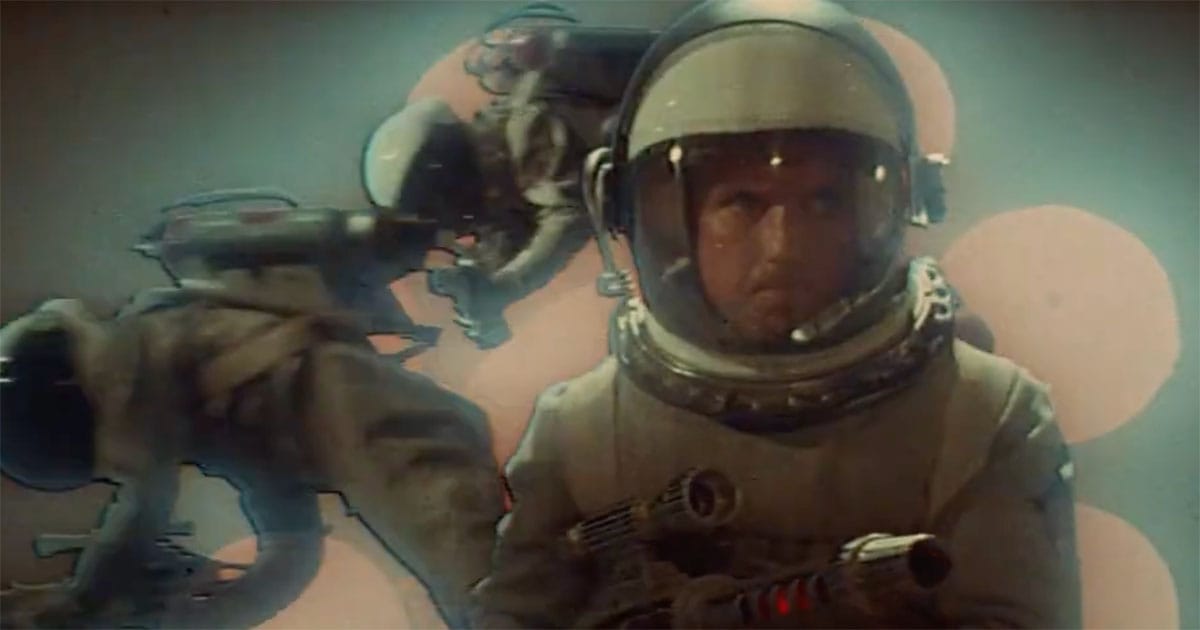
Science-fiction movies gradually began moving soldiers farther from the familiar battlefields of Earth. "Planet of the Apes" (1968) sent American astronauts into a hostile civilization, while "The Green Slime" (1968) put military personnel aboard an orbiting space station threatened by rapidly multiplying creatures. Neither presented the fully developed space marine, but both helped move the fighting man into environments where ordinary military assumptions no longer applied. The battlefield itself was becoming science fiction.
By the late 1970s and early 1980s, movies increasingly treated space as a place where organized forces could actually fight wars. "Star Wars" (1977) filled its galaxy with soldiers, pilots, military bases, troop transports, and enormous fleets. The emphasis remained on adventure rather than realistic infantry warfare, but the visual language of military science fiction was becoming familiar. Audiences no longer found anything strange about soldiers carrying futuristic weapons through spaceships or across alien worlds.
"Aliens" Defines the Movie Space Marine
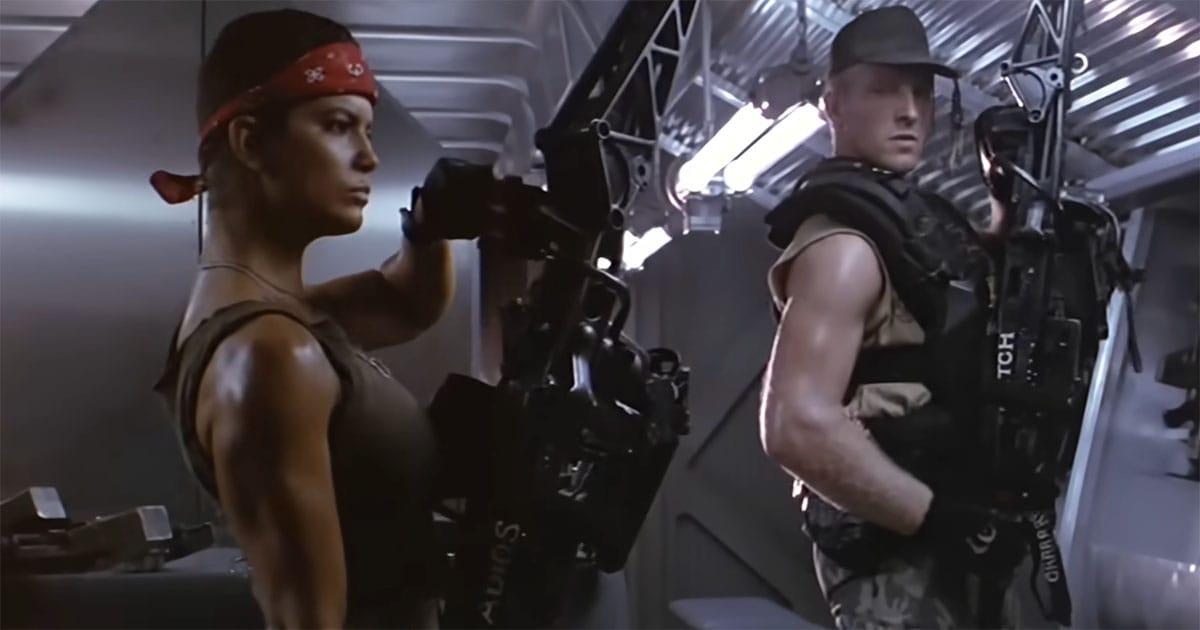
Then came "Aliens" (1986). James Cameron's Colonial Marines looked like men who might actually climb out of a futuristic troop transport and complain about their assignment. Hicks, Hudson, Vasquez, and their comrades had pulse rifles, smart guns, motion trackers, body armor, an armored personnel carrier, and a dropship to carry them into battle.
Their personalities mattered as much as their equipment. They joked, bragged, complained, followed orders, and displayed the confidence of professionals who believed they had seen everything. Cameron made the futuristic technology convincing partly by surrounding it with recognizable military behavior. The Colonial Marines felt less like fantastic warriors than ordinary servicemen who happened to work in the 22nd century.
Heinlein's shadow was still there. Cameron had the actors playing the Colonial Marines read "Starship Troopers" while preparing for the film. Yet "Aliens" developed its own version of the space marine by combining futuristic equipment with the familiar personalities of a military unit. After "Aliens," the archetype hardly required an introduction.
"Starship Troopers" Comes Full Circle
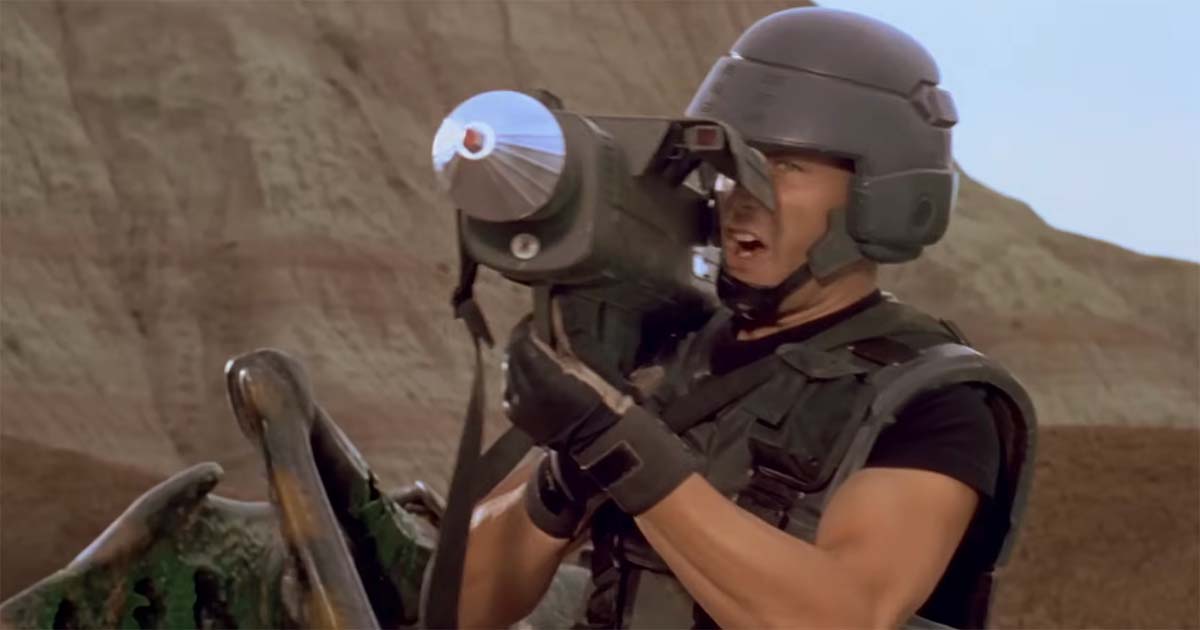
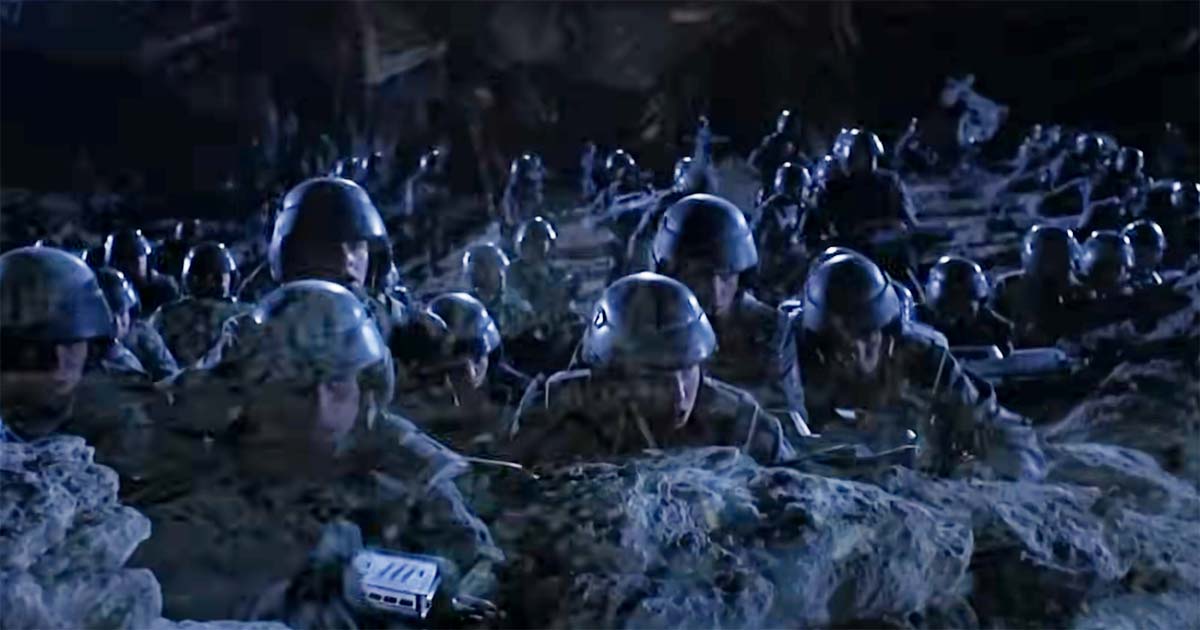
Hollywood finally brought Heinlein's Mobile Infantry to theaters with "Starship Troopers" (1997), nearly four decades after the novel appeared. Curiously, the movie discarded one of Heinlein's most influential ideas. The powered armor was gone, leaving soldiers who relied mainly on rifles, numbers, and courage when facing the Arachnids.
That choice makes the movie an interesting endpoint in the evolution of the space marine. Heinlein had transformed the infantryman by surrounding him with technology, while "Aliens" had created soldiers who seemed completely at home with futuristic military equipment. "Starship Troopers" went in the opposite direction by placing comparatively vulnerable foot soldiers on an interplanetary battlefield. The future had arrived, but infantry combat remained frighteningly personal.
That may explain why the space marine has remained such a durable science-fiction figure. Spaceships can cross impossible distances, weapons can grow more destructive, and armor can make a man resemble a walking tank. Yet science fiction repeatedly returns to the same stubborn fact of warfare. Someone still has to put boots on alien ground.