
“The Shape of Things to Come” and the Fate of Civilization
A 1933 H. G. Wells classic imagines war, scientific progress, and the future of civilization in an ambitious work that reads more like history than a traditional novel.

A History Written Before It Happened
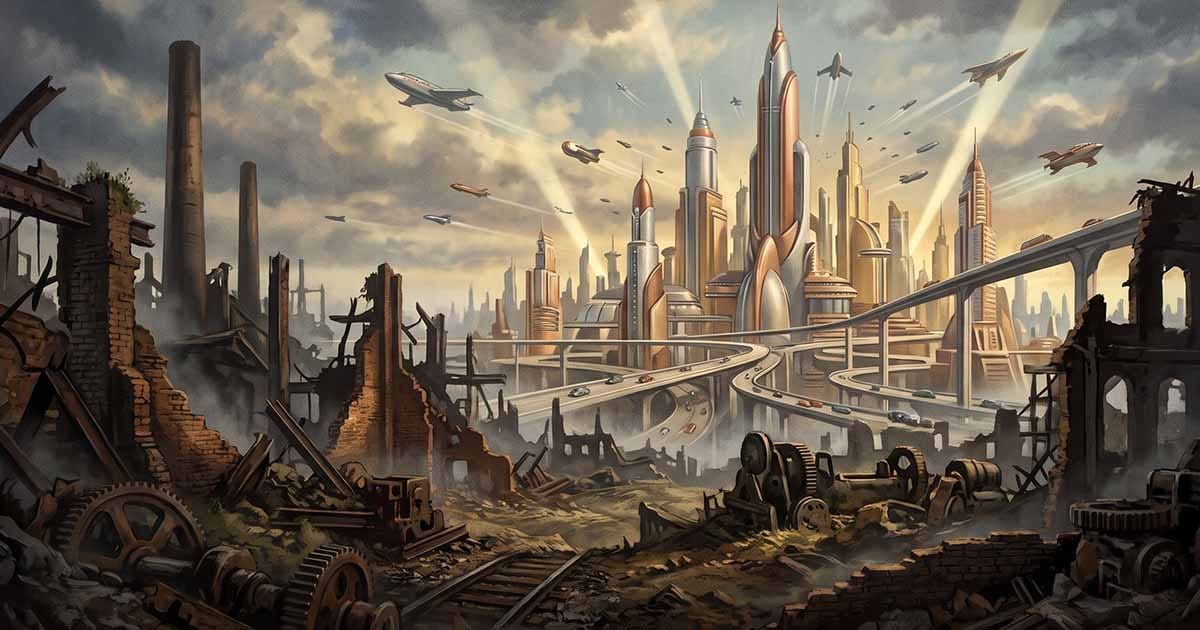
H. G. Wells had already imagined time travel, alien invasion, invisible men, and strange biological experiments by the time he published "The Shape of Things to Come" in 1933. This time he aimed at something larger than a single invention or scientific breakthrough. He tried to write the history of the next two centuries before they happened, using fiction to examine the fate of civilization itself.
The book appeared at a moment when the real world already looked unstable. Economic depression, political extremism, nationalism, and the memory of World War I shaped the atmosphere around Wells as he wrote. Instead of escaping those problems, he projected them forward and asked what might happen if modern science continued to advance while political institutions remained trapped in old habits.
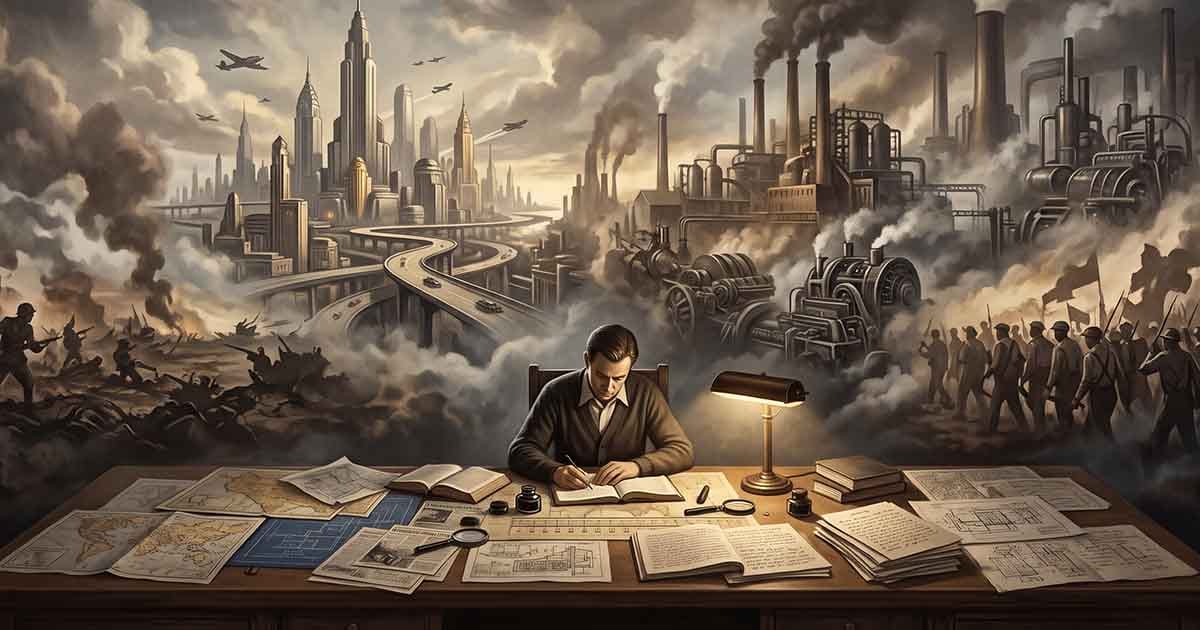
Wells framed the story through the writings of the fictional Dr. Philip Raven, whose visions supplied an account of future history. That device gave Wells permission to move across decades, countries, technologies, and political movements without following a single hero. Readers expecting another "The War of the Worlds" or "The Time Machine" therefore encountered something far stranger and much less conventional.
That unusual form became the first question any review had to answer. Could a book with little of the usual machinery of a novel still succeed as science fiction? "The Shape of Things to Come" did not always succeed as fiction, but its ambition was difficult to dismiss because Wells was attempting to make civilization itself the subject of the story.
Civilization Is the Main Character
Wells began with a world that would have been immediately recognizable to readers in 1933. Nations struggled with economic instability, international rivalry, political extremism, and the lingering consequences of the previous war. From that starting point, he followed the pressures that might shape the decades ahead without relying on a conventional protagonist to carry the reader through them.
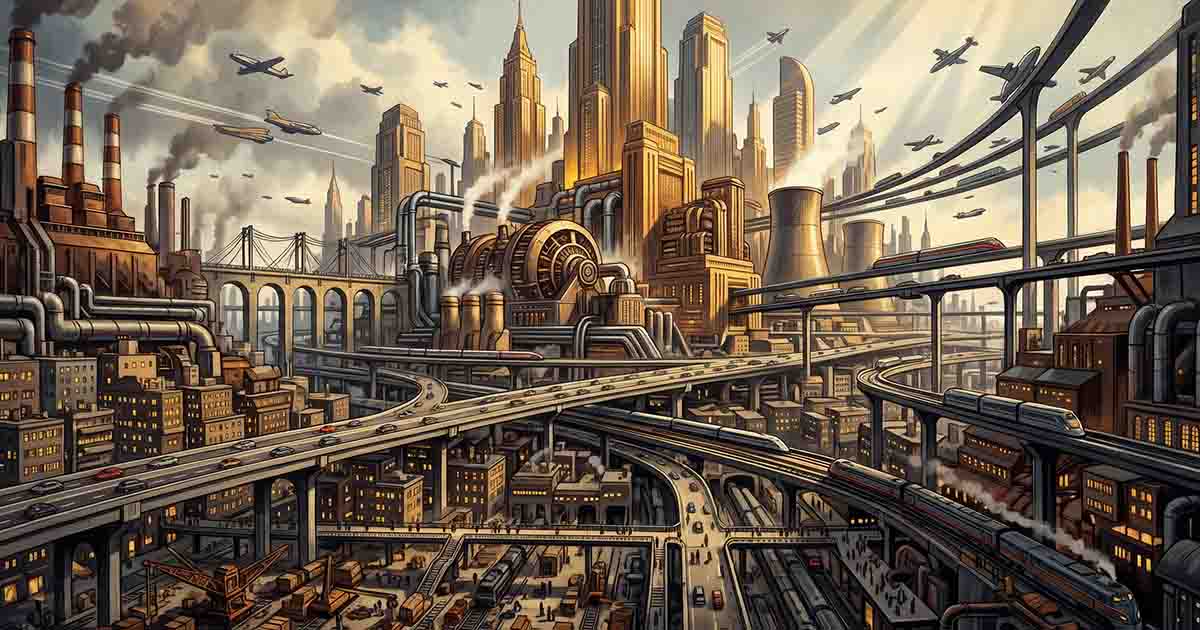
The result felt less like a novel and more like an invented history book. Wells moved between political change, technological development, education, transportation, warfare, economics, and social organization as though he were describing events that had already taken place. People appeared, but institutions and historical forces mattered more than individual personalities.
That choice created both the book's fascination and its distance. A reader rarely became attached to one person, one family, or one dramatic problem in the way he might in a conventional novel. Instead, the reader watched whole societies shift, fracture, adapt, and reorganize under the pressure of scientific and political change.
Wells was especially interested in systems. Aviation, communications, medicine, industrial production, education, and government all became parts of a larger structure that could either support civilization or help pull it apart. His future therefore depended less on a miraculous machine than on whether human beings could build institutions capable of handling the machines they already possessed.
This approach could feel dry because Wells often explained rather than dramatized. Yet it also gave the book a scale that few novels attempted, since decades could pass in a few pages and entire political systems could rise or weaken without the story stopping for personal melodrama. The main character was not a man or woman at all, but civilization under stress.
Can Science Save Civilization
The strongest idea in "The Shape of Things to Come" concerned the gap between technological progress and political maturity. Wells saw modern civilization becoming more interconnected through industry, transportation, communications, and scientific knowledge. At the same time, nations still behaved as jealous rivals, each defending its own power and sovereignty in a world that increasingly depended on cooperation.
That contradiction gave the book much of its intellectual force. Wells believed science had made older political arrangements increasingly dangerous because technology allowed nations to damage one another on a scale that earlier generations could barely imagine. A world connected by machines could no longer survive indefinitely if its political institutions remained divided by the instincts of the past.
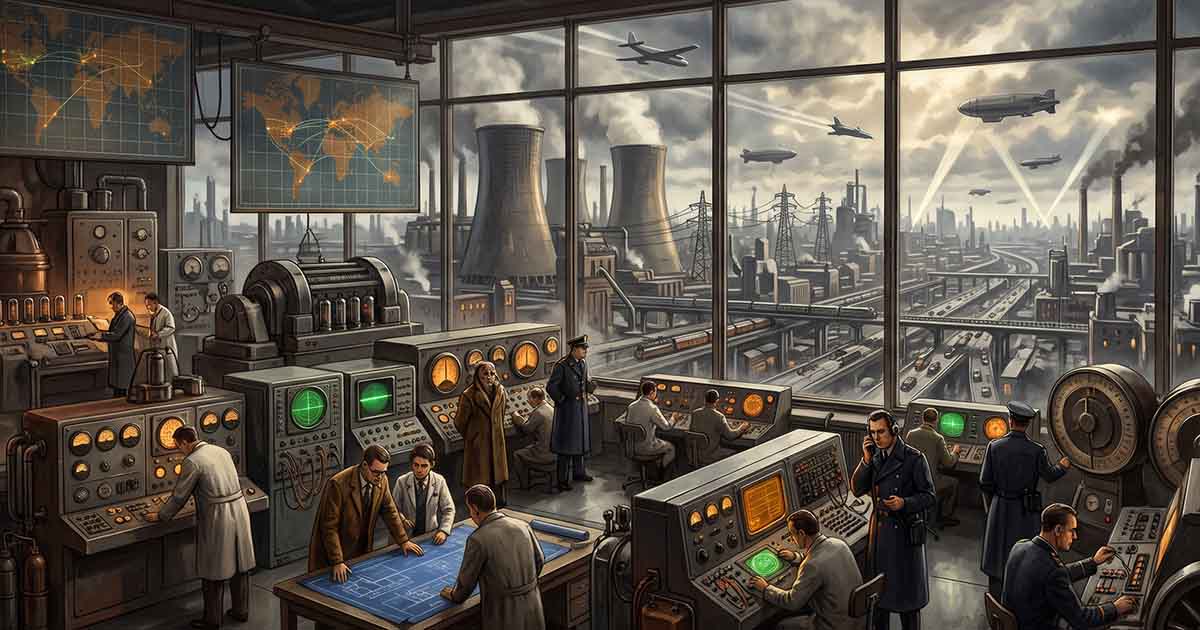
His faith in technical expertise was unmistakable. Engineers, scientists, educators, and planners represented the possibility of a more rational civilization because they approached problems through knowledge, measurement, and organization. Wells repeatedly suggested that humanity's future depended on learning to manage society with the same seriousness it applied to machines and scientific research.
That confidence also exposed the book's deepest weakness. George Orwell later argued that Wells had treated science and rationality as though they naturally opposed nationalism, dictatorship, and political passion. The experience of the 1930s and 1940s showed that advanced technology could just as easily strengthen destructive governments, since aircraft, radio, industry, and scientific organization did not automatically make the people using them wise.
Orwell's criticism did not make Wells irrelevant. It made the book more interesting because the disagreement went to the heart of modern science fiction. Wells asked whether scientific progress could pull civilization toward reason. At the same time, Orwell warned that science might simply give greater power to whatever beliefs and ambitions already ruled the people controlling it.
That tension remained more important than any individual prediction in the book. Wells understood that technology would transform politics, warfare, economics, and daily life, but he placed enormous trust in humanity's ability to organize itself rationally around those changes. The question he raised was stronger than the answer he offered because modern civilization still had to decide whether technical power could ever be matched by political wisdom.
A Novel Without Much Novel
As a conventional novel, "The Shape of Things to Come" was difficult to praise without qualification. Readers who came to Wells through "The War of the Worlds," "The Invisible Man," or "The Time Machine" would have found far less suspense, dialogue, characterization, and dramatic momentum. Long stretches read more like speculative history, political argument, or social criticism than fiction.
The problem was that Wells often sacrificed narrative pleasure to intellectual range. A scene another novelist might have developed through characters and conflict became a summary of a social movement or a description of institutional change. That method kept the argument moving, but it also left the reader with fewer emotional reasons to care about any particular event.
Yet the weakness was tied directly to the book's achievement. Because Wells was not bound to one hero, one city, or even one generation, he could move freely across decades and examine civilization as a connected whole. The very thing that made the book an uneven novel made it a remarkably ambitious work of future history.
That distinction offered the fairest way to judge it. "The Shape of Things to Come" was not among Wells' most exciting stories, and readers looking for adventure could reasonably find it slow or overly argumentative. As an attempt to imagine the history of a technological civilization across generations, however, it remained unusual, daring, and important.
Thinking in Centuries
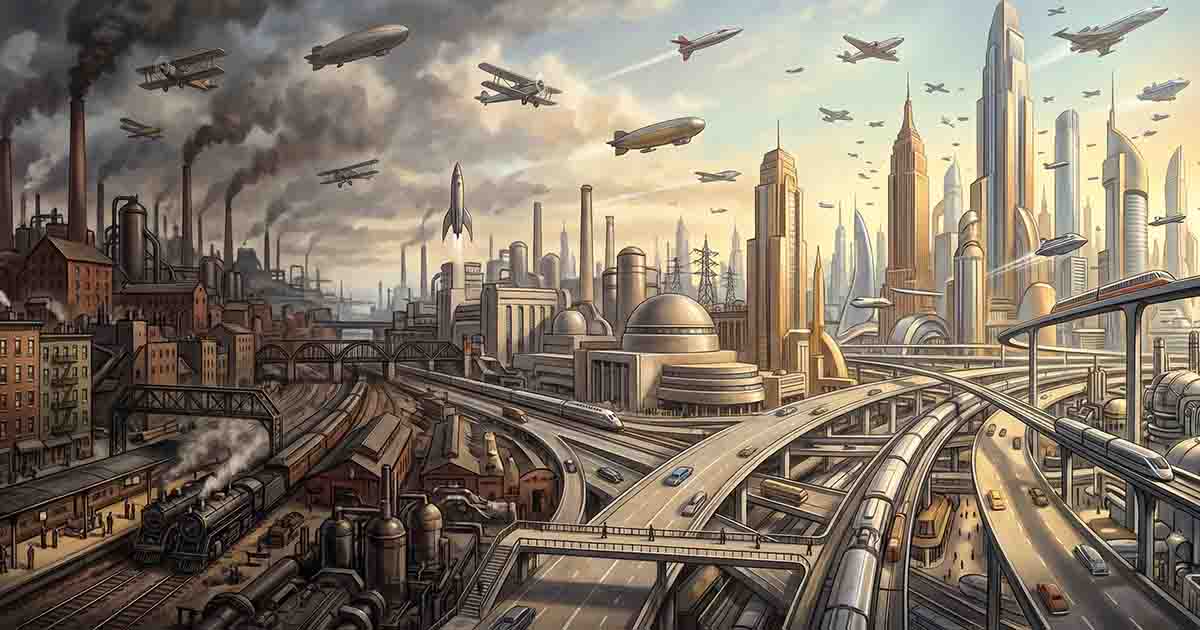
The easiest way to judge an old book about the future was to make a list of predictions and mark them right or wrong. That approach sold Wells short because his most interesting achievement was not guessing the exact shape of later events. He tried to understand how technological change might alter civilization over decades rather than merely imagining the next clever invention.
Some of his expectations proved perceptive, while others looked badly dated with the advantage of hindsight. That mixture was inevitable in a work attempting to project political, scientific, and social development so far beyond its own publication date. The more important achievement was the scale of the speculation and the seriousness with which Wells treated the future as a historical problem.
In that sense, "The Shape of Things to Come" helped point toward the later science fiction tradition of future history. Writers after Wells would also imagine civilizations across centuries, trace political and technological cycles, and treat societies as subjects large enough to carry a story. Wells did not invent every part of that approach, but he demonstrated how far science fiction could expand once it stopped focusing only on individual inventions or adventures.
Orwell's challenge remained the right caution to carry away from the book. Wells had great confidence that knowledge, education, and technical organization could eventually discipline politics' destructive habits. History gave readers many reasons to doubt that confidence, yet it also confirmed that technological systems would become inseparable from the way modern civilization lived, fought, communicated, and governed.
"The Shape of Things to Come" was therefore more successful as an experiment in future history than as a conventional novel. Wells sacrificed character and drama to make room for a much larger argument about science, war, nationalism, institutions, and the direction of civilization. The result was uneven, sometimes dry, and occasionally overconfident, but few books asked science fiction to think on a larger scale.
Its lasting value came from that scale. Wells asked readers to look beyond the next machine and consider the society that would have to live with it, regulate it, and survive its consequences. That question remained strong even when his answers did not, which made "The Shape of Things to Come" a flawed novel but a significant work of speculative thought.