
The 25 Best Quotes and Quips from "Star Trek: The Original Series"
The 25 best quotes from Star Trek: The Original Series — Kirk, Spock, and McCoy lines that fans have been repeating for more than 50 years

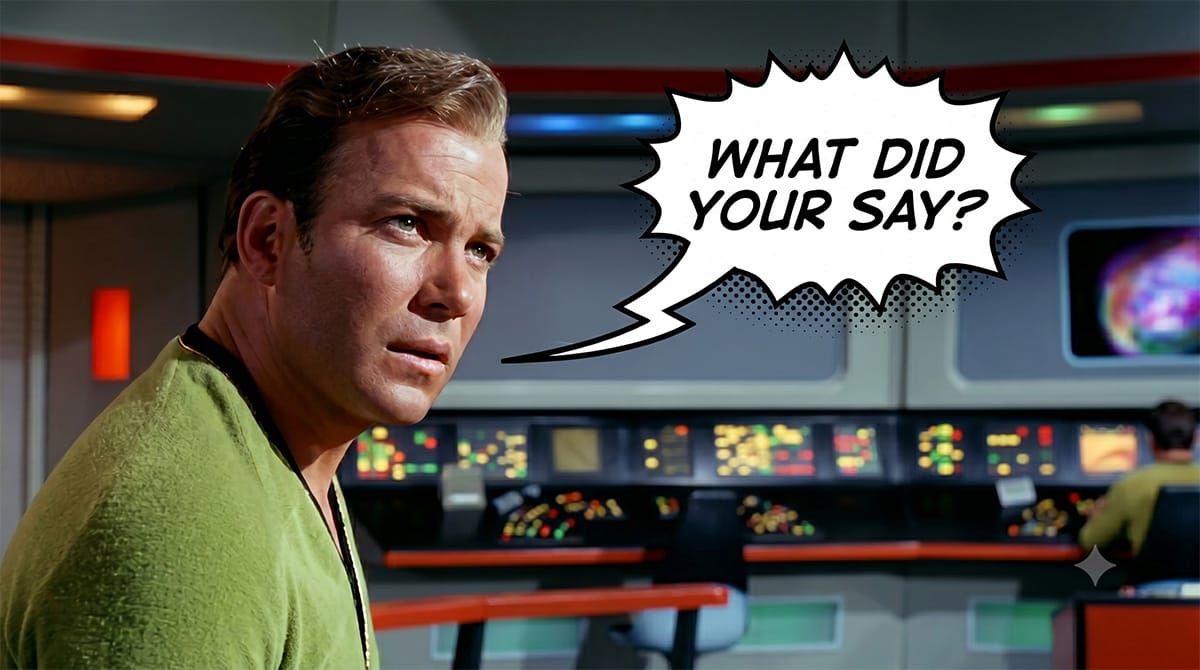
Gene Roddenberry’s “Star Trek” ran for just three seasons, from 1966 to 1969, yet it left behind a catalog of lines that fans have been repeating for more than half a century.Some of those lines are philosophical. Some are funny. Some are both. All of them feel like they belong to an era when television still trusted its audience to think.Here, in no particular order, are the 25 greatest quotes from “Star Trek: The Original Series.”
| # | Quote | Character | Episode |
|---|---|---|---|
| 1 | "Space: the final frontier." | Captain Kirk | Opening Narration |
| 2 | "These are the voyages of the starship Enterprise." | Captain Kirk | Opening Narration |
| 3 | "To boldly go where no man has gone before." | Captain Kirk | Opening Narration |
| 4 | "Live long and prosper." | Spock | The Savage Curtain |
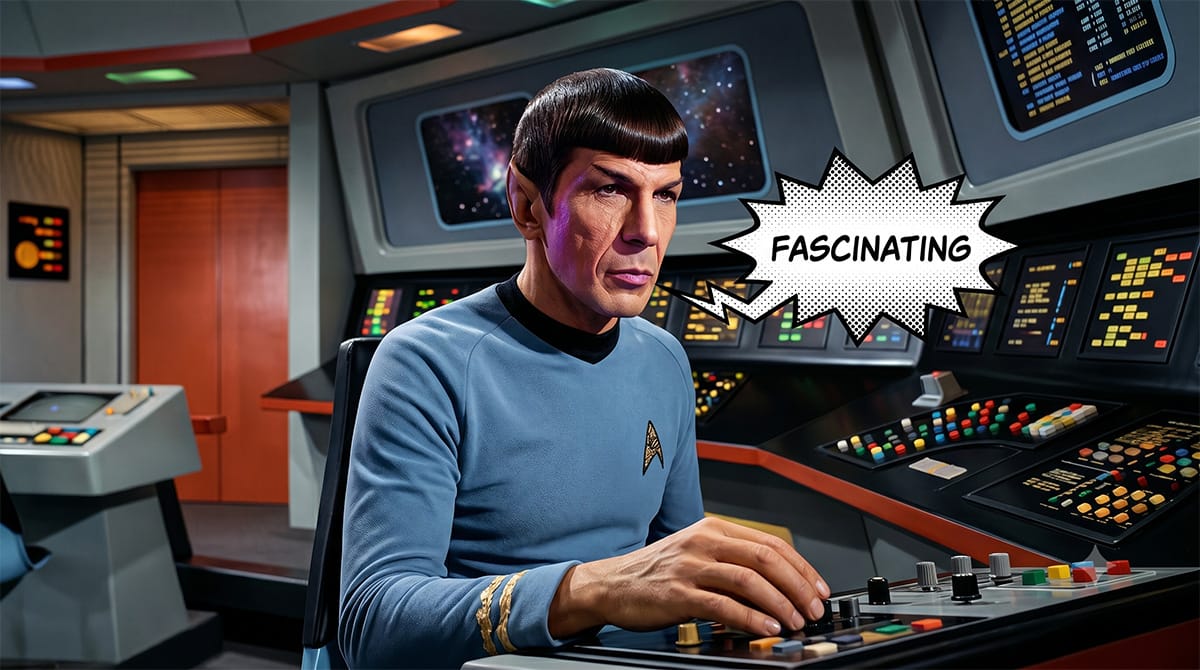
| 5 | "Fascinating." | Spock | Recurring catchphrase |
| 6 | "The needs of the many outweigh the needs of the few." | Spock | The Devil in the Dark |
| 7 | "Insufficient facts always invite danger." | Spock | Space Seed |
| 8 | "Logic is the beginning of wisdom, not the end." | Spock | The Changeling |
| 9 | "After a time, you may find that having is not so pleasing a thing as wanting." | Spock | Amok Time |
| 10 | "I have been and always shall be your friend." | Spock | Amok Time |
| 11 | "He's dead, Jim." | Dr. McCoy | Recurring catchphrase |
| 12 | "I'm a doctor, not a bricklayer." | Dr. McCoy | The Devil in the Dark |
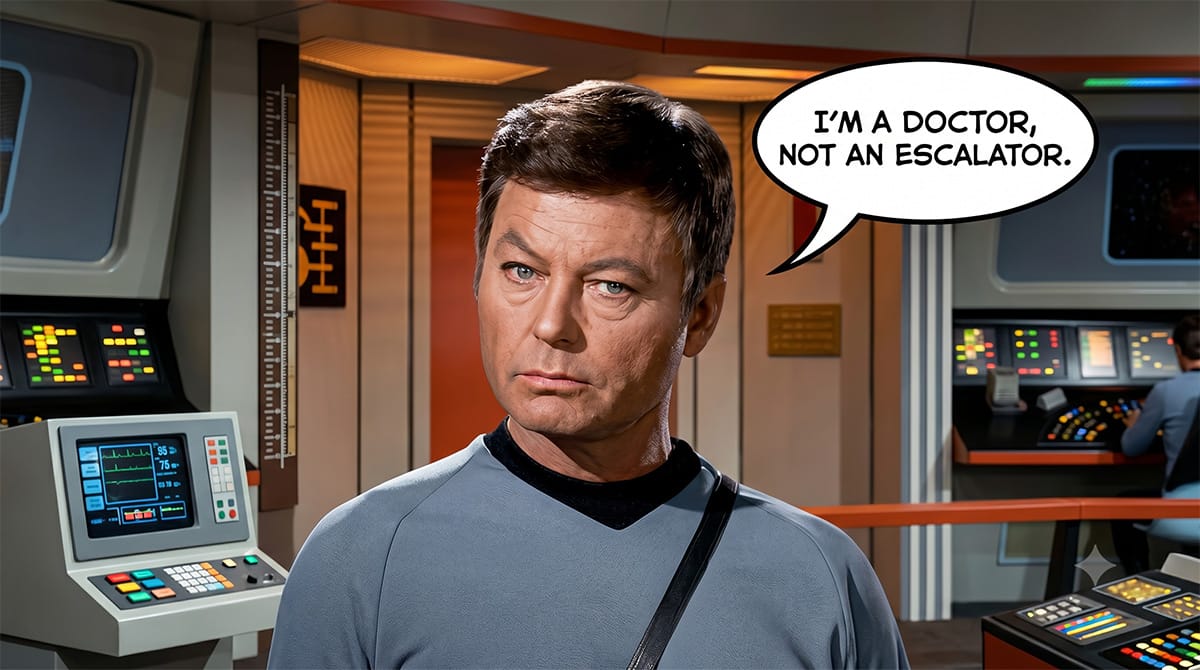
| 13 | "I'm a doctor, not an escalator." | Dr. McCoy | Friday's Child |
| 14 | "I'm a doctor, not a mechanic." | Dr. McCoy | The Doomsday Machine |
| 15 | "In this galaxy, there's a mathematical probability of three million Earth-type planets." | Captain Kirk | Balance of Terror |
| 16 | "Risk is our business." | Captain Kirk | Return to Tomorrow |
| 17 | "They used to say if man could fly, he'd have wings. But he did fly." | Captain Kirk | Return to Tomorrow |
| 18 | "Leave any bigotry in your quarters; there's no room for it on the bridge." | Captain Kirk | Balance of Terror |
| 19 | "Without freedom of choice, there is no creativity." | Captain Kirk | The Return of the Archons |
| 20 | "Compassion: that's the one thing no machine ever had." | Dr. McCoy | The Ultimate Computer |
| 21 | "I'm laughing at the superior intellect." | Captain Kirk | The Naked Time |
| 22 | "The prejudices people feel about each other disappear when they get to know each other." | Captain Kirk | Elaan of Troyius |
| 23 | "Computers make excellent and efficient servants, but I have no wish to serve under them." | Spock | The Ultimate Computer |
| 24 | "Change is the essential process of all existence." | Spock | Let That Be Your Last Battlefield |
| 25 | "A piece of the action." | Young Boy / Iotian slang | A Piece of the Action |
The Opening Words
We begin with the words that opened every episode, words whose pull endures: “Space: the final frontier. These are the voyages of the starship Enterprise. To boldly go where no man has gone before.” Captain Kirk delivered them with the confidence of a man who meant every syllable, and viewers believed him. That opening monologue may be the most recognizable in the history of American television.
Spock on Logic and Wisdom
Spock, of course, gave the show much of its intellectual weight. When he observed that “logic is the beginning of wisdom, not the end,” he was saying something the Greeks would have recognized and that most people still get backward.His declaration that “the needs of the many outweigh the needs of the few” has permeated everyday life so thoroughly that people say it without knowing where it comes from. His quiet “fascinating”—delivered with one raised eyebrow and no further explanation — became one of the most imitated lines in the history of the medium.
Spock on Human Failure
Spock also had a sharp eye for human failure. In “Balance of Terror,” he sized up a dangerously overconfident opponent with the observation that “he’s intelligent, but not experienced. His pattern indicates two-dimensional thinking.” That line works as well in a boardroom as it does on a starship bridge. And when he told Kirk that “insufficient facts always invite danger,” he was not being pedantic. He was right.
Spock's Quieter Side
Not all of Spock’s lines were stern. “After a time, you may find that having is not so pleasing a thing as wanting,” from “Amok Time,” is surprisingly melancholy for a Vulcan, and true in a way that most people learn the hard way. And his parting assurance to Kirk—“I have been and always shall be your friend” — remains one of the most quietly moving lines the series ever produced.
McCoy on Machines and Men
Dr. McCoy was the show’s emotional counterweight to Spock, and he knew how to make a point. “Compassion: that’s the one thing no machine ever had,” he said in “The Ultimate Computer,” which was already a warning in 1968 and feels even more pointed today.His agreement with Spock’s limits was summed up neatly when he said, “Computers make excellent and efficient servants, but I have no wish to serve under them.” McCoy said that. Spock said it. The writers were clearly worried about something.
McCoy Being Funny
McCoy’s comic timing was just as reliable. His recurring insistence on his professional identity produced some of the show’s funniest moments. “I’m a doctor, not a bricklayer.” “I’m a doctor, not an escalator.” “I’m a doctor, not a mechanic.”Each one landed with the same rhythm and the same exasperation, and each one got a laugh. The crowning entry in that tradition came in “The Naked Time,” when McCoy, riding a wave of improbable confidence, announced: “By golly, Jim, I’m beginning to think I can cure a rainy day.” That line is pure gold. So is his blunt recurring verdict on crew casualties: “He’s dead, Jim.”
Kirk on Risk and Freedom
Kirk got the speeches. He earned them. “Risk is our business,” he announced in “Return to Tomorrow,” and the line fit the man perfectly.He also pointed out something that sounds obvious until you realize how rarely anyone says it: “They used to say if man could fly, he’d have wings. But he did fly.”In “Balance of Terror,” he drew a harder line: “Leave any bigotry in your quarters; there’s no room for it on the bridge.” In “The Return of the Archons,” he went further: “Without freedom of choice, there is no creativity.” Kirk believed that, and he acted like it.
Kirk's Dry Wit
Kirk could also be funny. His dry announcement in “The Naked Time” — “I’m laughing at the superior intellect” — was delivered at precisely the right moment, and it still works.
Spock on Possibility and Change
Spock, always the scientist, never abandoned hope. “There are always possibilities,” he said, more than once, in the measured tone of a man who had calculated the odds and decided they were still worth the effort. And his reminder in “Let That Be Your Last Battlefield” that “change is the essential process of all existence” was the kind of observation that sounds simple until you sit with it.
Honorable Mentions
A few lines deserve honorable mention. Kirk’s sober calculation in “Balance of Terror”—“In this galaxy, there’s a mathematical probability of three million Earth-type planets”—set the scale of the show’s ambitions in a single sentence. His observation in “Elaan of Troyius” that “the prejudices people feel about each other disappear when they get to know each other” was optimistic in 1968 and remains so. And the Iotian slang from “A Piece of the Action”—“a piece of the action”—was funny enough that it outlasted the episode that coined it.
“Star Trek: The Original Series” ran for 79 episodes. It produced quotes that have been in circulation for more than 50 years. That is not a bad return on three seasons of network television.
Longer Speeches Worth Looking Up
| Episode | Speaker | Why It Matters |
|---|---|---|
| The Return of the Archons | Kirk | His argument that freedom, creativity, and individuality are essential to civilization. |
| The Omega Glory | Kirk | The famous reading and interpretation of the U.S. Constitution and the meaning of liberty. |
| A Taste of Armageddon | Kirk | His condemnation of sanitized, computerized warfare and insistence that people must face the horrors of war. |
| Balance of Terror | Kirk | Several discussions about prejudice, duty, and judging individuals rather than their race. |
| The Devil in the Dark | Spock and Kirk | The realization that the Horta is intelligent and deserving of understanding rather than destruction. |
| The Ultimate Computer | Kirk | His defense of human judgment and responsibility over machine control. |
| Let That Be Your Last Battlefield | Bele and Lokai | The episode's climactic discussion revealing the absurdity of racial hatred. |
| Return to Tomorrow | Kirk | His speech about humanity's destiny to grow beyond its limitations. |
| The Savage Curtain | Surak and Lincoln | Discussions about the nature of good, evil, and moral choice. |
| The Cloud Minders | Kirk | His challenge to a society built on privilege and class division. |