
War Cryptography and Power in Cryptonomicon
Neal Stephenson’s “Cryptonomicon” blends World War II, cryptography, computers, and adventure in a sprawling, funny, and ambitious novel about information, power, and technological change.

Secrets, Codes, and Gold
Neal Stephenson's "Cryptonomicon" arrived in 1999 with the dimensions of a doorstop and the ambitions of a small national government. It mixed World War II, mathematics, cryptography, buried treasure, computer programming, international business, electronic money, and the early Internet into a novel of more than 900 pages. Readers who prefer their fiction lean and efficient received fair warning from the scale alone.
Yet "Cryptonomicon" was not large merely because Stephenson had a great deal of plot to cover. It was large because he had a great deal to say. He approached technology with the enthusiasm earlier adventure writers reserved for sailing ships, firearms, automobiles, and airplanes.
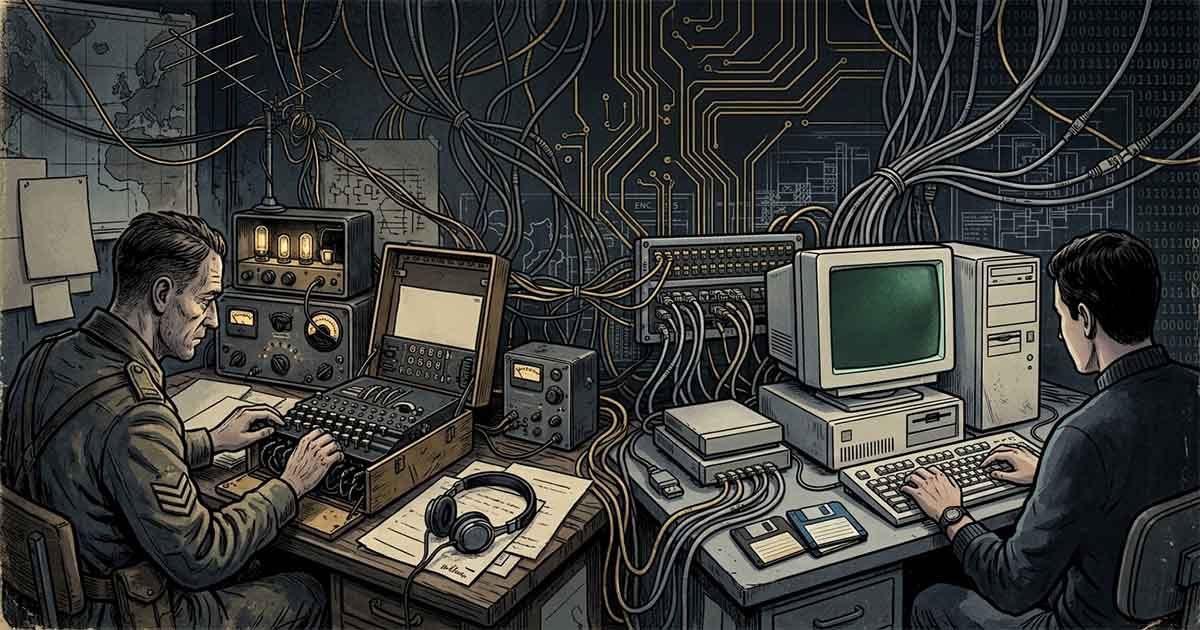
The novel moved between two periods. During World War II, Lawrence Pritchard Waterhouse, a brilliant and eccentric American mathematician, became involved in Allied cryptanalysis. His story crossed that of Bobby Shaftoe, a tough American Marine whose experience of the war was considerably more physical.
Decades later, Lawrence's grandson Randy Waterhouse worked as a computer programmer and entrepreneur. Randy became involved in a telecommunications enterprise that raised questions about encryption, privacy, electronic money, and the growing importance of computer networks. The two periods initially appeared far apart, but Stephenson gradually demonstrated that they were different fronts in the same struggle.
That struggle concerned the control of information and the power that followed from it. This gave "Cryptonomicon" a foundation sturdier than its sprawling construction sometimes suggested. It was an unruly, overgrown, frequently brilliant novel whose defects were closely related to its virtues.
Two Wars for Information
The World War II sections contained one of Stephenson's cleverest ideas. Breaking an enemy code did not automatically solve the intelligence problem. It created another problem because using secret information could reveal that the secret was no longer secure.
If Allied forces acted too efficiently upon intercepted information, the enemy might realize its communications had been compromised. The Allies, therefore, needed both to acquire secret information and to conceal the fact that they possessed it. Knowledge became useful only when it was accompanied by control over what others knew about it.
Stephenson made this problem exciting because he understood that information could produce physical consequences. A mathematical discovery made in a quiet room might eventually determine where ships sailed, where soldiers fought, and who lived long enough to return home. The distance between abstraction and action could be surprisingly short.
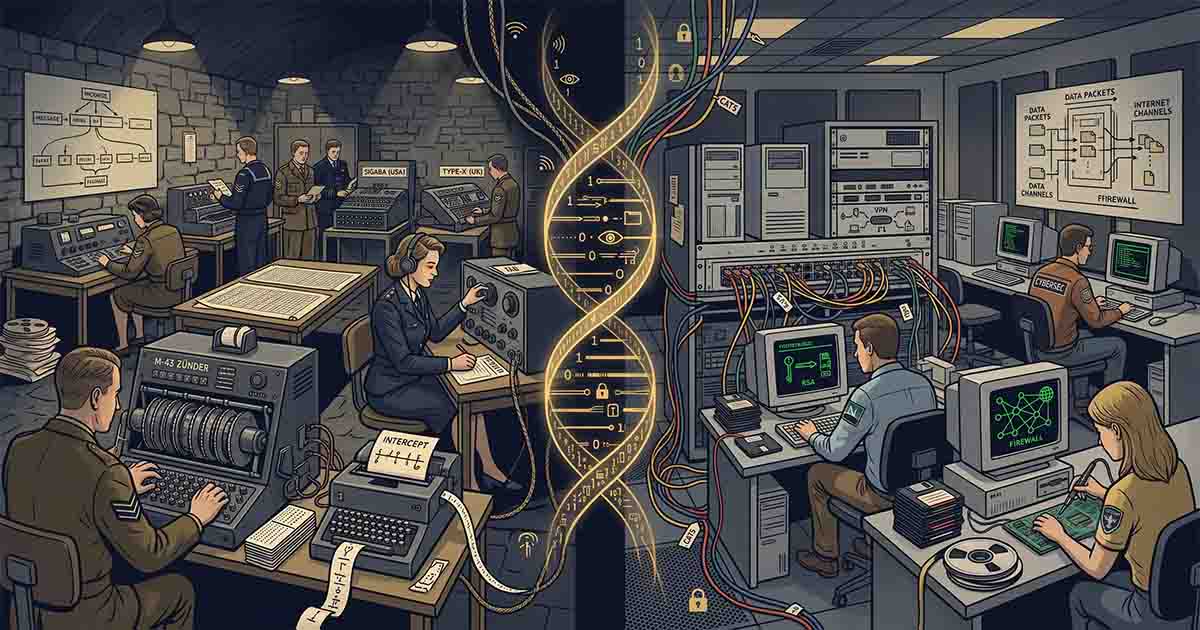
The 1990s story reversed the equation. Randy and his associates lived in a world where governments and large institutions already possessed considerable power to gather, store, and control information. Their technological ambitions centered upon keeping information secure.
The symmetry gave the novel much of its intellectual force. Lawrence's generation wanted to penetrate encrypted systems, while Randy's generation wanted to build encrypted systems that resisted penetration. Between those two periods lay the development of the modern information society.
Radio signals became computer networks, wartime cryptography became civilian encryption, and physical money began its transformation into information moving between machines. Stephenson understood that this transformation concerned more than better gadgets. Information had become a form of power comparable to money, industrial capacity, and military force.
This was where "Cryptonomicon" rose above the ordinary technological thriller. Its machines and algorithms were never merely decorations attached to an adventure story. They helped determine the structure of the world in which the adventure occurred.
Engineers as Heroes
Stephenson also made an unusual choice about heroism. His characters frequently succeeded because they understood how things worked. Competence itself became one of the book's chief heroic qualities.
Lawrence Waterhouse was the clearest example. He approached the world mathematically and sometimes appeared better equipped to understand an equation than another human being. Yet Stephenson turned that peculiar mind into a source of dramatic energy.
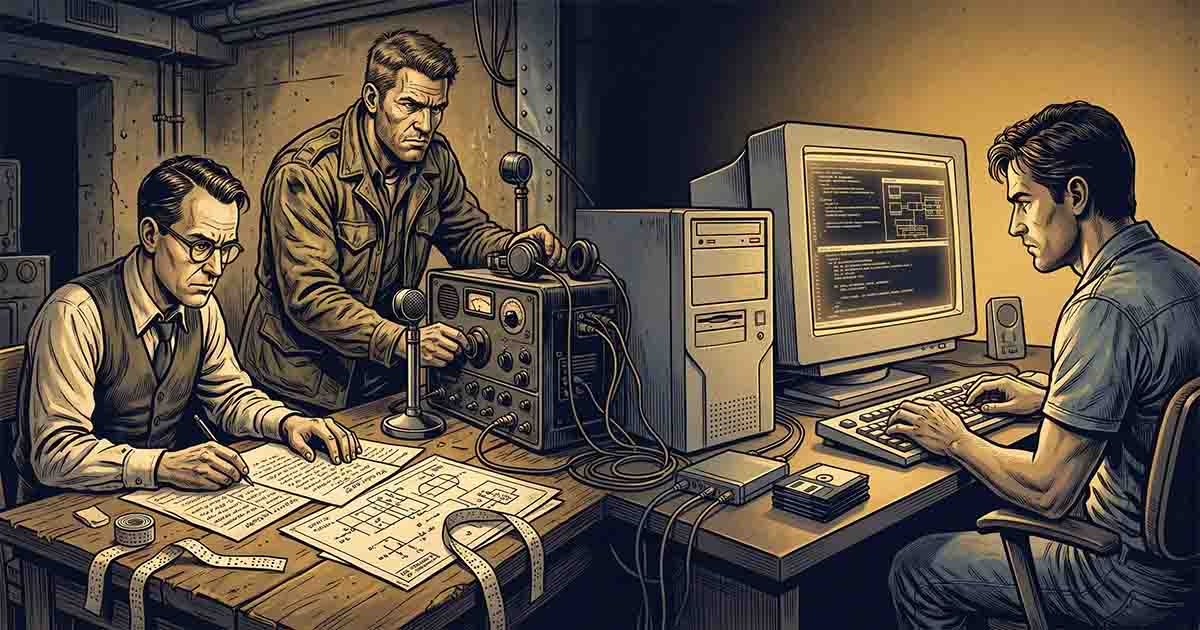
Bobby Shaftoe provided the necessary counterweight. Shaftoe was practical, tough, loyal, and accustomed to solving problems that could not be reduced to symbols on paper. Where Waterhouse confronted abstractions, Shaftoe confronted their physical consequences.
Their differences mattered because "Cryptonomicon" respected both kinds of competence. Mathematical brilliance without practical action remained sterile, while physical courage without good information could become wasteful or disastrous. Stephenson was interested in what happened when thought and action worked together.
Randy Waterhouse carried this tradition into the computer age. His battlefield involved software, networks, business agreements, communications systems, and the complicated interests surrounding them. The tools changed while the requirement for competence remained.
This affection for capable men gave the novel an old-fashioned quality beneath its technological surface. Stephenson admired people who understood their work, accepted difficult problems, and solved them through intelligence, persistence, courage, or some combination of the three. Civilization in "Cryptonomicon" depended less upon grand declarations than upon people who could make complicated systems function.
That emphasis also revealed one of Stephenson's limitations. His characters often became more convincing through their work than through their emotional lives. Readers learned how a man thought about mathematics, machinery, cryptography, or computers more readily than they learned the deeper movements of his heart.
The approach, nevertheless, suited the novel. "Cryptonomicon" was fascinated by the connection between thought and action. Stephenson's heroes earned their place in the story because they could do things and understood why those things mattered.
The Magnificent Mess
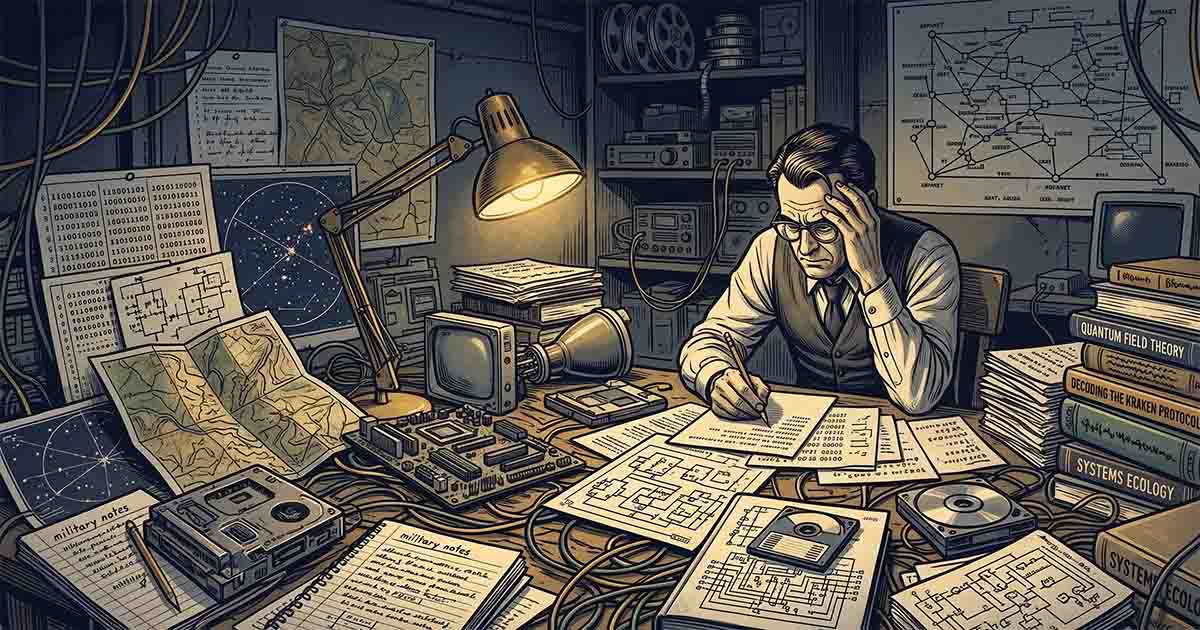
Stephenson had another defining habit that could delight one reader and drive another to distraction. He could begin with a perfectly straightforward scene and suddenly decide that the reader required several pages about mathematics, computer hardware, military procedure, telecommunications, business, food, or another subject that had caught his attention. A conventional editor might have approached certain passages with pruning shears and professional determination.
The problem was that many of these excursions were wonderful. Stephenson possessed a rare ability to make technical explanations funny. He understood the comic possibilities of obsessive intelligence.
A character who pursued a minor problem far beyond the point where an ordinary man would have abandoned it could become both ridiculous and strangely admirable. Stephenson recognized that knowledgeable people often became funniest when they were completely serious. Much of the novel's humor grew naturally from that observation.
The digressions also created the book's distinctive texture. "Cryptonomicon" was interested in systems, and systems contained details. Cables, codes, currencies, machines, organizations, and human beings all formed parts of larger structures whose workings were not always visible from the outside.
Contemporary reviewers noticed the same contradiction. The Washington Post praised Stephenson's exuberance while acknowledging stretches of pedantry and excess. Wired admired the novel's cryptographic sophistication and its unusual technological heroes while recognizing that its length and detours demanded patience.
Publishers Weekly treated the book as a major and ambitious literary production. Kirkus Reviews was considerably less impressed by the enormous quantities of technical explanation and the loose relationship between some of that material and the central plot. Other contemporary critics similarly admired Stephenson's intelligence while questioning his discipline.
The critics on both sides had a point. "Cryptonomicon" could have been shorter, and some passages slowed the narrative while some ideas received more attention than they deserved. The book occasionally behaved as though every interesting thought Stephenson had during composition deserved permanent residence in the manuscript.
Yet a ruthlessly edited "Cryptonomicon" might also have been a lesser book. Its abundance created the sense that the reader had entered a world of interconnected systems rather than a carefully constructed fictional corridor. The clutter was sometimes irritating, but it also made the intellectual environment feel alive.
This was the novel's central paradox. Stephenson's lack of restraint weakened its structure while strengthening its personality. The same writerly impulse produced both the unnecessary pages and some of the book's most memorable passages.
The Information Age Arrives
More than a quarter-century after publication, "Cryptonomicon" has acquired an additional layer of interest. Stephenson wrote about strong encryption, electronic money, private communications, global computer networks, data security, and conflicts over control of information when many of these subjects still belonged to a relatively specialized technological culture. Modern readers encounter these subjects under very different circumstances.
It would be easy to praise Stephenson simply for predicting the future, but that would give him both too much and too little credit. Stephenson did something more interesting than assembling a list of gadgets that later became important. He recognized the direction in which existing technologies were pushing society.
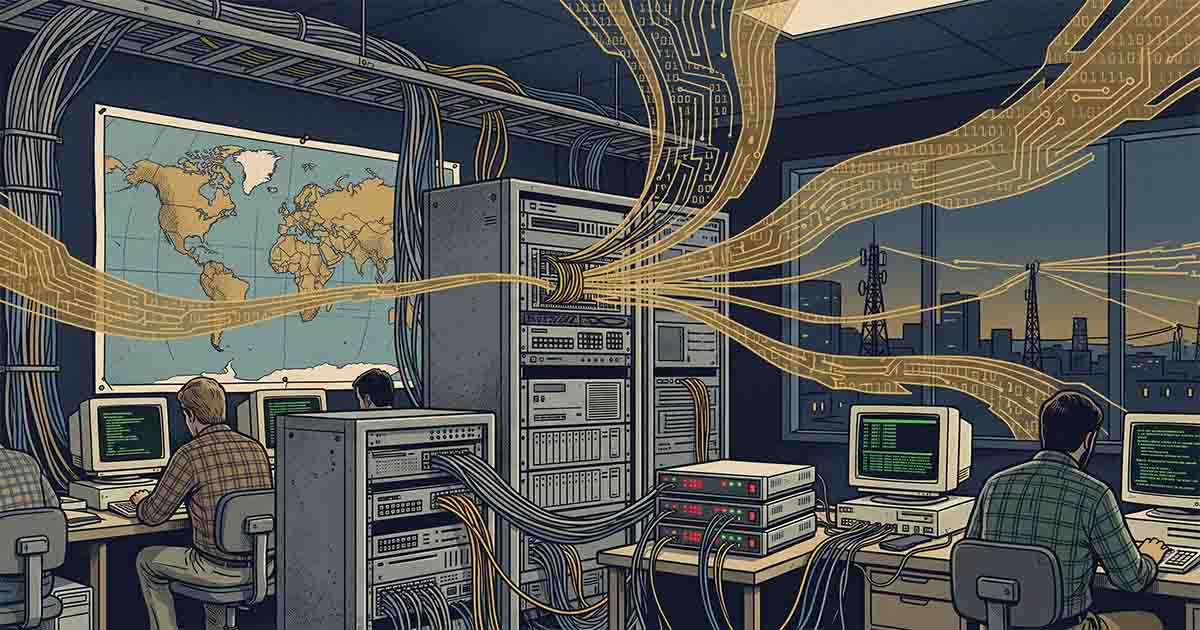
Computer networks were not merely faster methods of communication. They were changing the relationship between information, money, institutions, and individual power. Stephenson grasped that technological development could change the balance of power without changing basic human motives.
That insight connected the modern narrative with World War II. The machines changed dramatically, but the underlying contest remained familiar. Governments, corporations, soldiers, mathematicians, businessmen, and programmers all wanted information because information allowed them to act.
This also explained why "Cryptonomicon" comfortably belonged to science fiction, even though much of the novel occupied historical or approximately contemporary settings. Stephenson applied the traditional method of serious science fiction to the world immediately around him. He examined existing technologies and asked what followed from them.
The results were not always elegant. "Cryptonomicon" demanded patience, tolerated digression, and sometimes seemed determined to test whether the reader possessed the endurance of one of Bobby Shaftoe's Marines. Readers who wanted ruthless narrative economy had legitimate reasons for frustration.
For readers who enjoyed history, machinery, mathematics, codes, computers, adventure, and the spectacle of intelligent people attacking difficult problems, the excess was part of the bargain. Few novels made technical thought feel so much like exploration. Fewer still connected that intellectual excitement so effectively with the movement of history.
"Cryptonomicon" was not a flawless masterpiece. It was something more peculiar and, in some respects, more interesting. It was an undisciplined but formidable novel about the moment when information became one of civilization's principal forms of power.
Stephenson saw that the tools used to protect and acquire information would change, while the human struggle surrounding information would remain. That insight gave "Cryptonomicon" a relevance beyond the technological fashions of 1999. Its machinery aged, but its central argument did not.