
The Heroes Who Defined Classic Science Fiction
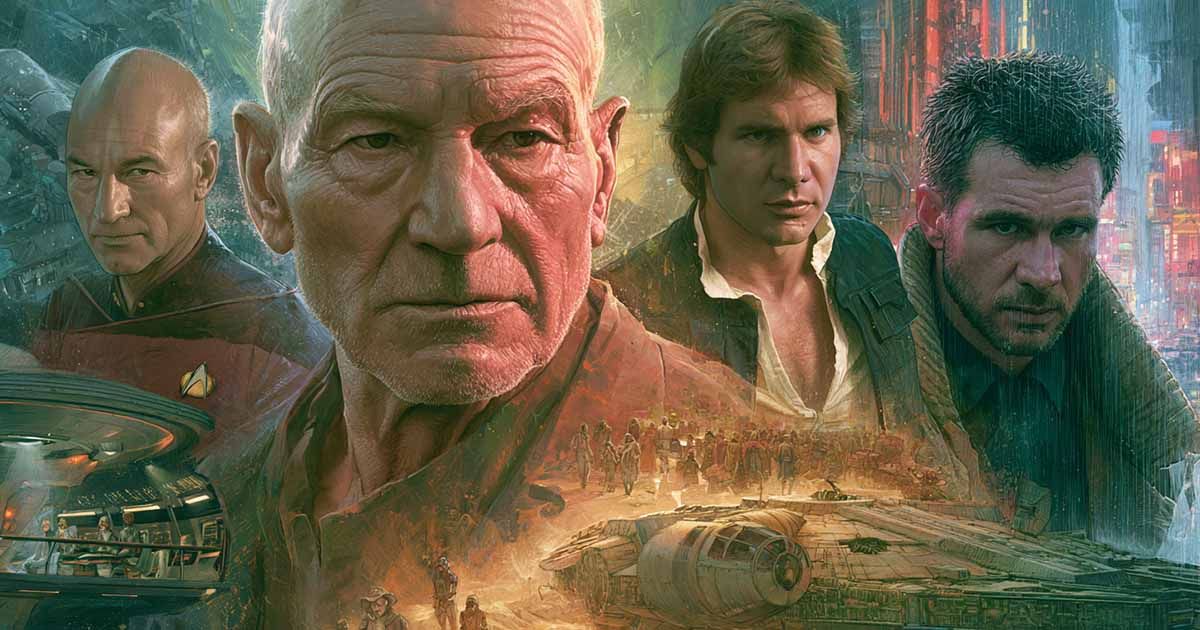
This week's Science Fiction Classics celebrates the shared birthday of Patrick Stewart and Harrison Ford, then explores four unforgettable heroes from "Star Trek," "Dune," "Star Wars," and "Blade Runner" to discover what makes a science fiction hero endure.

This Week in Classic Science Fiction
July 13 marks the birthdays of two actors whose careers helped shape modern science fiction. Patrick Stewart was born in 1940, and Harrison Ford followed two years later in 1942. Although they became famous in very different roles, both earned a permanent place in the history of the genre.
Before Patrick Stewart took command of the USS Enterprise as Captain Jean-Luc Picard in "Star Trek: The Next Generation," he appeared as Gurney Halleck in David Lynch's "Dune" (1984). That adaptation divided audiences when it was released, yet it has since gained a loyal following over the years. Three years later, Stewart stepped onto the bridge of the Enterprise and created one of television's most respected science fiction characters.
Harrison Ford made an equally lasting impression on the big screen. He introduced moviegoers to the charming rogue Han Solo in "Star Wars" and later portrayed the weary blade runner Rick Deckard in "Blade Runner." Those two performances helped define two very different visions of the future, and both continue to influence science fiction today.
It is an interesting coincidence that Stewart and Ford share the same birthday. It is even more remarkable that two men born just two years apart helped create some of the most memorable characters in classic science fiction. We celebrate both this week as we take a closer look at the heroes they brought to life.
Sponsored by: Captain Claw Science Fiction Cat T-shirt
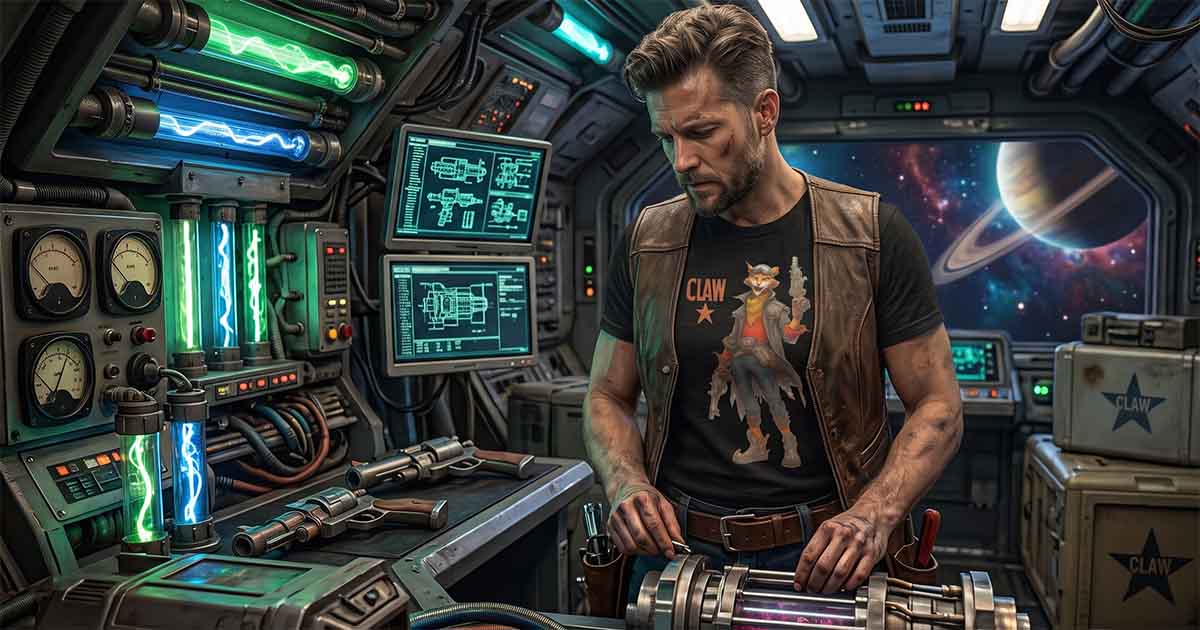
Space is a dangerous place, but Captain Claw has never let that ruin his day. The captain of the Hairball Express has talked his way out of pirate ambushes, escaped impossible traps, and somehow turned a mountain of dog kibble into the perfect getaway. If you enjoy wisecracking rogues, ray guns, and classic space adventure with a healthy dose of humor, Captain Claw is ready for his next mission.
Four Heroes for Four Futures
Classic science fiction has never depended on one kind of hero. The stories that continue to entertain us present men with different strengths, different flaws, and different ideas about duty. Some lead from the front. Others would rather be left alone until events force them to choose between comfort and doing what is right.
Patrick Stewart and Harrison Ford became science fiction icons because they portrayed four very different heroes. Jean-Luc Picard, Gurney Halleck, Han Solo, and Rick Deckard live in very different futures, yet each reflects a timeless quality that audiences recognize. Their stories remind us that while technology changes, character does not.
The Hero of Civilization
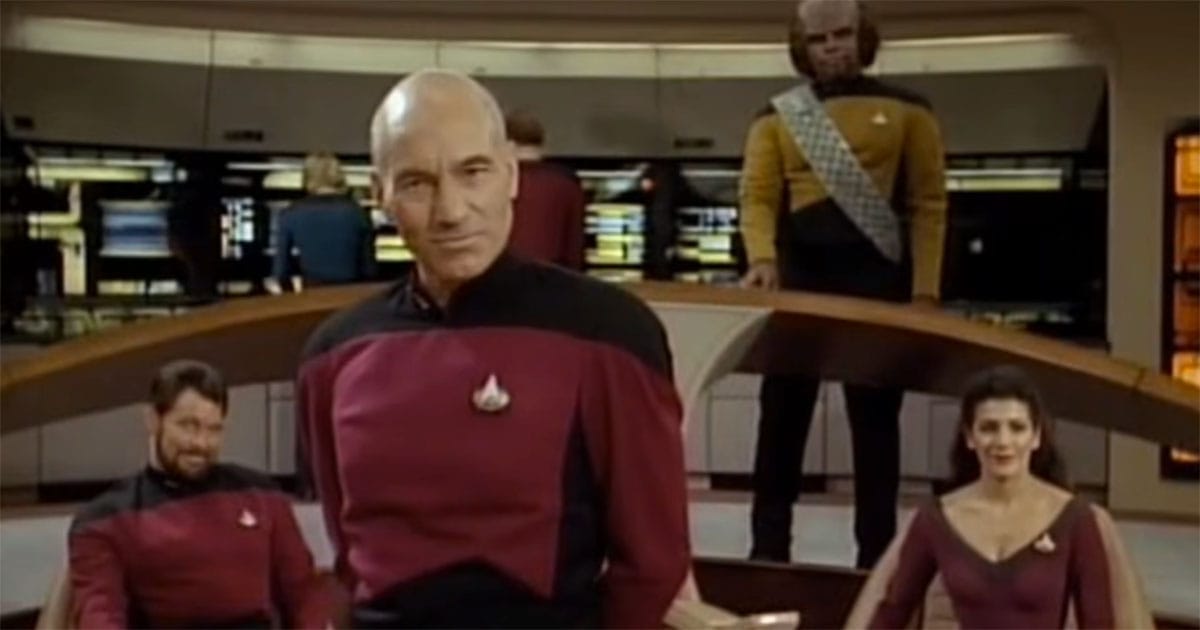
Captain Jean-Luc Picard represents the hero of civilization. As captain of the USS Enterprise in "Star Trek: The Next Generation," he rarely rushed into action. He gathered information, listened to his officers, and searched for the wisest solution before giving an order.
When force became necessary, Picard accepted it as a responsibility rather than an opportunity. He understood that every decision affected the lives of his crew. That sense of duty earned their respect and gave viewers confidence that they were watching a man worthy of command.
Picard also reflected the optimism that has always been part of the "Star Trek" vision. Humanity had not become perfect, but it had become better. Knowledge, self-discipline, and cooperation were more valuable than anger or fear. The Enterprise explored the unknown with curiosity instead of conquest.
That approach made Picard different from many action heroes of the era. He proved that wisdom could be just as exciting as a firefight. His greatest victories often came through patience, diplomacy, and moral courage.
The Hero of Loyalty
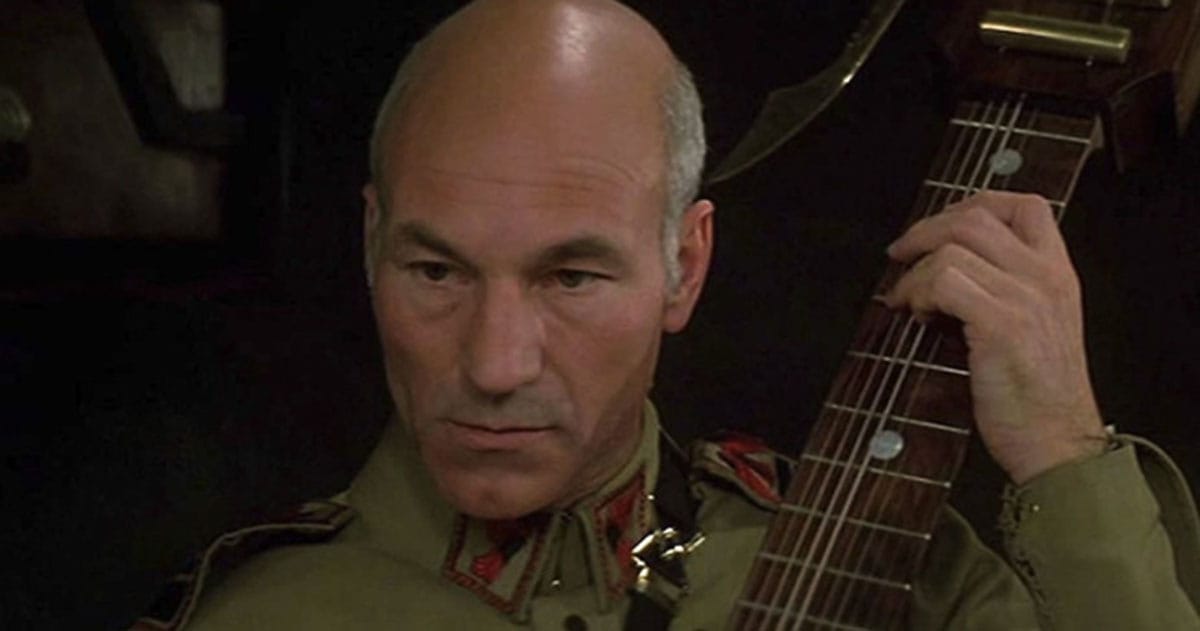
Gurney Halleck from "Dune" represents the hero of loyalty. He is a warrior, a mentor, and a trusted servant of House Atreides. His world is filled with betrayal, political intrigue, and constant danger, yet he never loses sight of the men he has sworn to protect.
Unlike Picard, Gurney does not lead an expedition into the unknown. He serves someone else's cause. His strength comes from remaining faithful even after disaster destroys everything he has known. That kind of loyalty is not glamorous, but it is essential.
Gurney teaches Paul Atreides to fight, to think, and to survive. He becomes more than a weapons master. He becomes an example of honor under pressure. In a universe where alliances change overnight, Gurney's word remains dependable.
Classic science fiction often celebrates explorers and inventors, but it also honors men who keep their promises. Gurney reminds us that history is shaped not only by great leaders, but also by faithful companions who refuse to abandon their principles.
The Hero of Freedom
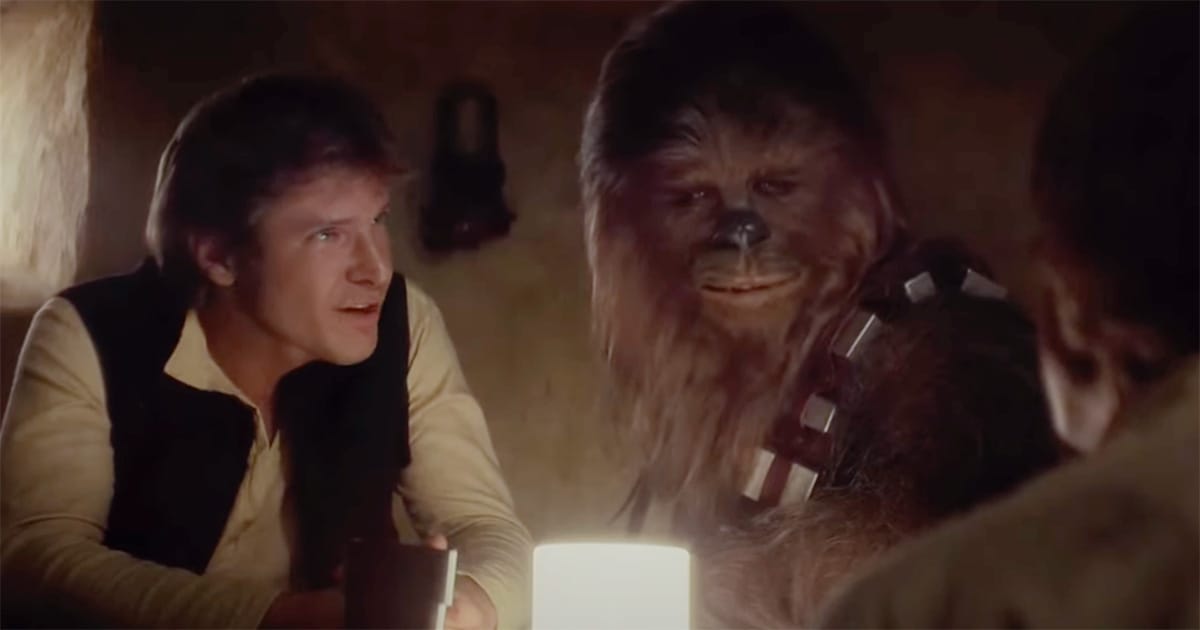
Han Solo begins as the hero of freedom. He wants to stay independent, earn enough money to keep the Millennium Falcon flying, and avoid becoming involved in other people's problems. He is clever, resourceful, and always looking for the quickest escape.
Those qualities make Han entertaining from the moment he appears on screen. He delivers sharp one-liners, trusts his instincts, and refuses to pretend he is something he is not. Yet his greatest strength is not his confidence. It is his capacity to change.
As the story unfolds, Han discovers that freedom means more than avoiding responsibility. It also means choosing to stand beside friends when walking away would be easier. His return during the Battle of Yavin remains one of the defining moments in science fiction adventure because it is entirely his decision.
Han earns his place among science fiction's great heroes because he grows. He chooses courage over comfort and loyalty over self-interest. Audiences recognize that kind of transformation because it reflects the choices ordinary people face in everyday life.
The Hero of Conscience
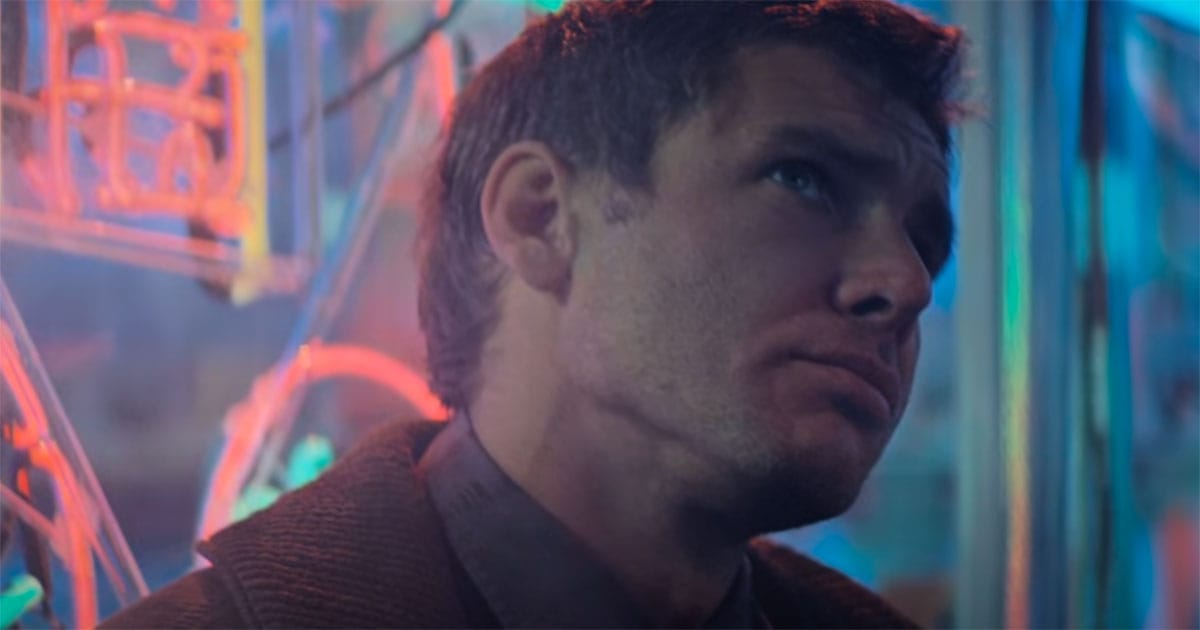
Rick Deckard from "Blade Runner" offers another kind of hero altogether. He commands no starship, leads no rebellion, and seeks no glory. He simply tries to complete a difficult assignment in a future where the line between man and machine has become uncertain.
As Deckard hunts the replicants, the questions become more important than the action. What makes a person human? Is it memory, emotion, compassion, or something else entirely? The story refuses easy answers, and that uncertainty gives it lasting power.
Deckard's greatest struggle takes place within his own conscience. The more he learns about the beings he has been ordered to destroy, the more difficult his mission becomes. He discovers that technology can imitate humanity, but compassion cannot be programmed.
"Blade Runner" remains one of science fiction's finest films because it asks timeless questions instead of offering simple solutions. Deckard reminds us that preserving one's humanity can require as much courage as winning a battle.
Character Before Technology
These four heroes could hardly be more different. One leads through wisdom. One serves through loyalty. One discovers responsibility through freedom. One follows his conscience through uncertainty.
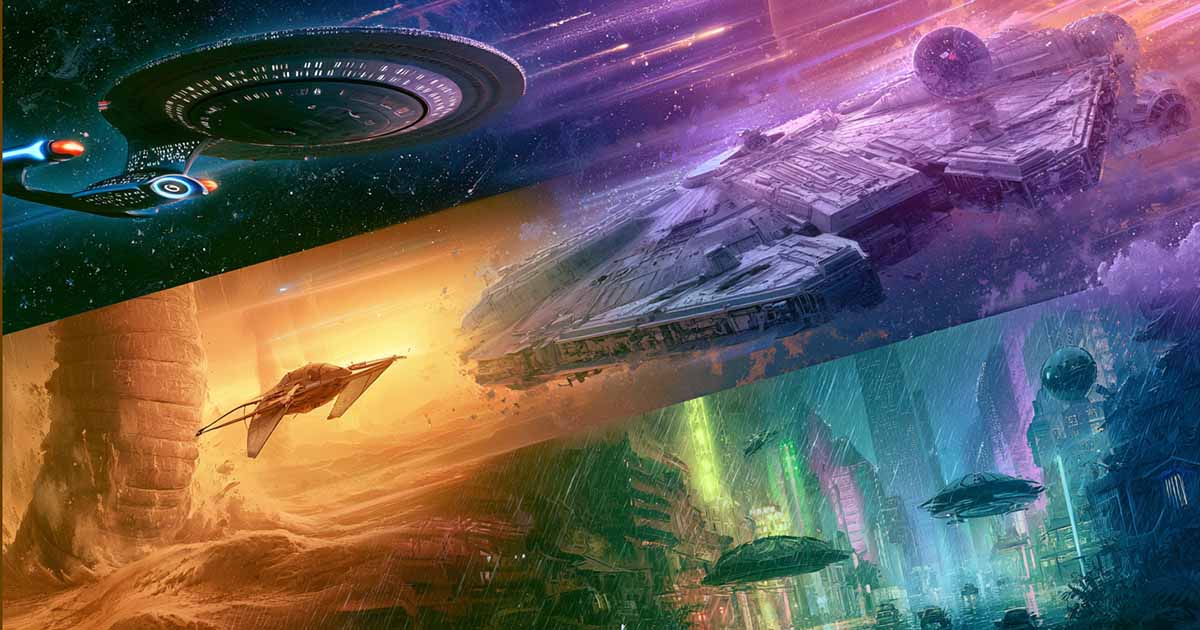
Their worlds are filled with starships, desert planets, distant galaxies, and artificial humans. Those imaginative settings make the stories memorable, but they are not the reason audiences return to them decade after decade. We return because we recognize the men at the center of those stories.
Classic science fiction has always understood that technology alone cannot carry a story. Faster engines, more powerful weapons, and impressive special effects may capture a viewer's attention, but they cannot hold it. Memorable heroes give those imagined futures their heart.
That is why these characters continue to resonate today. Special effects improve with every generation, and filmmakers constantly imagine new futures. Wisdom, loyalty, courage, and conscience remain as valuable as they have always been.
Patrick Stewart and Harrison Ford happened to portray four remarkable heroes, but the lasting achievement belongs to the stories themselves. Classic science fiction reminds us that no matter how far mankind travels among the stars, the future will still depend on men of character.
Classic Science Fiction Trivia
- Patrick Stewart reportedly kept his suitcases packed during the first season of "Star Trek: The Next Generation" because he expected the show to fail.
- Harrison Ford was working as a carpenter when George Lucas asked him to read lines during "Star Wars" auditions.
- Patrick Stewart's Gurney Halleck in "Dune" (1984) carries a baliset, an instrument invented by Frank Herbert for the novel.
- Harrison Ford has said he found Rick Deckard difficult to play because "Blade Runner" gave him fewer clear heroic beats than "Star Wars."