
"Things to Come" (1936): A Bold Vision of War, Collapse, and the Future
A deep look at "Things to Come" (1936), a science fiction classic that explores global war, social collapse, and the rebuilding of civilization through science and discipline.

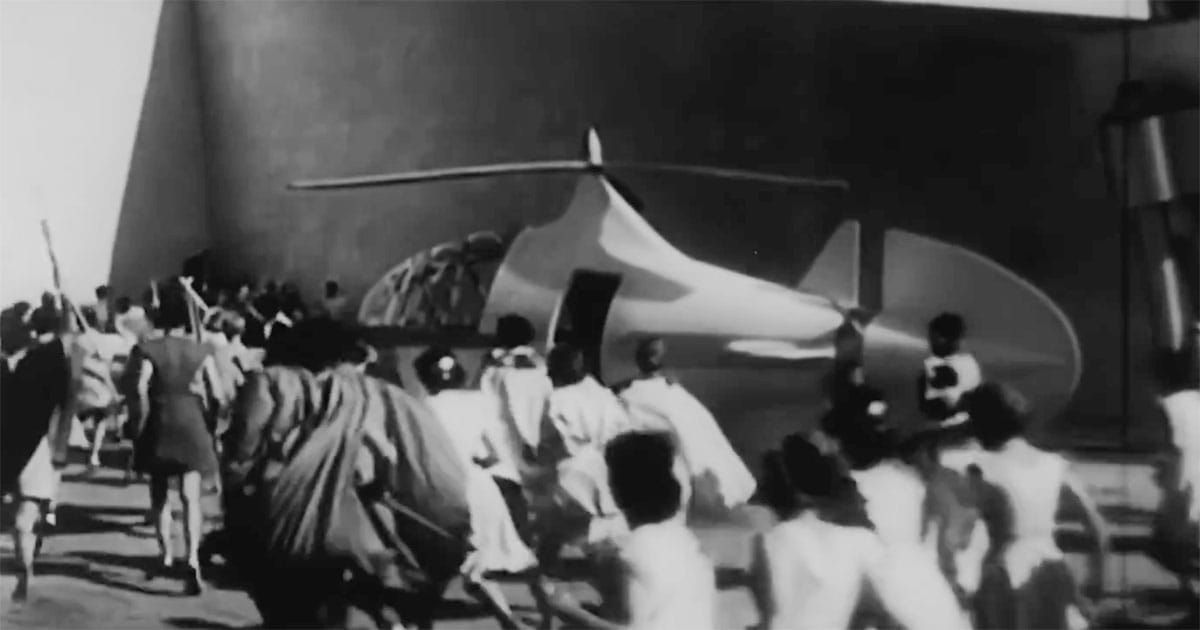
"Things to Come" is an ambitious science fiction film written by H. G. Wells and directed by William Cameron Menzies. It reflects the concerns of the 1930s and projects them into a sweeping vision of the future shaped by war and reconstruction. Few films of its era attempt such a broad view of human history.
A wide historical scope defines the film from its opening moments. Rather than focusing on a single character or conflict, it traces the rise and fall of civilization across generations. This structure allows it to present a clear, deliberate view of progress, shaped by science and discipline.
Uncertainty in the years before global conflict informs much of its outlook. The film anticipates large scale war and social collapse with striking clarity, echoing tensions that would soon erupt into World War II. That connection gives the story a weight that extends beyond fiction.
Longevity comes from its bold ideas and visual ambition. "Things to Come" presents a direct argument about humanity's direction and the role of knowledge in shaping the future. It asks whether progress leads to renewal or whether it carries new risks.
| Attribute | Details |
|---|---|
| Title | Things to Come |
| Director | William Cameron Menzies |
| Writer | H. G. Wells |
| Actors or Actresses | Raymond Massey, Edward Chapman, Ralph Richardson, Cedric Hardwicke |
| Rated | PG |
| Runtime | 109 min |
| Box Office | $1,700,000 (estimated worldwide gross) |
| U.S. Release Date | 18 Apr 1936 |
| Quality Score | 7.0/10 |
Synopsis
A century of upheaval unfolds, beginning with the outbreak of global war. Modern cities are struck by aerial bombardment, and daily life collapses with alarming speed. The early scenes present a confident society that proves unprepared for sustained conflict.
This conflict stretches far beyond its initial outbreak and becomes a defining condition of life. Nations lose their sense of purpose as the war continues without a clear resolution. The destruction becomes routine, and the original causes of the conflict fade into the background.
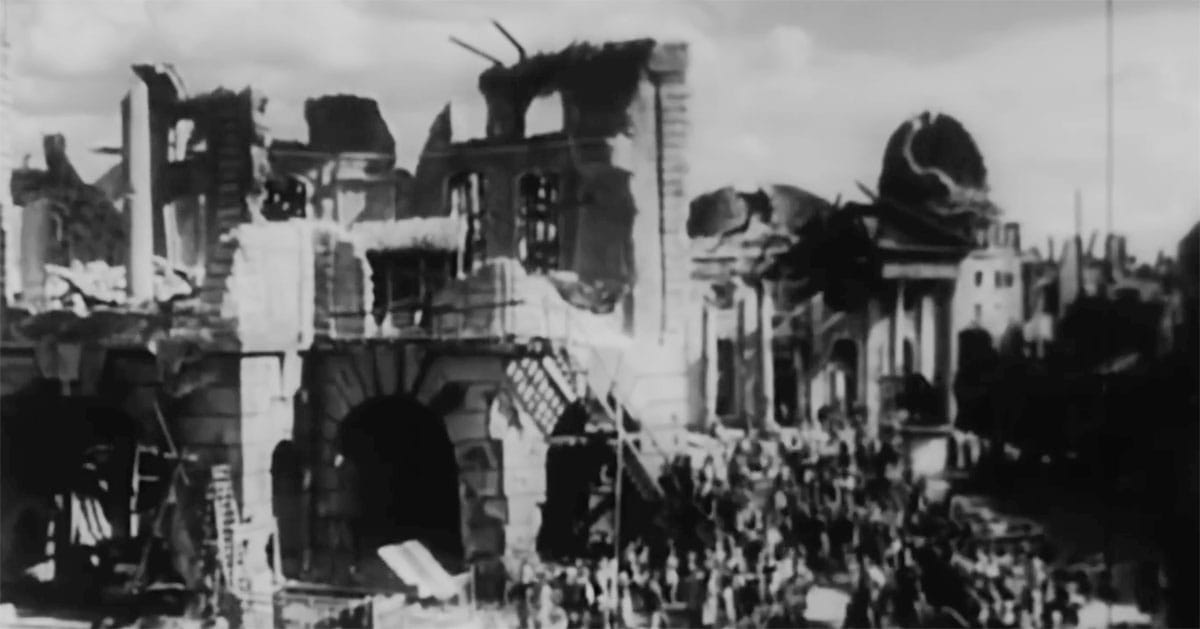
Disease spreads alongside the violence and deepens the crisis. Entire populations are weakened by illness, and recovery becomes difficult as resources vanish. This combination of war and plague accelerates the collapse of organized society.
Order breaks down as institutions fail to respond. Governments lose control, and the systems that once supported daily life begin to disappear. Civilization enters a prolonged dark age marked by uncertainty and fear.
Power shifts to those willing to take it by force. Ralph Richardson portrays a warlord who controls a ruined city through strength and intimidation. His reliance on outdated machines reflects a world that has lost the ability to innovate.
Survival replaces progress as the central concern of daily life. Communities become isolated, and knowledge from the past is gradually lost. This stage of the story emphasizes how fragile modern systems can be under pressure.
Change arrives from an unexpected direction. A group of engineers and pilots introduces a new vision based on order and technical skill. Raymond Massey represents this effort across generations as society begins to rebuild.
Reconstruction is carried out with discipline and long term planning. Cities are redesigned with efficiency in mind, and new systems are created to avoid past failures. Stability returns, though it is closely managed.
A new civilization emerges from this effort and places science at its center. Daily life becomes organized around progress and control. The chaotic past is replaced by a structured and forward looking society.
Attention gradually turns toward the future rather than survival. Scientific advancement becomes the primary goal, and new technologies shape everyday life. The rebuilt world begins to look outward rather than inward.
Space travel becomes the next stage of development. The idea of leaving Earth represents both achievement and ambition. It signals a shift from recovery to expansion.
A final act of exploration closes the narrative. A new generation prepares to move beyond the planet and continue the pursuit of knowledge. The image suggests that progress will continue without a clear endpoint.
Theme
Confidence in science forms the foundation of the film's central idea. Progress is presented as necessary for survival in a world shaped by destruction and uncertainty. This reflects the influence of H. G. Wells and his belief in rational planning.
Control becomes an essential part of maintaining that progress. The new society depends on uniform behavior and centralized authority to prevent a return to chaos. This structure creates a tension between order and personal freedom.
Dissent begins to emerge as the system matures. Not everyone accepts constant advancement as a goal worth pursuing. This resistance introduces a competing view of what a stable society should look like.
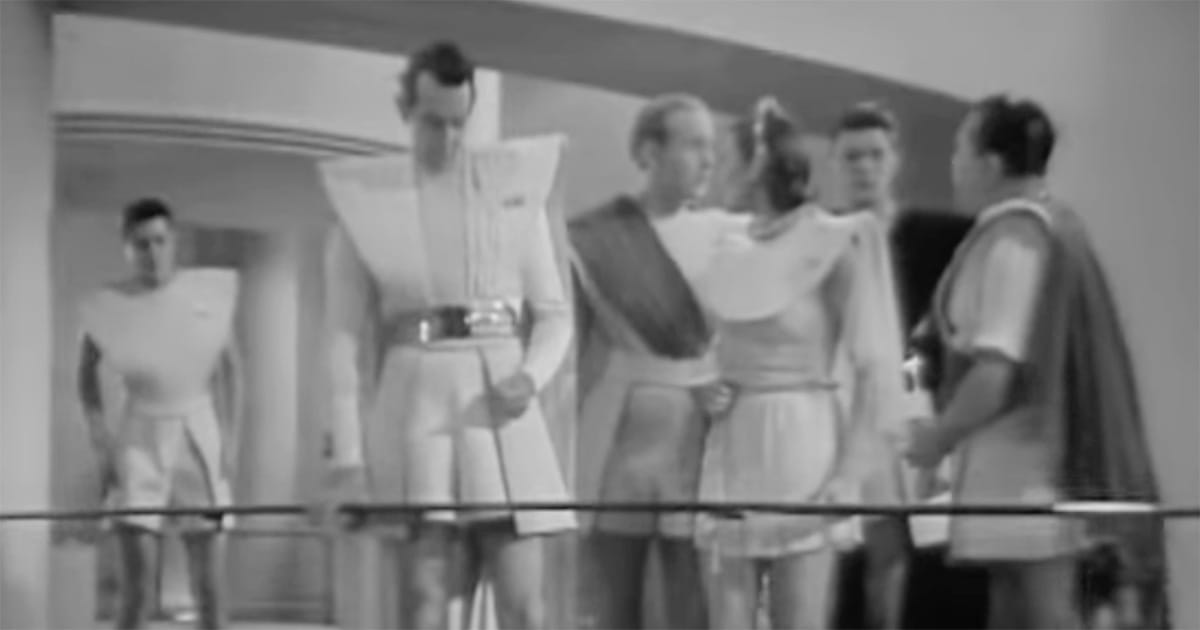
Fragility defines the earlier stages of civilization. War and disease show how quickly modern life can collapse under sustained pressure. The film presents progress as something that must be actively protected.
Destruction is treated as a recurring possibility rather than a single event. The damage caused by war can erase decades of development in a short time. This reinforces the need for strong systems that can endure a crisis.
Rebuilding is shown as a deliberate and controlled process. Engineers restore civilization through planning, discipline, and technical knowledge. Their success suggests that recovery requires structure rather than chance.
Efficiency shapes the character of the new world. Systems are designed to reduce risk and maintain stability. This approach limits chaos but also reduces variation in daily life.

The balance between safety and freedom remains unresolved. Stability is achieved, but it comes at a cost. The film presents this tradeoff without offering a simple answer.
Forward movement becomes the defining trait of humanity. Expansion into space reflects a belief that progress must continue. Stagnation is presented as a form of decline.
An open question closes the film and defines its lasting impact. Humanity must choose between continued advancement or retreat. This uncertainty gives the story its intellectual weight.
Who Will Watch This
Classic science fiction fans will find much to appreciate in this film. Its large ideas and historical scope reflect early attempts to define the future. Viewers familiar with "Metropolis" will recognize a similar interest in society and progress.
Viewers who prefer ideas over character driven drama will find it especially engaging. The story focuses on structure, history, and long term change rather than personal conflict. This approach gives it a distinct identity.
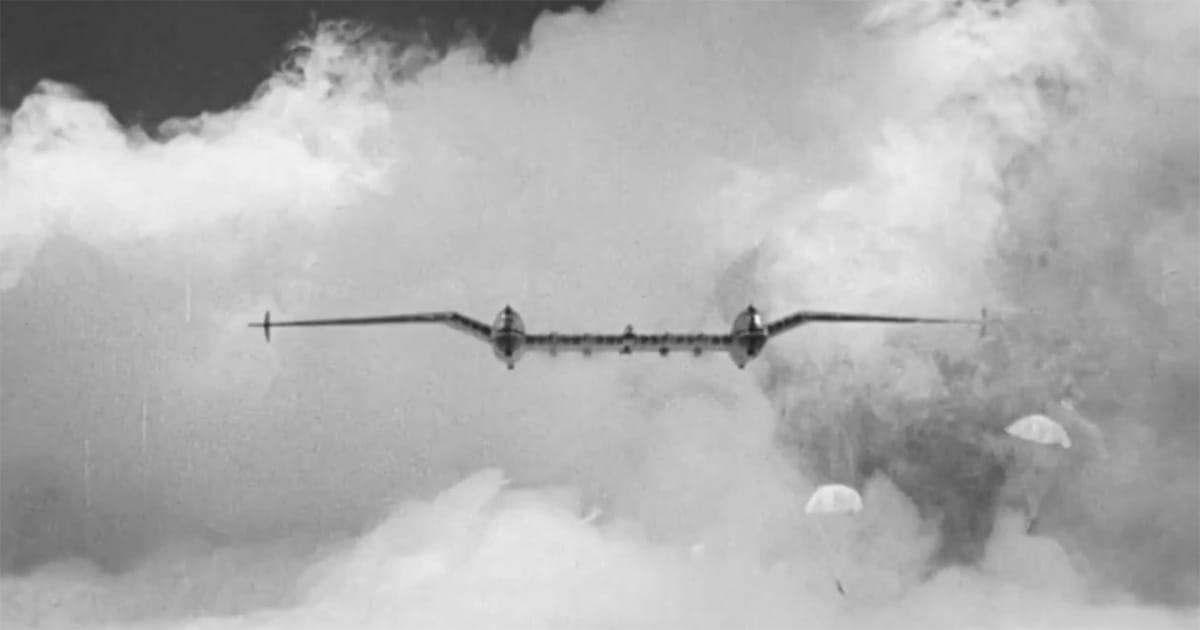
Interest in film history adds another layer of value. The visual style shaped by William Cameron Menzies reflects early modernist design. The imagery remains clear and purposeful in spite of its age.
Readers of H. G. Wells will recognize his influence throughout the film. His ideas about science and society guide the narrative. The film reflects his later thinking with unusual clarity.
The film also appeals to those interested in the development of science fiction as a genre. It presents a vision shaped by the concerns of its time. This makes it useful for understanding how earlier audiences viewed progress.
Pacing may feel slow compared to modern films. Performances are formal, and dialogue is direct. The focus remains on ideas rather than emotional storytelling.
Patience is rewarded for those willing to engage with its structure. Careful viewing reveals a detailed and thoughtful vision of the future. The film offers insight that extends beyond its era.
Viewers who appreciate ambitious storytelling will find lasting value here. The film attempts to address large questions about humanity and its direction. That effort alone sets it apart from many others of its time.