
Why “The Fifth Element” Is Suddenly One of Netflix’s Biggest Sci-Fi Hits Again
Nearly 30 years later, “The Fifth Element” is back on Netflix and climbing the charts again, proving Luc Besson’s colorful sci-fi classic still feels inventive and fresh.

Back on Netflix
Nearly 30 years after its theatrical debut, “The Fifth Element” is once again finding a massive audience.
Netflix recently added the film back to its U.S. lineup, and within days it climbed into the platform’s Top 10 movie rankings in America.
Streaming tracking sites such as FlixPatrol showed the movie reaching No. 8 in the United States in April 2026. Oddly, the film had been available on Amazon Prime, but it seems to have taken a competitor to get some extra attention.
That resurgence says something important about science fiction movies and audiences. In an era filled with interchangeable franchises and grim digital spectacles, “The Fifth Element” still feels alive. It remains colorful, strange, funny, romantic, and just a little ridiculous.
Most importantly, it feels handmade.
A Future With Personality
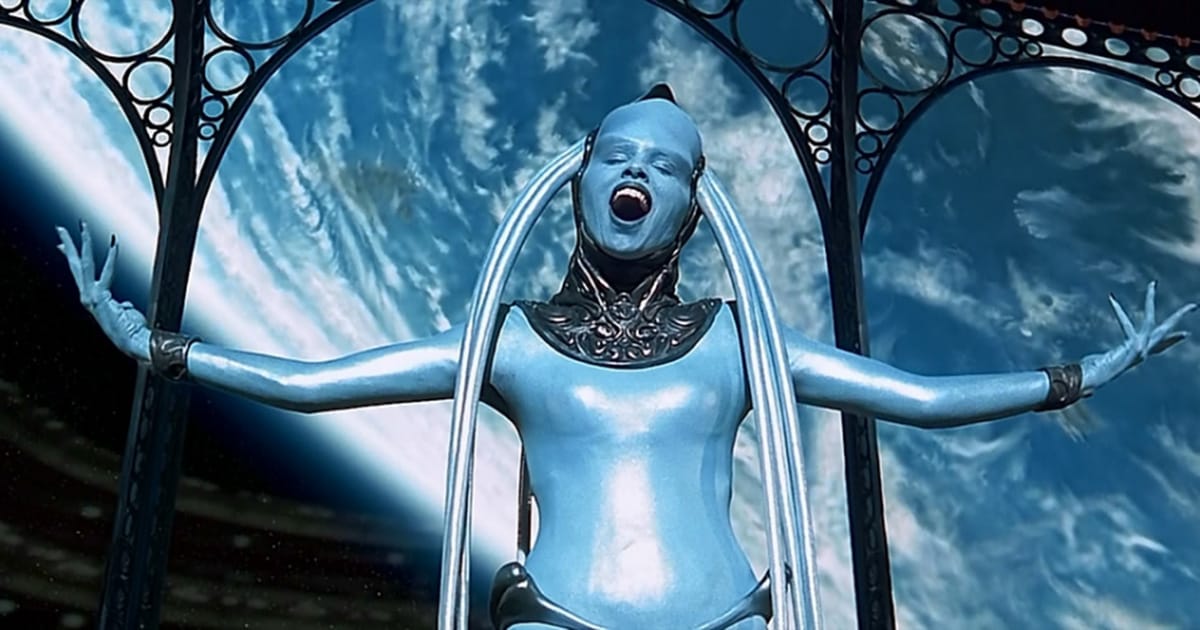
Released in 1997 and directed by Luc Besson, the movie imagined the 23rd century as a loud, crowded, chaotic place filled with flying taxis, bizarre fashion, corporate corruption, alien evil, and fast-food delivery ships that cruise through apartment windows. The film does not attempt realism. It never wants to be grounded science fiction.
Instead, it aims for wonder.
That creative confidence may explain why modern audiences keep rediscovering it.
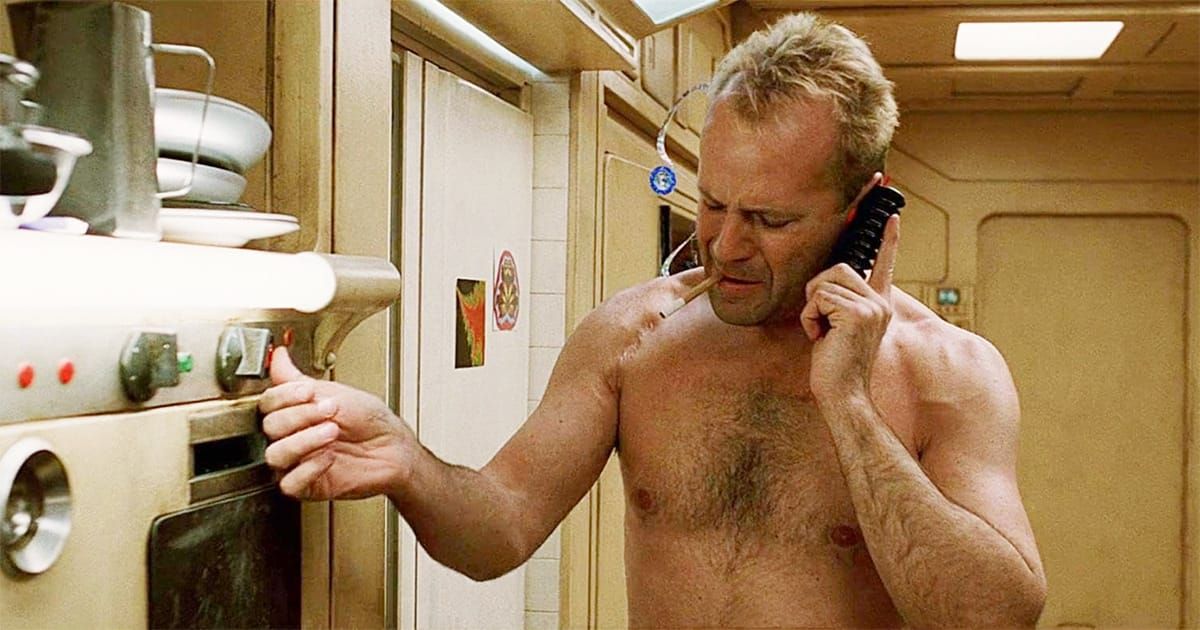
At the center of the story is Bruce Willis as Korben Dallas, a former soldier turned taxi driver. Korben is one of the movie’s smartest ideas. He is not a genius scientist, chosen prince, or elite superhero. He is a working man trying to survive in an absurd future.
Willis plays the role with exhausted practicality. While everything around him becomes increasingly insane, Korben reacts like a man who still has bills to pay.
That grounded performance gives the movie balance.
Korben and Leeloo

Without Korben, “The Fifth Element” might collapse under the weight of its own imagination. The film throws opera singers, alien stones, radio celebrities, space cruise ships, and giant cosmic evil at the audience in rapid succession. Korben keeps the story human.
The emotional center, however, belongs to Milla Jovovich as the sexy, brilliant, and did we mention sexy, Leeloo.

The role effectively launched Jovovich into science-fiction and action stardom. Before “Resident Evil” and her later action roles, there was Leeloo — mysterious, powerful, innocent, dangerous, and oddly funny. She entered popular culture almost immediately.
Orange suspenders and all.
Leeloo could easily have become an annoying “chosen one” character in another film. Instead, Jovovich gives her curiosity and vulnerability. The relationship between Leeloo and Korben works because it contrasts two very different personalities. He is cynical and worn down. She still believes humanity might be worth saving.
That tension gives the movie heart.
Controlled Chaos
Visually, the film remains remarkable. Many science-fiction movies from the late 1990s now look trapped in their era. “The Fifth Element” somehow escaped that fate. The production design still feels inventive because it does not resemble anything else.
The costumes, designed in part by Jean Paul Gaultier, remain unforgettable. The cityscapes feel dense and industrial instead of sterile. The alien designs lean into comic-book exaggeration rather than photorealistic seriousness.
Even the film’s excess becomes part of its charm.

Chris Tucker’s performance as Ruby Rhod probably should not work. Yet somehow it does. Gary Oldman’s Zorg is cartoonishly evil, but memorable. The movie constantly risks becoming too much, and then somehow survives its own ambition.
That energy matters.
Modern science-fiction films often feel carefully engineered by committee. “The Fifth Element” feels like a filmmaker pursuing a specific vision regardless of whether everyone else fully understood it. In spite of its flaws, audiences respond to that kind of confidence.
And yes, the movie is overstuffed.
Why It Still Works
The plot occasionally turns messy. The pacing lurches from comedy to action to romance to cosmic apocalypse. Some dialogue scenes exist mainly to move viewers toward the next visual spectacle. Yet the movie’s momentum carries it forward before those problems become fatal.
The result is a film people remember emotionally instead of logically.
That may explain why Netflix viewers are embracing it again nearly three decades later. According to Netflix listings and streaming trackers, the movie returned to Netflix U.S. in April 2026 and quickly entered the service’s popular movie rankings.
This is not simply nostalgia.
Younger viewers continue discovering “The Fifth Element” because it offers something increasingly rare in modern science fiction. It is not a reboot, a sequel, or part of a carefully calibrated cinematic universe. It is an original movie with a strange personality and complete confidence in its own imagination.
That sort of science fiction ages well.
Nearly 30 years later, Korben Dallas is still driving his cab through one of the most memorable futures ever put on film. And audiences are apparently more than willing to ride along again.