
Big Worlds Built Small
Classic science fiction comes to life through “Dr. Cyclops” and the art of scale. Explore how filmmakers built worlds where small men face big dangers using practical effects and ingenuity.

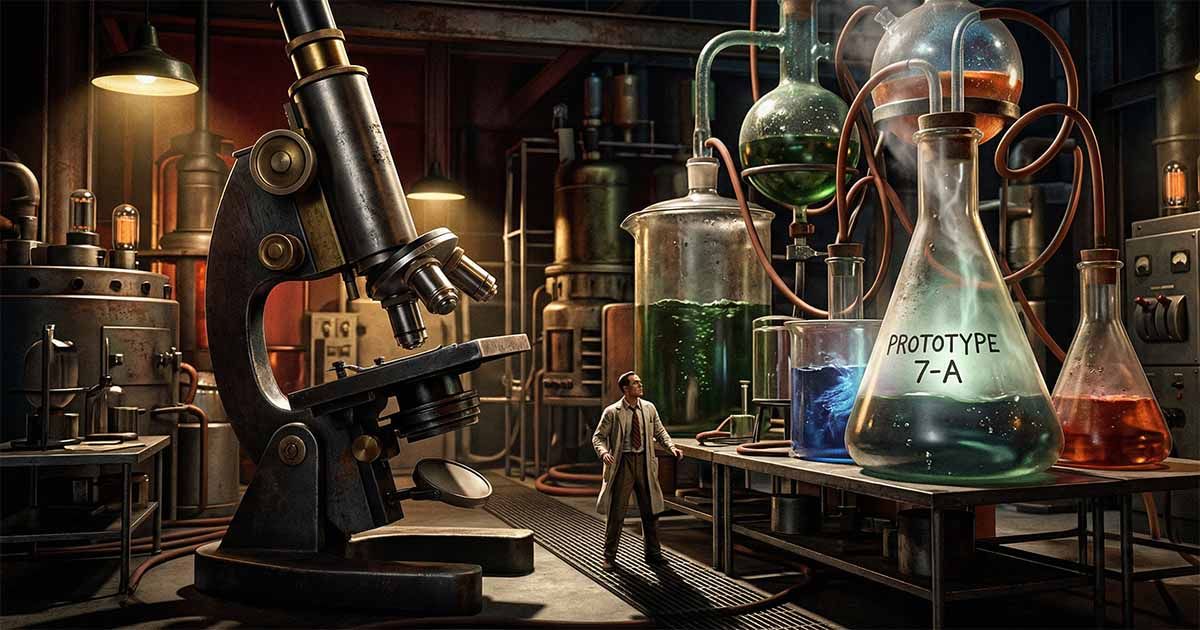
This Week in Science Fiction
In 1940, science fiction films were still finding their identity. Most leaned on shadows, monsters, and suggestion rather than spectacle. Then "Dr. Cyclops" arrived and showed that the genre could be something more deliberate and visually ambitious.
Released by Paramount Pictures, the film follows a scientist who discovers how to shrink living beings. He uses that power on his own colleagues, reducing them to helpless figures in a hostile environment. The story is simple, but it carries a clear warning about knowledge without restraint.
What set the film apart was how it looked. Shot in full Technicolor, it gave audiences a sharp and almost unnatural view of the jungle and laboratory. Everyday objects became threats, and the world itself turned against the characters through scale and perspective.
At the center is Albert Dekker as Dr. Thorkel, a man who believes his intellect places him above others. He is calm, precise, and completely without humility. "Dr. Cyclops" reminds us that in science fiction, the greatest danger is often not the invention, but the man who controls it.
Sponsored by: Cosmic Tusk T-shirt
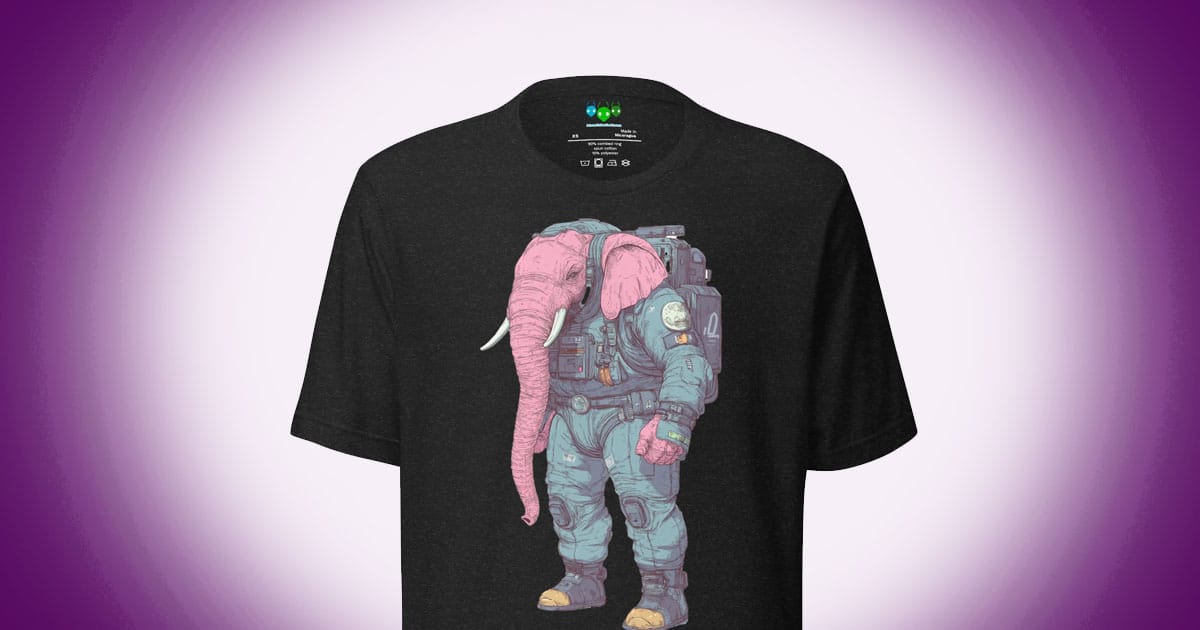
A lone explorer stands ready at the edge of the unknown. The Cosmic Tusk design reflects a classic science fiction idea. A being shaped by another world now moves with purpose among the stars. The heavy suit and steady posture suggest quiet resolve in the face of discovery.
Big Worlds Built Small
A man stands no taller than a matchstick. Around him, the world has not changed, but it has become hostile. A simple object now carries the weight of a weapon. This image appears again and again in science fiction, but one of its earliest and clearest forms came in "Dr. Cyclops." The film did not rely on suggestion alone. It presented the idea plainly and allowed the audience to see the consequences unfold in full view. In doing so, it helped establish a visual language that would carry forward through decades of science fiction filmmaking.
The power of the image lies in its simplicity. Nothing in the world has changed except scale, yet that single change alters everything. The familiar becomes threatening, and the ordinary becomes dangerous. That transformation gives the idea its staying power, and it explains why filmmakers returned to it again and again.
Building the Illusion
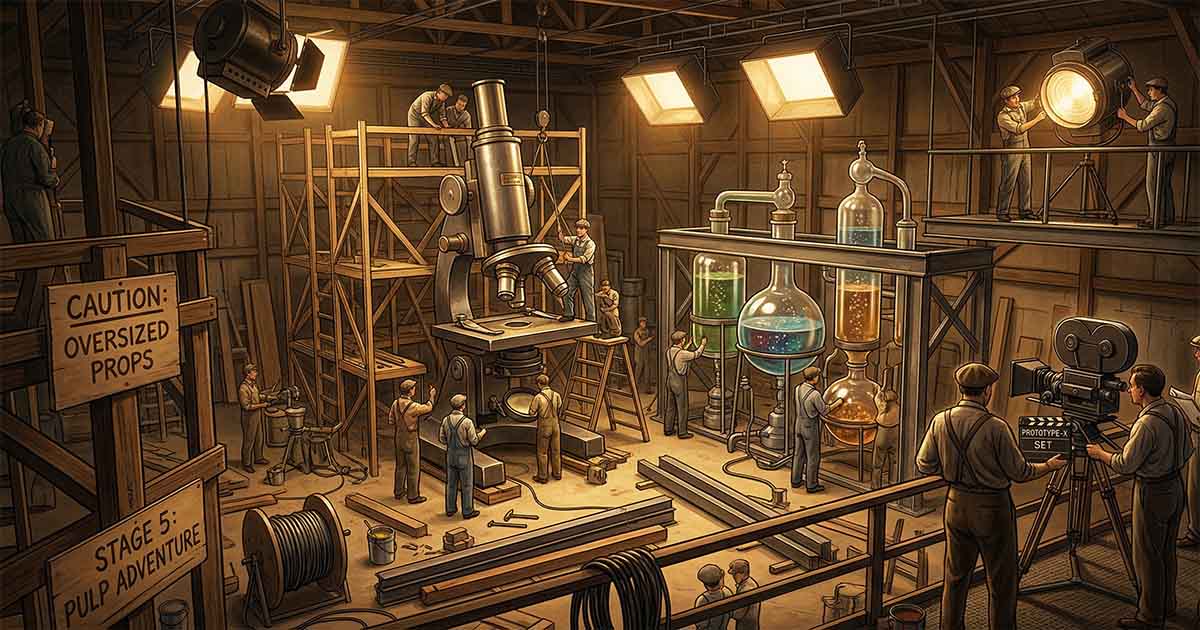
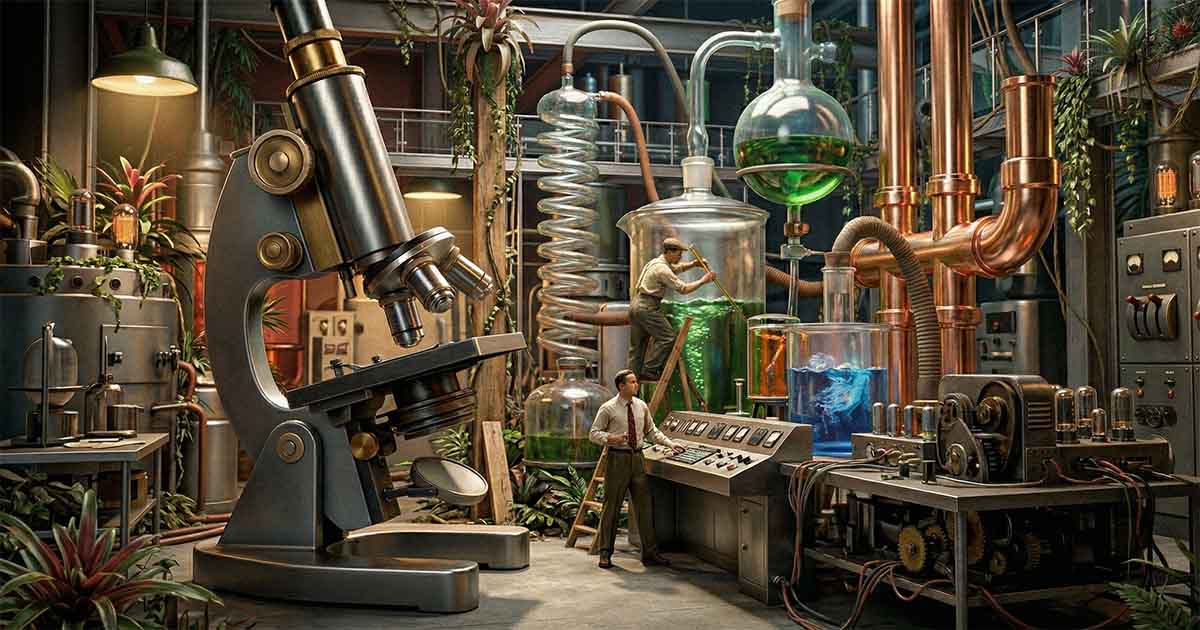
Before computers, filmmakers solved problems with physical means. If a man needed to appear small, they did not reduce the actor. They enlarged the world around him. A chair leg became a pillar. A tabletop became open ground. A simple container became a prison. These effects required planning, construction, and careful camera placement. Every object had to be built with intention, and every shot had to be framed to support the illusion.
In "Dr. Cyclops," this method is clear and effective. Oversized props carry the burden of the illusion. Laboratory instruments tower over the characters, and confined spaces feel like cages. The audience sees texture, shadow, and depth, which makes the environment believable. Nothing feels distant or artificial. The danger exists in the same physical space as the actors, and that shared space gives the film a sense of weight.
What matters most is that the illusion holds under scrutiny. The viewer is not asked to imagine the effect. He is shown it in concrete terms. That clarity builds trust, and once the audience accepts the premise, the story can proceed without distraction.
When Size Becomes Danger
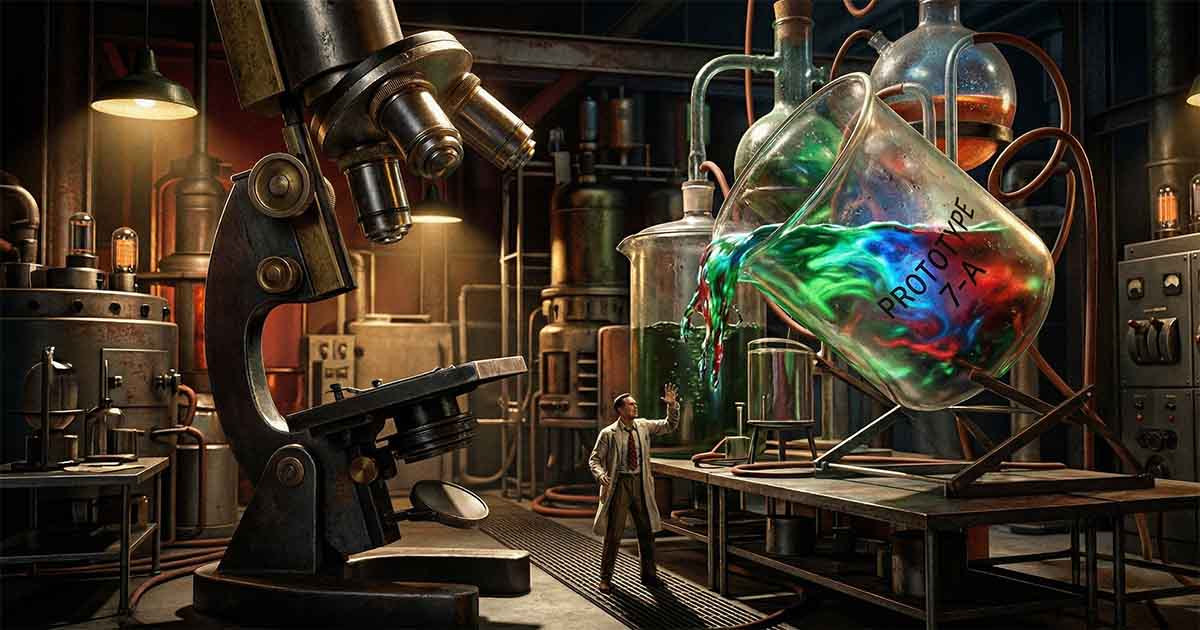
Shrinking a man changes more than scale. It changes power. Objects that once served him now threaten him. A pin becomes a weapon. A box becomes a trap. The familiar world turns against him without warning. What once provided safety now offers no protection.
This removes the need for a traditional monster. The environment becomes the threat. Distance becomes difficult to cross. Shelter becomes scarce. Every movement carries risk, and every decision has consequences. The character cannot overpower what surrounds him, and he cannot escape it easily. He must adapt to survive in a world that offers no advantage.
"Dr. Cyclops" treats this idea with seriousness. It shows how smallness shapes behavior and limits options. The audience recognizes the objects on screen, but their meaning has changed. That shift creates tension that builds steadily. It does not depend on sudden shocks. It depends on the constant awareness that the world itself has become hostile.
Refining the Technique
By the 1950s, filmmakers refined these methods while keeping their foundation intact. "The Incredible Shrinking Man" expanded the idea with greater precision and control. The sets became more detailed, and the interaction between actor and environment became more convincing.
One well-known sequence places the protagonist in a basement where common items become hazards. The setting works because it is physical and grounded. The actor moves through a space built to scale, not suggested through editing alone. Each movement feels deliberate, and each obstacle feels real. The audience understands the danger because it can see it clearly.
This builds on what "Dr. Cyclops" established. Progress comes through refinement rather than replacement. Filmmakers did not abandon practical effects. They improved them. The result is a more seamless illusion, but the underlying principle remains the same. A believable world must be constructed, not implied.
Bigger Budgets, Same Idea
Decades later, "Honey, I Shrunk the Kids" returned to the same concept with more resources and a broader audience. The scale increased, and the effects became more elaborate. Filmmakers had access to new tools, but the core method remained unchanged.
Large sets still carried the illusion. Grass became towering structures, and household items became obstacles that required careful navigation. The actors interacted with real objects, which gave the scenes credibility. The audience could see and understand the environment, which made the story easy to follow.
Even with technical advances, the filmmakers relied on physical construction. The concept still depended on building a world that felt real. That continuity shows the strength of the original idea. Technology may change, but the fundamentals of visual storytelling remain consistent.
The World Grows, the Man Does Not
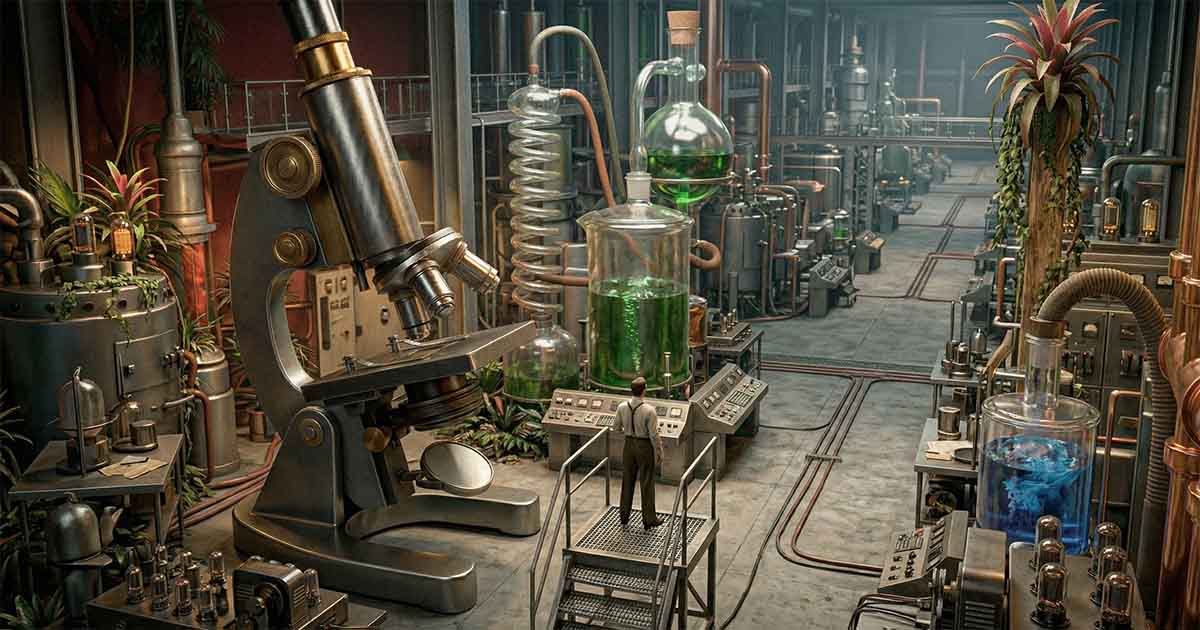
These films show that scale is more than a visual device. It changes how a man understands his place in the world. When the environment grows, and he does not, his limits become clear. That realization gives these stories their lasting appeal and their ability to speak across generations.
Practical effects endure because they create presence. They give the illusion of weight and make the danger feel immediate. "Dr. Cyclops" helped establish this approach early, and later films confirmed its value. A well-built world does more than impress the eye. It reveals something steady about how a man responds when the world no longer fits him, and when he must find a way to endure within it.
"Dr. Cyclops" Trivia
- "Dr. Cyclops" was one of the first science fiction films shot in full Technicolor, giving it a visual richness uncommon for the genre at the time.
- The film's director, Ernest B. Schoedsack, previously co-directed "King Kong" (1933), bringing his experience with scale and visual effects into a more intimate, science-driven story.
- Many of the oversized props in "Dr. Cyclops" were physically constructed on set, allowing actors to interact with them directly and helping establish techniques later refined in "The Incredible Shrinking Man" (1957).