
"Doctor Who" and the Machine That Never Ran Out of Adventures
The 1963 premiere of "Doctor Who" introduced the TARDIS, one of science fiction's greatest inventions. A look at the impossible machines that transformed science fiction storytelling.

This Week in Classic Science Fiction
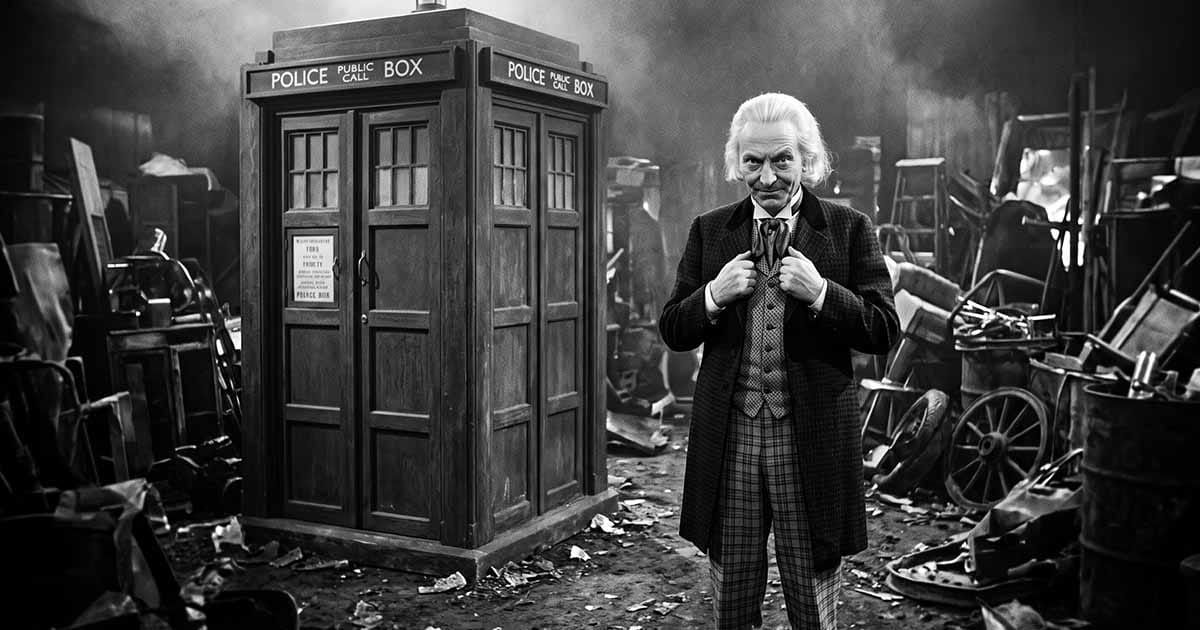
On November 23, 1963, BBC television introduced British audiences to "Doctor Who," a science fiction series featuring a mysterious old man, a strange police box, and a machine capable of traveling through time and space.
The first episode, "An Unearthly Child," starred William Hartnell as the Doctor, an irritable but brilliant traveler whose granddaughter, Susan Foreman, puzzled her schoolteachers with her extraordinary knowledge.
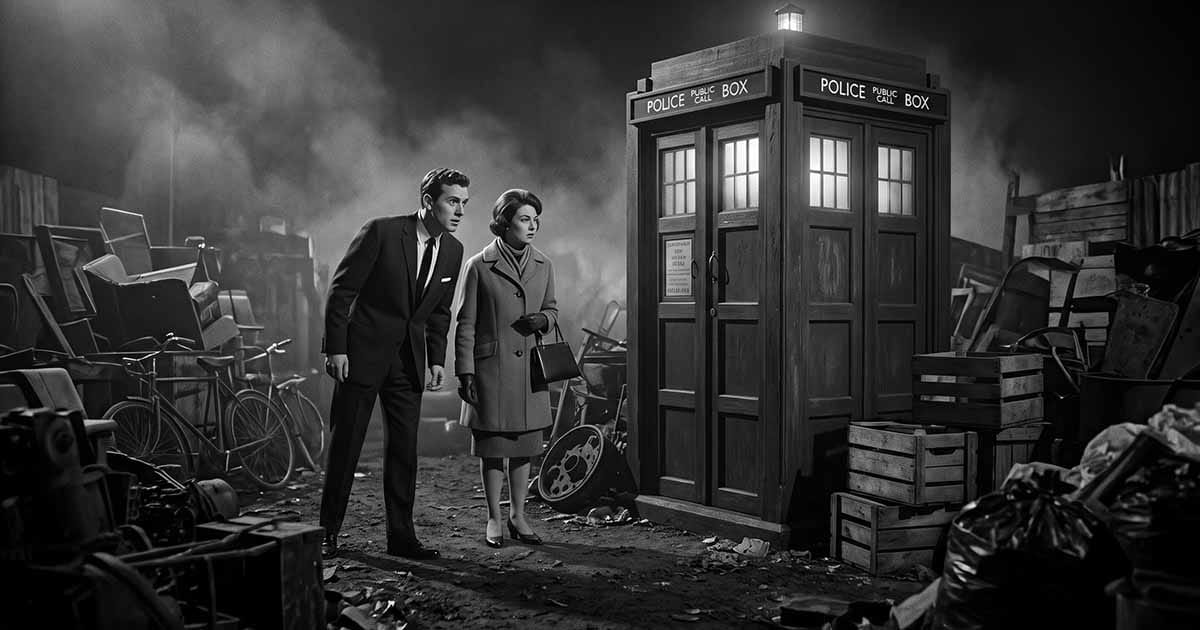
Concerned about Susan, teachers Ian Chesterton and Barbara Wright followed her to a London junkyard at 76 Totter's Lane. There, they discovered the TARDIS, a time machine disguised as a police box. Its interior was impossibly larger than its exterior. When the Doctor refused to let them leave with knowledge of his secret, the teachers became unwilling passengers on a journey to prehistoric Earth.
"Doctor Who" offered something different from conventional science fiction. The TARDIS could carry its passengers anywhere in history or across the universe, giving writers almost unlimited storytelling possibilities. The Doctor relied on intelligence and resourcefulness rather than physical strength.
The Daleks arrived just weeks later, helping establish the program's popularity. In 1966, the Doctor's ability to regenerate allowed the series to continue with a new leading actor.
What began as a modest television production became one of science fiction's most enduring adventures.
Sponsored by: Golden Knight T-shirt

Even Starships Need a Mechanic
Science fiction has always celebrated the explorers who venture into the unknown, but someone must keep their remarkable machines running. Behind every interstellar voyage lies a maze of circuits, engines, and mechanical mysteries that would give even the most experienced engineer a headache.
The Golden Knight science-fiction T-shirt makes a fitting companion for anyone who appreciates the machinery behind the adventure.
The TARDIS and Science Fiction's Impossible Machines
Science fiction has produced some remarkable inventions. Time machines, teleporters, and faster-than-light spacecraft have carried fictional characters to places that ordinary technology could never reach. Some have become almost as famous as the heroes who operate them.
There is just one problem. Most of these wonderful machines are impossible to build, at least according to our present understanding of physics. Yet audiences have embraced them for generations, rarely demanding convincing explanations of how they work.
Their appeal has little to do with engineering. The best imaginary machines make extraordinary adventures possible, and few have done that better than the TARDIS from "Doctor Who."
A Ticket to Tomorrow
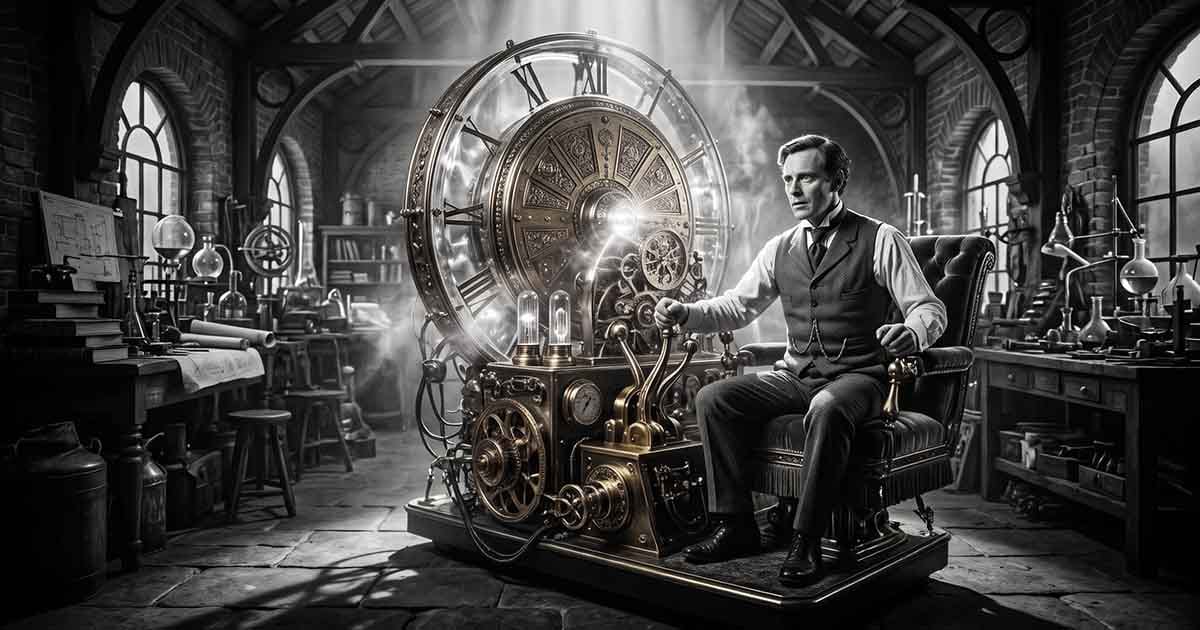
H. G. Wells introduced one of science fiction's most influential inventions in "The Time Machine" (1895). His unnamed Time Traveller built a device that allowed him to move through time as ordinary people move through space. Instead of visiting another country, he journeyed hundreds of thousands of years into Earth's future.
There, he encountered the childlike Eloi and the subterranean Morlocks, descendants of humanity whose existence reflected Wells's concerns about civilization's future. The machine was simply the means of reaching that unsettling destination. Its mechanical operation mattered far less than what its inventor discovered.
Wells established time travel as a technological possibility within fiction, but his machine served one particular story. Nearly seven decades later, British television would introduce an invention capable of producing an almost unlimited number of adventures.
The Police Box That Could Go Anywhere
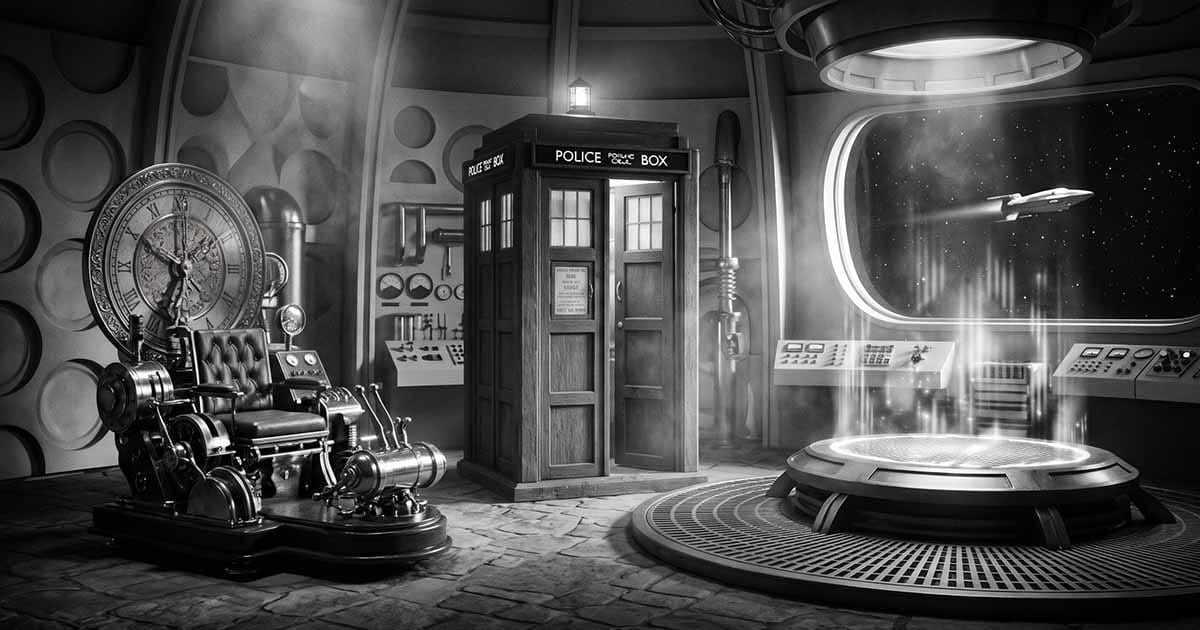
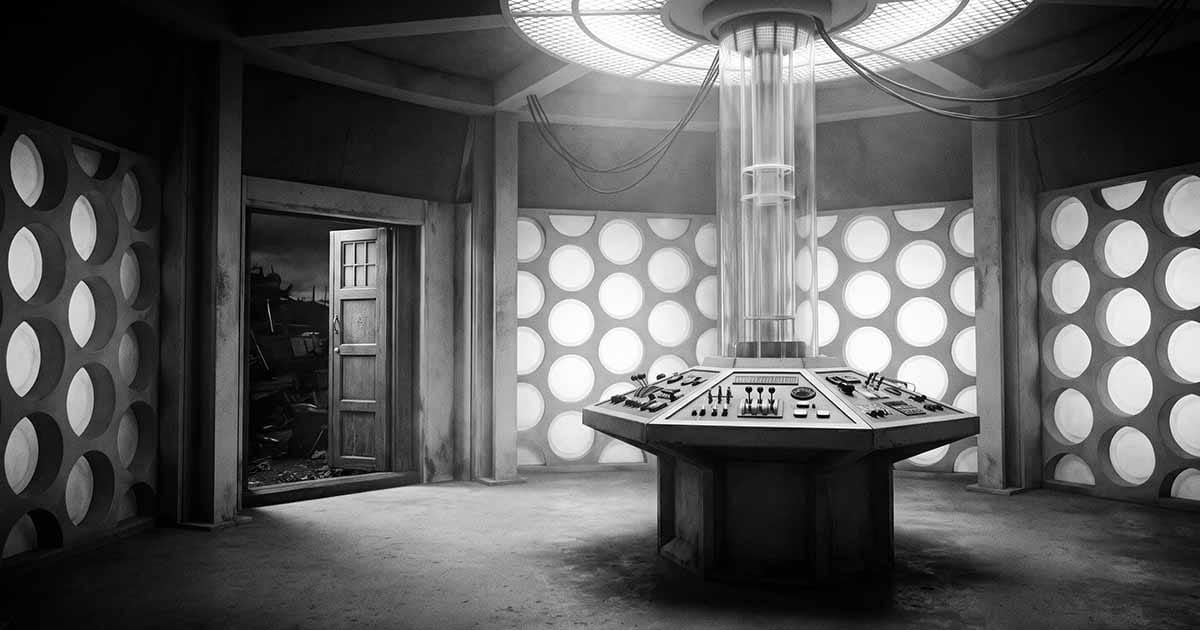
When "Doctor Who" premiered in 1963, its most extraordinary invention looked remarkably ordinary. The TARDIS resembled a British police box, the familiar blue structure once used by police officers to communicate with their stations. Inside, however, was an enormous control room that could never have fit within its exterior dimensions.
The TARDIS could travel through both time and space, carrying its passengers to ancient civilizations, distant planets, and futures beyond human imagination. Its capabilities made virtually any destination available to the program's writers. A story could begin in prehistoric Earth and be followed by an adventure aboard a spacecraft thousands of years in the future.
The police box appearance was itself the result of a mechanical problem. The TARDIS possessed a chameleon circuit designed to alter its exterior to match its surroundings, but the mechanism malfunctioned. Instead of disguising itself as something appropriate to each destination, the machine remained stubbornly recognizable.
Its navigation system was hardly more dependable. William Hartnell's original Doctor frequently struggled to control where the TARDIS would land, leaving him and his companions uncertain about their next destination. They might intend to return to London and instead find themselves confronting hostile aliens or wandering through an unfamiliar historical period.
This unreliability was one of the program's greatest advantages. Most fictional vehicles exist to carry their passengers safely and efficiently from one place to another.
The TARDIS frequently delivered its occupants somewhere they had never intended to visit, creating adventures through its own mechanical shortcomings.
The machine also served as the Doctor's home, laboratory, and refuge. Its strange interior and unpredictable behavior gave it a presence that ordinary spacecraft rarely possessed. The TARDIS was not merely transportation between adventures, but an essential part of the adventures themselves.
Shortcuts Across the Universe
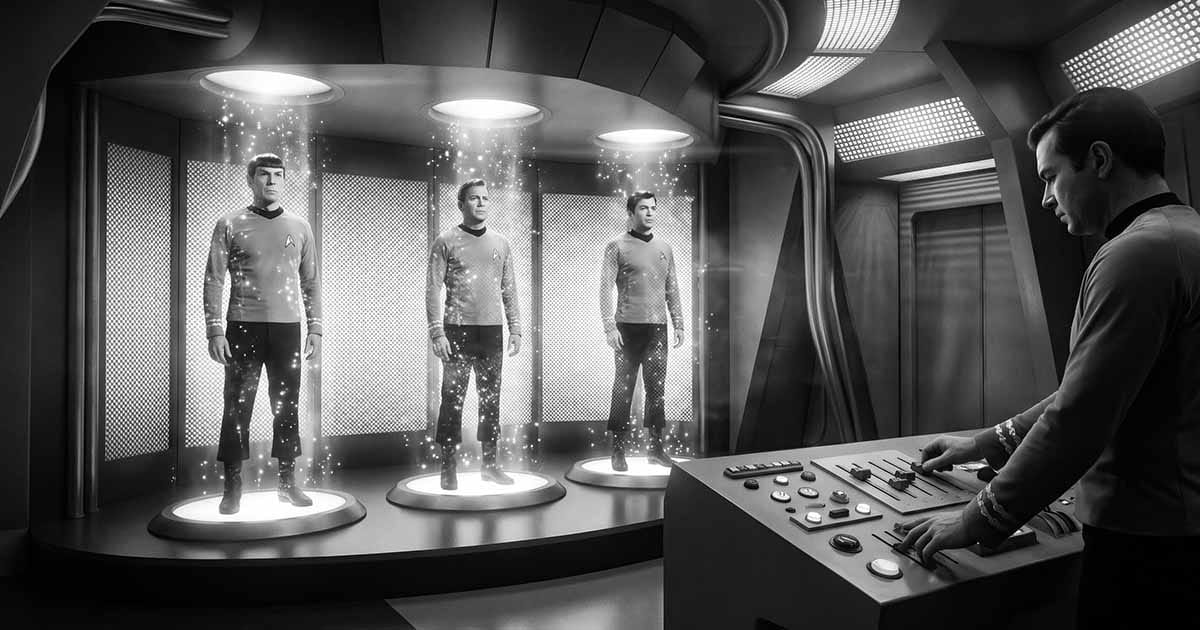
Other science-fiction productions developed equally improbable machines to overcome the limitations of ordinary travel. When "Star Trek" premiered in 1966, its creators faced the expensive prospect of depicting the Enterprise landing on different planets. Their solution was the transporter, which moved crew members directly from the spacecraft to planetary surfaces.
The transporter conveniently eliminated lengthy landing sequences, although disassembling and reconstructing human beings presented enormous scientific difficulties. It also introduced problems of its own, including equipment failures and questions about whether a reconstructed person was truly the original individual.
"Star Wars" (1977) addressed a much larger transportation problem. Even at the speed of light, journeys between distant stars would require years or centuries. Hyperdrive allowed Han Solo's Millennium Falcon to cross interstellar distances quickly enough for pursuits, rescues, and battles to unfold across an entire galaxy.
Not every impossible machine was designed to make travel easier. In "Forbidden Planet" (1956), the vanished Krell civilization left behind machinery capable of converting mental activity into physical effects. Their invention ultimately destroyed them because it amplified destructive unconscious impulses that even their advanced intelligence could not control.
Each machine served a different purpose. The transporter eliminated inconvenient journeys, hyperdrive connected distant worlds, and the Krell machinery demonstrated the dangers of technological power without wisdom. The TARDIS accomplished something more unusual by combining transportation, unpredictable destinations, and a continuing source of dramatic complications.
The Machine That Never Ran Out of Stories
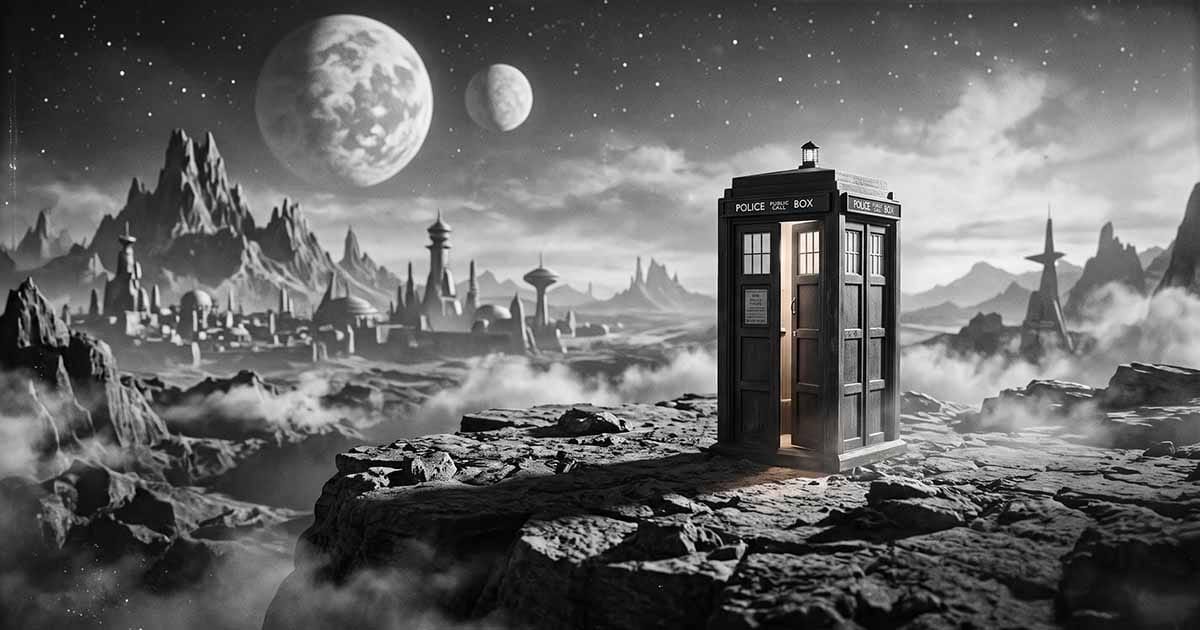
Wells's time machine made one extraordinary journey possible, while the transporter and hyperdrive removed obstacles that would otherwise slow an adventure. The TARDIS went further by providing both the means of travel and the uncertainty that made each new destination interesting. Its unlimited range and unreliable operation gave "Doctor Who" a storytelling advantage that few other science-fiction inventions could match.
The TARDIS's greatest achievement was not its ability to travel through time and space. It was its ability to make the next adventure possible, regardless of where or when that adventure might occur.
"Doctor Who" Trivia
- The TARDIS sound was created by scraping a house key along the strings of a dismantled piano.
- The original TARDIS control room contained a fault locator, an ornate clock, and a Sheraton chair.
- Susan Foreman claimed she invented the name TARDIS, although later episodes established that other Time Lords used it.