
House Harkonnen in "Dune" Behind the Power, Politics, and Legacy
House Harkonnen shaped the conflict at the heart of "Dune" through wealth, strategy, and fear. This look at Frank Herbert's canon explores its origins, power, legacy, and screen adaptations.


House Harkonnen in "Dune"
Among the many Great Houses of Frank Herbert's "Dune," none casts a darker shadow than House Harkonnen. From their industrial homeworld of Giedi Prime, the Harkonnens accumulate immense wealth, wield political influence, and rule through calculated fear. They stand as the principal rivals of House Atreides, and their schemes set the events of the first novel in motion.
Yet House Harkonnen is more than a family of villains. Herbert uses the dynasty to explore the corrupting effects of unchecked power, the dangers of exploiting both people and nature, and the illusion that every outcome can be controlled through careful planning. Across the original novel and its major screen adaptations, the Harkonnens remain one of science fiction's most enduring and unsettling aristocratic houses.
| Field | Details |
|---|---|
| Name | House Harkonnen |
| Aliases | The Harkonnens, House of Harkonnen |
| Homeworld | Giedi Prime |
| Affiliation | Landsraad, CHOAM, Padishah Imperium |
| Ruling Title | Siridar-Baron (during the events of Dune) |
| Leader | Baron Vladimir Harkonnen |
| First Appearance | "Dune" by Frank Herbert (1965) |
| Film Appearances | "Dune" (1984), "Dune" (2021), "Dune: Part Two" (2024) |
| Miniseries Appearance | "Frank Herbert's Dune" (2000) |
| Primary Rivals | House Atreides, the Fremen |
| Role | Great House of the Imperium and principal antagonist of "Dune" |
| Description | A wealthy and ruthless noble house that builds its power through political intrigue, economic influence, and military force while seeking to dominate Arrakis and destroy House Atreides. |
| Key Members | Baron Vladimir Harkonnen, Feyd-Rautha Harkonnen, Glossu Rabban, Piter De Vries |
| Major Themes | Power, corruption, political manipulation, exploitation, tyranny, ecology |
| Created By | Frank Herbert |
Origins And Context
House Harkonnen is one of the Great Houses of the Landsraad, the noble families that govern the feudal society of the Imperium. Led during the events of "Dune" by Baron Vladimir Harkonnen, the family rules the heavily industrialized world of Giedi Prime. While other noble houses seek honor, diplomacy, or military prestige, the Harkonnens build their reputation through ruthless efficiency, political manipulation, and economic strength.
Much of the family's immense fortune comes from its long stewardship of Arrakis, the harsh desert planet that produces the spice melange. Because melange is essential for interstellar commerce, navigation, and the stability of the Imperium itself, control of Arrakis brings extraordinary wealth and influence. The Harkonnens exploit the planet aggressively, focusing almost entirely on maximizing spice production while paying little attention to the land or its native Fremen population.
The Harkonnens also share an ancient feud with House Atreides, a rivalry that predates the events of the novel. Herbert intentionally leaves much of this history in the background, allowing readers to understand that generations of hostility already exist between the two families. That rivalry becomes politically useful when Emperor Shaddam IV transfers stewardship of Arrakis to Duke Leto Atreides. Publicly, the decision appears to reward the increasingly respected Atreides. Privately, however, it is part of a carefully orchestrated conspiracy that allows the Harkonnens and the Emperor to eliminate a dangerous rival while preserving the appearance of imperial neutrality.

Power And Ambition
The true strength of House Harkonnen lies not simply in military force but in long-term political calculation. Baron Vladimir Harkonnen understands that wealth can purchase armies, influence powerful institutions, and reward loyal servants. More importantly, it allows him to plan years into the future.
Rather than relying on trust, the Baron deliberately encourages rivalry among those who serve him. His twisted Mentat, Piter De Vries, provides brilliant strategic advice while remaining dependent on the Baron's favor. His nephews fulfill different purposes within a larger design. Glossu Rabban, known as Beast Rabban, is chosen to govern Arrakis through relentless brutality. The Baron expects Rabban's cruelty to exhaust the population and generate widespread hatred.
Only then does the second phase of the plan begin. Feyd-Rautha, the Baron's preferred heir, is intended to replace Rabban as a seemingly enlightened ruler. By first subjecting Arrakis to oppression, the Baron believes the population will welcome Feyd as a liberator while remaining under Harkonnen control. It is one of the novel's most sophisticated examples of political manipulation, demonstrating that appearances can be as powerful as military conquest.
Yet Herbert also reveals the limits of such careful planning. The Baron assumes that every individual acts out of fear, greed, or ambition because those are the motivations that govern his own household. He repeatedly underestimates loyalty, conviction, religious belief, and the unique culture that has developed among the Fremen. His plans are brilliantly conceived within his own worldview but ultimately fail because they cannot account for forces outside his experience.

Role In The Story
House Harkonnen serves as the principal antagonist throughout "Dune." The family's actions drive nearly every major conflict in the novel, beginning with the conspiracy to destroy House Atreides after its arrival on Arrakis. Working secretly with Emperor Shaddam IV and aided by the betrayal of Dr. Wellington Yueh, the Harkonnens launch a devastating assault that overwhelms Duke Leto's forces and restores their control of the planet.
Following the victory, Baron Harkonnen installs Rabban as governor exactly as planned. Rabban's harsh rule is intended to squeeze every possible resource from Arrakis while making the population desperate for a more merciful successor. Meanwhile, Feyd-Rautha is carefully cultivated as the future public face of the dynasty, combining noble appearance with calculated violence beneath the surface.
The Baron believes he has anticipated every political development. He expects rival houses to accept the destruction of the Atreides, assumes the Emperor will remain a useful partner, and dismisses the scattered Fremen as little more than a local nuisance. Each assumption proves increasingly dangerous. As Paul Atreides survives, joins the Fremen, and transforms their resistance into a formidable military movement, the carefully balanced Harkonnen strategy begins to collapse.
Herbert presents this reversal as more than a military defeat. The Baron's failure reflects his inability to understand the ecological, cultural, and spiritual realities of Arrakis. Where the Harkonnens see only spice production, the Fremen see a homeland. Where the Baron measures power in wealth and intimidation, Paul discovers that belief and shared purpose can become equally powerful political forces. The downfall of House Harkonnen therefore marks the collapse of a worldview built entirely upon domination and exploitation.
Legacy And Themes
House Harkonnen remains one of the defining villainous dynasties in science fiction because Herbert gives the family symbolic importance beyond its role in the plot. The Harkonnens embody the dangers of absolute political power divorced from responsibility. Their treatment of Arrakis illustrates the consequences of exploiting a living ecosystem solely for economic gain, while their internal culture demonstrates how fear ultimately corrodes even those who wield it.
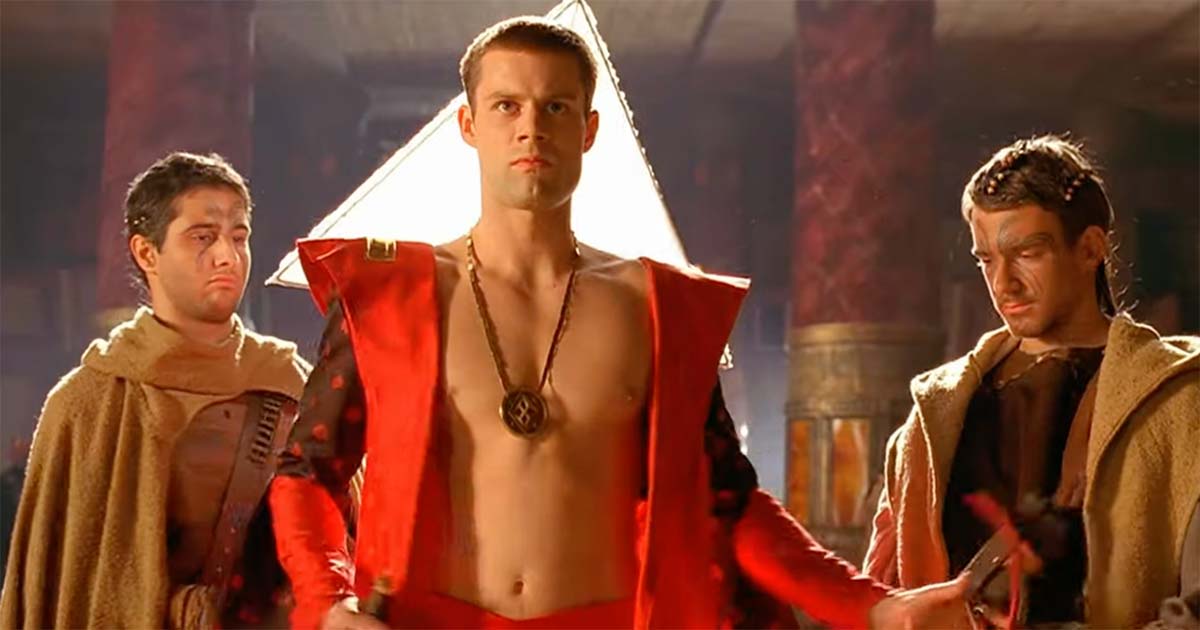
The major screen adaptations emphasize different aspects of this legacy. David Lynch's 1984 film presents the Harkonnens as grotesque and theatrical, highlighting physical excess and moral decay. The 2000 Sci-Fi Channel miniseries devotes more attention to the Baron's intricate political strategy, allowing viewers to appreciate the complexity of his plans. Denis Villeneuve's films instead portray the family with stark visual restraint, using the oppressive architecture of Giedi Prime and the Baron's quiet menace to create an atmosphere of institutionalized tyranny rather than chaotic cruelty.
Across all versions, however, House Harkonnen serves the same essential purpose. It stands as Herbert's warning that empires built on fear, exploitation, and absolute control may achieve remarkable victories. Still, they inevitably fail to understand the human and ecological forces that shape history. That enduring lesson is why the Harkonnens continue to fascinate readers more than half a century after "Dune" first appeared.