
“Last and First Men” and Two Billion Years of Humanity
Our “Last and First Men” review examines Olaf Stapledon’s ambitious science fiction classic, its vision of deep time, human progress, evolution, and its enduring influence on the genre.

Humanity From a Great Distance
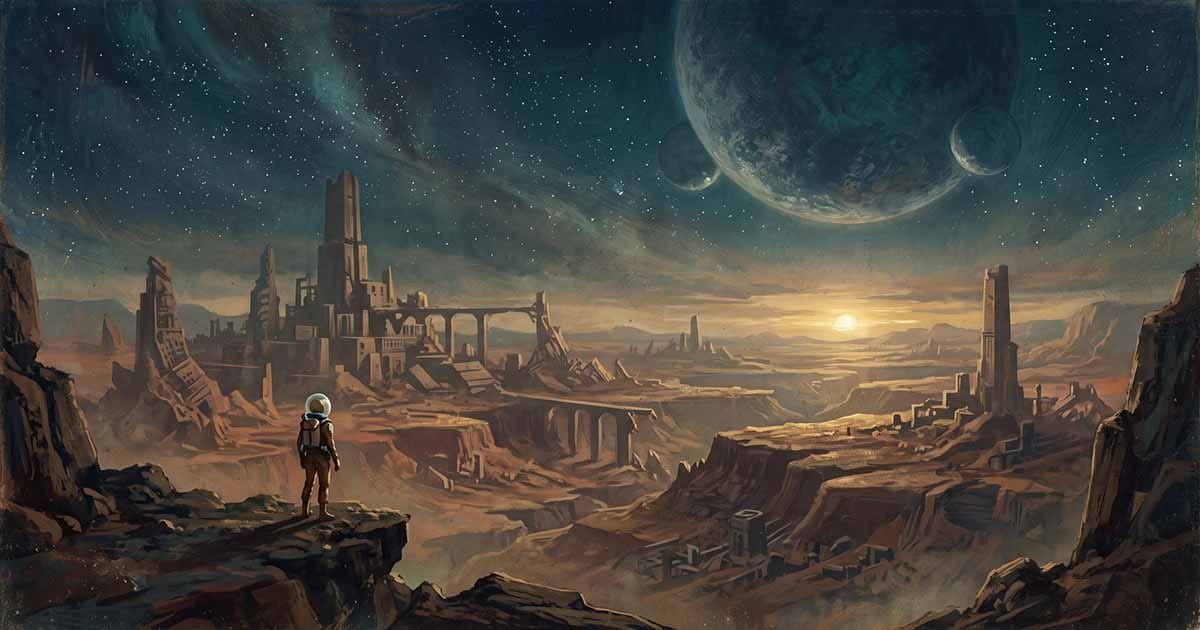
Most science fiction writers are content to predict the next century. Olaf Stapledon looked ahead across ages. In "Last and First Men," he imagined human history on a scale so large that nations, civilizations, and even familiar forms of mankind become brief episodes in a much greater story. Few novels have asked readers to consider humanity from such a distance.
Published in 1930, "Last and First Men" arrived when much popular science fiction still drew its energy from inventions, strange worlds, scientific wonders, and adventure. Stapledon had different ambitions. A philosopher by training, he used speculative fiction to examine mankind from the perspective of deep time. His subject was not simply what new machines men might build, but what humanity might become.
The premise remains startling nearly a century later. Stapledon surveys an immense future history and considers human existence across spans of time that dwarf recorded civilization. He moves far beyond ordinary prediction while keeping mankind at the center of his speculation. At times, the result reads less like a traditional novel than a history written from an impossibly distant vantage point.
That distance defines the book. "Last and First Men" has no conventional hero whose adventures carry the reader through its pages. Humanity itself assumes that role, with generations and civilizations contributing to a story far larger than any single life.
Stapledon gains an extraordinary field of vision from that choice, but he gives up many pleasures readers expect from fiction. That exchange provides both the book's peculiar power and its most persistent difficulty.
A Different Kind of Novel
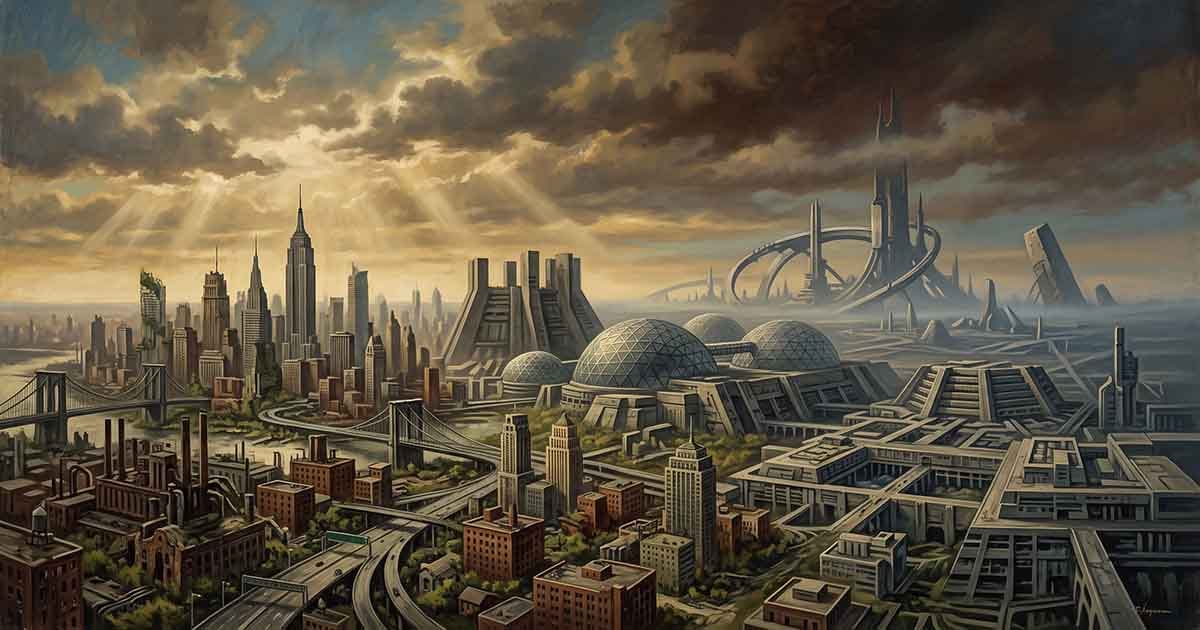
Calling "Last and First Men" a novel creates expectations Stapledon has little interest in satisfying. Instead of building a continuous plot around a handful of characters, he writes a future history. Civilizations emerge, flourish, struggle, and disappear as the narrative moves through immense stretches of time. Events that could fill an entire book elsewhere may pass in a few pages here.
Stapledon consequently works with epochs rather than scenes. Political movements, scientific discoveries, cultural changes, and biological developments matter more to him than the daily experiences of particular men. He often describes events with the calm authority of a historian looking backward at a completed age. This approach gives the book an almost documentary quality, even when its speculation becomes astonishing.
The method gradually changes the reader's sense of time. A century initially appears substantial, then becomes only a small interval within a much longer sequence. Familiar measures of historical importance begin to shrink as Stapledon widens the view. The effect is one of the book's most impressive accomplishments.
There is a price for this perspective. Stapledon offers little sustained characterization, relatively little dialogue, and few scenes constructed around immediate dramatic tension. His people rarely acquire the individuality readers expect from memorable fictional characters. At its driest, the book can resemble an exceptionally imaginative textbook.
Yet conventional characterization would also restrict what Stapledon wants to examine. By keeping his distance, he can follow patterns that no individual character could live long enough to witness. Ideas, civilizations, and forms of human existence can be compared across stretches of history that make a single lifetime almost invisible.
That method requires patience, but it gives Stapledon an unusual freedom. He can ask not merely where one society is going, but whether progress itself can endure across the long history of mankind.
The Problem of Human Progress
Stapledon's grandest speculation concerns evolution itself. "Last and First Men" refuses to treat modern humanity as nature's finished product. Man belongs to an evolutionary process that began before recorded history and may continue beyond anything he could recognize. This possibility allows Stapledon to ask whether humanity can improve not only its machines and institutions, but itself.
Civilization proves much harder to perfect. Knowledge accumulates, societies become more sophisticated, and men repeatedly discover new ways to organize their world. Yet folly survives alongside achievement. Conflict, pride, shortsightedness, and failures of judgment can still undo accomplishments that once seemed secure.
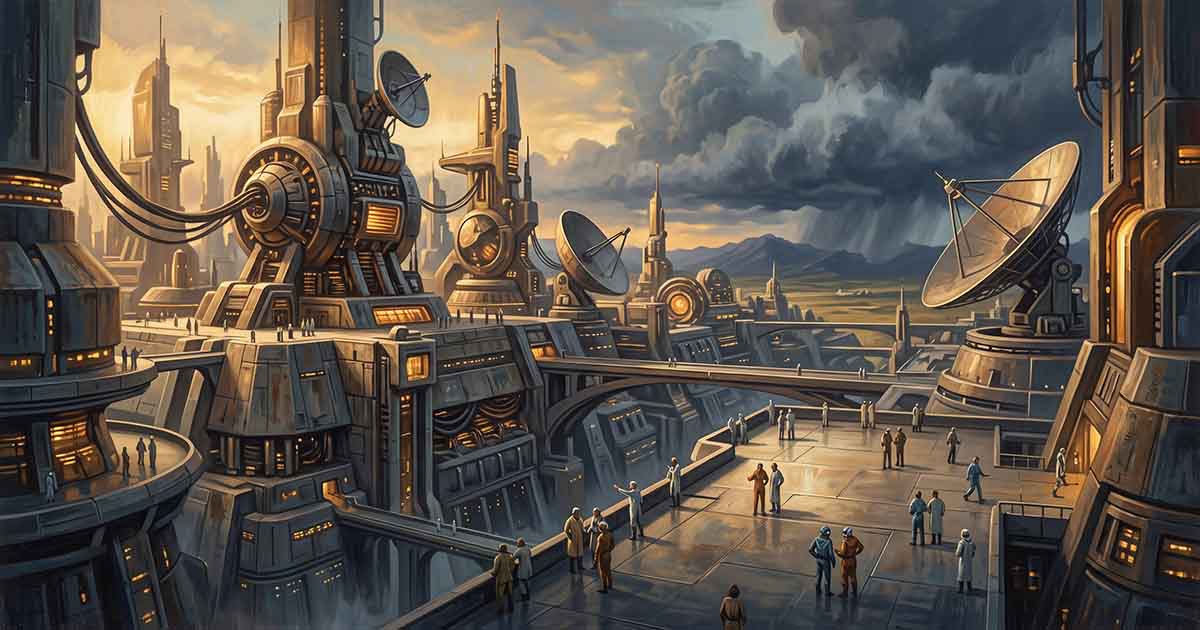
Science occupies an uneasy place within this pattern. Stapledon clearly admires intellectual discovery, and scientific knowledge opens possibilities that earlier generations could scarcely imagine. Yet knowledge does not produce wisdom automatically. The greater man's command over nature becomes, the more dangerous his errors can become.
This distinction keeps "Last and First Men" from becoming a simple celebration of progress. Stapledon measures advancement by more than technical power or material comfort. A civilization may possess remarkable knowledge while remaining poorly equipped to govern its appetites. Scientific achievement matters, but the character of those who command it matters more.
Against the book's enormous timescale, permanence also becomes difficult to claim. Political systems, cultural assumptions, and great institutions may dominate an age and still prove temporary. Stapledon does not treat their disappearance as proof that human effort is worthless. Instead, their fragility forces a harder question about what deserves to endure.
His answer lies less in monuments or institutions than in qualities of mind and character. Intelligence, creativity, courage, knowledge, and the pursuit of understanding retain value even when their products cannot last forever. Humanity matters because it can look beyond immediate survival and attempt to understand itself and the universe it inhabits.
That conviction gives Stapledon's otherwise severe vision an unexpected hopefulness. Progress may never become permanent, but the effort to become wiser remains worthwhile.
Great Ideas, Difficult Reading
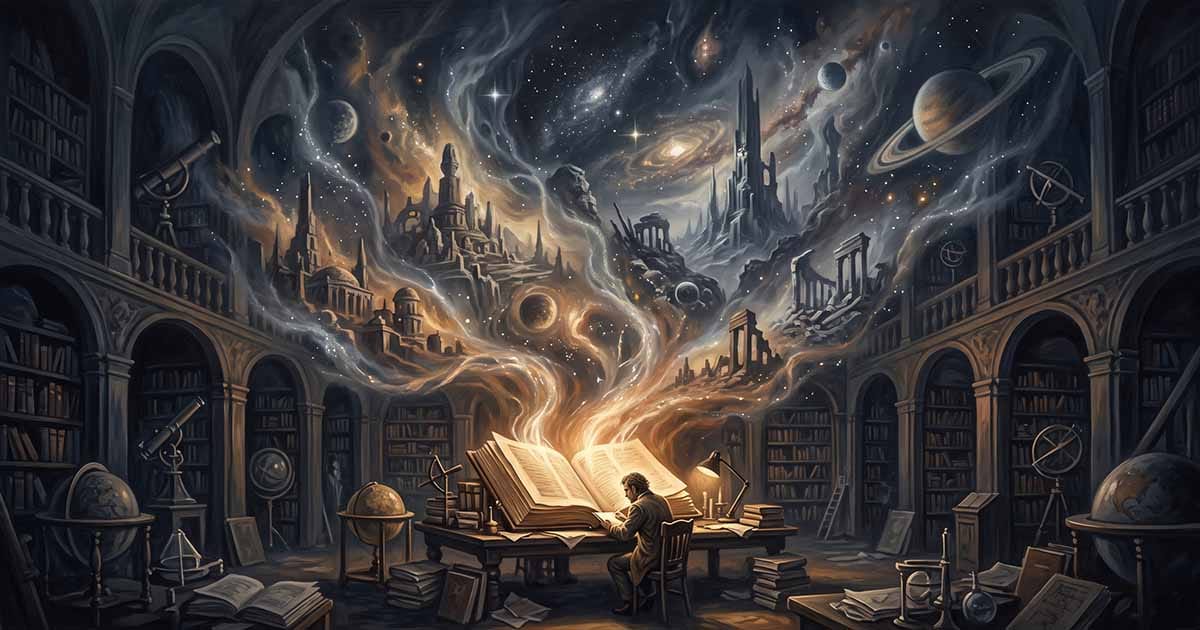
Stapledon's ideas often prove more compelling than his prose. His style is austere, analytical, and deliberately historical, with little of the color associated with adventure fiction. He explains far more often than he dramatizes. The result can be intellectually absorbing on one page and remarkably dry on the next.
The pacing presents a similar challenge. Stapledon compresses events of enormous consequence into summaries that another writer might develop across several chapters. Moments that seem to demand a dramatic scene instead receive the treatment of entries in a historical chronicle. Readers accustomed to conventional storytelling may occasionally wish Stapledon would stop surveying history and allow them to experience it.
Jorge Luis Borges identified this problem with unusual precision in his 1937 review. He regarded Stapledon as far more convincing when dealing with generations and centuries than with individuals and immediate events. That judgment remains useful because it explains why the book becomes more persuasive as its perspective grows broader. Stapledon is at his best when human history becomes too large for ordinary storytelling.
Early readers recognized the scale of that achievement. Reviewers praised the extraordinary reach of Stapledon's imagination, while writers and intellectuals responded to a work that seemed to stretch science fiction beyond its established boundaries. Even readers who questioned his narrative methods could hardly dismiss the magnitude of the attempt.
Arthur C. Clarke later identified "Last and First Men" as a profound influence on his imagination. The connection makes sense. Stapledon's greatest legacy was not a particular character, invention, or prediction, but permission to think bigger. Later science fiction could contemplate civilizations, evolutionary change, and cosmic timescales with an ambition that Stapledon had helped establish.
The difficulty and the achievement therefore cannot be neatly separated. The distance that weakens characterization also creates the book's enormous perspective. The compression that frustrates dramatic expectations allows Stapledon to cross ages. "Last and First Men" can be demanding because Stapledon refuses many ordinary pleasures of fiction, but that refusal also makes the book unlike almost anything else.
When Humanity Becomes History
"Last and First Men" remains easier to admire than to love as a conventional novel. Its characters seldom linger in the memory, its dialogue is limited, and its broad historical narration can test a reader's patience. Yet those weaknesses seem considerably smaller when measured against the magnitude of Stapledon's conception. As speculative literature, the book remains extraordinary.
Readers who want adventure, sharply drawn heroes, and sustained dramatic action may find the experience frustrating. Stapledon demands a different kind of attention. His rewards come through ideas, patterns, and the gradual enlargement of perspective rather than suspense. Anyone willing to accept those terms will encounter one of classic science fiction's most unusual achievements.
Stapledon makes evolutionary and cosmic time comprehensible without making it ordinary. His immense chronology encourages readers to see familiar human concerns from a distance that few novels attempt. That perspective helped establish possibilities later explored throughout future-history and cosmic science fiction. The book's influence matters because Stapledon expanded what the genre could reasonably attempt.
For serious readers of classic science fiction, "Last and First Men" remains essential, though demanding. Its age shows, and some passages require patience, but the imagination behind them still feels formidable. Few books so thoroughly challenge the assumption that mankind's present condition defines its future.
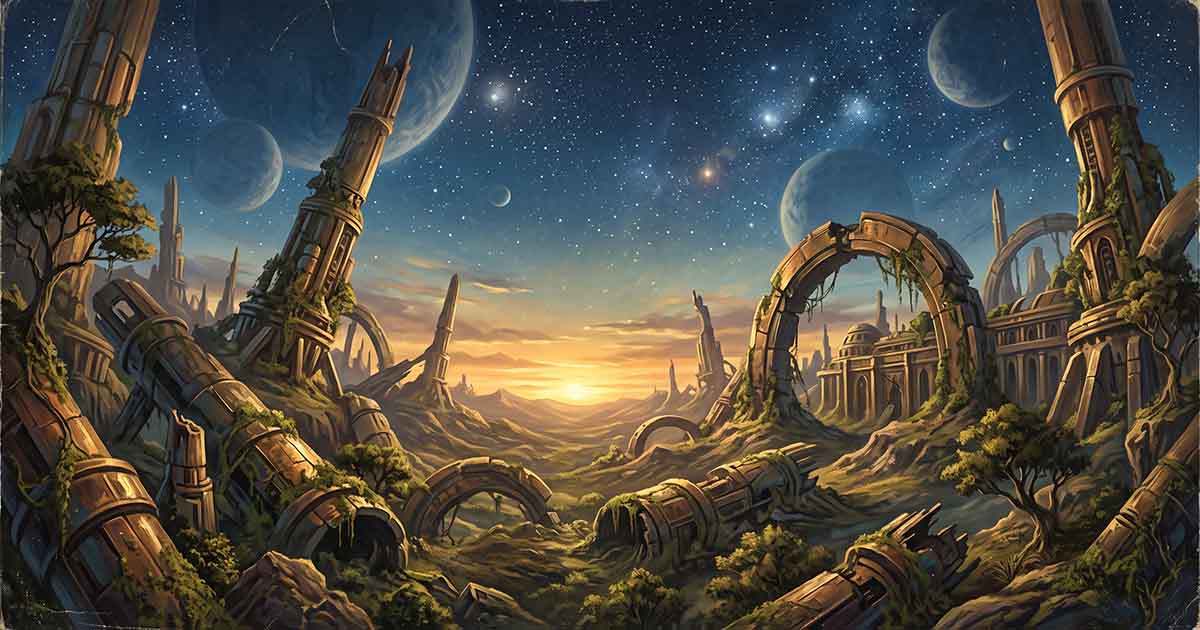
Stapledon's accomplishment was never accurate prophecy. Predictions inevitably age, while imaginative perspective can endure. Nearly a century after publication, "Last and First Men" still asks readers to look beyond tomorrow, beyond civilization, and beyond the comforting dimensions of a human lifetime. Its enduring achievement is making humanity itself visible from the distance of eternity.