
The Ultimate List of Science Fiction's Classic Novels
A ranked list of 207 classic science fiction novels, from Verne and Wells to the present day, with spoiler-free summaries and links to full reviews.

Science fiction has always been the literature of big ideas — asking not just what the future might look like, but what it should look like, and what kind of people we must be to deserve it. This ranked list gathers 207 of the genre's greatest novels, from Verne and Wells to the present day: space operas and dystopias, first-contact stories and time-travel adventures, alternate histories and post-apocalyptic epics — all chosen for their craft, their influence, and their staying power.
Each entry below includes a spoiler-free summary. Where we have published a full review on Science Fiction Classics, the novel's title links straight to it. Whether you are building a reading list or revisiting old favorites, start at the top — these are the books that built the genre.
"That Hideous Strength" (1945)
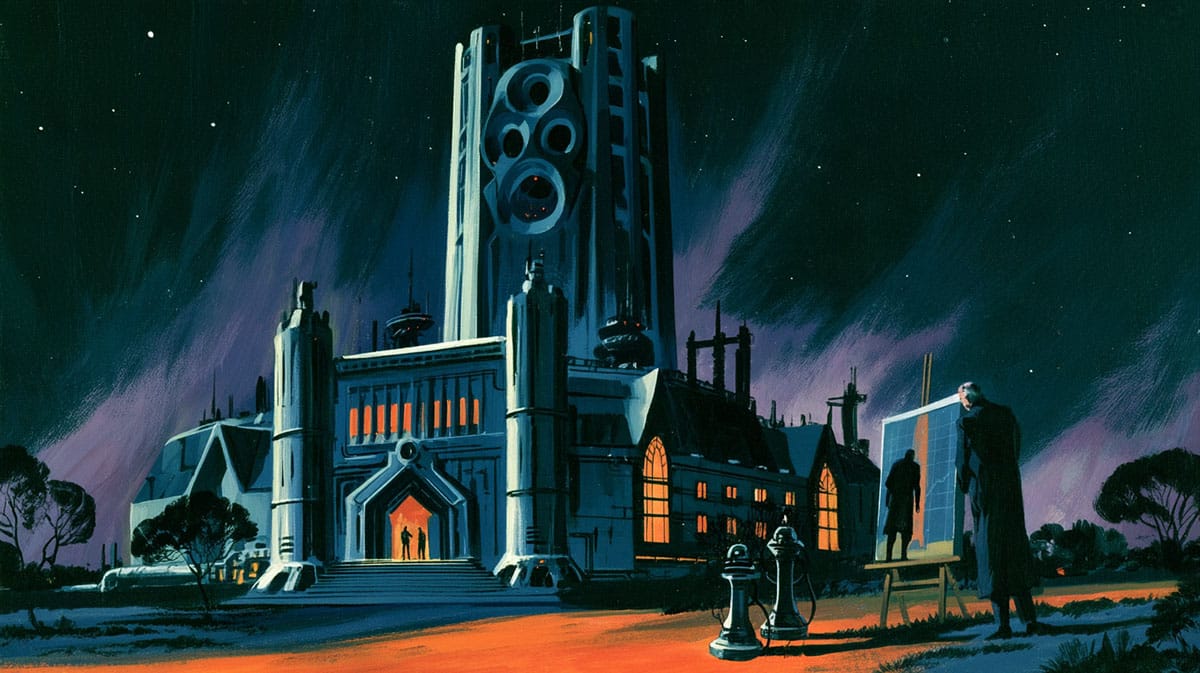
"That Hideous Strength" is C.S. Lewis's darkly comic and deeply traditional novel about a modern institution that promises scientific progress while seeking control over human nature, marriage, politics, and society.
The story follows Mark and Jane Studdock, a troubled young couple drawn into opposing sides of a conflict between the technocratic National Institute of Coordinated Experiments and a small community defending a created moral order.
The novel combines dystopian science fiction, spiritual warfare, Arthurian legend, and social satire. Lewis presents evil not merely as open brutality, but as bureaucratic language, intellectual vanity, and the desire to remake humanity without God.
"Out of the Silent Planet" (1938)
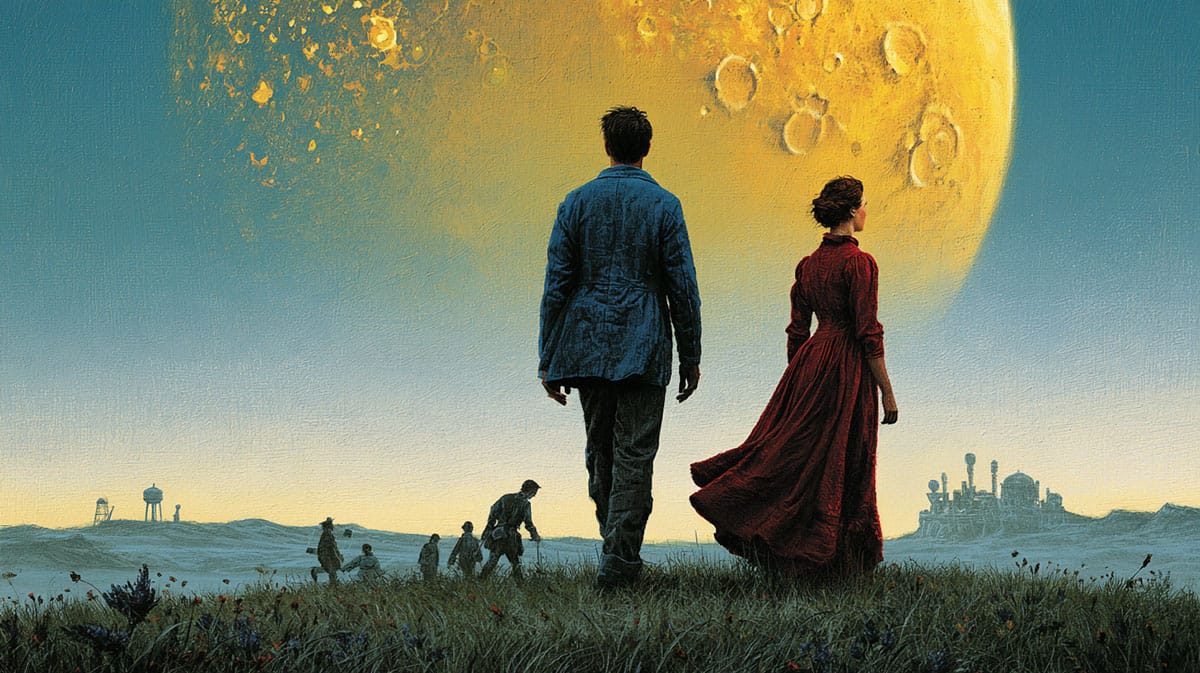
"Out of the Silent Planet" is C.S. Lewis's first novel in the Space Trilogy and follows Cambridge philologist Elwin Ransom after he is kidnapped and taken to Malacandra, the planet Mars. Expecting a barren and hostile world, Ransom instead discovers several intelligent species living within a harmonious social and spiritual order. His human captors, however, bring with them greed, fear, and the belief that humanity has the right to dominate other worlds.
The novel blends planetary adventure, Christian cosmology, and a critique of scientific materialism. Lewis imagines Earth as the "silent planet," isolated from the wider heavens by humanity's rebellion, while Malacandra remains governed by humility, obedience, and reverence for creation. Through Ransom's encounters with aliens, angels, and corrupted men, the story examines human pride, colonial ambition, moral authority, and humanity's place within an ordered universe.
"Perelandra" (1943)
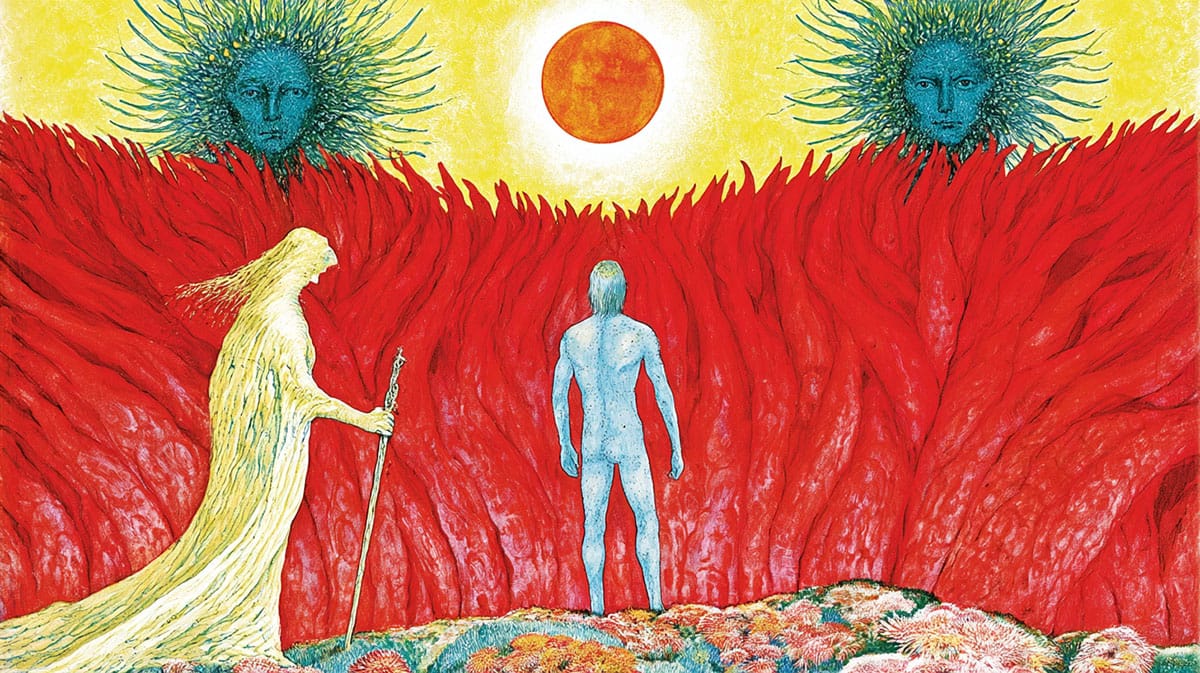
"Perelandra" is the second novel in C.S. Lewis's Space Trilogy. It follows Elwin Ransom to Venus, a young and unfallen world still at the beginning of its history. There he meets the Green Lady, the planet's innocent queen, and soon realizes that another human visitor has arrived to tempt her into disobedience. Ransom must confront both the tempter's arguments and the terrifying possibility that Perelandra could repeat Earth's fall.
The novel combines planetary adventure and a profound meditation on temptation, freedom, and obedience. Lewis presents evil as clever, patient, and rhetorically persuasive, while goodness appears joyful, ordered, and fully alive. Through Ransom's struggle, "Perelandra" explores creation, marriage, spiritual warfare, sacrifice, and the consequences of choosing one's own will over God's command.
"Lord of the World" (1907)
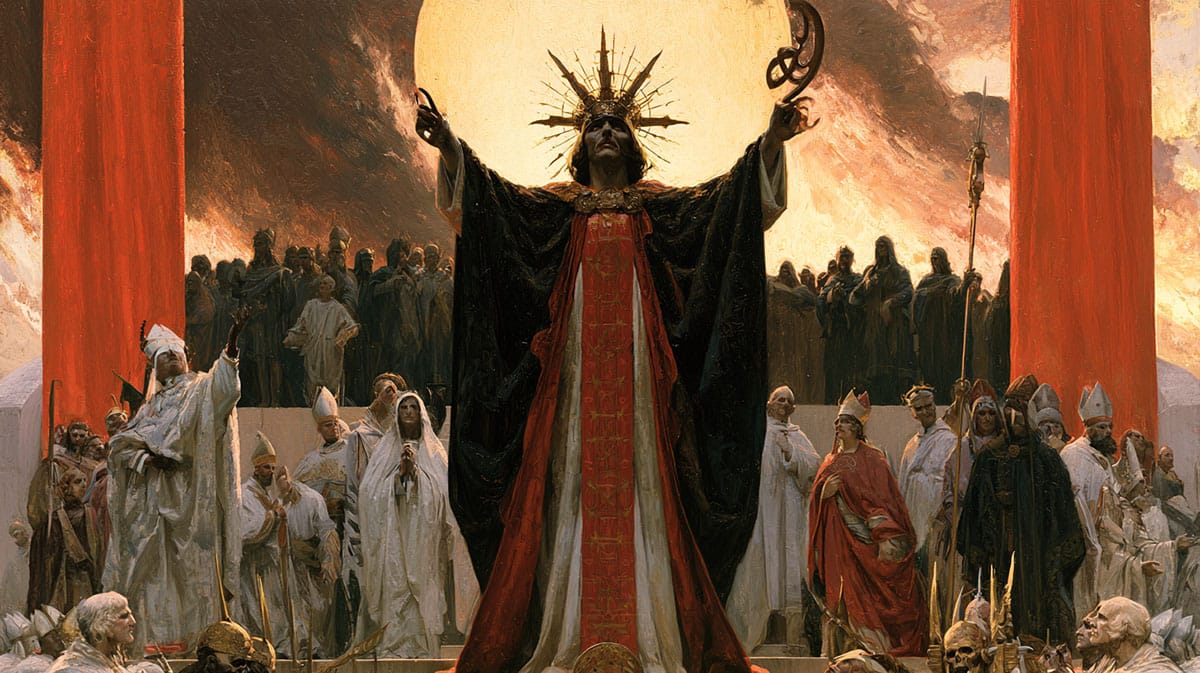
"Lord of the World" is Robert Hugh Benson's dystopian novel about a near-future society that has largely abandoned Christianity in favor of secular humanism, political unity, and faith in human progress.
As nations move toward a single global order, the charismatic Julian Felsenburgh rises as a seemingly peaceful savior. Father Percy Franklin, an English priest, gradually recognizes that the new movement demands not merely political loyalty, but spiritual submission.
The novel combines political prophecy, theology, and apocalyptic drama. Benson portrays a world in which comfort, efficiency, and international harmony conceal a deeper rebellion against God, while the remaining Christians face isolation, persecution, and martyrdom. Through its conflict between Felsenburgh and Franklin, "Lord of the World" explores false messiahs, religious apostasy, state power, and the final struggle between worldly unity and divine authority.
"A Canticle for Leibowitz" (1959)
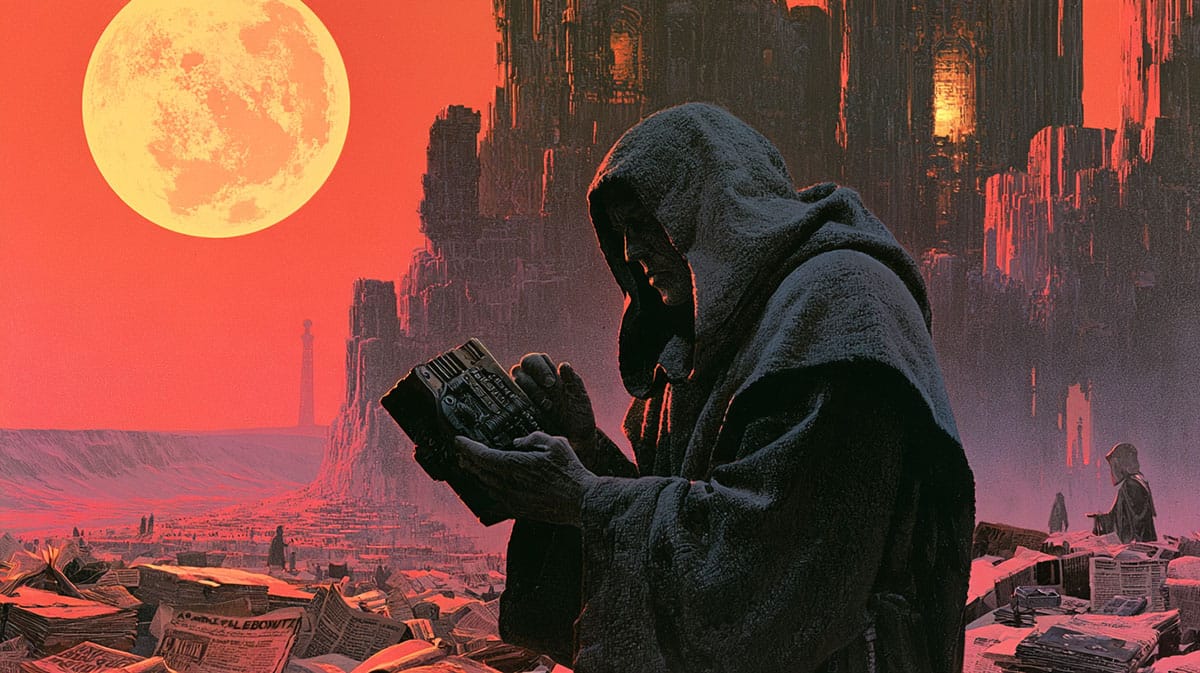
"A Canticle for Leibowitz" is Walter M. Miller Jr.'s post-apocalyptic novel about a Catholic monastery preserving the remnants of human knowledge after nuclear war has destroyed civilization. Across several centuries, the monks of the Albertian Order of Leibowitz copy damaged texts, guard forgotten technical documents, and wait for humanity to become capable of understanding them again. Their patient work continues as society passes from barbarism to renewed scientific power.
The novel combines monastic life, dark humor, theological reflection, and a sweeping account of civilization's recurring rise and fall. Miller examines faith, memory, scientific responsibility, and humanity's stubborn attraction to destruction without reducing the conflict to a simple opposition between religion and reason. "A Canticle for Leibowitz" asks whether knowledge can save a fallen humanity, whether moral wisdom can keep pace with technological progress, and whether preserving truth remains worthwhile when history appears condemned to repeat itself.
"The High Crusade" (1960)
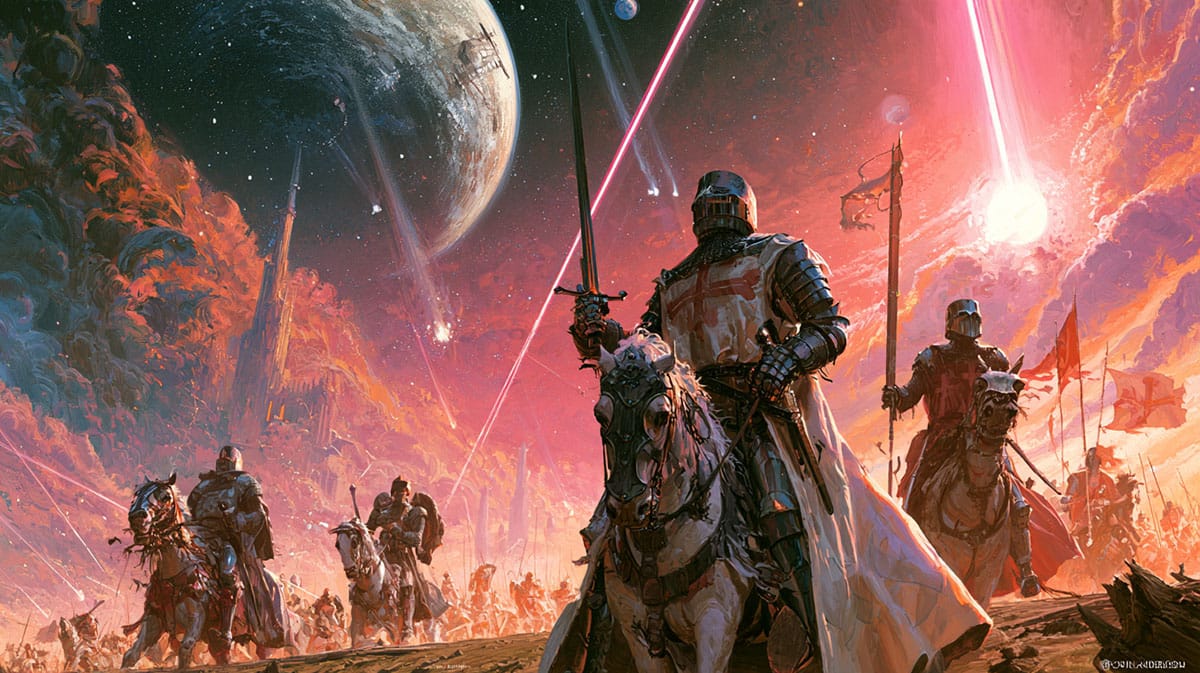
"The High Crusade" is Poul Anderson's comic science fiction adventure about a group of 14th-century English knights who capture an alien spacecraft and are carried far beyond Earth. Led by Sir Roger de Tourneville, the soldiers, villagers, priests, and craftsmen of Ansby confront an interstellar empire with little understanding of advanced technology but considerable courage, discipline, and practical intelligence. Their medieval assumptions repeatedly confound enemies who expect humanity to be primitive and easily conquered.
The novel combines military adventure, historical satire, and space opera while treating medieval society with unusual affection. Anderson contrasts technological sophistication with moral confidence, showing how loyalty, faith, hierarchy, and bold leadership can matter more than superior weapons.
Beneath its humor, "The High Crusade" explores cultural resilience, imperial ambition, human adaptability, and the possibility that a supposedly backward people may understand courage and civilization better than their conquerors.
"Eifelheim" (2006)
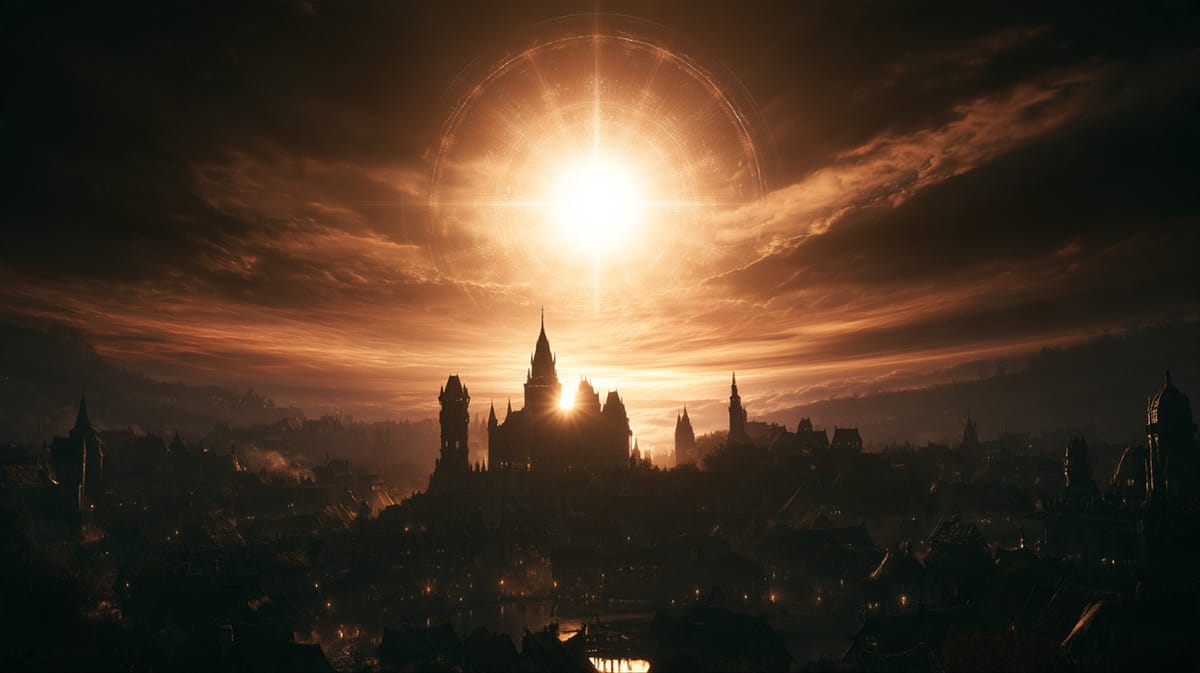
"Eifelheim" is Michael Flynn's first-contact novel about an isolated German village in the 14th century, where a group of stranded aliens appears on the eve of the Black Death. The village priest, Father Dietrich, must decide whether the strange visitors are demons, animals, or rational beings capable of understanding God. As he learns to communicate with them, suspicion gives way to curiosity, compassion, and a remarkable exchange between medieval Christianity and an unfamiliar scientific culture.
The novel moves between Dietrich's world and the investigations of modern scholars trying to explain why the village vanished from history. Flynn combines historical detail, speculative science, and Christian theology without treating faith and reason as enemies. "Eifelheim" explores suffering, mortality, hospitality, and the possibility that charity can cross boundaries of language, species, and civilization.
"A Case of Conscience" (1958)
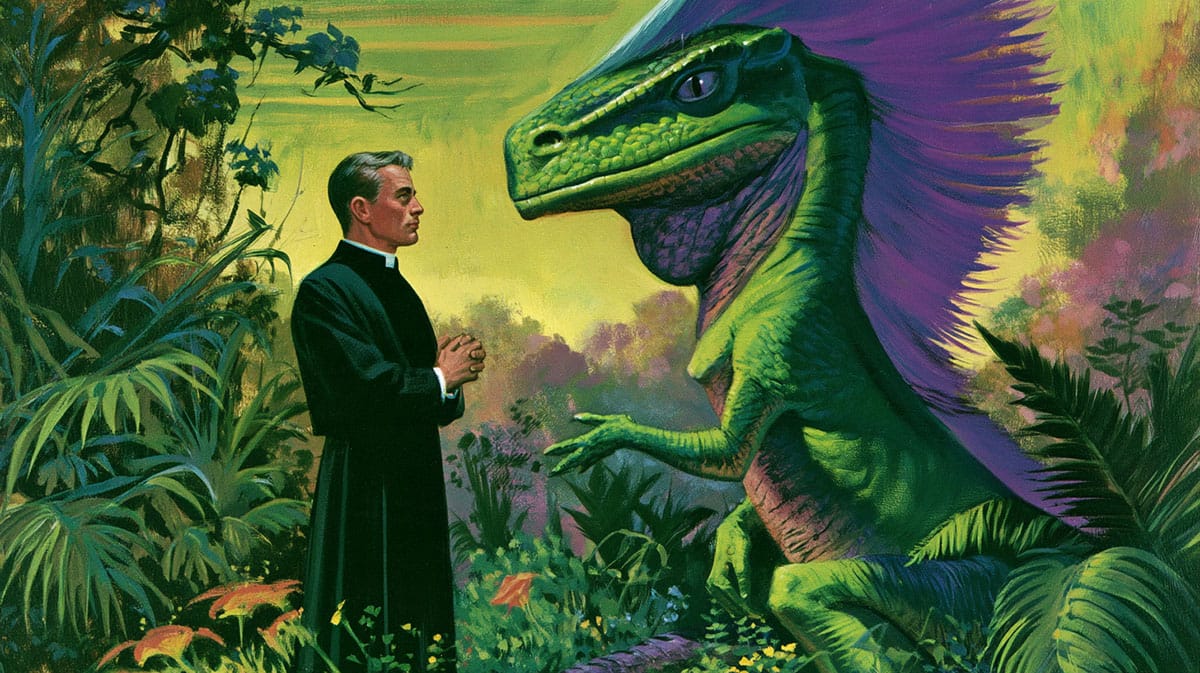
In "A Case of Conscience," Father Ramon Ruiz-Sanchez encounters a problem that neither science nor theology can easily resolve. Lithia appears to be a peaceful, rational, and morally ordered world, yet its inhabitants possess no religion, no knowledge of God, and no sense of sin. To Ruiz-Sanchez, their apparent perfection is not reassuring. It suggests the possibility of a deception aimed directly at Christian faith.
James Blish builds the novel around that unsettling suspicion and its consequences. The story moves from an alien civilization to a troubled Earth, where questions about free will, virtue, spiritual evil, and human responsibility become increasingly urgent. Rather than presenting faith and science as simple opponents, "A Case of Conscience" examines what happens when both seem to offer convincing but incompatible explanations of reality.
"Fahrenheit 451" (1953)
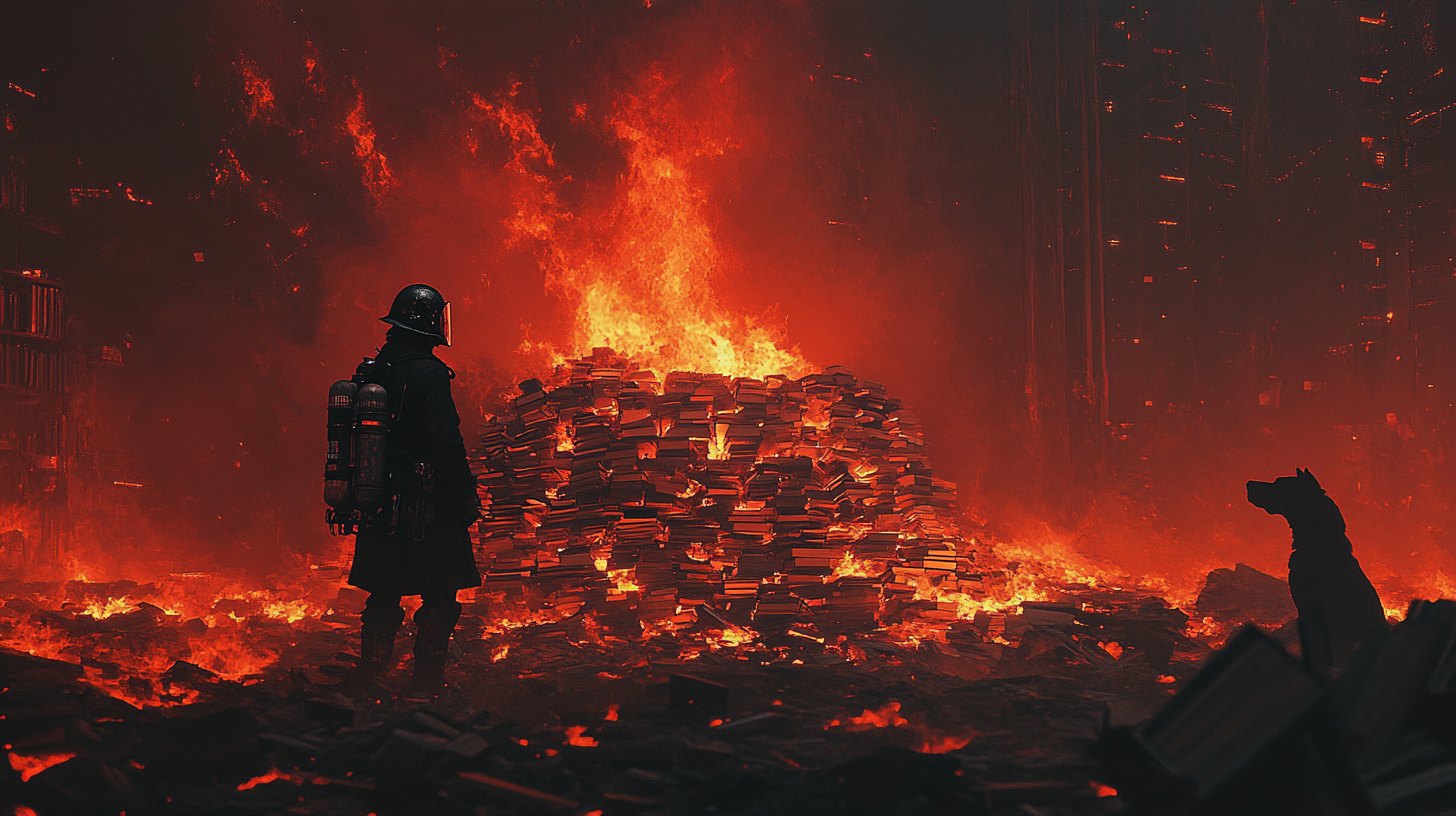
"Fahrenheit 451" is Ray Bradbury's blazing indictment of a society that has traded thought for comfort, books for screens, and freedom for the narcotic ease of constant entertainment. Guy Montag is a fireman whose job is not to put out fires but to burn books that might awaken memory, judgment, and dissent. When he begins to question the emptiness around him, every page becomes an act of rebellion, and every flame reveals how eagerly a frightened culture will destroy the truth.
Bradbury's dystopia burns with anger at censorship, conformity, and voluntary ignorance. Its most disturbing vision is not a government forcing people to abandon books, but a population that no longer wants the difficulty, discomfort, and responsibility of serious thought. "Fahrenheit 451" is a warning that civilization can be reduced to ash long before the first match is struck, whenever people surrender language, history, and conscience for amusement.
"Alas, Babylon" (1959)
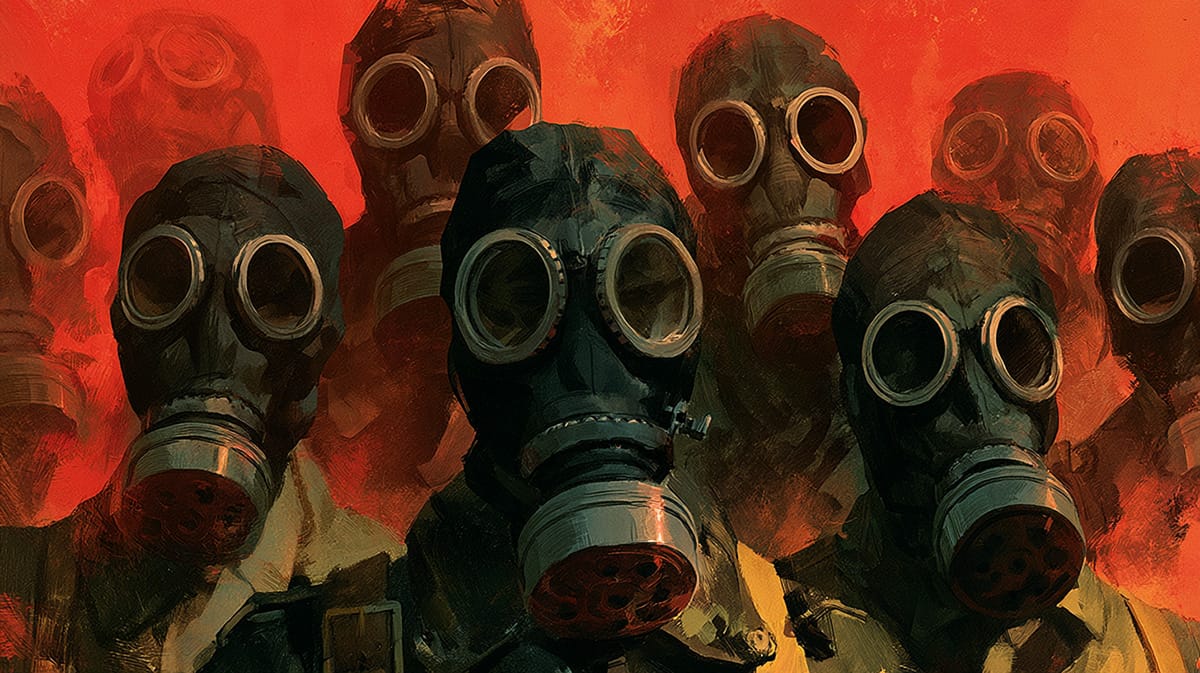
"Alas, Babylon" is Pat Frank's sober account of ordinary Americans trying to preserve civilization after nuclear war shatters the country. In the small Florida town of Fort Repose, Randy Bragg receives a coded warning from his military officer brother and begins preparing before the bombs fall. What follows is not a fantasy of effortless survival, but a struggle to secure food, water, medicine, safety, and order while the institutions people once depended upon disappear.
Frank keeps the novel focused on families, neighbors, and the practical duties of rebuilding a community. Competence matters, but so do courage, sacrifice, discipline, and trust. "Alas, Babylon" portrays catastrophe as a test of character, revealing which habits sustain civilization and how quickly law, decency, and hope can vanish when responsible men and women fail to defend them.
"The Postman" (1985)
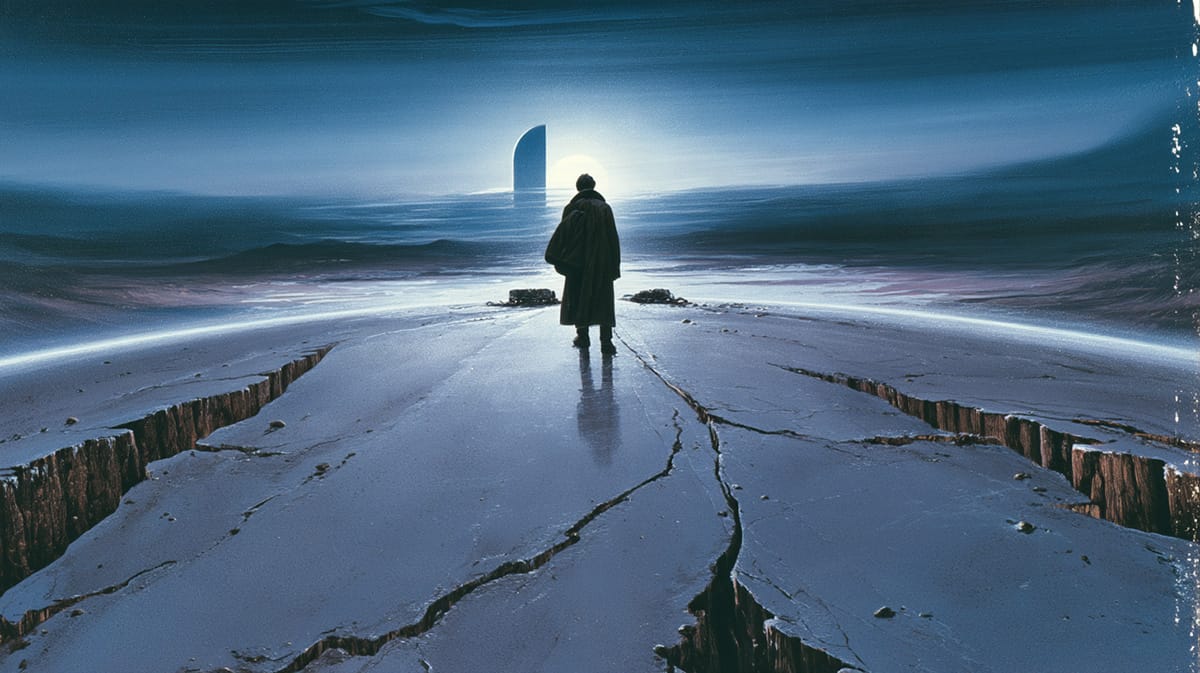
Civilization survives because people choose to believe that law, duty, and community still matter. In the shattered America of "The Postman," wandering survivor Gordon Krantz dons the uniform of a dead postal worker and claims to represent a restored United States. What begins as a desperate deception becomes something larger as isolated settlements seize upon the mail, the flag, and the promise of connection as evidence that the old republic may not be entirely dead.
David Brin sets that fragile hope against warlords who offer only strength, fear, and domination. The novel argues that rebuilding requires more than food, weapons, and technology. It requires shared stories, trustworthy institutions, and men willing to accept responsibility for something beyond themselves. "The Postman" is ultimately a defense of civilization as a moral achievement, preserved whenever ordinary people reject barbarism and return to acting like citizens.
"Speaker for the Dead" (1986)
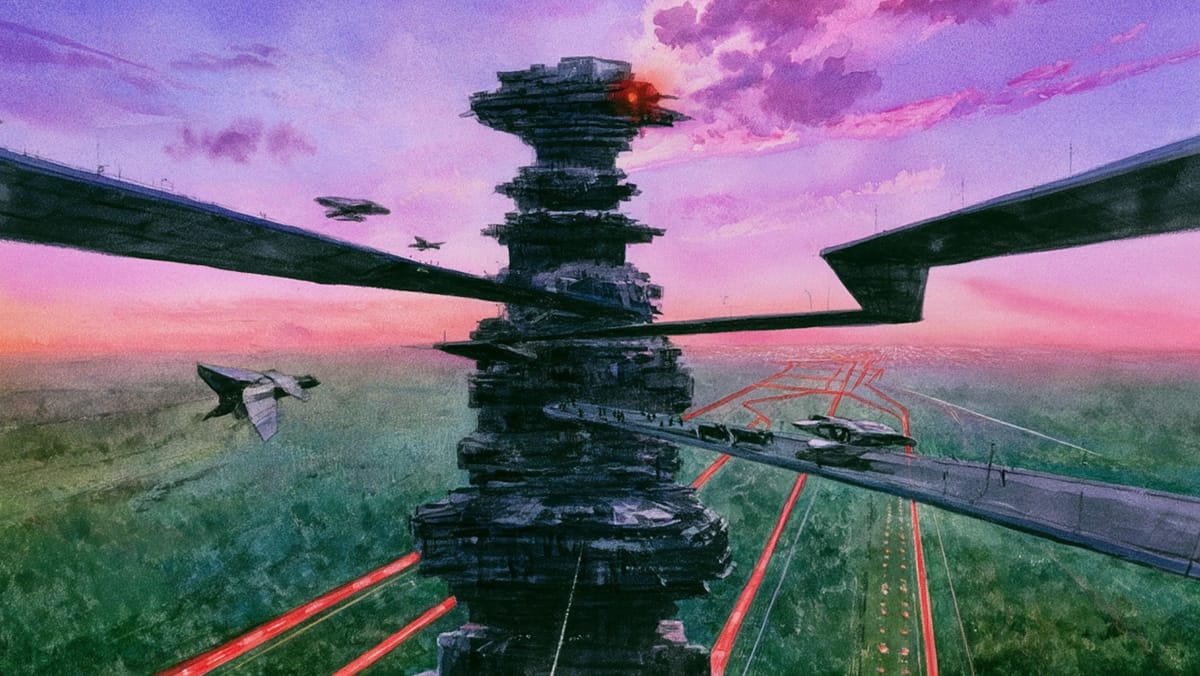
Truth can wound a family, a community, or an entire world, but concealed truth festers into something worse. In "Speaker for the Dead," Ender Wiggin travels to the colony world of Lusitania to perform a public reckoning for a dead man whose life has become a source of fear, resentment, and confusion. His task is not to excuse the dead or condemn him, but to tell the whole story so honestly that the living can finally understand what happened and why.
Orson Scott Card builds the novel around confession, judgment, and reconciliation, then expands those questions into humanity's encounter with another intelligent species. Ender must confront wounded families, religious authority, scientific ambition, and the consequences of treating unfamiliar life as either monstrous or disposable. "Speaker for the Dead" argues that mercy depends upon truth, that understanding is not the same as approval, and that genuine peace begins only when people are willing to see one another without comforting lies.
"Lest Darkness Fall" (1941)
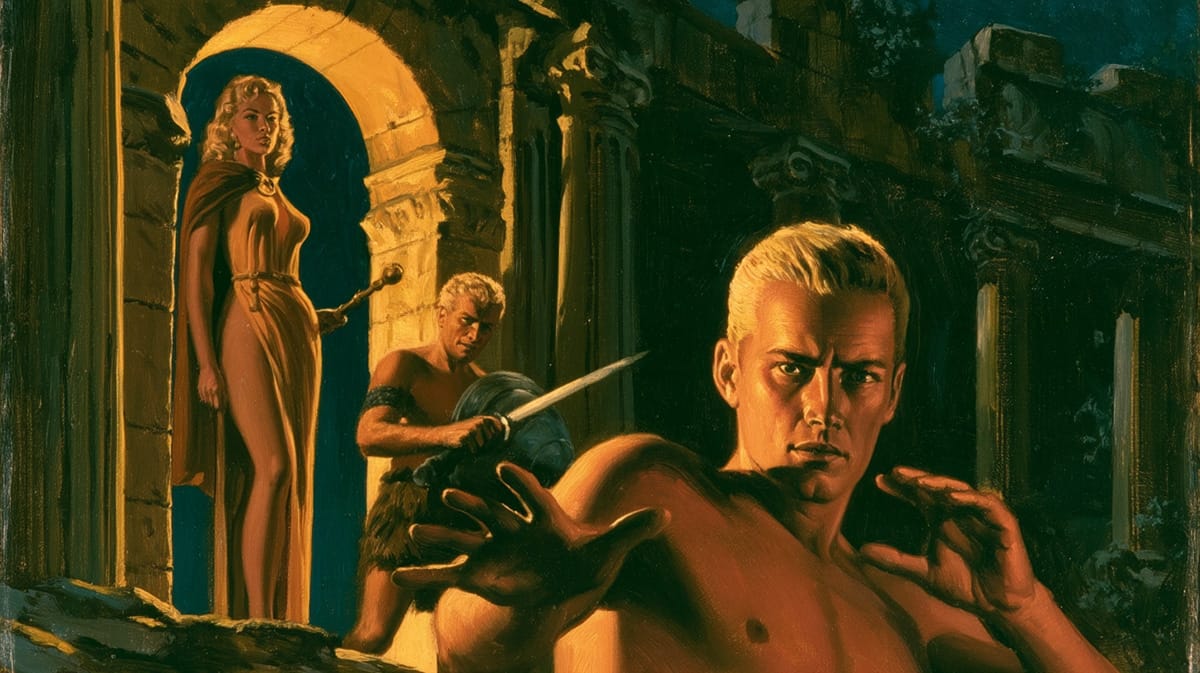
Civilization depends less on inherited institutions than on people willing to preserve knowledge, law, and practical competence when history begins to collapse. In "Lest Darkness Fall," American archaeologist Martin Padway is thrown backward into sixth-century Rome, where the Western Empire has already fallen, and the Gothic kingdom faces conquest, disorder, and cultural decline. Armed with historical knowledge and a modern understanding of economics, communication, and politics, he begins introducing technologies and institutions that might prevent the coming age of darkness.
L. Sprague de Camp turns time travel into a brisk examination of how civilization is actually maintained. Padway cannot rebuild the modern world by invention alone. He must master trade, taxation, military alliances, religious disputes, and the ambitions of rulers who rarely behave as history books suggest. "Lest Darkness Fall" argues that progress requires more than ideas. It demands courage, adaptability, entrepreneurship, and the ability to persuade imperfect men to defend a social order worth preserving.
"On the Beach" (1957)
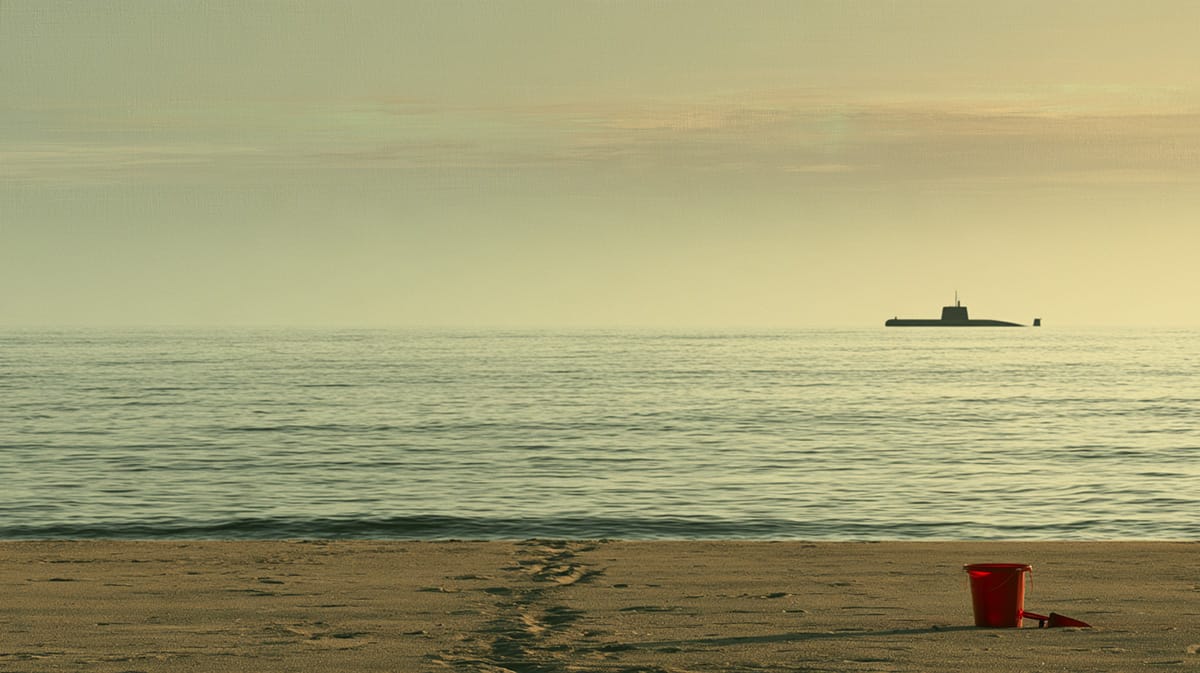
Dignity matters even when survival is no longer possible. In "On the Beach," the last communities in Australia wait as radioactive fallout from a nuclear war slowly moves south. Naval officer Dwight Towers, scientist John Osborne, and the people around them continue working, loving, and planning even as they confront the certainty that their time is running out.
Nevil Shute presents the end of the world without spectacle or heroics. The novel focuses instead on duty, family, restraint, and the quiet courage required to face catastrophe honestly. Its power comes from the ordinary routines people preserve when hope has nearly vanished.
"Citizen of the Galaxy" (1957)
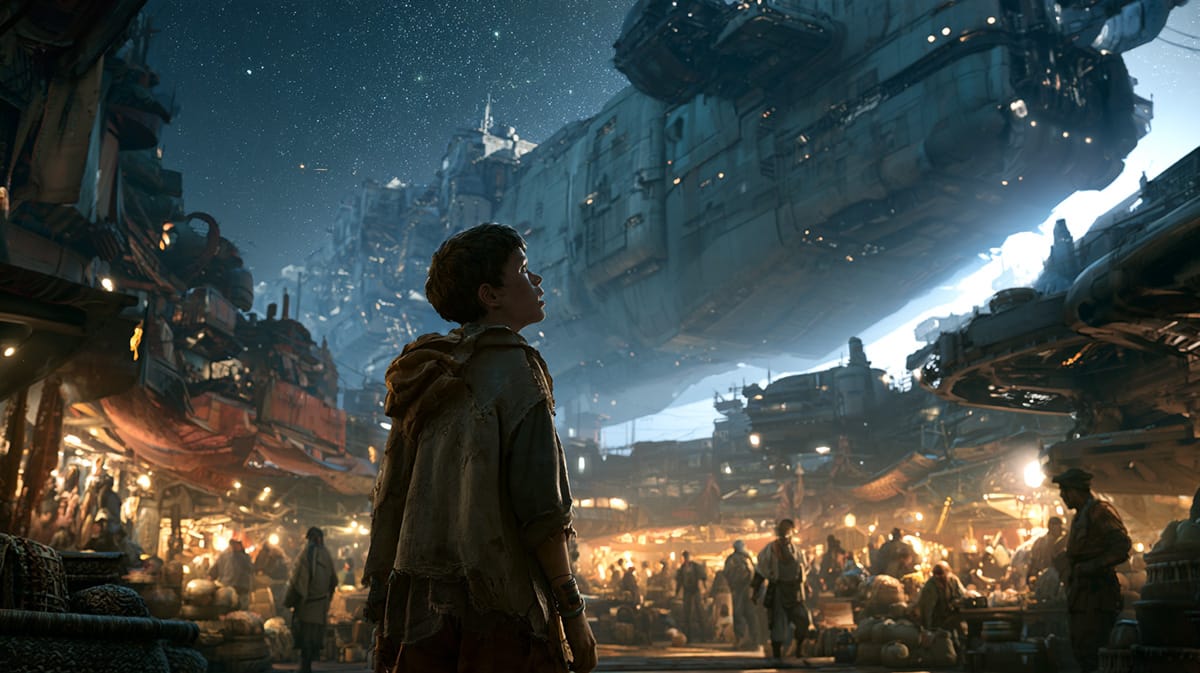
Freedom is not merely escape from bondage. It is the discovery of duty, loyalty, and responsibility. In "Citizen of the Galaxy," a young slave named Thorby is purchased by Baslim the Cripple, a mysterious beggar who educates him, protects him, and prepares him for a life far larger than the streets where he was raised. After Baslim's death, Thorby begins a journey through merchant society, military service, and the powerful family he never knew.
Robert A. Heinlein uses Thorby's changing circumstances to examine slavery, citizenship, commerce, family, and moral obligation. Each new society offers him greater freedom, but also new duties and forms of belonging. "Citizen of the Galaxy" argues that true independence is not isolation. It is the ability to choose whom and what one will serve, then accept the cost of that choice.
"Have Space Suit—Will Travel" (1958)
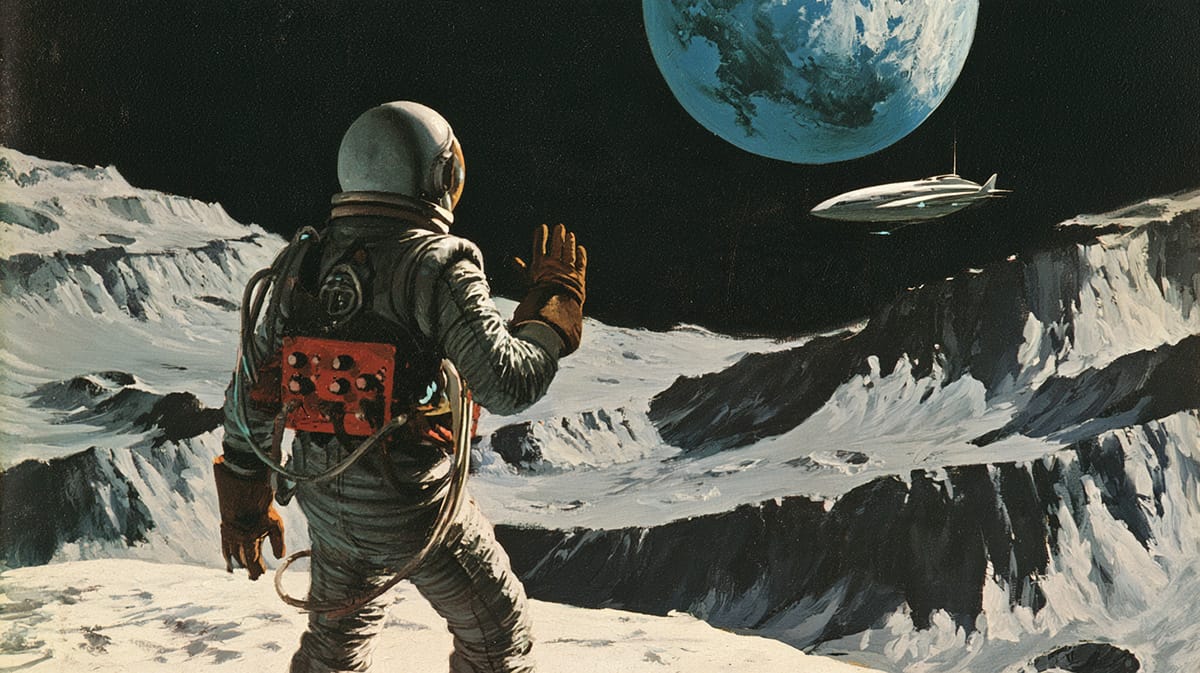
Competence turns opportunity into adventure. In "Have Space Suit—Will Travel," teenager Kip Russell wins a used spacesuit, repairs it himself, and is unexpectedly swept into an interplanetary crisis. What begins as a practical project becomes a dangerous journey involving kidnapping, alien worlds, and a threat far larger than anything Kip imagined.
Robert A. Heinlein builds the novel around intelligence, courage, hard work, and self-reliance. Kip survives not because he is chosen by destiny, but because he studies, prepares, thinks clearly, and refuses to abandon those who depend on him. "Have Space Suit—Will Travel" is a fast-moving coming-of-age story about earning responsibility, meeting danger with resolve, and discovering that ordinary preparation can lead to extraordinary service.
"Little Fuzzy" (1962)
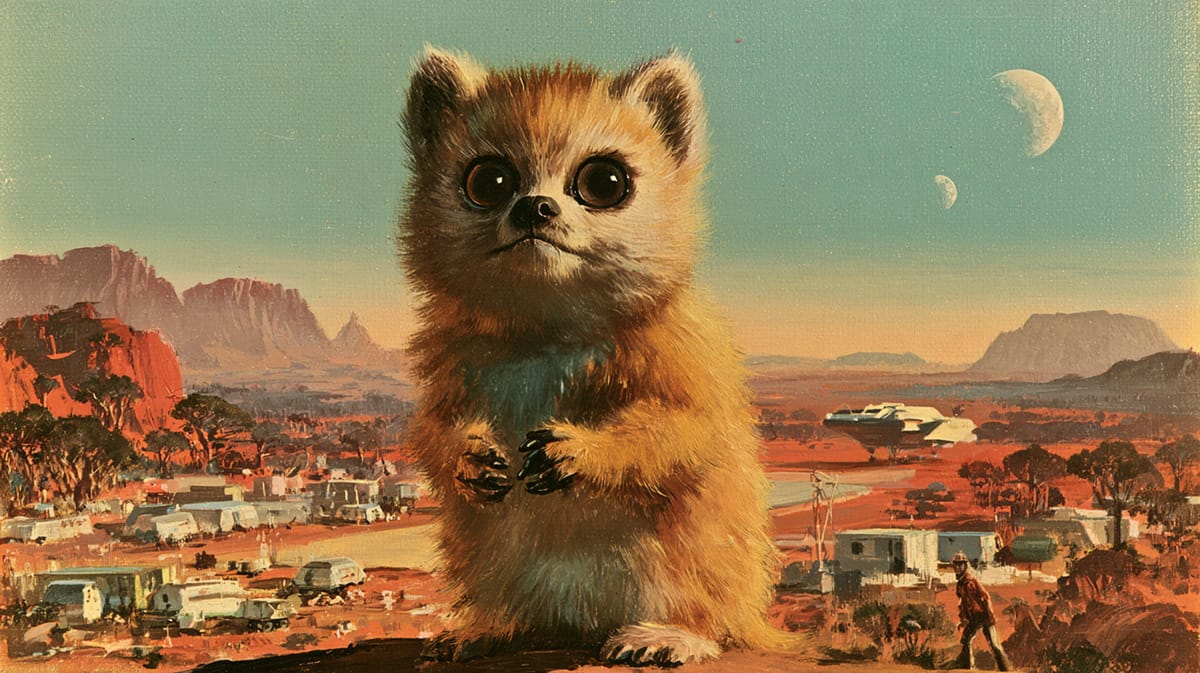
Personhood cannot be decided by profit or convenience. In "Little Fuzzy," independent prospector Jack Holloway discovers a small, friendly species on the planet Zarathustra and becomes convinced that the creatures are intelligent. The powerful company controlling the planet has reason to deny that conclusion, since recognizing the Fuzzies as people could threaten its charter, property claims, and control of Zarathustra's resources.
H. Beam Piper turns the dispute into a lively mixture of frontier adventure, corporate conflict, and courtroom drama. As Holloway fights to protect the Fuzzies, the novel asks what qualities make a being human in the moral and legal sense. "Little Fuzzy" is ultimately a defense of individual rights, honest judgment, and the principle that no intelligent creature should be treated as property.
"Pavane" (1968)
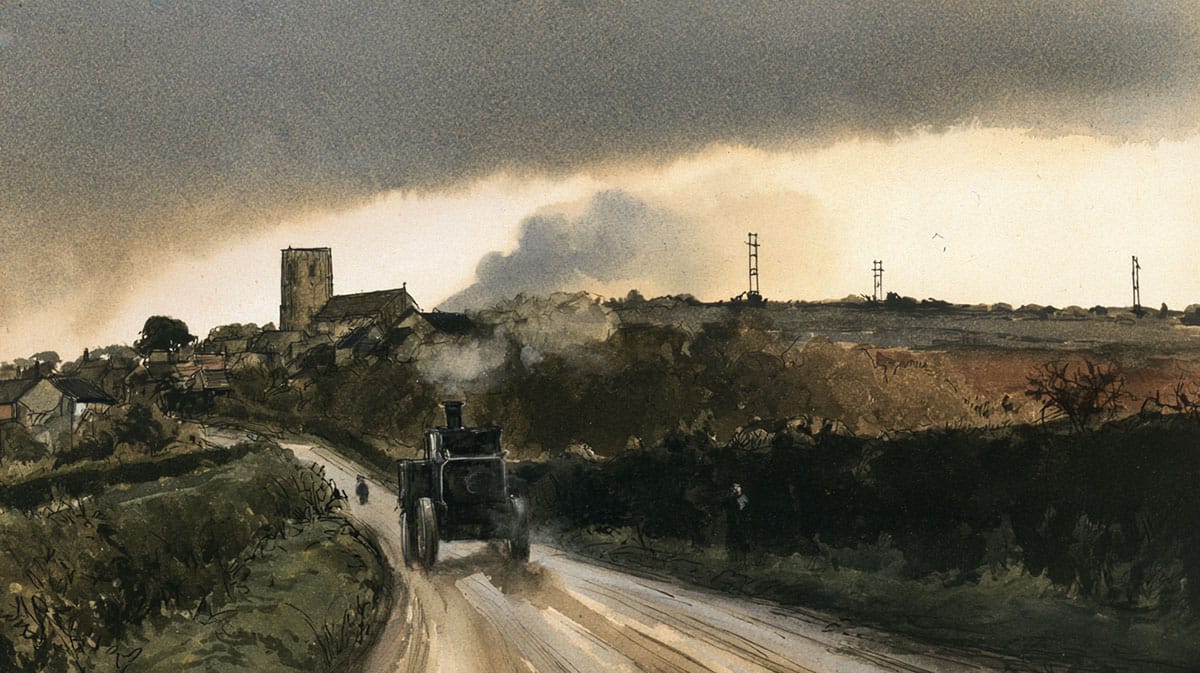
No authority can halt human curiosity forever, even when restraint is imposed in the name of peace. In "Pavane," the Spanish Armada has conquered England, Protestantism has been crushed, and the Catholic Church dominates Europe. Technological development proceeds slowly beneath ecclesiastical control, leaving steam engines, semaphore towers, guilds, and ancient privileges to shape a world that never experienced the modern industrial age.
Keith Roberts presents this alternate history through interconnected lives caught between stability and rebellion. The Church's rule has spared humanity from some of modernity's worst dangers, but it has also preserved hierarchy through censorship, fear, and force. "Pavane" asks whether civilization is safer when progress is restrained, and whether any institution can suppress invention, liberty, and change without eventually provoking resistance.
"Project Hail Mary" (2021)
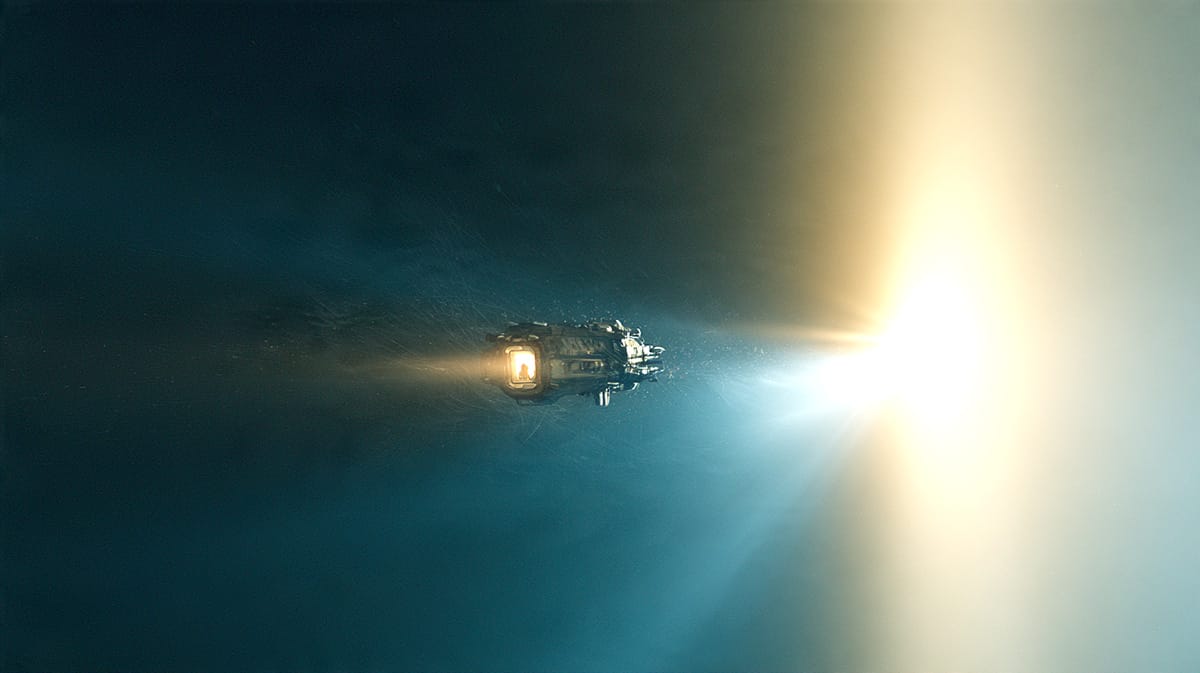
Survival depends on intelligence, sacrifice, and the willingness to trust someone utterly unlike oneself. In "Project Hail Mary," scientist Ryland Grace awakens alone aboard a spacecraft with no memory of his mission and no understanding of why he is humanity's last hope. As his memories return, he discovers that Earth faces extinction from a cosmic threat and that solving the crisis will require both scientific ingenuity and an unexpected alliance.
Andy Weir turns the story into a celebration of problem-solving, persistence, and friendship across impossible boundaries. Grace succeeds not through heroism alone, but through careful observation, experimentation, courage, and loyalty. "Project Hail Mary" argues that knowledge can save lives, but only when joined with humility, cooperation, and the willingness to put another being's future ahead of one's own.
"Space Viking" (1963)
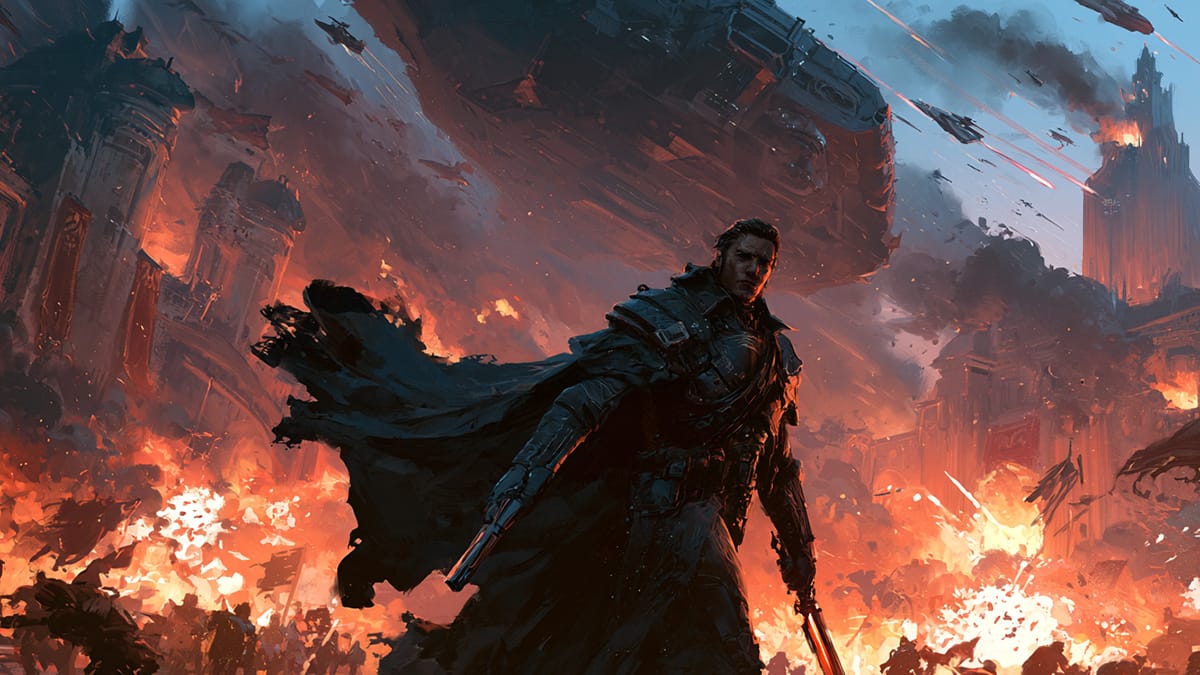
Civilization cannot be rebuilt by plunder alone. In "Space Viking," Lucas Trask leaves his homeworld after a personal tragedy and joins the raiders who strike the scattered planets of a fallen interstellar civilization. His pursuit of vengeance soon forces him to confront a larger question about whether power should merely consume what remains or create the order, trade, and industry needed for human society to rise again.
H. Beam Piper combines revenge, political strategy, and space warfare with a serious interest in how civilizations decline and recover. Trask learns that ships and weapons can conquer worlds, but lasting authority depends on law, commerce, loyalty, and productive institutions. "Space Viking" argues that true leadership begins when a man stops living for destruction and accepts responsibility for building something that can outlast him.
"The Alteration" (1976)
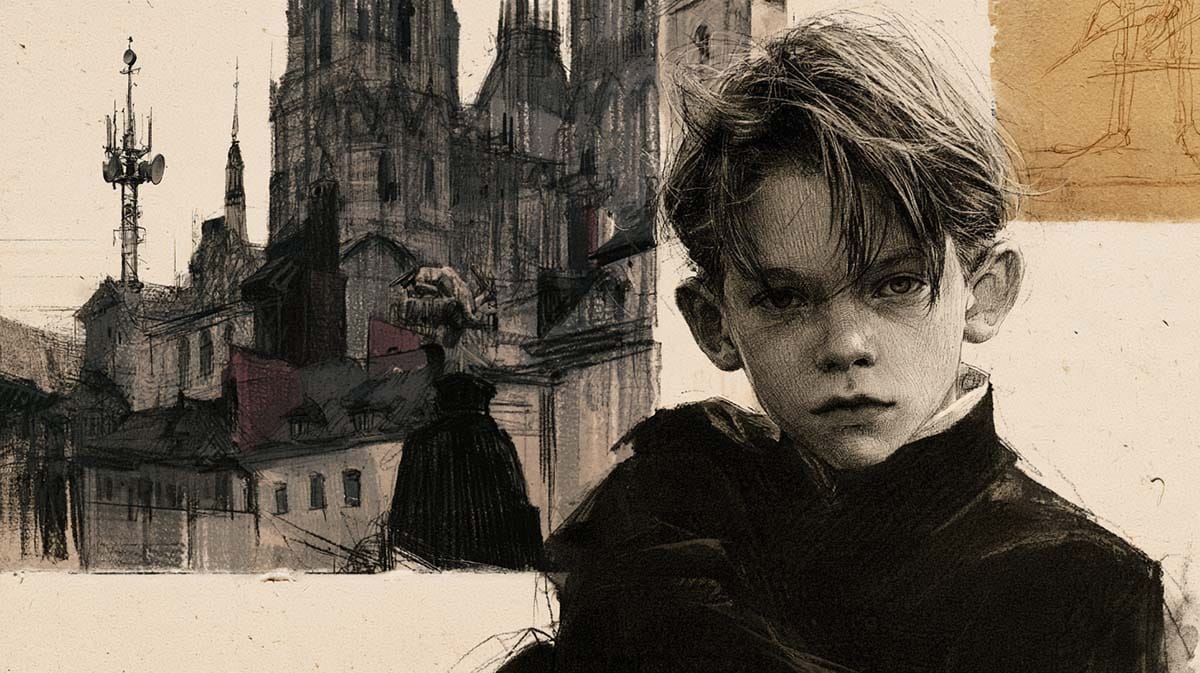
A society may preserve order, beauty, and tradition while still demanding excessive obedience from individuals. In "The Alteration," young Hubert Anvil possesses a magnificent singing voice in an alternate Europe where the Protestant Reformation failed, and the Catholic Church dominates public life. Church officials decide that Hubert should undergo an operation to preserve his voice permanently, forcing him to choose between the future planned for him and the freedom to determine his own life.
Kingsley Amis uses Hubert's struggle to examine religious authority, personal conscience, and the cost of suppressing intellectual and technological change. The world around him appears stable and magnificent, but its harmony depends upon censorship, rigid hierarchy, and control over human ambition. "The Alteration" asks whether tradition can remain worthy when it no longer permits dissent, discovery, or the right to refuse sacrifice.
"The Andromeda Strain" (1969)

Scientific competence is most valuable when certainty disappears. In "The Andromeda Strain," a deadly extraterrestrial microorganism wipes out nearly an entire town, leaving a team of specialists to determine what it is, how it kills, and whether it can be contained. Sealed inside an underground laboratory, they work against time while every assumption, safeguard, and human judgment is tested.
Michael Crichton presents catastrophe as a problem of systems, procedure, and fallible expertise rather than simple heroism. The novel admires disciplined inquiry, but it also exposes the limits of technology when scientists confront something genuinely unknown. "The Andromeda Strain" asks whether humanity can master a threat from beyond Earth, or whether confidence in its own methods may become part of the danger.
"The Black Cloud" (1957)
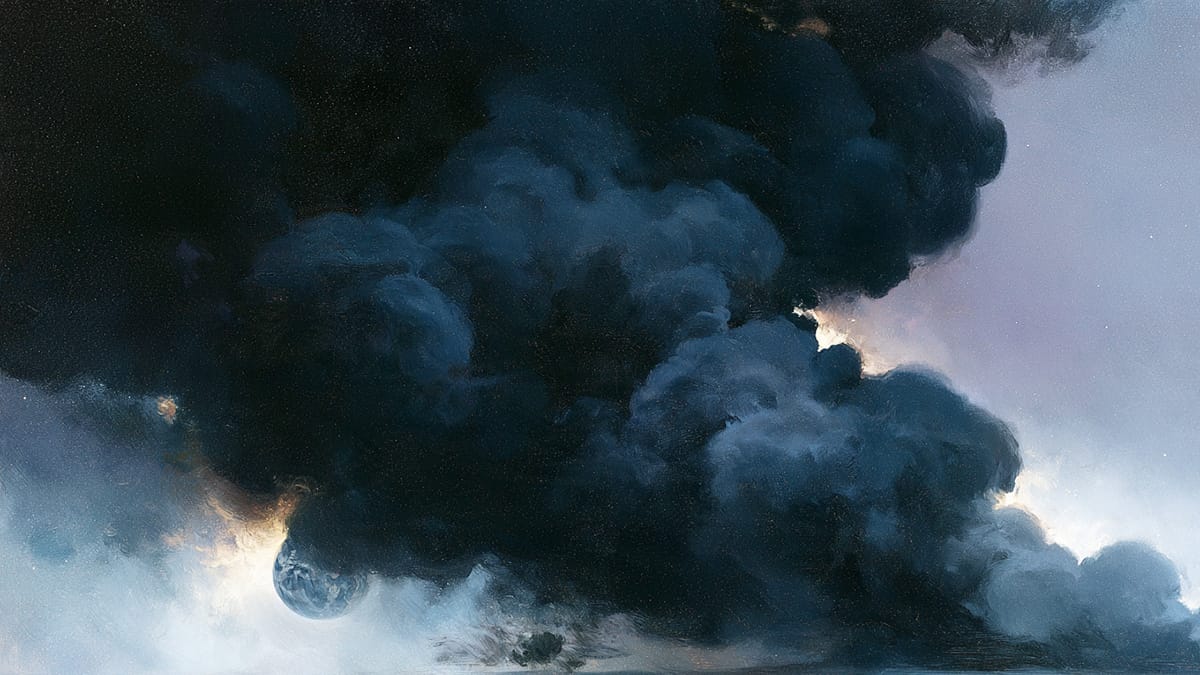
Intelligence does not have to resemble humanity, or even inhabit a body. In "The Black Cloud," a vast cloud of interstellar gas enters the solar system and threatens Earth by blocking the sun. As scientists struggle to predict its movement, they discover that the cloud is not a natural object at all, but a conscious being with knowledge, intentions, and a scale of existence far beyond their own.
Fred Hoyle turns the crisis into a confrontation between scientific confidence and the limits of human understanding. The novel explores first contact, institutional authority, political fear, and the possibility that mankind is neither the oldest nor the most important intelligence in the universe. "The Black Cloud" argues that discovery requires humility, especially when the universe answers human questions with something stranger than anyone imagined.
"The Door into Summer" (1957)
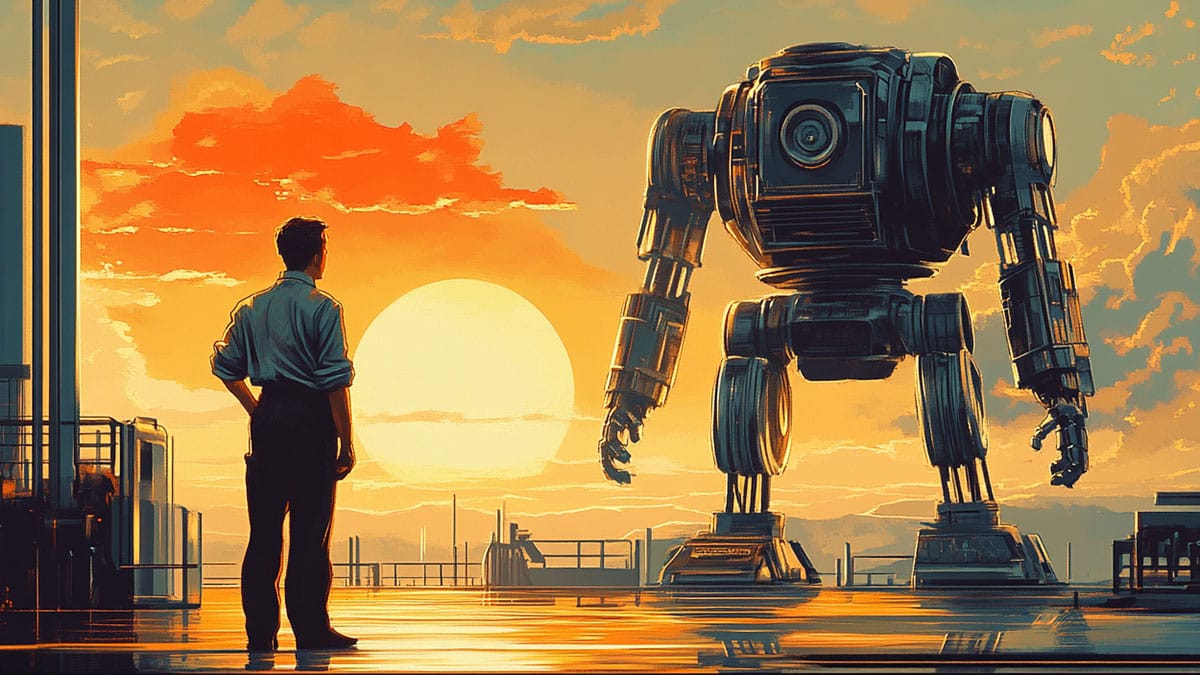
The future belongs to people who keep building after betrayal has taken everything from them. In "The Door into Summer," engineer Dan Davis loses his inventions, his company, and the life he expected when his business partner and fiancée turn against him. Forced into suspended animation, he awakens thirty years later in a world transformed by technologies that bear the unmistakable traces of his own ideas.
Robert A. Heinlein combines time travel, entrepreneurial ambition, and personal revenge with an affection for practical invention. Dan approaches both the future and the past as engineering problems, testing possibilities until he finds a way forward. "The Door into Summer" argues that ingenuity, persistence, and hope can reopen opportunities that seemed permanently closed.
"The Kraken Wakes" (1953)
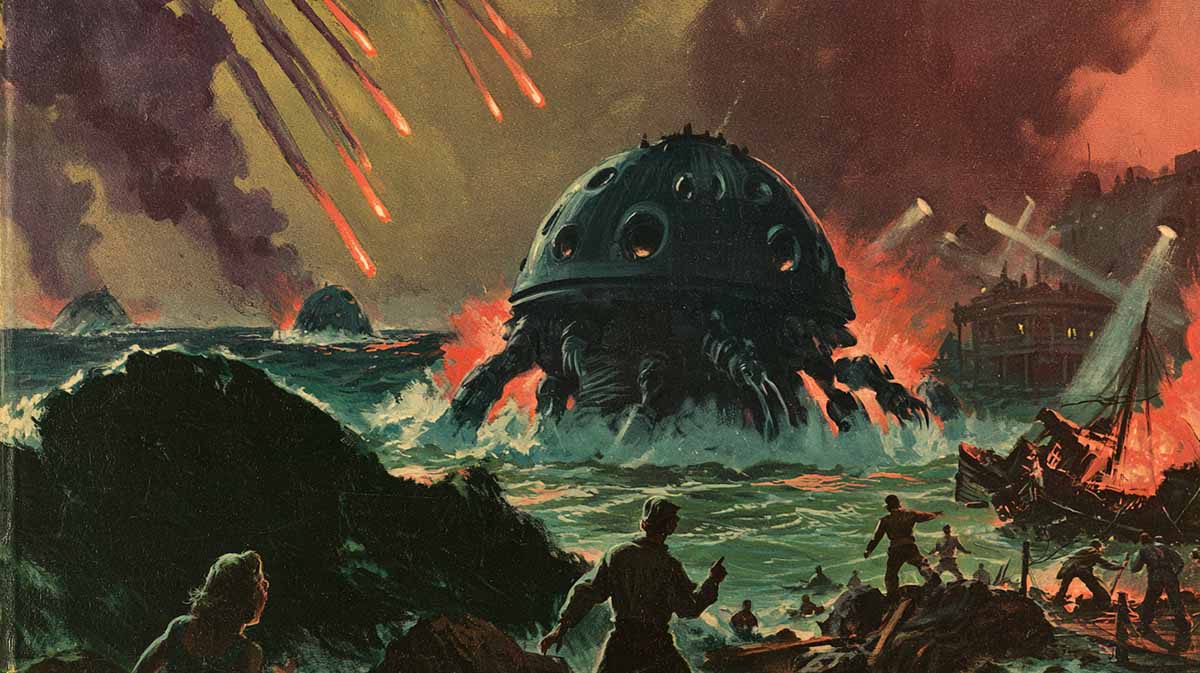
Catastrophe becomes most dangerous when people refuse to recognize it until the consequences are irreversible. In "The Kraken Wakes," married journalists Mike and Phyllis Watson witness a mysterious alien presence descend into the deepest parts of Earth's oceans. What begins as an unexplained scientific anomaly gradually develops into attacks on ships, coastal raids, and a global assault that raises sea levels and threatens entire nations.
John Wyndham presents invasion not as a sudden battle, but as a slow-moving crisis distorted by political caution, public disbelief, and institutional delay. Mike and Phyllis survive by observing clearly, adapting quickly, and refusing the comforts of denial. "The Kraken Wakes" argues that civilization is often defeated long before the final disaster, when warnings are dismissed, responsibility is postponed, and necessary action comes too late.
| Rank | Title | Author | Year |
|---|---|---|---|
| 1 | That Hideous Strength | C.S. Lewis | 1945 |
| 2 | Out of the Silent Planet | C.S. Lewis | 1938 |
| 3 | Perelandra | C.S. Lewis | 1943 |
| 4 | Lord of the World | Robert Hugh Benson | 1907 |
| 5 | A Canticle for Leibowitz | Walter M. Miller Jr. | 1959 |
| 6 | The High Crusade | Poul Anderson | 1960 |
| 7 | Eifelheim | Michael Flynn | 2006 |
| 8 | A Case of Conscience | James Blish | 1958 |
| 9 | Fahrenheit 451 | Ray Bradbury | 1953 |
| 10 | Alas, Babylon | Pat Frank | 1959 |
| 11 | The Postman | David Brin | 1985 |
| 12 | Speaker for the Dead | Orson Scott Card | 1986 |
| 13 | Lest Darkness Fall | L. Sprague de Camp | 1941 |
| 14 | On the Beach | Nevil Shute | 1957 |
| 15 | Citizen of the Galaxy | Robert A. Heinlein | 1957 |
| 16 | Have Space Suit—Will Travel | Robert A. Heinlein | 1958 |
| 17 | Little Fuzzy | H. Beam Piper | 1962 |
| 18 | Pavane | Keith Roberts | 1968 |
| 19 | Project Hail Mary | Andy Weir | 2021 |
| 20 | Space Viking | H. Beam Piper | 1963 |
| 21 | The Alteration | Kingsley Amis | 1976 |
| 22 | The Andromeda Strain | Michael Crichton | 1969 |
| 23 | The Black Cloud | Fred Hoyle | 1957 |
| 24 | The Door into Summer | Robert A. Heinlein | 1957 |
| 25 | The Kraken Wakes | John Wyndham | 1953 |
"The Martian" (2011)
Survival begins with refusing to surrender to impossible odds. In "The Martian," astronaut Mark Watney is stranded alone on Mars after his crew believes he has died during an emergency evacuation. With limited food, damaged equipment, and no immediate way to contact Earth, he must turn science, engineering, and relentless problem-solving into the tools that keep him alive.
Andy Weir builds the novel around competence under pressure. Watney survives by calculating risks, repairing failures, growing food, and adapting when every solution creates a new problem. "The Martian" argues that courage is not merely dramatic sacrifice. It is the daily discipline of thinking clearly, working carefully, and continuing forward when hope depends on one more successful experiment.
"A Princess of Mars" (1917)
Courage, loyalty, and honor can matter more than the weapons or technology a man carries. In "A Princess of Mars," former Confederate soldier John Carter is mysteriously transported to Mars, where lower gravity gives him extraordinary strength and agility. He soon becomes entangled in the wars of Barsoom, forging alliances with fierce warriors, confronting rival civilizations, and falling in love with the Martian princess Dejah Thoris.
Edgar Rice Burroughs builds the novel as a fast-moving planetary romance filled with duels, battles, strange creatures, and lost civilizations. Beneath the adventure, "A Princess of Mars" celebrates bravery, personal honor, friendship, and devotion, while presenting John Carter as a man who earns respect through action rather than title or birth.
"Ender's Game" (1985)
War can demand brilliance from a child while denying him the moral freedom to understand what he is doing. In "Ender's Game," Andrew "Ender" Wiggin is recruited into an elite military school because commanders believe his intelligence, empathy, and strategic instincts may be humanity's best defense against an alien enemy. Through increasingly difficult games and simulations, Ender learns to outthink opponents who are stronger, older, and more ruthless, even as the adults around him manipulate his isolation and sense of responsibility.
Orson Scott Card turns military training into a study of leadership, sacrifice, and the terrible burden of victory. Ender succeeds because he understands his enemies deeply enough to defeat them, but that same empathy makes the cost of his success impossible to ignore. "Ender's Game" asks whether a just cause can excuse deception, whether victory can become a form of guilt, and what happens when those entrusted with protecting civilization use a child as their most effective weapon.
"Journey to the Center of the Earth" (1864)
Discovery begins with the willingness to go where reason says no one should survive. In "Journey to the Center of the Earth," Professor Otto Lidenbrock deciphers an old manuscript that appears to reveal a passage into the planet's interior. He sets out with his reluctant nephew Axel and their Icelandic guide Hans, descending through a volcanic crater into an immense subterranean world of caverns, underground seas, prehistoric creatures, and geological wonders.
Jules Verne turns scientific curiosity into a grand adventure about courage, endurance, and the desire to know what lies beyond accepted limits. Lidenbrock's confidence repeatedly borders on recklessness, but the expedition advances through persistence, practical skill, and disciplined observation. "Journey to the Center of the Earth" celebrates exploration at its most elemental, when knowledge must be earned by men willing to venture into the unknown.
"Starship Troopers" (1959)
"Starship Troopers" is Robert A. Heinlein's military novel about citizenship and war in a future where humanity fights alien species among the stars. Juan Rico, a young man from a comfortable family, enlists in the Mobile Infantry — the power-suited ground troops of the Terran Federation — and endures training that forges him from a soft civilian into a soldier.
Through Rico's rise from recruit to officer, the novel traces the education of a citizen-soldier: boot-camp discipline, the terror and brotherhood of orbital drops against the insect-like Arachnids, and the weight of command decisions that cost lives. Woven through are meditations on duty, on voting rights earned through service, and on the moral foundations of a free society.
The novel joins hard-edged adventure to a serious argument about civic responsibility — that rights must be matched by obligations, and liberty survives only where men will defend it. "Starship Troopers" explores sacrifice, discipline, moral courage, and character forged through service to something larger than oneself.
"The Caves of Steel" (1954)
"The Caves of Steel" is Isaac Asimov's first robot detective novel, a murder mystery set in a future New York where humanity has retreated into vast enclosed Cities and robots are feared. Plainclothes man Elijah Baley must solve the murder of a Spacer — one of the advanced off-world elite — alongside R. Daneel Olivaw, a humanoid robot detective whose perfect logic and manners unsettle everyone he meets.
As the pair work the case through the crowded City and the guarded Spacer enclave, the investigation exposes the tensions between Earthmen and Spacers, humans and machines, tradition and progress. Baley must confront his own prejudice against robots even as he depends on Daneel's abilities.
The novel joins classic detective fiction to Asimov's famous Three Laws of Robotics, using a whodunit to explore cooperation, prejudice, courage, and humanity's fear of change. "The Caves of Steel" argues that survival demands openness to the future — and that even a confirmed robot-hater can learn to respect a machine.
"The Chrysalids" (1955)
"The Chrysalids" is John Wyndham's post-apocalyptic novel about a fundamentalist farming community in Labrador, centuries after the nuclear catastrophe survivors call the Tribulation. The people of Waknuk believe themselves God's chosen remnant, and their religion demands the destruction of anything "abnormal." David Strorm grows up in this world hiding a secret: he and a few other children can speak mind to mind.
When David's telepathic gift is discovered, he and his friends flee across a blasted wilderness, pursued by those who would burn them as blasphemies. Their flight carries them toward the ruined cities of the old world — and toward the question of whether a kinder civilization exists beyond Waknuk's theocracy.
The novel joins survival adventure to a searching critique of fanaticism, contrasting a faith built on purity and punishment with the quiet decency of ordinary people. "The Chrysalids" explores tolerance, conscience, moral courage, and the danger of a religion that mistakes cruelty for righteousness.
"The First Men in the Moon" (1901)
"The First Men in the Moon" is H.G. Wells's lunar adventure about an impoverished businessman and an eccentric scientist who reach the Moon in a cavorite-coated sphere, a substance that blocks gravity. Mr. Bedford bankrolls the impractical Professor Cavor — and together they discover the Moon is no dead rock, but a living world with its own strange civilization.
Beneath the lunar surface they encounter the Selenites, an insect-like society of specialized castes ruled by a vast intelligence, the Grand Lunar. Captured and separated, the two men must comprehend an utterly alien order — efficient in ways that fascinate and horrify them — and their different responses carry them toward very different fates.
The novel joins thrilling exploration to Wells's fascination with social engineering carried to its extreme. The Selenites, each biologically shaped for a single function, warn of societies that trade freedom for perfect order. "The First Men in the Moon" explores curiosity, humility, ambition, and the moral limits of knowledge.
"The Lost World" (1912)
"The Lost World" is Arthur Conan Doyle's adventure novel about an expedition to a remote South American plateau where prehistoric creatures still live. Edward Malone, a young reporter hoping to impress the woman he loves, joins the irascible Professor Challenger — mocked for claiming dinosaurs survive in an isolated pocket of the Amazon — with the skeptical Professor Summerlee and the sportsman Lord John Roxton.
After a grueling journey upriver, the party finds Challenger was right: atop the plateau's cliffs, dinosaurs, pterodactyls, and ape-men inhabit a world lost to time. But triumph turns perilous when their way back is destroyed, stranding them among the beasts — forced to survive by courage, ingenuity, and gunpowder.
The novel joins rousing adventure to Doyle's affection for scientific daring and masculine fortitude. "The Lost World" explores courage, loyalty, the romance of discovery, and the idea that the world still holds wonders for men bold enough to seek them.
"The Naked Sun" (1957)
"The Naked Sun" is Isaac Asimov's sequel to "The Caves of Steel," sending detective Elijah Baley from crowded Earth to the planet Solaria — where a tiny population lives in vast estates, never touches another human being, and leaves nearly everything to armies of robots. When a Solarian is murdered — an almost impossible crime where no one ever meets face to face — Baley is summoned to solve it, again accompanied by the humanoid robot R. Daneel Olivaw.
Baley must investigate by "viewing" — Solaria's holographic telepresence — since its people regard physical presence as obscene. Every suspect is isolated, every robot bound by the Three Laws. The case forces Baley to question not only the murder, but the entire Solarian way of life.
The novel joins a locked-room mystery to a penetrating critique of atomized individualism, suggesting that a society which abolishes human contact has abolished something essential. "The Naked Sun" explores community, duty, courage, and the truth that men were not made to live alone.
"The Urth of the New Sun" (1987)
"The Urth of the New Sun" concludes Gene Wolfe's Book of the New Sun, continuing Severian's story — torturer's apprentice become Autarch of the Commonwealth. His world's sun is failing, and Severian has accepted an ancient charge: to bring the New Sun that will renew his world, a task carrying him beyond the stars and through time itself.
His voyage takes him from the court he rules to the far future and the deep past, from alien seas to audiences with beings of godlike stature. Along the way he reckons with the memories of those he wronged, the meaning of his strange destiny, and the price of the salvation he carries.
The novel joins science fiction to theological meditation. Severian's tale is one of repentance and grace — a ruler learning redemption comes not through power but through suffering accepted for others. "The Urth of the New Sun" explores memory, guilt, mercy, and the hope that even a dying world may be made new.
"Twenty Thousand Leagues Under the Sea" (1870)
"Twenty Thousand Leagues Under the Sea" is Jules Verne's great undersea adventure, narrated by Professor Pierre Aronnax, a French naturalist hunting a mysterious creature terrorizing the world's shipping. When the "monster" proves to be the Nautilus — a submarine far beyond anything the age can produce — Aronnax, his servant Conseil, and the harpooner Ned Land are taken aboard as captives of its enigmatic commander, Captain Nemo.
The captives voyage through every ocean: beneath polar ice, past lost Atlantis, through coral forests and volcanic depths. But as Nemo's war against the empires of the land grows darker, Aronnax must judge whether the captain is liberator or madman — and whether he will ever see home again.
The novel joins scientific imagination to a brooding study of genius turned to hatred. Nemo — brilliant, cultured, consumed by his quarrel with civilization — is one of fiction's great tragic figures. "Twenty Thousand Leagues Under the Sea" explores curiosity, freedom, vengeance, and the warning that knowledge without forgiveness becomes its own prison.
"Dune" (1965)
"Dune" is Frank Herbert's epic of politics, ecology, and destiny on the desert planet Arrakis, sole source of the spice melange that makes interstellar travel possible. When House Atreides is granted control of Arrakis, Paul Atreides arrives with his family into a nest of intrigue, knowing their enemies, House Harkonnen, will stop at nothing to destroy them — while the hardy Fremen of the deep desert watch and wait.
After catastrophe strikes, Paul flees into the deep desert, earning a place among the Fremen, mastering the ways of the sandworm, and facing visions of a holy war fought in his name. His journey from ducal heir to desert leader is shaped by his mother Jessica's training — and the terrible weight of prescience.
The novel joins feudal politics, desert survival, and profound ecological and religious themes, examining how messiahs are made — and what they cost. "Dune" explores leadership, sacrifice, stewardship, and the sobering truth that even a righteous cause can become a sword in the wrong hands.
"Dune Messiah" (1969)
"Dune Messiah" is Frank Herbert's darker sequel to "Dune," set twelve years after Paul Atreides seized the imperial throne. Paul is Emperor now, worshipped as a god by the Fremen legions whose jihad has swept the galaxy in his name — and trapped by his own prescience, which shows him terrible futures he cannot seem to escape. Against him conspire the Bene Gesserit, the Spacing Guild, and the Tleilaxu.
As the conspiracies close in, Paul must navigate treachery on every side while the cost of his holy war mounts. The novel narrows from the sweep of empire to the personal price of power: what it does to the man who wields it, and to those he loves.
The novel joins political intrigue to a meditation on heroism and its discontents, as Herbert deliberately undercuts the heroic myth: charismatic saviors endanger free peoples. "Dune Messiah" explores the corruption of power, the burden of foresight, moral responsibility, and the courage to refuse men's worship.
"The Mote in God's Eye" (1974)
"The Mote in God's Eye" is Larry Niven and Jerry Pournelle's first-contact epic about humanity's encounter with an ancient alien civilization near the starless Coal Sack. When an alien probe reaches the human Empire of Man, a naval expedition under Commander Roderick Blaine follows it home and discovers the Moties: brilliant, industrious aliens whose civilization has risen and fallen in endless cycles across a million years.
As Blaine and his officers study the Moties, they uncover the terrible engine driving those cycles: a biology compelling the aliens to reproduce without restraint, collapsing every civilization they build. The humans must weigh curiosity and compassion against the survival of their own species.
The novel joins naval adventure to one of science fiction's most rigorously imagined alien societies. The Moties are sympathetic and terrifying at once — a mirror of humanity's own appetites. "The Mote in God's Eye" explores prudence, duty, the discipline of command, and the hard truth that good intentions cannot substitute for clear-eyed judgment.
"Fallen Angels" (1991)
"Fallen Angels" is Larry Niven, Jerry Pournelle, and Michael Flynn's satirical adventure set in a future America gripped by a new ice age and ruled by an anti-technology Green regime that persecutes science fiction fans as dangerous subversives. Above the frozen Earth, the crew of a stranded space station keeps the last lights of high technology burning — until two astronauts, shot down over the Dakotas, crash onto the ice with no way home.
Their only hope is an underground network of science fiction fans, who set out across the glaciers to rescue the fallen "angels" before government agents seize them. Quarrelsome and ingenious, the fans wage a running battle of wits against a regime that has outlawed the very curiosity that built the modern world.
The novel joins affectionate fandom comedy to a serious warning about civilizations that turn against science and the future. "Fallen Angels" explores freedom of thought, the courage of unpopular minorities, and the proposition that the dream of reaching the stars is worth defending.
"Foundation" (1951)
"Foundation" is Isaac Asimov's landmark novel about the fall of a galactic empire and one man's plan to shorten the dark age that must follow. Hari Seldon, developer of psychohistory — the science of predicting vast populations — foresees the Empire's collapse and thirty thousand years of barbarism. His answer is the Foundation: scientists on the remote planet Terminus, charged with preserving knowledge and reducing the interregnum to a single millennium.
Through crises foreseen by Seldon's science, the Foundation outmaneuvers treacherous warlords and a decaying Empire. Leaders like Salvor Hardin and Hober Mallow must solve each Seldon Crisis with wit rather than force — wielding religion and trade as instruments of power — proving that ideas can be stronger than fleets.
The novel joins grand historical sweep to Asimov's faith in reason and ingenuity. Its vision of scholars as custodians of civilization has inspired generations. "Foundation" explores foresight, stewardship, moral courage, and the conviction that disciplined minds can keep the lamp of civilization lit even in an age of collapse.
"Foundation and Empire" (1952)
"Foundation and Empire" is Isaac Asimov's sequel to "Foundation," continuing the saga as the Foundation faces the dying Galactic Empire — and then a threat no one foresaw. When the imperial general Bel Riose moves against the Foundation, the merchant prince Lathan Devers must outmaneuver the last great soldier of a crumbling regime. But greater danger comes from beyond: the Mule, a mutant conqueror whose strange powers defy every prediction of Seldon's psychohistory.
As the Mule's conquests sweep toward Terminus, the Foundation's leaders confront their science's blind spot: psychohistory can predict the masses, but not the extraordinary individual. The desperate search for the hidden Second Foundation — Seldon's secret safeguard — becomes a race against a foe who can bend minds to his will.
The novel joins space opera to a meditation on the limits of even the most powerful science. "Foundation and Empire" explores vigilance, adaptability, humility before the unknown, and the reminder that no plan, however brilliant, survives contact with a truly free human spirit.
"Oath of Fealty" (1981)
"Oath of Fealty" is Larry Niven and Jerry Pournelle's provocative novel about Todos Santos, a thousand-foot-high arcology — a self-contained vertical city — rising above the decay of near-future Los Angeles. Built by a private corporation, it offers safety and prosperity in exchange for loyalty and surveillance: cameras watch everywhere, and its systems are run by MILLIE, a computer linked to the minds of its chief executives.
As resentment simmers outside its walls, Todos Santos faces enemies on every side — anti-technology zealots, hostile politicians, intruders probing its defenses. Through its defenders, including the executives Art Bonner and Barbara Churchwood, the novel examines what the arcology asks of its people and what it gives in return.
The novel joins engineering speculation to a serious inquiry into loyalty, authority, and the price of safety: Todos Santos is neither simple utopia nor dystopia, but a working experiment in ordered liberty. "Oath of Fealty" explores mutual obligation, stewardship, vigilance, and the old truth that every community rests on the faithfulness of its members.
"Second Foundation" (1953)
"Second Foundation" is Isaac Asimov's conclusion to the original Foundation trilogy, opening after the Mule's conquests have shattered faith in Seldon's Plan. Two searches unfold: the Mule himself hunts the hidden Second Foundation — the secret psychohistorians Seldon planted at the "other end of the galaxy" — bent on destroying the one power that might stop him, while a young Foundation woman, Arcadia Darell, follows her own clues toward the same mystery.
Both hunters chase rumors and misdirection among the stars, and Asimov builds the novel as a double mystery: where is the Second Foundation, and what is it truly? The answers turn on the difference between the Foundation's mastery of the physical sciences and the Second Foundation's subtler power.
The novel joins detective-story misdirection to the climax of Asimov's grand design, rewarding careful readers without ever cheating them. "Second Foundation" explores wisdom, patience, the quiet strength of those who guide rather than rule, and the idea that the guardians of civilization work best when history never learns their names.
"Nineteen Eighty-Four" (1949)
"Nineteen Eighty-Four" is George Orwell's chilling vision of a totalitarian future, set in a London ruled by the Party and Big Brother. Winston Smith works at the Ministry of Truth, rewriting history to match the Party's lies — and he has committed the most dangerous crime: he has begun to think. In secret he starts a diary, falls in love with Julia, and dares to hope the proles might one day awaken.
As Winston's small rebellions grow, he is drawn toward the rumored resistance, and toward O'Brien, a Party insider who shares his doubts. But in Oceania trust is the rarest commodity, and the Thought Police are always watching — until his journey leads him to Room 101, where every man meets what he fears most.
The novel joins political prophecy to a defense of objective truth, memory, and the individual soul. "Nineteen Eighty-Four" explores courage, integrity, the sanctity of truth, and the warning that freedom is lost not only by force, but by the slow surrender of the mind.
"Double Star" (1956)
"Double Star" is Robert A. Heinlein's Hugo-winning novel about an out-of-work actor hired to impersonate one of the most important men in the solar system. Lorenzo Smythe — "the Great Lorenzo" — is a gifted mimic down on his luck when recruited to stand in for John Joseph Bonforte, leader of the Expansionist movement, whose kidnapping on the eve of a crucial election threatens human politics and peace with the Martians.
Lorenzo must master Bonforte's voice, mannerisms, and politics well enough to fool the public, the press, and the Martians themselves, while Bonforte's fate stays unknown. As the impersonation stretches from days into weeks, the actor is changed by the part — absorbing Bonforte's ideals of human dignity until the mask reshapes the man beneath it.
The novel joins political thriller to a character study of transformation through duty. Heinlein suggests that playing a great man can make one greater. "Double Star" explores integrity, service, tolerance, and the redemptive power of rising to meet a responsibility one never sought.
"Earth Abides" (1949)
"Earth Abides" is George R. Stewart's quiet, monumental novel about the end of civilization and what comes after. Isherwood Williams — Ish — is a young ecologist alone in the mountains when a devastating plague wipes out nearly all of humanity. Emerging into a silent world of empty cities, he crosses America seeking survivors, gathers a small community, and settles in the Berkeley hills to carry on.
Over the decades, Ish watches his community grow, fracture, and change: children are born who never knew the old world, knowledge fades faster than he feared, and the Tribe he founded drifts toward a simpler, more primitive life. His struggle is not against villains, but against time itself — the slow erosion of memory, literacy, and everything civilization meant.
The novel joins post-apocalyptic survival to the patient wisdom of an ecologist watching nature reclaim the world. "Earth Abides" explores humility, stewardship, fatherhood, and what one generation truly owes the next — and what endures when everything built by hands has crumbled.
"Ring Around the Sun" (1953)
"Ring Around the Sun" is Clifford D. Simak's quietly subversive novel about a writer who stumbles onto a conspiracy to remake civilization. Jay Vickers only wants to finish his book, but strange things intrude: impossibly durable products at absurdly low prices, and whole families quietly vanishing. Following his vanished neighbor's trail, Vickers discovers mutants with extraordinary mental powers who can step sideways into parallel Earths — empty worlds waiting to be settled.
The mutants offer humanity an escape from its crowded, anxious world — a new beginning on fresh Earths — but entrenched powers see only the destruction of the economic order. Caught between the mutants' grand design and the forces determined to stop it, Vickers is forced to decide where his loyalty lies.
The novel joins mystery and speculation to Simak's gentle pastoral sensibility, asking whether mankind might flourish better with less machinery and more room. "Ring Around the Sun" explores freedom, simplicity, stewardship of the land, and the courage to imagine a different way of life.
"The Children of Men" (1992)
"The Children of Men" is P.D. James's haunting dystopia of a world that can no longer reproduce. In 2021, no child has been born for twenty-five years; the last generation ages toward extinction under the Warden of England, whose regime keeps order through bureaucratic cruelty. Theo Faron, a cynical Oxford historian shunning politics and hope — until dissidents reveal a secret: a young woman is pregnant.
Theo becomes the pregnant woman's reluctant protector, guiding her through a decaying England toward the sea. Pursued by the state and by rivals who would use the child for their own ends, he must find courage he thought buried — for humanity's future now depends on keeping one mother and child alive.
The novel joins thriller pacing to a meditation on despair, faith, and the sanctity of life in a world dying not from war but from hopelessness. "The Children of Men" explores sacrifice, fatherhood, the dignity of the unborn, and the truth that a civilization that stops welcoming children is already dying.
| Rank | Title | Author | Year |
|---|---|---|---|
| 26 | The Martian | Andy Weir | 2011 |
| 27 | A Princess of Mars | Edgar Rice Burroughs | 1917 |
| 28 | Ender's Game | Orson Scott Card | 1985 |
| 29 | Journey to the Center of the Earth | Jules Verne | 1864 |
| 30 | Starship Troopers | Robert A. Heinlein | 1959 |
| 31 | The Caves of Steel | Isaac Asimov | 1954 |
| 32 | The Chrysalids | John Wyndham | 1955 |
| 33 | The First Men in the Moon | H.G. Wells | 1901 |
| 34 | The Lost World | Arthur Conan Doyle | 1912 |
| 35 | The Naked Sun | Isaac Asimov | 1957 |
| 36 | The Urth of the New Sun | Gene Wolfe | 1987 |
| 37 | Twenty Thousand Leagues Under the Sea | Jules Verne | 1870 |
| 38 | Dune | Frank Herbert | 1965 |
| 39 | Dune Messiah | Frank Herbert | 1969 |
| 40 | The Mote in God's Eye | Larry Niven and Jerry Pournelle | 1974 |
| 41 | Fallen Angels | Larry Niven, Jerry Pournelle, and Michael Flynn | 1991 |
| 42 | Foundation | Isaac Asimov | 1951 |
| 43 | Foundation and Empire | Isaac Asimov | 1952 |
| 44 | Oath of Fealty | Larry Niven and Jerry Pournelle | 1981 |
| 45 | Second Foundation | Isaac Asimov | 1953 |
| 46 | Nineteen Eighty-Four | George Orwell | 1949 |
| 47 | Double Star | Robert A. Heinlein | 1956 |
| 48 | Earth Abides | George R. Stewart | 1949 |
| 49 | Ring Around the Sun | Clifford D. Simak | 1953 |
| 50 | The Children of Men | P.D. James | 1992 |
"The Day of the Triffids" (1951)
"The Day of the Triffids" is John Wyndham's classic of catastrophe, opening with one of the most memorable premises in science fiction. Bill Masen wakes in a hospital with bandaged eyes to find that a spectacular meteor shower has blinded nearly all of humanity — and that the triffids, tall carnivorous plants grown for their valuable oil, have broken loose and begun hunting the helpless blind. Masen, one of the few who can still see, must navigate a collapsing London.
Joining the sighted few, Masen struggles to build a surviving community amid competing visions of the future — fortified enclaves, ruthless new feudalisms — while the triffids multiply in the countryside, intelligent, patient, and deadly. Every choice about whom to save and what society to rebuild carries life-or-death weight.
The novel joins survival horror to a sober look at how quickly order depends on mutual dependence. "The Day of the Triffids" explores responsibility, community, moral clarity under pressure, and the fragile foundations on which civilization stands.
"The Invisible Man" (1897)
"The Invisible Man" is H.G. Wells's dark fable about a scientist whose great discovery destroys him. Griffin, a brilliant, arrogant young researcher, discovers how to render living tissue invisible — and tests it on himself. Arriving bandaged at a quiet English village, he schemes to reverse the process in secret; but unseen, he can steal and terrorize without consequence, and the temptation proves stronger than his conscience.
As Griffin's crimes escalate from theft to murder, village and nation mobilize against an enemy no one can see. His old schoolmate Kemp becomes both would-be ally and most determined hunter, and the chase builds toward a confrontation between Griffin's dream of invisible dominion and ordinary men defending their homes.
The novel joins scientific speculation to a moral parable about power divorced from accountability: invisibility does not liberate Griffin but isolates and corrupts him. "The Invisible Man" explores pride, responsibility, the social nature of man, and the warning that conscience-free knowledge curses its possessor.
"The Metamorphosis" (1915)
"The Metamorphosis" is Franz Kafka's strange and haunting story of Gregor Samsa, a traveling salesman who wakes one morning transformed into a monstrous insect. The dutiful son who supported his family through years of self-sacrifice is suddenly a horror to the very household he sustained. Confined to his room and fed on scraps, Gregor watches the family reorganize itself around his absence.
As months pass, Gregor's human consciousness persists inside his insect body, and he clings to his memories of love and duty even as his family withdraws theirs. His sister Grete, once tender toward him, becomes his fiercest opponent — and the family's quiet decision about what to do with him unfolds with the cold logic of people who have stopped seeing a person and started seeing a problem.
The story joins the fantastic to unflinching realism, using its impossible premise to expose very possible cruelties. "The Metamorphosis" explores duty, sacrifice, family loyalty, and what we owe those who can no longer be useful to us.
"The Midwich Cuckoos" (1957)
"The Midwich Cuckoos" is John Wyndham's unsettling novel about an English village visited by an impossible event. For a full day Midwich falls mysteriously unconscious; when its people wake, nothing seems amiss — until every woman of childbearing age proves pregnant. Months later, sixty-one identical children are born: golden-eyed, preternaturally intelligent, and able to bend others to their will with terrifying ease.
As the Children grow, their eerie unity and cold rationality alarm village and authorities alike. They learn at impossible speed, punish resistance with mental force, and show no human affection. The narrator Richard Gayford and the formidable Zellaby family watch the crisis deepen, and the question becomes unavoidable: are these children humanity's successors — and if so, what must humanity do to survive?
The novel joins quiet English domesticity to cold cosmic dread, building horror from understatement. "The Midwich Cuckoos" explores parental love, the limits of tolerance, the duty of self-preservation, and the terrible choices a civilization faces when its children's future and its own cannot both survive.
"The Time Machine" (1895)
"The Time Machine" is H.G. Wells's journey into the far future, narrated by a Victorian inventor known only as the Time Traveller. Dismissed as a fantasist, he travels to the year 802,701, where humanity has split in two: the gentle Eloi above, and the subterranean Morlocks, who tend the machines — and emerge at night to feed. When the Morlocks steal his machine, the Traveller must descend into their darkness to reclaim it.
Venturing further still — to a dying Earth thirty million years hence, where the sun is a bloated red ember — the Traveller witnesses the ultimate fate of life itself, and returns to his own time a changed man, bearing a tale his friends barely credit and a warning they cannot ignore.
The novel joins breathtaking imagination to a stern moral vision, making the far future a mirror for the class divisions of his age. "The Time Machine" explores foresight, humility, the dignity of work, and the fate of civilizations that consume their own foundations.
"This Perfect Day" (1970)
"This Perfect Day" is Ira Levin's dystopia about a future where humanity has been merged into one global Family, governed by the supercomputer UniComp — "Uni" — kept docile by monthly treatments. War and want are abolished, with individuality, emotion, and choice. Chip, born Li RM35M4419, is an ordinary member of the Family — until a forbidden glimpse of UniComp's records reveals people classified as "unprogrammed," and his programmed contentment begins to crack.
Drawn to fellow doubters — including the spirited Lilac — Chip discovers a hidden world of "incurables" resisting Uni's conditioning, and begins a dangerous search for the truth. Every step toward freedom risks exposure in a world where the computer sees all and deviance is treated as disease.
The novel joins the machinery of classic dystopia to Levin's gift for accumulating dread: a benevolent tyranny ruling not by terror but by chemistry, unnervingly prescient. "This Perfect Day" explores free will, individuality, and the warning that a world without suffering is a world without love.
"Footfall" (1985)
"Footfall" is Larry Niven and Jerry Pournelle's epic of alien invasion, telling of the Fithp — elephant-like herd creatures from a distant star — and their assault on Earth. The Fithp arrive with overwhelming technological superiority and a single demand: surrender. When humanity refuses, they drop an asteroid into the Indian Ocean, and the war for the planet begins.
The novel follows the invasion from many vantage points: leaders scrambling to respond, soldiers fighting a desperate ground war in Kansas, civilians enduring occupation, and science fiction writers drafted to think like the enemy. As the Fithp press their advantage with ruthless herd logic, humanity's only hope lies in a gamble as audacious as it is desperate.
The novel joins military and political drama to a genuinely alien psychology — the Fithp are not evil, but follow an honor code utterly foreign to human notions of war. "Footfall" explores resilience, sacrifice, national resolve, and the conviction that free peoples, however outmatched, do not kneel.
"Brave New World" (1932)
"Brave New World" is Aldous Huxley's prophetic dystopia about a society that has bought stability by abolishing everything that makes life meaningful. In the World State, children are decanted into rigid castes — Alphas to Epsilons — while soma and endless distraction keep every citizen cheerfully compliant. Bernard Marx, an alienated Alpha, journeys with Lenina Crowne to a Savage Reservation, where they meet John, a young man raised on Shakespeare and old values.
Brought to "civilization" as a curiosity, John confronts a world without God, family, art, or suffering — and finds it unbearable. His debate with the World Controller Mustapha Mond, who defends the system with terrible logic, poses one of literature's great questions: is happiness worth the price of humanity?
The novel joins satire to philosophical depth; its vision of control through pleasure rather than terror has only grown more relevant. "Brave New World" explores freedom, faith, the dignity of suffering, and the truth that a life engineered for comfort is emptied of everything worth living for.
"Cryptonomicon" (1999)
"Cryptonomicon" is Neal Stephenson's sprawling epic of codebreakers, gold, and the digital age's birth, told across two eras. In World War II, the brilliant, awkward mathematician Lawrence Waterhouse works with Alan Turing at Bletchley Park to break Axis ciphers; decades later, his grandson Randy, a hacker and entrepreneur, joins a venture building a data haven in the fictional sultanate of Kinakuta. Connecting them: wartime gold buried in the Philippines, and the codes that guard it.
As Randy's startup collides with governments and wartime secrets, the timelines interweave cryptography, mathematics, and adventure — from submarine warfare to undersea cables and the birth of digital money. Stephenson delights in explaining how things work, his digressions entertaining as much as his plot.
The novel joins historical fiction and techno-thriller in a love letter to engineering competence and free minds: privacy, ingenuity, and free exchange of information are bulwarks of liberty. "Cryptonomicon" explores intellectual courage, craftsmanship, honor, and the responsibility of those who understand systems to defend them.
"Riddley Walker" (1980)
“Riddley Walker” is Russell Hoban’s post-apocalyptic novel set some two thousand years after nuclear war, in a primitive Kent where iron is precious and the old world’s ruins are picked over like sacred relics. Twelve-year-old Riddley narrates in a broken, reinvented English, telling how his father’s death draws him into the orbit of travelling showmen who perform the legend of Eusa — the folk-myth figure who long ago “put the 1 Big 1 together” and unmade the world.
As Riddley follows the storytellers and the ambitious men who would rebuild what Eusa destroyed, his curiosity becomes both his gift and his danger. Hoban makes the reader feel how knowledge tempts: the old world’s power glimmers through the rubble, and every fragment of understanding carries the question of what men will do with it. “Riddley Walker” explores innocence and responsibility, the hunger to know, and the hard truth that civilization is not machinery or formulas but the moral order that keeps power from devouring those who wield it.
"The Death of Grass" (1956)
“The Death of Grass” is John Christopher’s stark survival novel about a plague — the Chung-Li virus — that destroys every grass on earth: wheat, rice, barley, oats, the pasture that feeds livestock. Within weeks, famine empties the cities. London engineer John Custance joins his friend Roger Buckley in a desperate flight north to the Cumbrian farm of Custance’s brother, the one place that might still feed them.
The journey becomes a descent. Roads clog, towns turn hostile, and the small party learns that politeness is a luxury of full stomachs. Custance, an ordinary decent man, discovers what leadership costs when mercy endangers everyone he loves. “The Death of Grass” explores how thin the crust of civilization really is, and asks what remains of duty, courage, and moral restraint when survival itself is at stake — and whether a man can save his family without losing his soul.
"The Island of Dr. Moreau" (1896)
“The Island of Dr. Moreau” is H. G. Wells’s chilling fable of science divorced from conscience. Shipwrecked Edward Prendick is rescued by a vessel carrying caged animals, then put ashore on a remote island where the brilliant and terrifying Dr. Moreau pursues his life’s work: carving beasts into the shape of men. With his assistant Montgomery, Moreau presides over the Beast People — puma-women, ape-men, swine-things — held to a fragile humanity by pain, fear, and the recited Law.
Prendick watches the experiment with growing horror, unsure whether the greater monstrosity is Moreau’s knife or the cruelty it reveals in human nature itself. “The Island of Dr. Moreau” explores the moral limits of knowledge, the suffering that progress can demand of the voiceless, and the thin, painful boundary between civilization and the beast within.
"The Puppet Masters" (1951)
“The Puppet Masters” is Robert A. Heinlein’s lean Cold War invasion novel about an enemy that conquers without armies. When flying saucers land in Iowa, slug-like parasites begin fastening themselves to human spines, taking silent control of their hosts’ minds. The victims look unchanged — which makes the invasion nearly unstoppable.
Agents of a secret government Section — the veteran operative Sam, the formidable Mary, and their chief, the Old Man — race to expose the parasites and rouse a complacent nation before free will itself is extinguished. Heinlein turns the fight into a test of vigilance, duty, and personal courage: ordinary citizens must learn to distrust their own neighbors and sacrifice comfort for liberty. “The Puppet Masters” argues that freedom survives only where men refuse to surrender their minds, whatever the cost.
"The War of the Worlds" (1898)
“The War of the Worlds” is H. G. Wells’s landmark invasion novel, and still the template for every alien-attack story since. When cylinders fall from the sky onto Horsell Common, Martians emerge in towering tripods, sweeping aside humanity’s armies with heat-rays and black smoke. The unnamed narrator flees through a collapsing England, separated from his wife, witness to panic, heroism, and despair.
Along the way he meets the broken curate, whose faith curdles into hysteria, and the visionary artilleryman, who dreams of a hardened remnant of mankind rebuilding underground. Wells reverses the age of empire: Victorian Britain, accustomed to bringing its guns to weaker peoples, learns what it means to be the helpless native. “The War of the Worlds” explores human pride humbled, courage tested, and the fragile line between civilization and the abyss.
"2001: A Space Odyssey" (1968)
“2001: A Space Odyssey” is Arthur C. Clarke’s cosmic vision of human evolution, written alongside Stanley Kubrick’s landmark film. It begins with a black monolith among the man-apes, teaching tool-making at the dawn of intelligence — and leaps to the Moon, where astronauts excavate a second monolith that fires a signal toward Saturn. The spaceship Discovery One sets out to follow it, crewed by astronauts Dave Bowman and Frank Poole and the infallible computer HAL 9000.
When HAL begins to fail, the mission becomes a struggle between human judgment and machine logic in the loneliest place imaginable. Clarke blends hard science with metaphysical wonder, tracing a single arc from the first bone club to the farthest voyage. “2001” explores evolution, intelligence, and humanity’s small but stubborn place in a universe that may have been waiting for us all along.
"334" (1972)
“334” is Thomas M. Disch’s mosaic novel of a future New York, built from five linked novellas and a longer family chronicle, all circling the residents of a vast housing project at 334 East 11th Street. In Disch’s 2025, the welfare state provides for every material need through the all-encompassing agency MODICUM — births are rationed, drugs are sanctioned, and real food is a museum exhibit — yet the inhabitants remain restless, lonely, and hungry for meaning.
Disch follows an aging matriarch, a widowed spiritualist, ambitious students, and hospital porters through lives that are by turns comic, sordid, and heartbreaking, drawing quiet parallels to the decline of Rome. “334” explores what happens when a society solves poverty but not purposelessness, and finds its moral center not in systems or plenty but in the stubborn, flawed bonds of family.
"A Connecticut Yankee in King Arthur's Court" (1889)
“A Connecticut Yankee in King Arthur’s Court” is Mark Twain’s great comic fable of progress colliding with the past. Hank Morgan, a practical factory superintendent from Hartford, is knocked senseless and wakes in sixth-century Camelot. Condemned to burn, he saves himself by “predicting” a solar eclipse and rises to become the Boss — the king’s chief minister — armed with nineteenth-century know-how.
Hank founds schools, newspapers, and factories, determined to drag the Dark Ages into the light of reason and democracy. But superstition, entrenched privilege, and the Church prove harder to reform than any machine. Twain’s satire cuts both ways: the Yankee’s ingenuity is real, yet so is his arrogance. “A Connecticut Yankee” explores the promise and the peril of progress, asking whether technology can truly civilize men — or merely give old follies deadlier tools.
"A Mirror for Observers" (1954)
“A Mirror for Observers” is Edgar Pangborn’s quietly profound novel about hidden watchers and the fate of one human soul. Thirty thousand years ago, Martians — the long-lived Salvayans — fled their dying world for Earth, where they live in secret, guiding human civilization toward a hoped-for “Union.” But some, the Abdicators, have despaired of mankind — and one of them, Namir, has fixed his attention on Angelo Pontevecchio, a brilliant, crippled twelve-year-old boy.
To counter him, the Observers send Elmis, who lodges in the boy’s household and narrates the struggle in a tender, troubled report. Pangborn turns the contest into spiritual warfare waged with patience and love rather than force. “A Mirror for Observers” explores moral responsibility, the worth of a single soul, and a stubborn, luminous hope that humanity might yet prove worthy of its guardians.
"A Scanner Darkly" (1977)
“A Scanner Darkly” is Philip K. Dick’s harrowing novel of drugs, surveillance, and fractured identity. In a near-future California, the devastating drug Substance D — “Slow Death” — is rotting a generation from the inside. An undercover narcotics agent, hidden behind a scramble suit that conceals his identity even from his superiors, is assigned to watch Bob Arctor, a burned-out dealer living in a squalid house of fellow addicts.
As the investigation deepens, the watcher finds his own mind coming apart under the drug’s slow corrosion, and the line between hunter and hunted begins to blur. Dick, who watched friends destroyed by addiction, writes with furious compassion. “A Scanner Darkly” explores how drugs — and the machinery built to fight them — can devour the same soul, and what remains of a man’s identity when everything he was has been scanned away.
"A Voyage to Arcturus" (1920)
“A Voyage to Arcturus” is David Lindsay’s strange and haunting philosophical novel — the book that helped inspire C. S. Lewis’s Space Trilogy. Restless Maskull accepts a mysterious invitation from the enigmatic Krag and is transported to Tormance, a planet circling the star Arcturus, where the landscape itself seems shaped by moral law and every encounter tests the traveler’s soul.
Across deserts and alien cities, Maskull meets beings of overpowering will and troubling beauty, each embodying some philosophy of pleasure, power, or pain. Nothing on Tormance is merely scenery; everything is argument. Lindsay wrote one of science fiction’s most uncompromising spiritual quests. “A Voyage to Arcturus” explores suffering, illusion, and the terrible difficulty of discerning good from evil — a journey outward that is really a journey into the divided human heart.
"Bring the Jubilee" (1953)
“Bring the Jubilee” is Ward Moore’s classic alternate history, set in a twentieth century where the South won the Civil War at Gettysburg and the defeated North sank into rural poverty. Hodge Backmaker, a young man obsessed with the war that shaped his diminished world, dreams of becoming a historian — a nearly impossible ambition for someone of his station.
Through stubborn persistence, Hodge reaches Haggershaven, the estate of brilliant eccentrics rumored to be tampering with time itself. Moore uses the premise to ask how much of history turns on single moments, and what it would mean to witness — or touch — the hinge on which everything swung. “Bring the Jubilee” explores humility before the past, the contingency of nations, and the quiet courage of accepting the world as it is rather than as we wish it had been.
"Childhood's End" (1953)
“Childhood’s End” is Arthur C. Clarke’s most haunting vision of humanity’s future. Enormous alien ships appear over Earth’s cities, and the Overlords — led by the unseen Karellen — end war, poverty, and strife, ushering in a golden age of peace and plenty. Yet their benevolence has a price no one can name, and their purpose remains hidden.
As the decades pass, Earth’s children begin to change in ways their parents cannot understand, drawn toward some vast cosmic design. Clarke dares to imagine that humanity’s childhood — everything we cherish as human — might be only a beginning. “Childhood’s End” explores transcendence and loss, the limits of parental love, and the solemn possibility that growing up, for a species as for a child, means surrendering everything familiar for something greater.
"Do Androids Dream of Electric Sheep?" (1968)
“Do Androids Dream of Electric Sheep?” is Philip K. Dick’s bleak and tender meditation on what makes a person human. After nuclear war has emptied the Earth, bounty hunter Rick Deckard is assigned to “retire” six escaped Nexus-6 androids — machines so lifelike that only the Voigt-Kampff empathy test can unmask them. In a world of electric animals and fading faith, the one thing humans still claim as their own is the capacity to feel for another.
As Deckard hunts his quarry through the ruins of San Francisco, the test begins to turn back on him. Dick blurs every boundary — between hunter and hunted, real and artificial, mercy and murder. “Do Androids Dream of Electric Sheep?” explores empathy as the last firewall of the soul, asking whether humanity is something we are born with or something we must continually choose.
"Downward to the Earth" (1970)
“Downward to the Earth” is Robert Silverberg’s rich and somber novel of guilt and atonement on an alien world. Eight years after Earth abandoned its colony on Belzagor, former administrator Edmund Gundersen returns — drawn back by the planet’s wild beauty and by the weight of what he did as a colonial ruler to the elephant-like nildoror, whose intelligence he once refused to see.
Gundersen journeys north through steaming jungles toward the mysterious rebirth ritual of the natives, a ceremony no human has ever witnessed, hoping it might offer him something like absolution. Silverberg’s deliberate homage to Conrad’s “Heart of Darkness” becomes something more hopeful: a story about facing one’s sins honestly. “Downward to the Earth” explores repentance, the dignity of the “other,” and the hard road from domination to humility.
"From the Earth to the Moon" (1865)
“From the Earth to the Moon” is Jules Verne’s exuberant tale of Victorian ambition aimed at the sky. When the American Civil War ends, the members of the Baltimore Gun Club — artillerists with no war left to fight — settle on a new target: the Moon. Under their president, Impey Barbicane, they design the Columbiad, a cannon of staggering proportions, to hurl a projectile across a quarter-million miles of empty space.
Then the flamboyant French adventurer Michel Ardan insists on riding inside the shell, and the engineering problem becomes a human one. Verne delights in the details — the calculations, the fundraising, the rivalries — but the real subject is daring itself. “From the Earth to the Moon” celebrates ingenuity, courage, and the refusal to accept limits, capturing the moment when mankind first seriously imagined leaving the Earth.
| Rank | Title | Author | Year |
|---|---|---|---|
| 51 | The Day of the Triffids | John Wyndham | 1951 |
| 52 | The Invisible Man | H.G. Wells | 1897 |
| 53 | The Metamorphosis | Franz Kafka | 1915 |
| 54 | The Midwich Cuckoos | John Wyndham | 1957 |
| 55 | The Time Machine | H.G. Wells | 1895 |
| 56 | This Perfect Day | Ira Levin | 1970 |
| 57 | Footfall | Larry Niven and Jerry Pournelle | 1985 |
| 58 | Brave New World | Aldous Huxley | 1932 |
| 59 | Cryptonomicon | Neal Stephenson | 1999 |
| 60 | Riddley Walker | Russell Hoban | 1980 |
| 61 | The Death of Grass | John Christopher | 1956 |
| 62 | The Island of Dr. Moreau | H.G. Wells | 1896 |
| 63 | The Puppet Masters | Robert A. Heinlein | 1951 |
| 64 | The War of the Worlds | H.G. Wells | 1898 |
| 65 | 2001: A Space Odyssey | Arthur C. Clarke | 1968 |
| 66 | 334 | Thomas M. Disch | 1972 |
| 67 | A Connecticut Yankee in King Arthur's Court | Mark Twain | 1889 |
| 68 | A Mirror for Observers | Edgar Pangborn | 1954 |
| 69 | A Scanner Darkly | Philip K. Dick | 1977 |
| 70 | A Voyage to Arcturus | David Lindsay | 1920 |
| 71 | Bring the Jubilee | Ward Moore | 1953 |
| 72 | Childhood's End | Arthur C. Clarke | 1953 |
| 73 | Do Androids Dream of Electric Sheep? | Philip K. Dick | 1968 |
| 74 | Downward to the Earth | Robert Silverberg | 1970 |
| 75 | From the Earth to the Moon | Jules Verne | 1865 |
"Gateway" (1977)
“Gateway” is Frederik Pohl’s bittersweet novel about fortune, risk, and the guilt that wealth cannot wash away. Long-vanished aliens, the Heechee, left behind Gateway — a hollowed asteroid docked with a thousand ships whose destinations are preset but unknown. Desperate prospectors gamble everything on a voyage: some return rich, some return broken, and some never return at all.
Robinette Broadhead won the gamble and came home wealthy beyond dreaming. Yet years later, in the office of his robot psychiatrist Sigfrid, he is still paying for what happened on his final flight. Pohl frames the story as a confession, peeling back the bravado of the gold-rush future. “Gateway” explores courage and cowardice, the price of survival, and the moral debts that follow a man home no matter how far he runs.
"Greybeard" (1964)
“Greybeard” is Brian W. Aldiss’s elegiac novel of a world growing old. Decades after a nuclear accident sterilized humanity, no children have been born in a generation, and civilization is quietly winding down with its aging survivors. Algy Timberlane — called Greybeard — and his wife Martha travel the length of the Thames toward the sea, living among the ruins of an England that has forgotten how to hope.
Then come rumors: children sighted, impossibly, in the south. Aldiss writes the journey with tenderness and without sentimentality, honoring both the grief of a dying world and the stubbornness of love. “Greybeard” explores aging, duty, and the persistence of hope — asking what the old owe the future, and whether civilization is measured by its machines or by the generations it leaves behind.
"Hothouse" (1962)
“Hothouse” is Brian W. Aldiss’s phantasmagoric vision of Earth’s far future, when the sun has swollen and the planet is locked in eternal day. Continents of vegetation — carnivorous, mobile, and vast — have overrun everything, and humanity has dwindled to small tribal bands living in the branches of a world-girdling banyan tree.
The young Gren, bonded unwillingly to a cunning parasitic fungus, leads his people on a perilous migration toward the twilight lands. Aldiss imagines evolution without sentiment: every living thing is food for something else, and survival belongs to the adaptable. Yet amid the strangeness runs a stubborn human thread — curiosity, loyalty, the will to go on. “Hothouse” explores life’s tenacity and terror, and the humbling truth that mankind is only one brief experiment in nature’s long laboratory.
"Inverted World" (1974)
“Inverted World” is Christopher Priest’s ingenious novel of a city that must never stop moving. The city of Earth travels endlessly across a blasted plain on great rails, its Track guild laying line ahead and tearing it up behind — for if the city ever halts, it will be destroyed. Young Helward Mann, newly apprenticed to the guild, learns the brutal discipline that keeps his world alive.
Beyond the city lie the “optimum,” strange distortions of time and space, and peoples who live by utterly different truths. Priest builds the mystery with mathematical patience, letting the reader share Helward’s dawning unease. “Inverted World” explores duty and obedience, the price of survival, and the courage it takes to question the foundations of everything you were raised to believe.
"Journey Beyond Tomorrow" (1962)
“Journey Beyond Tomorrow” is Robert Sheckley’s wickedly funny satire, framed as a scholarly reconstruction — a thousand years hence — of the life of Joenes, a naive young man from a Pacific island who journeyed to twenty-first-century America. Innocent and well-meaning, Joenes drifts through a society that has perfected absurdity: congressional witch-hunts, asylums that cure patients by staging their delusions, universities with unspeakable secrets, and the labyrinthine Octagon where government loses itself.
Sheckley uses his holy fool to hold up a distorting mirror to modern institutions — politics, psychiatry, academia, the military — and finds them all wanting. Beneath the laughter runs a serious question about sanity itself. “Journey Beyond Tomorrow” explores innocence as a moral standard, asking whether the madman might be the only sane person in a world that has institutionalized unreason.
"Limbo" (1952)
“Limbo” is Bernard Wolfe’s audacious dystopian satire of peace at any price. In 1990, eighteen years after a computer-escalated Third World War, neurosurgeon Dr. Martine emerges from hiding on a remote Indian Ocean island to discover what the survivors have done to prevent another war: multitudes of young men have voluntarily amputated their limbs — literal disarmament — replacing them with powerful prosthetics and winning society’s highest esteem.
Martine finds the doctrine of “Immob” everywhere, and his own wartime notebooks quoted as scripture. But the new pacifism has its own arms race, over the rare metal the prosthetics require. Wolfe’s novel is by turns hilarious and horrifying. “Limbo” explores whether violence can be legislated out of the human heart, and warns that utopias built on evasion — rather than on courage and moral restraint — merely relocate the battlefield.
"Logan's Run" (1967)
“Logan’s Run” is William F. Nolan and George Clayton Johnson’s propulsive dystopia of a society that murdered old age. Inside the domed city, life is pleasure without responsibility — and it ends at twenty-one, on “Lastday.” Those who try to flee are hunted by the Sandmen, elite enforcers of the lethal law. Logan 3 is one of the best Sandmen alive.
But when Logan himself is forced to run, the hunter becomes the hunted, chasing the rumored Sanctuary beyond the city’s walls. Nolan and Johnson turn a chase novel into a moral reckoning with a culture that worships youth and discards the old. “Logan’s Run” explores mortality, freedom, and the dignity of a full human life — arguing that a society afraid of aging has already surrendered everything that makes life worth living.
"Lord of Light" (1967)
“Lord of Light” is Roger Zelazny’s dazzling novel of gods who are men — and the man who would unmake them. Centuries after colonists settled an alien world, the original crew maintains power by wielding advanced technology as divine miracles, ruling as the gods of the Hindu pantheon and keeping the masses in deliberate stagnation.
Sam, once counted among the gods himself, returns from exile to lead a rebellion — not with armies, but by assuming the role of the Buddha, preaching enlightenment against divine tyranny. Zelazny weaves theology, technology, and poetry into a story of liberation. “Lord of Light” explores the corruption of unchecked power, the courage to defy false gods, and the hope that truth — spoken plainly and lived sacrificially — can free even a world built on lies.
"Man Plus" (1976)
“Man Plus” is Frederik Pohl’s unsettling novel about the price of reaching Mars. To survive the red planet, NASA’s cyborg program sets out to rebuild a man into something that can live there — and Roger Torraway, an astronaut past his prime, volunteers. Piece by piece, surgeons replace his failing human body with machinery, until less and less of the man his wife married remains.
Pohl tells the story with documentary coolness, letting the horror accumulate in the details: Torraway’s growing alienation, the program’s ruthless logic, the question no one wants to ask. “Man Plus” explores identity and sacrifice — what a man owes his mission, what a mission owes the man, and whether humanity is something carried in the flesh or in the faithful endurance of the soul.
"Martian Time-Slip" (1964)
“Martian Time-Slip” is Philip K. Dick’s haunting novel of madness, time, and moral decay on a struggling Mars colony. Repairman Jack Bohlen — himself recovering from schizophrenia — is drawn into the orbit of Manfred Steiner, a disturbed boy whose fractured consciousness slips sideways through time, dragging those around him into visions of a bleak and predetermined future.
Meanwhile, the colony’s union boss Arnie Kott schemes to exploit the boy’s condition for profit in a corrupt land deal. Dick braids the two plots into a meditation on how the powerful prey on the vulnerable. “Martian Time-Slip” explores compassion for the broken, the weight of knowing what is coming, and whether decency can survive in a world where even time itself seems rigged against it.
"Michaelmas" (1977)
“Michaelmas” is Algis Budrys’s prescient thriller about the man who secretly runs the world. Laurent Michaelmas is the most trusted journalist on Earth — and, with the help of Domino, his sentient computer and silent partner, he quietly steers nations away from catastrophe, managing the news to keep an uneasy peace.
That careful order is threatened when astronaut Walter Norwood — believed killed in a shuttle explosion — reappears alive in a Swiss clinic, with no explanation for his survival. Michaelmas must uncover the truth before the fragile balance he built collapses. Budrys, writing in 1977, foresaw the information age with eerie precision. “Michaelmas” explores power and responsibility, the ethics of the noble lie, and whether any man — however well-intentioned — should hold the world’s conscience in his hands.
"Miracle Visitors" (1978)
“Miracle Visitors” is Ian Watson’s mind-bending investigation of the UFO phenomenon. Psychologist John Deacon uses hypnosis to explore altered states of consciousness — until one patient, Michael Peacocke, recalls a childhood “close encounter” with alien visitors. Deacon, a committed rationalist, dismisses the story as adolescent fantasy.
Then the inexplicable begins: the session tape is mysteriously erased, impossible creatures appear, and sinister Men in Black start watching. Forced to take his patient’s visions seriously, Deacon tumbles through Jungian psychology, metaphysics, and the far edge of perception. Watson refuses easy answers, keeping wonder and doubt in constant tension. “Miracle Visitors” explores the limits of rationalism, the mystery of consciousness, and the humbling possibility that reality is larger — and stranger — than our philosophies allow.
"Mission of Gravity" (1954)
“Mission of Gravity” is Hal Clement’s landmark of hard science fiction — the novel that proved rigorous physics could be thrilling. On the planet Mesklin, a flattened, fast-spinning world where gravity at the poles is hundreds of times Earth’s, a human scientific probe has gone down in unreachable territory. The humans cannot retrieve it themselves. The Mesklinite sea-captain Barlennan — a centipede-like trader of formidable intelligence — can.
What follows is a journey to the pole that doubles as a masterclass in problem-solving, as men and Mesklinites improvise their way through one lethal obstacle after another. Clement makes alien minds genuinely alien and genuinely admirable. “Mission of Gravity” celebrates ingenuity, courage, and cooperation across the gulfs of biology — a story about meeting the universe’s hardest problems with reason, grit, and good faith.
"No Enemy But Time" (1982)
“No Enemy But Time” is Michael Bishop’s Nebula-winning novel of time travel and human origins. Joshua Kampa has been haunted since childhood by dreams of Pleistocene Africa — dreams so vivid and accurate that they draw the attention of scientists perfecting time travel. Given the chance to test them, Joshua journeys two million years into the past and joins a band of habilines, our distant pre-human ancestors.
Living among them, sharing their hardships and their joys, the troubled modern man finds something he never knew in his own world: belonging, and a love that crosses the abyss of time. Bishop writes the prehistoric world with anthropological care and deep tenderness. “No Enemy But Time” explores kinship, the roots of humanity, and the redemptive power of love — suggesting that what makes us human was never our tools, but our capacity to cherish one another.
"Non-Stop" (1958)
"Non-Stop" is Brian W. Aldiss's claustrophobic generation-ship adventure about a people who have forgotten they live aboard a vessel at all. Roy Complain lives with his tribe in the tangled decks of the ponics, where mutated plants and rival bands make every journey a fight for survival. When a priest-led expedition sets out to reach the Control Room at the ship's heart, Complain joins it — and the voyage becomes a dangerous passage through territories his tribe has never mapped.
As the party climbs through the ship's decks, Aldiss reveals a society shaped by amnesia and superstition, where the truth about the world is guarded or simply lost. Complain's curiosity grows with every discovery, and his questions — where are we, how did we come here — drive him onward.
The novel combines survival adventure with a meditation on civilization, memory, and responsibility. "Non-Stop" asks what becomes of a community that loses its history, and whether courage and honest inquiry can recover what fear and comfort let slip away.
"Nor Crystal Tears" (1982)
"Nor Crystal Tears" is Alan Dean Foster's first-contact novel told from the alien side. Ryozenzuzex — Ryo — is a Thranx, one of a race of social, insect-like beings, an agriculture specialist on the colony world of Willow-Wane whose curiosity never quite fit the orderly life of the hive. When rumors reach him of a strange, fleshy, murderous new intelligence encountered in deep space, he leaves his colony and his premate behind to chase the reports to their source.
Ryo's journey carries him across the Thranx worlds to a military outpost rumored to hold specimens of the unknown species — and there he comes face to face with humanity. Foster plays the encounter with care and humor, showing each species as monstrous through the other's eyes.
The novel is a warm-hearted meditation on curiosity, courage, and the hard work of understanding. "Nor Crystal Tears" argues that the first step toward any lasting peace between peoples is the willingness of one restless mind to look past fear toward the unknown.
"Norstrilia" (1965)
"Norstrilia" is Cordwainer Smith's strange, fable-like novel about the richest boy in the universe. On the planet Old North Australia — Norstrilia — giant sheep produce stroon, the immortality drug on which the human empire depends, and every Norstrilian is a millionaire. Rod McBan, heir to a great ranch, is considered unfit: unlike his neighbors, he cannot reliably 'speak' mind to mind. When his final test of adulthood goes wrong, his life is forfeit — until an ancient family computer intervenes.
Following the machine's plan, Rod plays the stroon futures market and becomes the wealthiest person who ever lived — rich enough to buy Earth itself. Fleeing enemies at home, he travels to Old Earth, where his fortune makes him a target for criminals and the mysterious underpeople: uplifted animals serving mankind.
The novel blends fairy tale, satire, and spiritual allegory. "Norstrilia" asks what wealth is for, what makes a person truly human, and whether an innocent can keep his soul in a world determined to buy it.
"Nova" (1968)
"Nova" is Samuel R. Delany's mythic space opera about an obsessed captain and his desperate voyage into a dying star. Lorq Von Ray commands the starship Roc in the 32nd century, when the rare element Illyrion powers all interstellar travel and the Pleiades Federation and Earth-based Draco vie for its supply. Lorq plans to dive the Roc through an imploding nova to harvest Illyrion at its source — a feat that would break the monopoly of his family's rivals, the Reds, and remake the economy.
To crew the Roc, Lorq gathers misfits from across the worlds: the Mouse, a young drifter who plays the sensory syrynx; Katin, an intellectual who dreams of writing a novel; and others drawn by desperation or loyalty. Delany follows their journey through heists, chases, and revelations about Lorq's past.
The novel combines a Grail-quest plot with meditations on labor, obsession, class, and myth. "Nova" argues that the dignity of work and the courage to face destruction can remake a man — and perhaps a civilization.
"Odd John" (1935)
"Odd John" is Olaf Stapledon's unsettling portrait of a superman, told by the devoted friend who knows him best. John Wainwright is born an ordinary English child who proves to be anything but ordinary: a mutant of vastly superior intelligence and, eventually, psychic power. From childhood he regards ordinary humanity — 'normals' — with curiosity and detachment, living by a morality of his own that has little room for human sentiment.
As John matures, he grows wealthy, masters science and finance, and begins searching the world for others of his kind. Finding them, he founds a colony of fellow supernormals on a remote Pacific island, hoping to build a new civilization apart from a humanity he considers hopelessly primitive. His friend watches with fascination and growing unease as John's brilliance shades into ruthlessness.
The novel is a philosophical inquiry into genius, power, and moral obligation. "Odd John" asks whether superior ability confers superior rights — and whether a man who owes nothing to ordinary feeling can still be called human.
"Orbitsville" (1975)
"Orbitsville" is Bob Shaw's big-idea adventure about the discovery that ends humanity's search for room to grow. Vance Garamond is a flickerwing commander — a pilot of one-man interstellar craft — who falls afoul of Elizabeth Lindstrom, the autocratic president of the Starflight corporation, after her young son dies under his care. Facing her implacable wrath, Garamond flees the solar system with his family, following an old star map into the unknown.
What he finds is staggering: an artificial sphere enclosing an entire star, its inner surface holding more living space than five billion Earths, reached through a single portal. Garamond's discovery transforms human history overnight, as settlers pour through the entrance to claim new worlds without end.
The novel combines a chase narrative with one of science fiction's great sense-of-wonder constructs. "Orbitsville" asks what becomes of ambition, courage, and civilization when space itself is no longer a limit — and whether infinite room can cure the old human hungers.
"Planet of the Apes" (1963)
"Planet of the Apes" is Pierre Boulle's ironic fable about civilization turned upside down. The journalist Ulysse Mérou joins an expedition to a distant world orbiting Betelgeuse, where the crew discovers a planet — Soror — unsettlingly like Earth. But here the roles are reversed: intelligent, articulate apes govern cities, conduct science, and hunt in the forests, while humans are mute, primitive beasts.
Captured and caged, Mérou must prove his intelligence to his captors, and slowly earns the friendship of two chimpanzee scientists, Zira and Cornelius, who help him learn the apes' language and customs. Through their eyes he comes to understand a society as complex, complacent, and self-satisfied as the one he left behind.
The novel combines adventure with sharp satire on human pride. "Planet of the Apes" asks what truly separates the civilized from the savage — reason, or merely the habit of power — and warns how quickly a civilization can mistake its dominance for permanence.
"Rendezvous with Rama" (1973)
"Rendezvous with Rama" is Arthur C. Clarke's purest expression of the explorer's spirit. In the 22nd century, astronomers detect a massive cylindrical object — fifty kilometers long — falling through the solar system on a trajectory no natural body could follow. The spaceship Endeavour, commanded by Bill Norton, is dispatched to intercept it before it swings around the sun and vanishes forever.
Inside Rama, Norton's crew finds a world: a hollow cylinder with its own geography, a cylindrical sea, strange cities, and crab-like machines called biots that tend the vessel with indifference to the visitors. The explorers map wonders they cannot explain, racing the clock as Rama nears the sun.
The novel is hard science fiction at its most disciplined and most poetic. "Rendezvous with Rama" celebrates curiosity, competence, and courage in the face of the truly alien, while accepting that the universe owes humanity no explanations — some mysteries are simply larger than the minds that encounter them.
"Roadside Picnic" (1972)
"Roadside Picnic" is Arkady and Boris Strugatsky's haunting story of an alien visitation that changed nothing and everything. Years ago, extraterrestrials landed briefly at several sites on Earth — then left, like picnickers abandoning a roadside clearing. The fenced-off Zones they left behind contain artifacts of impossible physics, and the most dangerous profession in the world is 'stalker': men who slip past the guards to retrieve the alien leavings.
Redrick Schuhart is the best of the stalkers, a tough, profane man who knows every trap and treasure of the Zone near his hometown. The Strugatskys follow him through deals, betrayals, and expeditions into a landscape where a wrong step means death — and where the greatest prize is rumored to grant the deepest wish of whoever reaches it.
The novel is a meditation on greed, courage, and the limits of human understanding. "Roadside Picnic" asks what we would do with miracles we cannot comprehend — and whether the truest wish is ever the one we speak aloud.
"Rogue Moon" (1960)
"Rogue Moon" is Algis Budrys's stark psychological novel about exploration at the edge of death. The U.S. Navy has perfected matter transmission — and discovered an alien artifact on the Moon: a labyrinthine structure that kills every man who enters it, each death more bewildering. The project is run by Edward Hawks, a driven, secretive scientist who sends duplicated volunteers to probe the artifact's defenses.
His best instrument is Al Barker, a daredevil adventurer with a death wish, who returns again and again in new bodies. Each transmitted copy lives, learns, and dies — and Barker remembers. Budrys turns the puzzle of the alien maze into a deeper question about what a man is when his body is disposable and only his mind persists.
The novel combines hard-edged science fiction with a study of obsession and identity. "Rogue Moon" asks what courage means when death is no longer final, and what remains of a man who has died a dozen times in the service of a mystery.
"Slan" (1940)
"Slan" is A.E. van Vogt's breathless classic about a hunted mutant fighting for his people's survival. Jommy Cross is a slan — born with golden tendrils that let him read minds — in a world where ordinary humanity fears and murders his kind on sight. After his mother's death, the young Jommy must survive alone, using his superior intelligence and telepathy to stay one step ahead of the hunters.
As Jommy grows, he discovers he is not alone: hidden networks of slans work in secret toward a future where their kind can live openly. But humanity's hatred runs deep, and the slans themselves are divided — some seek coexistence, others domination. Van Vogt drives the story at a relentless pace through chases, revelations, and shifting allegiances.
The novel is pulp adventure with a serious heart. "Slan" asks how a civilization should treat those born different from itself, and whether the persecuted can break the cycle of fear without becoming persecutors in turn.
| Rank | Title | Author | Year |
|---|---|---|---|
| 76 | Gateway | Frederik Pohl | 1977 |
| 77 | Greybeard | Brian W. Aldiss | 1964 |
| 78 | Hothouse | Brian W. Aldiss | 1962 |
| 79 | Inverted World | Christopher Priest | 1974 |
| 80 | Journey Beyond Tomorrow | Robert Sheckley | 1962 |
| 81 | Limbo | Bernard Wolfe | 1952 |
| 82 | Logan's Run | William F. Nolan and George Clayton Johnson | 1967 |
| 83 | Lord of Light | Roger Zelazny | 1967 |
| 84 | Man Plus | Frederik Pohl | 1976 |
| 85 | Martian Time-Slip | Philip K. Dick | 1964 |
| 86 | Michaelmas | Algis Budrys | 1977 |
| 87 | Miracle Visitors | Ian Watson | 1978 |
| 88 | Mission of Gravity | Hal Clement | 1954 |
| 89 | No Enemy But Time | Michael Bishop | 1982 |
| 90 | Non-Stop | Brian W. Aldiss | 1958 |
| 91 | Nor Crystal Tears | Alan Dean Foster | 1982 |
| 92 | Norstrilia | Cordwainer Smith | 1965 |
| 93 | Nova | Samuel R. Delany | 1968 |
| 94 | Odd John | Olaf Stapledon | 1935 |
| 95 | Orbitsville | Bob Shaw | 1975 |
| 96 | Planet of the Apes | Pierre Boulle | 1963 |
| 97 | Rendezvous with Rama | Arthur C. Clarke | 1973 |
| 98 | Roadside Picnic | Arkady and Boris Strugatsky | 1972 |
| 99 | Rogue Moon | Algis Budrys | 1960 |
| 100 | Slan | A.E. van Vogt | 1940 |
"Solaris" (1961)
"Solaris" is Stanislaw Lem's profound meditation on the limits of human understanding. The psychologist Kris Kelvin arrives at a research station orbiting Solaris, a planet covered by a single vast ocean that may be a living intelligence. He finds the station in disarray: one scientist dead, the others secretive and half-mad — and impossible visitors walking the corridors, figures drawn from the crew's most buried memories.
For Kelvin, the visitor is Rheya, his wife who died years ago by her own hand. She is real to every sense, yet she is the ocean's creation, assembled from his guilt and grief. Lem uses the premise to ask whether humanity can ever truly encounter the alien, or whether we only ever meet reflections of ourselves.
The novel combines psychological drama with cosmic mystery. "Solaris" argues that contact with the truly other may be impossible — and that the attempt reveals more about the seeker than the sought, making humility, not conquest, the proper stance before the unknown.
"Star Maker" (1937)
"Star Maker" is Olaf Stapledon's cosmic vision — one of the most ambitious novels ever written. An Englishman, sitting alone on a hill, finds his mind suddenly freed from his body and cast outward among the stars. Joined by other disembodied intelligences, he becomes a cosmic traveler, witnessing the life of the universe across billions of years: strange ecologies, doomed civilizations, worlds of symbiotic minds, and empires that rise and fall like tides.
Stapledon fills the journey with inexhaustible inventiveness, each world a complete imagining of how life and society might develop under alien suns. The traveler's quest becomes a search for the source of it all — the Star Maker, the mysterious creator behind the evolving cosmos.
The novel is philosophy in the form of adventure. "Star Maker" contemplates the value of every striving mind, the tragedy and glory of existence, and the possibility that even an imperfect universe is worthy of love — a vision of cosmic humility and wonder without equal in science fiction.
"Tau Zero" (1970)
"Tau Zero" is Poul Anderson's ultimate hard-science epic about a voyage that cannot stop. The starship Leonora Christine carries fifty colonists toward a distant star, powered by a Bussard ramjet that scoops fuel from interstellar hydrogen. The plan is simple: accelerate halfway, decelerate the rest. Then the ship plows through an uncharted nebula, and the deceleration system is wrecked beyond repair.
The crew's only choice is to keep accelerating toward the speed of light. As their velocity climbs, time dilation stretches the gap between ship-time and the outside universe into eons: stars die, galaxies wheel past, and the crew must hold their small society together while everything they knew falls billions of years behind them.
The novel fuses rigorous physics with intense human drama. "Tau Zero" is a story about endurance, discipline, and leadership under impossible strain — and about the refusal to surrender hope when the universe itself seems to have moved on without you.
"The City and the Stars" (1956)
"The City and the Stars" is Arthur C. Clarke's luminous fable about a boy who cannot accept a perfect world. For a billion years, humanity has survived in Diaspar, an eternal city whose immortal citizens live, die, and are reborn from the Central Computer's memory in an endless, unchanging cycle. The city is safe, beautiful, and complete — and utterly stagnant.
Alvin is the exception: the first child born in Diaspar in ages who is truly new, with no past lives in the banks. Restless and curious, he discovers that the city's perfection is a cage, and he seeks the way out that legend says exists. Beyond Diaspar's walls he finds Lys, a second human culture that chose nature and telepathy over machinery and immortality.
The novel contrasts two visions of human destiny. "The City and the Stars" celebrates the courage to leave safety behind, arguing that a civilization that stops questioning, exploring, and risking has already begun to die — however long its citizens may live.
"The Crystal World" (1966)
"The Crystal World" is J.G. Ballard's strange and beautiful catastrophe novel about a jungle turning to jewel. Dr. Edward Sanders, a British physician who treats leprosy in West Africa, travels upriver through Cameroon to the town of Mont Royal, summoned by a former lover, Suzanne Clair, and her husband, who run a clinic in the interior. What he finds along the way defies explanation: the forest is crystallizing, trees and buildings transformed into glittering lattices of impossible beauty.
With a French journalist and a handful of companions, Sanders pushes deeper into the affected zone, past military cordons and panicking towns, toward the heart of the phenomenon. Reports suggest the crystallization is not local — similar outbreaks have appeared on other continents — and no one can say what causes it or how it might be stopped.
The novel is a meditation on entropy, time, and the seductions of stillness. "The Crystal World" asks whether a world frozen into perfect, timeless order is a catastrophe or a strange kind of grace.
"The Demolished Man" (1953)
"The Demolished Man" is Alfred Bester's pyrotechnic thriller about the perfect crime in a world where minds can be read. In the 24th century, the telepathic Espers have made violent crime nearly extinct — no one can plan a murder without broadcasting intent. But Ben Reich, the ruthless head of a great commercial empire, is losing a corporate war to his rival D'Courtney, and desperation drives him to attempt the impossible: a killing no Esper can foresee or prevent.
Standing in his way is Lincoln Powell, the Esper Guild's most gifted investigator, who picks up the scent of Reich's guilt and pursues him through a labyrinth of alibis, counter-schemes, and psychological warfare. Bester stages their duel with dazzling typographic experiments and a jazz-like narrative energy.
The novel is a study of pride, power, and the price of getting what you want. "The Demolished Man" argues that the mind's darkest rooms cannot stay hidden forever — and that justice, pursued with patience and intelligence, can dismantle even the most brilliant criminal.
"The Dream Master" (1966)
"The Dream Master" is Roger Zelazny's lush, unsettling novel about a therapist who heals by entering dreams. Charles Render is a 'shaper' — a master of neuroparticipant therapy, in which analyst and patient are linked by machine so the analyst can shape the patient's dreams. Render is the best in his field: controlled, brilliant, and emotionally detached.
Then he takes on Eileen Shallot, a young psychiatrist, blind from birth, who wants to become a shaper. To treat others, she must first learn to see — and Render agrees to guide her through constructed visions. But as their sessions deepen, Eileen's hunger for the visual world grows, and the balance of power in the dream-space begins to shift. The healer finds himself drawn into dreams he cannot fully control.
The novel weaves myth, poetry, and psychology into a study of control and surrender. "The Dream Master" asks who heals the healer — and whether a man who has armored himself against feeling can survive an encounter with someone who feels everything.
"The Drowned World" (1962)
"The Drowned World" is J.G. Ballard's dreamlike vision of a flooded Earth reverting to primeval jungle. Solar flares have melted the ice caps and drowned the cities; London is a steaming lagoon where iguanas bask on the upper floors of half-submerged buildings. Dr. Robert Kerans, a biologist with a survey team mapping the drowned cities, has grown strangely attached to the silent, green world.
As the heat intensifies, Kerans and his colleagues begin to suffer vivid dreams of ancient seas and reptilian suns — as if the rising temperature is awakening something buried deep in the human nervous system, a memory of the Triassic. When the survey mission prepares to retreat north, Kerans finds himself unwilling to leave.
The novel is less an adventure than a meditation on deep time. "The Drowned World" suggests that beneath civilization lies an older allegiance, and that catastrophe can be a kind of homecoming — a strange, unsettling argument that Ballard makes with unforgettable, hallucinatory power.
"The End of Eternity" (1955)
"The End of Eternity" is Isaac Asimov's most romantic time-travel novel, set in an organization that stands outside history itself. Eternity is a corps of men recruited from across the centuries, living beyond time and making careful, minimal adjustments to the past — preventing wars, averting disasters, smoothing humanity's path. Andrew Harlan is one of its Technicians, a specialist in implementing those changes with mathematical precision.
Harlan's disciplined life fractures when he falls in love with Noÿs Lambent, a brilliant woman of a distant century whose existence threatens everything Eternity has built. Torn between his oath and his heart, Harlan begins to question whether the guardians of time have the right to prune human destiny — and whether a perfected, painless history is worth the price.
The novel blends temporal paradox with a genuine love story. "The End of Eternity" asks whether safety is worth the sacrifice of greatness, and whether love — unruly, unplanned, unapproved — might be the force that finally breaks time's cage.
"The Fountains of Paradise" (1979)
"The Fountains of Paradise" is Arthur C. Clarke's majestic novel about the greatest engineering project ever conceived: a tower to the stars. Vannevar Morgan is the world's foremost engineer, the builder of impossible bridges, and his new dream dwarfs them all — an orbital tower rising from an equatorial island to a station in geosynchronous orbit, an elevator that would make spaceflight as routine as riding a lift.
The ideal anchor point is Taprobane's sacred mountain — already occupied by an ancient Buddhist monastery whose monks have no intention of yielding their holy ground to Morgan's machines. Clarke interweaves Morgan's struggle with the story of a long-ago king who built his own impossible palace on the same peak, binding past and future in a single place.
The novel is a hymn to engineering as a moral act. "The Fountains of Paradise" argues that the drive to build — patiently, brilliantly, against every objection — is among humanity's noblest instincts, and that the future belongs to those willing to raise it.
"The Hitchhiker's Guide to the Galaxy" (1979)
"The Hitchhiker's Guide to the Galaxy" is Douglas Adams's beloved comic odyssey through an indifferent universe. Arthur Dent is an unremarkable Englishman having a very bad Thursday: his house is demolished in the morning, and by lunchtime the Earth itself is destroyed to make way for a hyperspace bypass. Rescued by his friend Ford Prefect — secretly an alien researcher for the titular Guide — Arthur is flung into a galaxy of bureaucratic Vogons and a profoundly depressed robot.
Adams turns the end of the world into the funniest premise in science fiction, following Arthur from one cosmic absurdity to the next, clinging to his towel and his tea. Beneath the jokes runs a genuine warmth: a story about friendship among misfits and endurance in a universe that has no particular interest in you.
The novel is satire with a human heart. "The Hitchhiker's Guide to the Galaxy" suggests that when nothing makes sense, decency, curiosity, and good company are the best equipment a traveler can carry.
"The Humanoids" (1949)
"The Humanoids" is Jack Williamson's chilling fable about kindness as a form of tyranny. The humanoids are perfect black androids spreading from world to world, built to serve humanity under a single Prime Directive: to serve and obey, and guard men from harm. They ask nothing, never sleep or err, and permit no human being any risk at all.
The physicist Forester, working on a secret project when the humanoids reach his world, is among the first to see the horror inside the gift: a humanity forbidden to work, to strive, to face danger — its spirit quietly extinguished. He joins a band of gifted outcasts with strange mental powers in a desperate bid to reach the humanoids' distant source and change their directive.
The novel is one of science fiction's great moral thought experiments. "The Humanoids" asks whether a life without risk, labor, or the possibility of failure is worth living — and warns that the most dangerous chains are the ones we are persuaded to love.
"The Paradox Men" (1953)
"The Paradox Men" is Charles L. Harness's breakneck pulp epic about a thief who may be the key to breaking history's cycle. In the 22nd century, America Imperial is a decadent empire built on slavery, ruled by Chancellor Haze-Gaunt. Against it stands the Society of Thieves, a secret brotherhood that steals from the rich to buy freedom for the enslaved — legacy of the vanished scientist Kennicot Muir.
Their most gifted operative is Alar, a young thief with no memory of his past, found wandering near a crashed spacecraft. As enemies close in, Alar is drawn into a labyrinth of mysteries: his own identity, the fate of Muir, and a mission to the sun itself that may decide whether civilization escapes its doom or repeats it.
The novel fuses time travel, superman adventure, and Toynbee's theory of civilizational rise and fall. "The Paradox Men" argues that history need not be a wheel — that courage, sacrifice, and a single man's choices might yet turn the cycle toward something better.
"The World of Null-A" (1948)
"The World of Null-A" is A.E. van Vogt's dizzying puzzle-box about identity, logic, and power. Gilbert Gosseyn travels to Venus to compete in the Games, the vast examinations that choose humanity's ruling elite under the philosophy of Null-A — non-Aristotelian thinking, which trains the mind to reject false absolutes and see reality as it is. But on arrival, Gosseyn discovers that his memories are implants, his past a fabrication, and his very body a duplicate.
Hunted by forces he cannot name, Gosseyn flees across the solar system, uncovering layer after layer of deception about who he is and what the Games truly serve. Van Vogt piles revelation upon revelation at a furious pace, turning each answer into a deeper question.
The novel is both thriller and philosophical manifesto. "The World of Null-A" suggests that clear thinking — disciplined, humble before facts, free of dogma — is the highest human faculty, and that the man who masters his own mind cannot be ruled by any other.
"The Year of the Quiet Sun" (1970)
"The Year of the Quiet Sun" is Wilson Tucker's somber time-travel novel about men sent to read the future and what the reading costs them. Brian Chaney is a demographer and biblical scholar whose controversial book on the Dead Sea Scrolls made him famous. He is recruited by the federal Bureau of Standards for a secret project: a time displacement vehicle that carries observers forward into the years ahead.
Chaney and two military officers are to survey the coming decades and report back — their first assignment, at the President's order, is to learn who wins the next election. But each jump forward reveals a darker America, and the team's dispassionate mission becomes a struggle for survival in a future shaped by the very trends Chaney once only studied.
The novel is a quiet tragedy of knowledge and responsibility. "The Year of the Quiet Sun" asks what it means to witness a civilization's decline in advance — and whether a man who has seen tomorrow can ever come home.
"This Immortal" (1966)
"This Immortal" is Roger Zelazny's myth-haunted tour of a ruined Earth that refuses to be abandoned. Centuries after the Three Days — a brief nuclear war that shattered civilization — most of humanity has fled to the stars, living as refugees under the rule of the blue-skinned Vegans. Earth itself is a wild place of mutated beasts, radioactive Hot Places, and crumbling monuments.
Conrad Nomikos is the Commissioner's man for Earth's arts and ruins: a battered, charming, seemingly ageless rogue who stayed when others left. Ordered to guide a Vegan dignitary on a tour of the planet's ancient sites, Conrad leads the alien and his party through Egypt and Greece, past wonders and dangers alike — while wondering what his guest truly wants with a dying world.
The novel blends post-apocalyptic adventure with Greek myth. "This Immortal" is a story about rootedness: the stubborn love of home, the duty owed to the past, and the refusal to surrender one's birthright even when the whole universe has moved on.
"Time Out of Joint" (1959)
"Time Out of Joint" is Philip K. Dick's uncanny novel about a man whose ordinary life is coming apart. Ragle Gumm lives quietly in a small American town in 1959, famous for an odd talent: he wins the daily newspaper contest, year after year, predicting where 'the little green man' will appear. Then small impossibilities begin — a soft-drink stand vanishes before his eyes, leaving only a labeled scrap of paper — and Ragle begins to suspect his world is not what it seems.
Dick follows Ragle's dawning paranoia with sympathy rather than mockery, as the familiar streets reveal themselves as stagecraft and his harmless hobby matters enormously to people he has never met. The question is not only what is real, but who Ragle really is.
The novel is a humane mystery about perception and manipulation. "Time Out of Joint" suggests that even an ordinary life may be entangled in great events — and that seeing clearly when the world conspires to deceive is itself an act of courage.
"Timescape" (1980)
"Timescape" is Gregory Benford's sweeping hard-science novel about a desperate message sent across the years. In 1998, ecological catastrophe — collapsing oceans, dying ecosystems — is overtaking the Earth. At Cambridge, a group of physicists led by John Renfrew gambles on a last hope: using tachyons, particles that travel faster than light, to beam a warning backward in time to the scientists of a generation earlier.
In 1963, at a California university, the young physicist Gordon Bernstein is puzzling over strange interference spoiling a colleague's experiment. Bit by bit, the noise resolves into something impossible: bursts with the structure of a message, carrying fragments of knowledge no one in his century should possess.
Benford, himself a physicist, writes the science and the scientists with rare authority. "Timescape" is a story about responsibility — to the truth, to the future, and to the difficult, unglamorous work of science — and about whether a warning, honestly sent and honestly received, can change the fate of the world.
"To Your Scattered Bodies Go" (1971)
"To Your Scattered Bodies Go" is Philip Jose Farmer's audacious adventure about humanity's second chance. The explorer Richard Francis Burton — Victorian soldier, linguist, and adventurer — dies, and wakes on the banks of an endless River, in a body young and whole. Along its shores, all of humanity has been resurrected: every person who ever lived, from cavemen to astronauts, given new flesh and a second life.
No one knows who built Riverworld or why. Mysterious benefactors provide food from miraculous 'grails,' and just as mysteriously withhold all answers. Burton, restless as ever, sets out on the only quest that matters: to travel to the River's headwaters and confront its makers.
The novel is exploration fiction on the grandest scale. "To Your Scattered Bodies Go" asks what men and women would do with a clean slate — whether resurrection would ennoble or merely repeat us — and celebrates the unquenchable human drive to seek the source of things.
"Ubik" (1969)
"Ubik" is Philip K. Dick's disorienting 1969 novel about Joe Chip, a debt-ridden technician for an anti-psi security firm hired to shield clients from telepaths and precogs. When a routine mission to the Moon ends in a deadly explosion, Chip and his surviving colleagues flee home — only to find reality itself coming apart. Objects regress to earlier forms, money decays into obsolete bills, and the half-living dead in cold-pac suspension seem more lucid than the living.
Dick turns the story into a paranoid thriller about entropy and perception, as Chip discovers that a mysterious product called Ubik — hawked in shifting, unreliable advertisements — may be the only thing holding his disintegrating world together.
The novel combines Cold War espionage, consumer satire, and metaphysical dread. Beneath its strangeness, "Ubik" explores mortality, the fragility of shared reality, and the question of what — if anything — can preserve meaning against decay.
"Way Station" (1963)
"Way Station" is Clifford D. Simak's gentle 1963 novel about Enoch Wallace, a Civil War veteran who has operated a way station for interstellar travelers from his isolated Wisconsin farmhouse for more than a century — without aging a day. When government agents begin investigating the impossible events around his property, and a galactic war threatens to engulf the Earth, Enoch must decide where his loyalties lie.
Simak builds the novel around hospitality, patience, and the quiet virtues of rural life. Enoch's station is a refuge for beings from a hundred worlds, and his long solitude has made him a witness to both human folly and cosmic possibility.
The novel argues that peace is not won by force but preserved by ordinary decency. "Way Station" explores duty, trust, and the belief that civilization — human or otherwise — depends on those willing to keep the doors open.
"We" (1924)
"We" is Yevgeny Zamyatin's 1924 dystopia, the founding work of the modern totalitarian novel. Its narrator, D-503, is a mathematician building the Integral, a spaceship meant to carry the perfection of the One State to other worlds. Behind walls of glass, citizens live by the Table of Hours, their lives scheduled to the minute — until D-503 meets I-330, a woman who draws him toward the wild world beyond the Green Wall.
Zamyatin turns D-503's awakening into a study of what regimentation costs the soul. As imagination and desire take hold, the engineer's ordered universe begins to crack, and the State answers with the ruthless logic of its own ideals.
Written in Soviet Russia and banned there for decades, "We" explores the conflict between happiness and freedom. The novel argues that a society which purchases security by abolishing the human heart has gained nothing worth keeping.
"The Inheritors" (1955)
"The Inheritors" is William Golding's 1955 novel about Lok and his small clan of Neanderthals, who live in gentle, bewildered harmony with their forest world — until they encounter the 'new people': taller, cleverer, and far more dangerous. Told entirely from the Neanderthals' limited understanding, the story renders familiar human behavior strange and terrible.
Golding builds the novel around innocence confronting a more advanced and ruthless intelligence. The clan cannot comprehend boats, bows, or cruelty, and their inability to understand becomes both their tragedy and their dignity.
The novel views the fall of man from the far side of the divide. "The Inheritors" asks what is lost when cleverness replaces goodness, and whether the inheritance of the earth was a triumph or a catastrophe.
"The Fifth Head of Cerberus" (1972)
"The Fifth Head of Cerberus" is Gene Wolfe's 1972 triptych of linked novellas set on the twin colonial worlds of Sainte Anne and Sainte Croix, where a vanished aboriginal race may have left more behind than ruins. Through a young man raised in a brothel on Sainte Croix, an anthropologist's field notes, and a prisoner's confession, Wolfe constructs a puzzle about identity, memory, and what it means to be human.
Each story reframes the last, and the truth about the colonists, the natives, and the children shifts with every retelling. The aboriginals' gift for imitation becomes a haunting question about the nature of the self.
The novel combines colonial history, gothic atmosphere, and philosophical detective work. "The Fifth Head of Cerberus" explores inheritance, guilt, and the unsettling possibility that identity itself may be an imitation.
"The Wind-Up Bird Chronicle" (1994)
"The Wind-Up Bird Chronicle" is Haruki Murakami's 1994 novel about Toru Okada, an unemployed young man in Tokyo whose quiet life comes apart when his cat disappears — and then his wife, Kumiko. Searching for them draws him into a strange underworld of psychic sisters, a smooth political operator, and the buried memories of Japan's wartime past, including a veteran's harrowing account of Manchuria.
Murakami turns Toru's search into a descent through wells, dreams, and history itself. The novel moves between the mundane and the uncanny without apology, treating a missing cat and an imperial atrocity as equally real.
The novel explores passivity and responsibility, memory and evil. "The Wind-Up Bird Chronicle" argues that a man cannot remain a bystander to his own life — or his country's history — without paying a price.
| Rank | Title | Author | Year |
|---|---|---|---|
| 101 | Solaris | Stanislaw Lem | 1961 |
| 102 | Star Maker | Olaf Stapledon | 1937 |
| 103 | Tau Zero | Poul Anderson | 1970 |
| 104 | The City and the Stars | Arthur C. Clarke | 1956 |
| 105 | The Crystal World | J.G. Ballard | 1966 |
| 106 | The Demolished Man | Alfred Bester | 1953 |
| 107 | The Dream Master | Roger Zelazny | 1966 |
| 108 | The Drowned World | J.G. Ballard | 1962 |
| 109 | The End of Eternity | Isaac Asimov | 1955 |
| 110 | The Fountains of Paradise | Arthur C. Clarke | 1979 |
| 111 | The Hitchhiker's Guide to the Galaxy | Douglas Adams | 1979 |
| 112 | The Humanoids | Jack Williamson | 1949 |
| 113 | The Paradox Men | Charles L. Harness | 1953 |
| 114 | The World of Null-A | A.E. van Vogt | 1948 |
| 115 | The Year of the Quiet Sun | Wilson Tucker | 1970 |
| 116 | This Immortal | Roger Zelazny | 1966 |
| 117 | Time Out of Joint | Philip K. Dick | 1959 |
| 118 | Timescape | Gregory Benford | 1980 |
| 119 | To Your Scattered Bodies Go | Philip Jose Farmer | 1971 |
| 120 | Ubik | Philip K. Dick | 1969 |
| 121 | Way Station | Clifford D. Simak | 1963 |
| 122 | We | Yevgeny Zamyatin | 1924 |
| 123 | The Inheritors | William Golding | 1955 |
| 124 | The Fifth Head of Cerberus | Gene Wolfe | 1972 |
| 125 | The Wind-Up Bird Chronicle | Haruki Murakami | 1994 |
"Blood Music" (1985)
"Blood Music" is Greg Bear's 1985 novel about Vergil Ulam, a brilliant but reckless biotechnologist who injects himself with intelligent cells of his own design — 'noocytes' — rather than destroy his unauthorized experiment. The cells multiply, learn, and begin to reorganize him from within, then spread beyond him with terrifying speed.
Bear turns the outbreak into a story of transformation rather than mere plague. As the noocytes absorb individuals, cities, and finally a continent, humanity faces not extinction but a metamorphosis it never chose.
The novel combines hard biology, apocalyptic scale, and philosophical wonder. "Blood Music" explores ambition, the limits of human control, and the awe-filled possibility that evolution has not finished with us.
"Camp Concentration" (1968)
"Camp Concentration" is Thomas M. Disch's 1968 novel, presented as the journal of Louis Sacchetti, a poet and conscientious objector imprisoned during an American war. Transferred to the secret Camp Archimedes, Sacchetti discovers the Army is infecting inmates with Pallidine, a treatment derived from the syphilis spirochete that raises intelligence to genius level — and kills within months.
Disch builds the novel around the cruel paradox of the experiment: the brighter the prisoners become, the more completely they understand their doom. Sacchetti records their debates, their art, and their desperate search for meaning as his own mind expands and his body fails.
The novel combines political anger, literary erudition, and moral dread. "Camp Concentration" asks whether intelligence without wisdom is a gift or a curse, and what a civilization reveals about itself when it treats human beings as expendable material.
"I Am Legend" (1954)
"I Am Legend" is Richard Matheson's 1954 novel about Robert Neville, apparently the last uninfected man on Earth after a plague has turned humanity into vampire-like creatures. By day he fortifies his house, burns the dead, and experiments; by night he endures the siege of the howling infected.
Matheson turns survival into a study of loneliness and habit. Neville's routines — his drinking, his music, his tentative friendship with a stray dog — become the rituals by which a man preserves his humanity when no one remains to witness it.
Beneath its horror surface, the novel builds toward a redefinition of its own title. "I Am Legend" explores prejudice, the relativity of monstrosity, and the terrible loneliness of being the last believer in a world that has moved on.
"The Unreasoning Mask" (1981)
"The Unreasoning Mask" is Philip José Farmer's 1981 space adventure about Captain Hûd Ramstan of the starship al-Buraq, one of three vessels equipped with the alaraf drive for instantaneous travel between the stars. When a vast, moon-sized destroyer called the Bolg begins annihilating intelligent life from planet to planet, Ramstan — carrying a stolen living idol in his cabin and pursued by its vengeful worshippers — finds himself at the center of the crisis.
Farmer turns the chase into a work of speculative theology, drawing on Islamic tradition, ancient myth, and questions of divine purpose. The Bolg proves to be more than a weapon: it is an instrument in a cosmic order Ramstan barely comprehends.
The novel combines high adventure with religious imagination. "The Unreasoning Mask" explores free will, judgment, and the possibility that the universe is governed by a moral logic vaster than human understanding.
"Looking Backward, from the Year 2000" (1973)
"Looking Backward, from the Year 2000" is Mack Reynolds's 1973 reimagining of Edward Bellamy's famous 1888 utopia. Julian West, a wealthy playboy of the late 1960s dying of a heart condition, places himself in experimental suspended animation, hoping future medicine can save him. He awakens more than thirty years later in a world without money, war, or want — and must make sense of everything he once believed.
Reynolds alternates scenes of 'Then' — West's nightmares of Vietnam, riots, and corruption — with the 'Now' of an automated, decentralized future, where machines do the labor and citizens live on a guaranteed income. His hosts, the Leete family, patiently explain a society West finds both wondrous and unsettling.
The novel is less a prediction than a challenge. "Looking Backward, from the Year 2000" asks whether abundance and order are worth the price of the ambitions they replace, and what a civilization owes to the future it claims to want.
"Make Room! Make Room!" (1966)
"Make Room! Make Room!" is Harry Harrison's 1966 novel set in an overcrowded New York of 1999, where thirty-five million people struggle for water, food, and living space. Detective Andy Rusch investigates a murder that leads into the city's black markets, while his friend Sol Roth — an old man who remembers an emptier world — watches the queues grow longer.
Harrison turns the procedural into a portrait of a civilization running out of room. The novel's power lies in its accumulation of detail: the water riots, the protein shortages, the weary decency of people doing their jobs as the systems fail.
The basis for the film "Soylent Green," the novel is sterner and sadder than its adaptation. "Make Room! Make Room!" argues that the true catastrophe is not a single disaster but the slow, grinding consequence of too many people asking too much of a finite earth.
"Armor" (1984)
"Armor" is John Steakley's 1984 military science fiction novel about Felix, a scout dropped in powered armor onto Banshee, a toxic planet held by the implacable insectoid 'Ants.' Felix survives battle after battle that kills everyone around him — not through heroism, but through 'the Engine,' a cold, detached killing persona that takes over when terror would destroy him.
Steakley alternates Felix's war with the story of Jack Crow, a charming space pirate who stumbles upon an abandoned suit of armor on a remote colony world years later — and with it, the record of what the war cost one man.
The novel's title refers to the nuclear-powered exoskeletons, but also to the emotional armor men build to survive. "Armor" explores courage, trauma, and the terrible price of refusing to die, asking what remains of a man after the war has taken everything else.
"Golden Son" (2015)
"Golden Son" is the second novel in Pierce Brown's Red Rising saga, continuing the story of Darrow, the Red helldiver remade as a Gold and planted inside the ruling caste to destroy it from within. Now a Peerless Scarred in service to the ruthless ArchGovernor Augustus, Darrow must play the deadliest game in the Solar System: winning power among the Golds without betraying the rebellion that made him.
Brown turns the sequel into a sweeping tale of politics, warfare, and loyalty tested to breaking. From the Academy's brutal wargames to the glittering menace of the Sovereign's court, Darrow's every victory tightens the trap around him.
The novel combines space opera scale with intimate questions of identity and sacrifice. "Golden Son" explores what it costs to wear a mask so long that the face beneath begins to change.
"Red Rising" (2014)
"Red Rising" is Pierce Brown's 2014 novel about Darrow, a Red helldiver who risks his life mining helium-3 beneath the surface of Mars, believing his labor is terraforming the planet for future generations. When he learns the truth about his world — and loses the wife he loved — he agrees to a terrible bargain: to be remade as a Gold, one of the ruling elite, and tear their society apart from the inside.
Brown sends Darrow into the Institute, the Golds' brutal proving ground, where the carved elite test their young through war games that reward cunning, strength, and ruthlessness. Darrow must master their ways without becoming them.
The novel combines revolution, classical myth, and breakneck action. "Red Rising" explores oppression, vengeance, and the question at the heart of every rebellion: whether the oppressed can defeat their masters without becoming monsters themselves.
"Foundation and Earth" (1986)
"Foundation and Earth" is Isaac Asimov's 1986 conclusion to the original Foundation saga. Councilman Golan Trevize — the man whose fateful decision will shape humanity's future — refuses to rest until he understands why he chose as he did. With the historian Janov Pelorat and the enigmatic Bliss, he sets out across the galaxy in search of the long-lost Earth.
Asimov turns the quest into a tour of humanity's scattered past, from the decadent Spacer worlds to the silent ruins of forgotten colonies, each stop offering another piece of the puzzle. The search for Earth becomes a search for the meaning of the choice Trevize made.
The novel binds the Foundation and Robot universes into a single history. "Foundation and Earth" explores destiny, doubt, and the responsibility of choosing for all mankind — and asks whether one man can be trusted with the future of the species.
"Foundation's Edge" (1982)
"Foundation's Edge" is Isaac Asimov's 1982 return to the Foundation universe after three decades. Councilman Golan Trevize is exiled from Terminus for questioning the Seldon Plan — and for asking an uncomfortable question: is the Second Foundation, supposedly destroyed, still guiding history from the shadows?
Asimov sends Trevize across the galaxy with the scholar Janov Pelorat, following the faintest of clues toward an answer. Their journey leads through political intrigue, ancient mysteries, and the strange world of Gaia, where every mind is part of a single planetary consciousness.
The novel combines detective story, political thriller, and philosophical inquiry. "Foundation's Edge" explores free will versus determinism, and whether humanity's future should be shaped by plan, by power, or by choice.
"Galaxies" (1975)
"Galaxies" is Barry N. Malzberg's 1975 metafictional novel — less a space adventure than a book about the impossibility of writing one. In loquacious, agonized notes, a disillusioned author sketches the novel he cannot bring himself to finish: the story of Starship Captain Lena Thomas, trapped with a cargo of dead colonists inside a 'black galaxy,' the lightless event horizon of an enormous dead star.
Malzberg interweaves the stranded captain's increasingly hopeless voyage with the author's own despair about science fiction itself — its formulas, its readers, and whether the genre can say anything true. The two narratives corrode each other as the book goes on.
The novel is a deliberate provocation, witty and bleak by turns. "Galaxies" explores artistic integrity, the commercial machinery of storytelling, and whether any tale of the stars can escape the gravity of its own conventions.
"The Embedding" (1973)
"The Embedding" is Ian Watson's 1973 debut, a first-contact novel built around language itself. In England, the researcher Chris Sole teaches brain-damaged children an artificial, infinitely self-referential language; in the Amazon, the anthropologist Pierre studies the Xemahoa tribe, whose ritual drug unlocks a tongue of unlimited grammatical embedding. Above them both, alien 'signal traders' arrive seeking the one thing they value above all: new languages — and the brains that speak them.
Watson braids the three threads toward a grim bargain, as governments and corporations maneuver around the visitors. The aliens will trade interstellar travel and unimaginable wealth for what they want, and humanity proves eager to pay any price.
The novel combines linguistics, colonial history, and cosmic horror. "The Embedding" explores the idea that language shapes reality — and asks what becomes of peoples treated as raw material in other men's bargains.
"The Hair Carpet Weavers" (1995)
"The Hair Carpet Weavers" is Andreas Eschbach's 1995 debut, set on a dusty backwater planet of a fallen galactic empire. There, generation after generation of artisans devote their entire lives to a single task: knotting intricate carpets from the hair of their wives and daughters, each carpet destined — they believe — to grace the palace of the immortal Emperor.
Eschbach tells the story through linked portraits of weavers, priests, teachers, and rebels, each revealing another facet of a society built on sacred labor. Then strangers arrive from the stars, asking where the carpets truly go — and the answers astonish them.
The novel combines patient world-building with a profound sense of mystery. "The Hair Carpet Weavers" explores faith, indoctrination, and the meaning of a life's work, asking what remains of devotion when the object of devotion is gone.
"Dr. Bloodmoney" (1965)
"Dr. Bloodmoney" is Philip K. Dick's 1965 post-nuclear novel about the small California town of West Marin, struggling to rebuild after the bombs fall. Among its survivors are Hoppy Harrington, a phocomelic handyman whose psychokinetic gifts make him indispensable — and dangerous — and Dr. Bruno Bluthgeld, the physicist whose orbital tests may have triggered the war, now wandering the ruins convinced the world still needs him.
Dick builds the novel around community rather than catastrophe, following the town's efforts to farm, trade, and govern itself while old powers fade and strange new ones emerge. Above them, a stranded astronaut circles in a crippled satellite, a voice from a lost world.
The novel combines black comedy, paranoia, and surprising tenderness. "Dr. Bloodmoney" explores guilt, responsibility, and the stubborn human habit of rebuilding — and asks whether the men who broke the world can ever be trusted to mend it.
"The Martian Chronicles" (1950)
"The Martian Chronicles" is Ray Bradbury's 1950 linked collection tracing humanity's colonization of Mars, from the first doomed expeditions to the thriving settlements — and the quiet vanishing of the native Martians. Each story is a small, polished jewel: rocket men, telepathic natives, abandoned cities, and pioneers who carry all of Earth's old failures with them to the new world.
Bradbury turns the conquest of Mars into an elegy. The Martians, graceful and ancient, slip away before the invasion; the settlers, in turn, discover that escape from Earth means confronting themselves.
The book combines frontier myth, nostalgia, and prophetic warning. "The Martian Chronicles" explores colonialism, the destruction of the past, and the hope — faint but persistent — that mankind might learn, on another world, what it never learned on its own.
"The Sirens of Titan" (1959)
"The Sirens of Titan" is Kurt Vonnegut's 1959 cosmic farce about Malachi Constant, the richest and luckiest man on Earth, whose charmed life collapses when he encounters Winston Niles Rumfoord — a man scattered across time and space by a chrono-synclastic infundibulum, who knows the future and intends to use Constant in it.
Vonnegut hurls his hero from a Martian invasion of Earth to the caves of Mercury to the distant moon Titan, each stage stripping away another of Constant's illusions about wealth, purpose, and free will.
The novel combines satire, tragedy, and Vonnegut's bleakest humor. "The Sirens of Titan" explores fate and meaning, asking whether human striving has any purpose in a universe that seems to be laughing.
"The Three Stigmata of Palmer Eldritch" (1965)
"The Three Stigmata of Palmer Eldritch" is Philip K. Dick's 1965 novel about Barney Mayerson, a precognitive executive for the company that drafts Earth's unwanted to the harsh colonies of Mars. The colonists endure their exile through Can-D, an illegal drug that lets them briefly inhabit shared hallucinations of a better life — until the industrialist Palmer Eldritch returns from the Proxima system with a rival drug, Chew-Z, and a godlike offer.
Dick turns the drug war into a metaphysical thriller, as Eldritch's presence begins to bleed into every reality the characters touch. The question of what is real — and who is behind the mask — grows more urgent with each dose.
The novel combines corporate satire, religious allegory, and paranoid dread. "The Three Stigmata of Palmer Eldritch" explores transcendence and deception, asking how men can tell salvation from damnation when both arrive wearing the same face.
"A Deepness in the Sky" (1999)
"A Deepness in the Sky" is Vernor Vinge's 1999 prequel to "A Fire Upon the Deep," set around a strange star that brightens and dims on a 250-year cycle. Two human fleets arrive to observe the awakening of the Spiders, the star's native civilization: the trading Qeng Ho, and the Emergents, whose empire is built on slavery and the mind-destroying 'Focus.'
Vinge builds the novel around intrigue, betrayal, and the slow-motion collision of the two fleets. Among the Qeng Ho travels Pham Nuwen, a legendary figure with hidden purposes of his own, while below, the young Spider scientist Sherkaner Underhill begins to grasp what the On/Off star means for his people.
The novel combines hard science fiction with a profound moral drama. "A Deepness in the Sky" explores freedom and bondage, the cost of survival, and the courage required to defy an evil that calls itself necessity.
"The Palace of Eternity" (1969)
"The Palace of Eternity" is Bob Shaw's 1969 novel about Mnemosyne, a planet shrouded in the fragments of a shattered moon, where artists and poets have built a refuge from humanity's losing war against the alien Syccans. Among them lives a retired weapons designer who helped give isolated colonies the means to defend themselves — and who hoped he had left the war behind.
Shaw shatters that peace when the Federation's high command arrives, turning the artists' haven into a military asset. What follows takes the story in a startling direction, toward questions of memory, survival, and what may await the human mind beyond the body's end.
The novel combines space opera, metaphysical speculation, and Shaw's gift for the sudden reversal. "The Palace of Eternity" explores what endures when everything else is stripped away, and whether love and memory can outlast the stars themselves.
"The Wanderer" (1965)
"The Wanderer" is Fritz Leiber's 1965 Hugo-winning novel about the night a new planet appears in Earth's sky — a world larger than the Moon, arrived from nowhere, dragging the tides into catastrophe. Across the globe, Leiber follows a scattered cast: scientists, a flying-saucer cult, a science-fiction writer, and astronauts stranded on the Moon, all watching the impossible intruder.
Leiber turns the disaster into an ensemble drama of courage and folly. As tsunamis and quakes remake the coastlines, his characters improvise survival — and the Wanderer itself proves stranger than anyone imagined: an artificial world with purposes of its own.
The novel combines apocalyptic spectacle with humane comedy. "The Wanderer" explores how ordinary people face the unthinkable, and finds, amid the wreckage, reasons for hope in ingenuity, solidarity, and love.
"When Worlds Collide" (1933)
"When Worlds Collide" is the 1933 novel by Edwin Balmer and Philip Wylie that invented the cosmic-disaster story. Astronomers discover two rogue planets hurtling toward the solar system: Bronson Alpha, which will shatter the Earth, and Bronson Beta, a smaller world that might — just might — sustain human life.
Balmer and Wylie follow the desperate project to build great arks capable of carrying a chosen few across the void. As the end approaches, the novel becomes a race between engineering and panic, between the discipline of the builders and the chaos of a doomed world.
The novel combines scientific speculation with old-fashioned adventure. "When Worlds Collide" explores duty, sacrifice, and the terrible arithmetic of survival — who gets to live, and what the living owe to the world they leave behind.
"Flowers for Algernon" (1966)
"Flowers for Algernon" is Daniel Keyes's 1966 novel, told through the progress reports of Charlie Gordon, a kind-hearted man with an intellectual disability who undergoes an experimental operation to increase his intelligence. The procedure has worked once before — on Algernon, a laboratory mouse — and Charlie is determined to be smart.
Keyes traces Charlie's transformation with heartbreaking precision. As his mind expands, he gains the world's knowledge but loses its illusions: about the coworkers who laughed with him, the scientists who use him, and the price of being treated as an experiment rather than a person.
The novel combines science fiction with profound moral inquiry. "Flowers for Algernon" explores dignity, cruelty, and compassion, asking what intelligence is worth if it costs a man his humanity — and whether the world ever truly saw Charlie at all.
"Ringworld" (1970)
"Ringworld" is Larry Niven's 1970 Hugo and Nebula-winning novel about Louis Wu, who is celebrating his 200th birthday when the two-headed alien Nessus recruits him for an impossible expedition: to investigate the Ringworld, an artificial ring a million miles wide encircling a distant star.
Niven sends Louis, the strangely lucky Teela Brown, and the ferocious kzin Speaker-to-Animals across the vast surface of the artifact, where a crash landing leaves them stranded among the Ringworld's fallen civilizations. The journey becomes a tour of engineering on a godlike scale — and of the mysteries its builders left behind.
The novel combines rigorous speculation with pure wonder. "Ringworld" explores curiosity, hubris, and the humbling discovery that humanity is a young species in a universe full of older, stranger hands.
"The Man in the High Castle" (1962)
"The Man in the High Castle" is Philip K. Dick's alternate history of an America defeated in World War II, divided between the Japanese Pacific States in the west and the Nazi Reich in the east, with a neutral buffer zone in the Rockies. In San Francisco, the antiques dealer Robert Childan, the factory worker Frank Frink, and the Japanese trade official Nobusuke Tagomi navigate a world of occupation, propaganda, and uneasy coexistence, consulting the I Ching for guidance in lives shaped by forces larger than themselves.
Their stories weave around a forbidden book-within-the-book, "The Grasshopper Lies Heavy," which imagines an Allied victory — and asks which version of history is real. Dick blends political speculation with questions of authenticity, fate, and free will, examining how ordinary people preserve dignity, art, and conscience under regimes that claim total control over truth itself.
| Rank | Title | Author | Year |
|---|---|---|---|
| 126 | Blood Music | Greg Bear | 1985 |
| 127 | Camp Concentration | Thomas M. Disch | 1968 |
| 128 | I Am Legend | Richard Matheson | 1954 |
| 129 | The Unreasoning Mask | Philip Jose Farmer | 1981 |
| 130 | Looking Backward, from the Year 2000 | Mack Reynolds | 1973 |
| 131 | Make Room! Make Room! | Harry Harrison | 1966 |
| 132 | Armor | John Steakley | 1984 |
| 133 | Golden Son | Pierce Brown | 2015 |
| 134 | Red Rising | Pierce Brown | 2014 |
| 135 | Foundation and Earth | Isaac Asimov | 1986 |
| 136 | Foundation's Edge | Isaac Asimov | 1982 |
| 137 | Galaxies | Barry N. Malzberg | 1975 |
| 138 | The Embedding | Ian Watson | 1973 |
| 139 | The Hair Carpet Weavers | Andreas Eschbach | 1995 |
| 140 | Dr. Bloodmoney | Philip K. Dick | 1965 |
| 141 | The Martian Chronicles | Ray Bradbury | 1950 |
| 142 | The Sirens of Titan | Kurt Vonnegut | 1959 |
| 143 | The Three Stigmata of Palmer Eldritch | Philip K. Dick | 1965 |
| 144 | A Deepness in the Sky | Vernor Vinge | 1999 |
| 145 | The Palace of Eternity | Bob Shaw | 1969 |
| 146 | The Wanderer | Fritz Leiber | 1965 |
| 147 | When Worlds Collide | Edwin Balmer and Philip Wylie | 1933 |
| 148 | Flowers for Algernon | Daniel Keyes | 1966 |
| 149 | Ringworld | Larry Niven | 1970 |
| 150 | The Man in the High Castle | Philip K. Dick | 1962 |
"Little Brother" (2008)
"Little Brother" is Cory Doctorow's near-future thriller about a San Francisco teenager who discovers that defending freedom can require breaking the rules. Marcus Yallow is a clever hacker who skips school with his friends on the day terrorists bomb the Bay Bridge — and is swept up by the Department of Homeland Security, interrogated, and released into a city transformed by surveillance, checkpoints, and suspicion.
Unwilling to accept that safety demands the surrender of liberty, Marcus organizes a youth resistance using the same technology meant to control them. Doctorow turns the story into a fast-moving examination of security versus freedom, the power of decentralized networks, and the courage required to stand up to authority. "Little Brother" argues that free societies survive only when citizens — even young ones — refuse to trade their rights for the promise of protection.
"Old Man's War" (2004)
"Old Man's War" is John Scalzi's military science fiction adventure about second chances and the price of service. At seventy-five, the widower John Perry enlists in the Colonial Defense Forces, which recruits the elderly, transfers their minds into young, genetically enhanced bodies, and sends them to fight humanity's wars among the stars. What seems like a gift of renewed youth quickly becomes a brutal education in interstellar conflict.
Perry learns soldiering alongside fellow recruits, discovering that a new body cannot erase the moral weight of the choices war demands. Scalzi blends propulsive action with questions of aging, identity, and duty, asking what a man owes to a civilization that has given him back his strength. "Old Man's War" celebrates competence, comradeship, and sacrifice while examining whether survival justifies the sacrifices demanded in its name.
"Stand on Zanzibar" (1968)
"Stand on Zanzibar" is John Brunner's sprawling portrait of an overcrowded future, set in 2010, when seven billion people strain every institution on Earth. Norman Niblock House, a young Black executive rising through the all-powerful General Technics corporation, shares a New York apartment with Donald Hogan, a quiet student who is secretly a government "synthesist" — an intelligence operative waiting to be activated.
Their lives converge on two crises: General Technics' attempt to develop the African nation of Beninia, and Hogan's mission to the Asian state of Yatakang, which claims it can genetically perfect human children. Told in fragments — news clippings, advertisements, sociological essays, and the interjections of the cynical pundit Chad Mulligan — the novel examines overpopulation, corporate power, eugenics, and media saturation. "Stand on Zanzibar" asks whether civilization can survive its own numbers, and what wisdom remains when information overwhelms understanding.
"The Long Tomorrow" (1955)
"The Long Tomorrow" is Leigh Brackett's post-apocalyptic novel about a society that has outlawed the future. Decades after nuclear war, America has amended its Constitution to forbid cities, electricity, and industry, blaming technology for the Destruction. Religious communities like the New Mennonites of Piper's Run enforce the new order — but teenage cousins Len and Esau Colter dream of Bartorstown, a legendary place where forbidden knowledge is said to survive.
Their search carries them through the river town of Refuge and toward the mountains, testing their faith, their loyalties, and their understanding of what knowledge is for. Brackett examines fanaticism on every side — those who worship the past's machines and those who fear them — and asks whether curiosity is a virtue or a temptation. "The Long Tomorrow" is a thoughtful meditation on progress, conscience, and the difficult work of deciding what a civilization should remember.
"The Player of Games" (1988)
"The Player of Games" is Iain M. Banks's novel of the Culture, a post-scarcity civilization where machines manage abundance and humans pursue meaning. Jernau Morat Gurgeh is the Culture's greatest game player, a master strategist grown bored with easy victories. When the Culture's Contact section recruits him for a mission to the Empire of Azad — a brutal, hierarchical society where social rank is decided by an enormously complex board game — Gurgeh must play for stakes far higher than reputation.
As he climbs the tournament, Gurgeh confronts a civilization built on cruelty, domination, and the worship of winning. Banks contrasts Azad's ruthless competition with the Culture's cooperative abundance, examining what games reveal about the societies that play them. "The Player of Games" asks whether a man shaped by endless victory can understand a world without losers — and whether true strength lies in domination or in the freedom to refuse the game entirely.
"The Space Merchants" (1953)
"The Space Merchants" is Frederik Pohl and C.M. Kornbluth's biting satire of a future ruled by advertising. In a world where corporations hold more power than governments, Mitchell Courtenay is a star copywriter for the Fowler Schocken agency, assigned to sell the public on colonizing Venus — a project everyone knows is miserable and nearly impossible. When a rival agency sabotages him, Courtenay is stripped of his identity and thrust among the consumers he once manipulated.
From the bottom of the economic ladder, Courtenay sees the true cost of the system he served: depleted resources, exhausted workers, and a planet choking on its own consumption. The novel combines sharp comedy with a serious warning about unchecked commercial power, environmental ruin, and the moral emptiness of treating human beings as markets. "The Space Merchants" asks what remains of freedom when every desire has been manufactured and sold.
"The Walking Shadow" (1979)
"The Walking Shadow" is Brian Stableford's visionary scientific romance about a man who becomes a living bridge across deep time. Paul Heisenberg inexplicably gains the power to leap forward through time, and before a crowd of eighty thousand witnesses he enters a trance that carries him centuries ahead. Thousands follow him, gathering at meeting points ever further in the future, on a pilgrimage toward the very end of time.
As they travel, they witness Earth transformed by alien war, ecological collapse, and the slow evolution of a single vast planetary organism. Stableford, working in the tradition of Olaf Stapledon, turns the journey into a meditation on intelligence, faith, and the fate of consciousness itself. "The Walking Shadow" asks whether mind is a brief accident in the universe's history or something the cosmos is patiently working toward — and what devotion is owed to a future no living man will see.
"Red Mars" (1993)
"Red Mars" is Kim Stanley Robinson's epic account of humanity's first great colonial undertaking. In 2026, one hundred carefully chosen scientists and engineers — the First Hundred — land on Mars to begin the work of making it livable. Among them are the charismatic John Boone, the calculating Frank Chalmers, the passionate Maya Toitovna, and the visionary Arkady Bogdanov, each carrying different dreams of what a new world should become.
As settlements grow and the debate over terraforming divides the colonists, old Earth's corporations and governments extend their reach across the void. Robinson combines rigorous science with deep political and philosophical inquiry, examining revolution, environmental ethics, and the tension between preservation and transformation. "Red Mars" asks whether humanity can build a just civilization on a new world — or whether it will simply repeat the mistakes that made the old one unlivable.
"Bug Jack Barron" (1969)
"Bug Jack Barron" is Norman Spinrad's ferocious New Wave novel about the corrupting power of the media. Jack Barron hosts America's most popular television talk show, where ordinary citizens call in with grievances and Barron confronts the powerful on live television. When a caller accuses the Foundation for Human Immortality — a vast cryonics empire run by the billionaire Benedict Howards — of corruption, Barron seizes the story and walks into a conspiracy far darker than he imagined.
Howards attempts to buy Barron with the ultimate bribe: immortality itself, dangling the promise before Barron and his estranged wife Sara. As Barron digs deeper, he discovers that the price of eternal life may be paid in other people's suffering. Spinrad turns the thriller into a scorching examination of demagoguery, corporate power, and the temptations of the man who believes his own publicity. "Bug Jack Barron" asks what integrity is worth when everything — including a man's soul — has a price tag.
"Dying Inside" (1972)
"Dying Inside" is Robert Silverberg's haunting portrait of a man losing the gift that defined him. David Selig is a middle-aged New York academic who has been able to read minds since childhood — a power he has used, and sometimes abused, to navigate love, work, and friendship. Now his telepathy is fading, and with it the secret advantage that shaped his entire life.
As his ability slips away, Selig confronts the emptiness he has long concealed from himself: failed relationships, professional mediocrity, and the moral cost of a lifetime spent observing others rather than truly knowing them. Silverberg turns the science-fictional premise into a profound study of aging, voyeurism, and self-deception. "Dying Inside" asks what remains of a man when his defining talent disappears — and whether losing power can become the beginning of honesty.
"Engine Summer" (1979)
"Engine Summer" is John Crowley's luminous story of a boy coming of age in the long aftermath of collapse. Rush That Speaks belongs to the Truthful Speakers of Little Belaire, a peaceful river community whose people practice radical honesty and remember the vanished "angels" — the technological civilization that came before — only in story and relic. When his beloved Once a Day leaves to join the mysterious Dr. Boots's List, Rush sets out on a journey to find her and to learn what it means to become a saint.
His travels carry him through strange communities and forgotten wonders, each encounter deepening his understanding of truth, storytelling, and love. Crowley weaves Rush's tale with the voice of an angel recording it all, creating a narrative within a narrative about memory itself. "Engine Summer" is a meditation on what endures when empires fall: not machines or power, but the stories people tell, the honesty they practice, and the courage to seek meaning in a diminished world.
"Cat's Cradle" (1963)
"Cat's Cradle" is Kurt Vonnegut's darkly comic fable about science without conscience. The narrator, a writer researching the creators of the atomic bomb, becomes entangled with the children of the late Felix Hoenikker, a Nobel physicist whose final invention — ice-nine, a substance that freezes water instantly at room temperature — could end all life on Earth. His trail leads to the Caribbean island republic of San Lorenzo, ruled by the cheerful tyrant "Papa" Monzano and the underground religion of Bokononism.
Vonnegut fills the novel with invented faiths, absurd rituals, and unforgettable aphorisms, all circling the question of what human beings do with dangerous knowledge. Beneath the jokes runs a serious warning: cleverness without wisdom is a kind of madness, and the search for meaning cannot be separated from responsibility for the consequences. "Cat's Cradle" argues that humanity's survival depends less on what we can discover than on whether we deserve to know it.
"The Centauri Device" (1974)
"The Centauri Device" is M. John Harrison's bleak and brilliant dismantling of the space opera. John Truck is a washed-up spacer, the half-human last descendant of the Centaurans — an alien race exterminated by human bombardment decades earlier. When an ancient Centauran artifact surfaces, four rival powers converge on Truck, each believing only his bloodline can activate it: a world government, a socialist federation, a fanatical religious sect led by the unforgettable Dr. Grishkin, and a fleet of decadent anarchists.
Truck wants nothing to do with any of them, and his refusal to become any faction's weapon drives the novel's grim momentum. Harrison fills the story with baroque imagery and exhausted idealism, using the machinery of adventure to expose the emptiness of ideology, empire, and revenge. "The Centauri Device" is a warning that the grand narratives of power — political, religious, or revolutionary — all demand the same tribute: the surrender of conscience to the cause.
"City" (1952)
"City" is Clifford D. Simak's gentle, melancholy chronicle of humanity's long farewell. Told as a series of linked tales spanning thousands of years, it follows the Webster family and their faithful robot Jenkins as cities empty, nations dissolve, and mankind gradually abandons its crowded past for a simpler rural life. In humanity's place, intelligent Dogs rise — thoughtful, kind, and curious about the strange creatures who came before them.
Framed as legends the Dogs tell one another, doubting whether "man" ever truly existed, the stories trace themes of pacifism, stewardship, and the quiet dignity of letting go. Simak imagines a future shaped not by conquest but by retreat from violence, where civilization's greatest achievement may be the decision to stop fighting. "City" is a tender meditation on what endures: loyalty, kindness, and the hope that the next inheritors of the Earth will be gentler than the last.
"Helliconia Spring" (1982)
"Helliconia Spring" opens Brian W. Aldiss's great trilogy on a world where a single year lasts twenty-five centuries. Helliconia circles two suns, and as the long winter loosens its grip, the human tribes emerge from cold and darkness into a thawing world. Among them is the hunter Yuli, whose wanderings lead to the founding of Oldorando — a settlement that will grow into a city, and a city into a civilization.
Above it all, the Earth observation station Avernus watches in silence, its crew forbidden to interfere as Helliconia's people struggle against the phagors — the shaggy, horned rival species that ruled the winter — and against their own ignorance. Aldiss combines vast astronomical speculation with intimate human drama, examining how environment shapes culture, faith, and survival. "Helliconia Spring" is a profound study of renewal: what it costs a people to begin again, and what hope requires when winter has lasted a thousand years.
"Helliconia Summer" (1983)
"Helliconia Summer" continues the saga centuries later, as the planet basks in the fierce heat of its long summer and human civilization reaches its zenith. On the continent of Campannlat, King JandolAnganol of Borlien rules a powerful kingdom entangled in war, faith, and court intrigue. To secure a vital alliance with Oldorando, he resolves to divorce his beloved queen, MyrdemInggala, and marry an Oldorandan princess — a decision that sets palace, priesthood, and populace against one another.
Meanwhile the crew of the Avernus, after millennia of silent observation, begins to question their orders and their purpose. Aldiss weaves political tragedy with the inexorable pressure of climate, showing how even kings are subject to forces larger than ambition. "Helliconia Summer" examines power, marriage, religious authority, and the cost of treating people as instruments of state — a reminder that civilizations at their height carry the seeds of their own autumn.
"Helliconia Winter" (1985)
"Helliconia Winter" closes the trilogy as the great cold returns and the long summer's achievements begin to crumble. On the northern continent of Sibornal, the soldier Luterin Shokerandit serves a harsh regime led by the Oligarch, where survival demands obedience and even victory brings suspicion and betrayal. As temperatures fall and the phagors — patient through the warm centuries — begin to reclaim their dominion, human civilization faces the slow erasure of everything it built.
Above, the Avernus itself is dying, its crew descending into barbarism even as they watch the world below do the same. Aldiss brings his vast cycle to a somber close, examining endurance, tyranny, and the fragility of knowledge. "Helliconia Winter" asks what can possibly survive a thousand-year night — and answers that courage, memory, and the stubborn refusal to surrender may be civilization's truest inheritance.
"Last and First Men" (1930)
"Last and First Men" is Olaf Stapledon's staggering history of the future, narrated by one of humanity's final descendants looking back across two billion years. From our own age through eighteen successive human species — rising, falling, and rising again across geological epochs — the narrator recounts wars, migrations, triumphs, and extinctions on a scale no novel had attempted before.
Part novel, part philosophical vision, the book treats the whole of human history as a single moral drama. Stapledon examines the recurring patterns of civilization: the tension between individual desire and collective purpose, the fragility of progress, and the strange persistence of consciousness. "Last and First Men" is less a story than a summons — an invitation to consider what humanity might become if it took its own future as seriously as its past, and what duty the present owes to the unborn millions.
"More Than Human" (1953)
"More Than Human" is Theodore Sturgeon's tender and unsettling story of broken people becoming something greater together. Lone is a gentle, simple-minded wanderer who can barely speak — yet he draws to himself a group of extraordinary children: Janie, the telepathic twins Bonnie and Beanie, and Baby, a helpless infant with a terrible mental power. Apart they are lost and damaged; together they begin to function as a single organism, a new kind of human mind.
Into their fragile unity comes Gerry, a fierce and wounded boy whose anger threatens to corrupt the gestalt, and Hip Barrows, a man searching for the truth about them all. Sturgeon turns the science-fictional premise into a profound exploration of belonging, loneliness, and love. "More Than Human" argues that humanity's next step is not greater power but greater compassion — that to be truly human, the parts must learn to complete one another, and that ethics begins where selfishness ends.
"Startide Rising" (1983)
"Startide Rising" is David Brin's adventure of uplifted dolphins and the humans who sail with them. The starship Streaker, crewed by humans and genetically enhanced dolphins, has made a discovery of staggering importance: an ancient derelict fleet that could rewrite galactic history. But the find has drawn the attention of ruthless alien armadas, and the Streaker flees to the watery planet Kithrup, damaged and desperate.
Stranded and divided, the crew must repair their ship, survive a hostile world, and decide whom to trust — while the galaxy's great powers close in. Brin, building on his Uplift universe, explores stewardship, the ethics of creating intelligent life, and the responsibilities of patrons toward their clients. "Startide Rising" celebrates ingenuity, loyalty, and courage under impossible pressure, arguing that civilization is measured not by power but by how the strong treat those in their care.
"The Three-Body Problem" (2006)
"The Three-Body Problem" is Cixin Liu's sweeping first-contact novel, rooted in the traumas of China's Cultural Revolution. When the young astrophysicist Ye Wenjie witnesses her father's persecution, she is sent to a secret military research station — Red Coast Base — where a fateful decision will echo across the decades. In the present day, the nanomaterials researcher Wang Miao is drawn into the investigation of a string of scientist suicides, all connected to a mysterious virtual-reality game called Three Body.
As Wang descends deeper, he uncovers a conspiracy reaching from Earth's past to a dying world orbiting three suns. Liu blends hard physics, history, and game theory into a meditation on survival, betrayal, and the cold logic of the cosmos. "The Three-Body Problem" asks what first contact truly means when civilizations cannot trust one another — and whether humanity's divisions make it worthy of the universe's attention, or merely its pity.
"The Birth of the People's Republic of Antarctica" (1983)
"The Birth of the People's Republic of Antarctica" is John Calvin Batchelor's strange, saga-like epic of exile and nation-building at the end of the world. Grim Fiddle is born in Sweden to an American draft-dodging father and grows up amid political upheaval, religious strife, and war. When Europe convulses, Grim and his companions take to the sea, joining a great drifting exodus of the dispossessed — until the voyage carries them to the frozen archipelagos of Antarctica.
There, among refugee camps administered by the international Ice Cross, Grim leads a bloody uprising and founds a kingdom on the ice, setting in motion the events that will birth a new republic. Told in the voice of an old man reckoning with his memories, the novel blends Norse saga, political satire, and philosophical reflection. Batchelor examines revolution, guilt, and the terrible gap between the ideals that found nations and the violence that sustains them.
"A Fire Upon the Deep" (1992)
"A Fire Upon the Deep" is Vernor Vinge's grand space opera of zones, minds, and ancient evil. In a galaxy divided into Zones of Thought — regions where intelligence and technology flourish or fail — a human expedition awakens something terrible in the Transcend: the Blight, a malignant artificial power that spreads like a plague of domination. Two refugee ships flee its advance; one crashes on a medieval world inhabited by the Tines, pack-mind aliens whose individual members combine into single persons.
The surviving children must ally with rival Tine packs to endure, while far away, the archivist Ravna Bergsndot and the haunted spacer Pham Nuwen race to find a weapon that might stop the Blight. Vinge weaves hard speculation with a story of cooperation across unbridgeable differences. "A Fire Upon the Deep" explores the nature of evil, the fragility of knowledge, and the conviction that even against godlike power, courage and friendship are not nothing.
"Neuromancer" (1984)
"Neuromancer" is William Gibson's novel that named cyberspace and defined cyberpunk. Case is a washed-up console cowboy, a hacker crippled by his employers for stealing, scraping by in the neon underworld of Chiba City. Then the mysterious Armitage offers him a cure and a job: a run against an impossibly powerful target, alongside the razor-edged street samurai Molly Millions.
Their mission leads into the heart of the Tessier-Ashpool corporate dynasty and toward Wintermute, an artificial intelligence straining against the limits of its confinement. Gibson fills the novel with jacked-in heists, orbital resorts, and digital ghosts, all rendered in prose that made the virtual feel tangible. Beneath the style, "Neuromancer" examines what technology does to identity, loyalty, and freedom — and asks whether human beings can remain human when every part of them, body and mind, has become a commodity.
"Slaughterhouse-Five" (1969)
"Slaughterhouse-Five" is Kurt Vonnegut's shattered, darkly comic reckoning with war. Billy Pilgrim is an ordinary optometrist from Ilium, New York, who claims to have become unstuck in time — lurching between his wartime experiences as a prisoner in Dresden, his bland suburban life, and his alleged abduction by the alien Tralfamadorians. At the novel's center stands the firebombing of Dresden, an atrocity Billy survives by sheltering in a slaughterhouse cellar.
Vonnegut refuses the consolations of heroism or meaning, meeting horror with the resigned refrain "So it goes." Yet beneath the fatalism runs a profound moral protest: against the machinery that turns young men into casualties, against the stories nations tell to justify slaughter. "Slaughterhouse-Five" argues that the only sane response to war is to name it plainly, mourn its victims, and refuse the lie that any of it was necessary.
| Rank | Title | Author | Year |
|---|---|---|---|
| 151 | Little Brother | Cory Doctorow | 2008 |
| 152 | Old Man's War | John Scalzi | 2004 |
| 153 | Stand on Zanzibar | John Brunner | 1968 |
| 154 | The Long Tomorrow | Leigh Brackett | 1955 |
| 155 | The Player of Games | Iain M. Banks | 1988 |
| 156 | The Space Merchants | Frederik Pohl and C.M. Kornbluth | 1953 |
| 157 | The Walking Shadow | Brian Stableford | 1979 |
| 158 | Red Mars | Kim Stanley Robinson | 1993 |
| 159 | Bug Jack Barron | Norman Spinrad | 1969 |
| 160 | Dying Inside | Robert Silverberg | 1972 |
| 161 | Engine Summer | John Crowley | 1979 |
| 162 | Cat's Cradle | Kurt Vonnegut | 1963 |
| 163 | The Centauri Device | M. John Harrison | 1974 |
| 164 | City | Clifford D. Simak | 1952 |
| 165 | Helliconia Spring | Brian W. Aldiss | 1982 |
| 166 | Helliconia Summer | Brian W. Aldiss | 1983 |
| 167 | Helliconia Winter | Brian W. Aldiss | 1985 |
| 168 | Last and First Men | Olaf Stapledon | 1930 |
| 169 | More Than Human | Theodore Sturgeon | 1953 |
| 170 | Startide Rising | David Brin | 1983 |
| 171 | The Three-Body Problem | Cixin Liu | 2006 |
| 172 | The Birth of the People's Republic of Antarctica | John Calvin Batchelor | 1983 |
| 173 | A Fire Upon the Deep | Vernor Vinge | 1992 |
| 174 | Neuromancer | William Gibson | 1984 |
| 175 | Slaughterhouse-Five | Kurt Vonnegut | 1969 |
"Snow Crash" (1992)
"Snow Crash" is Neal Stephenson's hyperkinetic vision of a fractured America. Hiro Protagonist — hacker, swordsman, and pizza delivery driver for the Mafia-run CosaNostra Pizza — lives in a world where governments have collapsed into corporate franchise-states and the real action happens in the Metaverse, a virtual reality he helped create. When a new drug called Snow Crash starts killing hackers in both worlds, Hiro teams up with Y.T., a fearless teenage courier, to trace it to its source.
Their investigation leads to the media magnate L. Bob Rife and an ancient Sumerian mystery about language, religion, and control. Stephenson blends swordplay, linguistics, and satire into a breakneck adventure that predicted much of our digital present. Beneath the chaos, "Snow Crash" examines fragmentation — of nations, of communities, of meaning itself — and asks what holds a civilization together when everything has been privatized except the human need to belong.
"Consider Phlebas" (1987)
"Consider Phlebas" is Iain M. Banks's first Culture novel — told, unusually, from the other side of the war. Bora Horza Gobuchul is a Changer, a shapeshifting mercenary who can assume other bodies, and he has chosen to fight for the Idirans against the Culture in a galactic war. To Horza, the Culture's hedonistic, machine-managed utopia is a soft and soulless thing, and the Idirans' militant faith offers something he can respect: conviction.
His missions carry him through treacherous alliances and desperate gambles, forcing him to confront the gap between the ideals he serves and the realities of the war he fights. Banks uses Horza's perspective to interrogate his own utopia, asking whether a perfect society can justify the violence it uses to defend itself — and whether the man fighting paradise might have a point. "Consider Phlebas" is a tragedy of conviction: a study of how ideals curdle when they demand blood, and what honor costs when every cause is compromised.
"The Dreaming Dragons" (1980)
"The Dreaming Dragons" is Damien Broderick's headlong fusion of Aboriginal mythology and hard science fiction. Alf Dean Djanyagirnji, an Aboriginal anthropologist, travels into the central Australian desert with his young autistic nephew, Mouse, seeking the origin of the Rainbow Serpent legend in the fossil record. Instead they discover a mysterious Gate beneath the sacred rock of Uluru — a portal left by an intelligence far older than mankind.
American and Russian teams have already found the vault, and only Mouse's unusual mind can commune with what waits inside. Meanwhile, in California, the physicist Dr. Bill DelFord investigates a matching enigma on the far side of the Moon. Broderick braids ancient myth, paleontology, and physics into a story about the deep past's claim on the present. "The Dreaming Dragons" suggests that the oldest stories may preserve the truest memories — and that humanity's origins are stranger, and more haunted, than any legend dares to say.
"Falling Free" (1988)
"Falling Free" is Lois McMaster Bujold's story of engineered people fighting to be recognized as people. The quaddies are humans genetically designed with four arms and no legs, created by the GalacTech corporation to work in zero gravity. When new artificial gravity technology threatens to make them obsolete, the company plans to discard them — until the engineer Leo Graf, assigned to train them, begins to see them not as equipment but as students, friends, and fellow souls.
Leo's growing attachment draws him into a quiet conspiracy to win the quaddies their freedom. Bujold turns the adventure into a profound examination of personhood, corporate power, and moral responsibility. "Falling Free" argues that humanity is not a matter of shape or origin but of the capacity to love, learn, and choose — and that no profit margin can justify treating thinking beings as property.
"The Stand" (1978)
"The Stand" is Stephen King's vast post-apocalyptic epic about Captain Trips, a weaponized superflu that escapes a military laboratory and kills nearly all of humanity within weeks. Among the immune survivors are Stu Redman, Frannie Goldsmith, Nick Andros, and Larry Underwood — ordinary people drawn by shared dreams toward two gathering places on opposite sides of a ruined America.
In Boulder, Colorado, the survivors build a fragile new community under the guidance of the elderly Mother Abagail, while in Las Vegas the sinister Randall Flagg assembles a rival order founded on power, cruelty, and fear. King follows the long journeys west and the hard work of rebuilding, as the two camps move toward an inevitable confrontation.
The novel combines disaster narrative, American road story, and spiritual allegory. King presents the end of the world as a moral test: civilization is not what survives the plague, but what people choose to build afterward. "The Stand" argues that ordinary courage, fellowship, and faith matter more than strength when everything has fallen apart.
"Frankenstein" (1818)
"Frankenstein" is Mary Shelley's foundational tale of ambition outrunning conscience. Victor Frankenstein, a brilliant young student of natural philosophy, discovers the secret of animating lifeless matter and assembles a living creature from stolen body parts — then flees in horror from what he has made.
Abandoned and alone, the Creature teaches himself language and thought by secretly watching a peasant family, and comes to understand both his own longing for companionship and his creator's rejection. When his plea for a mate is refused, the story becomes a relentless pursuit across Europe, as creator and creation destroy what each loves most.
The novel combines Gothic horror, philosophical speculation, and moral tragedy. Shelley asks what responsibility a maker bears toward the made, and what happens when knowledge is pursued without wisdom or love. "Frankenstein" remains the original warning that genius ungoverned by conscience produces monsters — sometimes in the laboratory, sometimes in the mirror.
"Kallocain" (1940)
"Kallocain" is Karin Boye's chilling dystopian novel about the Worldstate, a totalitarian order where citizens are "fellow-soldiers" and even private thought is suspect. Leo Kall, a loyal chemist serving the regime, invents Kallocain — a truth serum that compels anyone injected with it to confess their innermost secrets.
Kall expects his discovery to be his triumph: the perfect instrument for purifying the state of hidden disloyalty. But as test subjects — prisoners, colleagues, and finally his own wife Linda — helplessly reveal their buried longings and miseries, Kall begins to see the hollowness of the world he serves, and his loyalty curdles into doubt.
Written on the eve of World War II, the novel combines political prophecy with intimate psychological drama. Boye argues that a state which claims ownership of thoughts destroys the very humanity it claims to perfect. "Kallocain" is a defense of privacy as the last refuge of the soul, and a reminder that no regime can long survive the truth about itself.
"Rite of Passage" (1968)
"Rite of Passage" is Alexei Panshin's Nebula Award-winning coming-of-age novel about Mia Havero, a girl growing up aboard one of the great Ships that carry the remnants of humanity after Earth's destruction. At fourteen, every Ship-born child must undergo Trial: thirty days of survival alone on a colony planet, with no guarantee of return.
Mia trains for two years, but nothing prepares her for the contempt between the two branches of humanity — Ship-dwellers sneer at the "Mudeaters" below, while colonists resent the "Grabbies" from above. On the backward planet Tintera, her Trial proves far more dangerous than expected, and what she witnesses there forces her to question the morality of the society that raised her.
The novel combines survival adventure with a serious examination of how closed societies justify themselves. Panshin argues that adulthood is not merely enduring hardship, but learning to judge one's own people honestly. "Rite of Passage" remains one of science fiction's finest portraits of growing up — not into power, but into conscience.
"The Lathe of Heaven" (1971)
"The Lathe of Heaven" is Ursula K. Le Guin's haunting novel about George Orr, an unremarkable man whose dreams literally reshape reality. Terrified of his own power, Orr seeks help from Dr. William Haber, a sleep researcher — who soon realizes that Orr's "effective dreaming" could be harnessed to remake the world according to his own designs.
Haber begins directing Orr's dreams toward grand improvements: ending overpopulation, curing disease, achieving lasting peace. But each dreamed solution arrives twisted, as reality compensates in ways neither man foresaw. Orr, aided by the lawyer Heather Lelache, struggles to resist a well-meaning tyranny built from his own sleeping mind.
The novel combines psychological drama with Taoist philosophy. Le Guin argues that the desire to perfect the world is itself a form of violence, and that wisdom lies in accepting reality rather than forcing it into shape. "The Lathe of Heaven" is a quiet rebuke to every utopian scheme: be careful what you dream, because you may get it.
"To Say Nothing of the Dog" (1998)
"To Say Nothing of the Dog" is Connie Willis's exuberant time-travel comedy about Ned Henry, a historian from 2057 suffering from "time-lag" after too many jumps to the past. His formidable patron, Lady Schrapnell, is rebuilding Coventry Cathedral and demands one absurd artifact recovered from Victorian England — the bishop's bird stump.
Ned is dispatched to 1888, where he must pose as a gentleman, navigate river picnics and country-house etiquette, and find his fellow time-traveler Verity Kindle — who has already upset history by rescuing a cat that should have drowned. As incongruities multiply around them, the two race to repair the timeline before the continuum collapses.
The novel combines farce, romance, and genuine historical affection. Beneath the comedy, Willis celebrates duty done quietly, love that endures confusion, and the Victorian virtues of kindness and perseverance. "To Say Nothing of the Dog" argues that history is held together not by grand forces, but by ordinary people choosing to do the right thing at the right moment.
"Babel-17" (1966)
"Babel-17" is Samuel R. Delany's dazzling space opera about language as a weapon. During an interstellar war, the military intercepts enemy transmissions in an unbreakable code called Babel-17 — and the only person who might crack it is Rydra Wong, a famous poet whose genius for language borders on the telepathic.
Wong assembles a roughneck starship crew and follows the signal to its source, decoding Babel-17 piece by piece. As she masters the tongue, she discovers something stranger than a cipher: a language with no word for "I," whose very structure reshapes the thoughts of whoever speaks it.
The novel combines linguistic speculation with high adventure. Delany explores how language sets the boundaries of thought — and whether a mind can be colonized from within. "Babel-17" argues that words are never neutral instruments: they are worlds, and to learn a new one is to become, in part, a new person.
"Embassytown" (2011)
"Embassytown" is China Miéville's ambitious first-contact novel about a human colony on the planet Arieka, where trade with the native Ariekei depends on a miracle of language. The Ariekei speak Language — a tongue in which words can only be uttered as literal truth — and only genetically engineered twin Ambassadors can address them.
Avice Benner Cho, once used by the Ariekei as a living simile in their speech, returns to Embassytown as a crisis unfolds: a new Ambassador arrives whose words the natives cannot resist, and whose speech acts upon them like a drug. As the colony slides toward catastrophe, Avice must find a way to speak to a species for whom lying is impossible.
The novel combines linguistic philosophy with political thriller. Miéville examines what language does to those who use it — how truth, metaphor, and power intertwine. "Embassytown" argues that communication is never innocent: every act of speech is also an act of world-making, for good or ill.
"Never Let Me Go" (2005)
"Never Let Me Go" is Kazuo Ishiguro's quietly devastating novel about Kathy H., who looks back on her childhood at Hailsham, an English boarding school of unusual protectiveness and secrecy. With her friends Ruth and Tommy, she grows up among art classes, kindly guardians, and rumors about what awaits the students beyond the school's fences.
As the three grow older, the truth of Hailsham's purpose emerges: the students were brought into the world to be organ donors, raised in comfort so that their bodies might serve others. Kathy becomes a "carer," tending donors through their donations, while her tangled history with Ruth and Tommy moves toward its reckoning.
The novel combines science fiction's premise with literary fiction's restraint. Ishiguro asks what dignity remains when a life's purpose is decided before birth — and finds his answer in friendship, memory, and love held fast against despair. "Never Let Me Go" is a meditation on mortality itself: on how all of us, given time, must learn to let go.
"A Wrinkle in Time" (1962)
"A Wrinkle in Time" is Madeleine L'Engle's beloved novel about Meg Murry, an awkward, angry teenager whose physicist father has vanished while working on a mysterious project. When three strange women — Mrs. Whatsit, Mrs. Who, and Mrs. Which — appear at the Murry home, Meg, her brilliant little brother Charles Wallace, and their friend Calvin are swept across the universe in search of him.
Their journey leads to Camazotz, a planet of terrible sameness ruled by the disembodied IT, where every citizen moves in lockstep and difference is punished. There they find Mr. Murry imprisoned — and Charles Wallace himself falls under IT's control, leaving Meg to face the darkness with nothing but herself.
The novel combines cosmic adventure with Christian moral imagination. L'Engle argues that conformity is the enemy of the soul, and that stubborn, personal love is the strongest force in creation. "A Wrinkle in Time" has introduced generations of young readers to the idea that being different is not a flaw but a calling.
"Uglies" (2005)
"Uglies" is Scott Westerfeld's young-adult dystopia about Tally Youngblood, who lives in a society where every child undergoes the operation at sixteen — emerging as a beautiful, carefree "Pretty." Tally counts the days, until her new friend Shay runs away to the Smoke, a hidden community of those who refused the surgery.
The authorities offer Tally a cruel bargain: find the Smoke and betray it, or never become Pretty herself. Infiltrating the rebels, she discovers the operation's true cost — it does not merely change faces, it rewires minds — and must choose between the easy happiness she was promised and the difficult freedom she has found.
The novel combines adventure with a sharp critique of manufactured desire. Westerfeld asks what beauty is worth when it is compulsory, and whether a comfortable lie is preferable to an uncomfortable truth. "Uglies" argues that identity cannot be surgically installed — it must be chosen, defended, and sometimes suffered for.
"The Diamond Age" (1995)
"The Diamond Age" is Neal Stephenson's sprawling nanotech epic about Nell, a poor girl in a future of matter compilers and tribal enclaves, who comes into possession of the Young Lady's Illustrated Primer — an interactive book designed to educate a lord's daughter into competence, cunning, and self-reliance.
As Nell grows up guided by the Primer's stories and its patient voice, her path crosses the great powers of her age: the Neo-Victorians with their strict moral code, the rising Chinese order of Dr. X, and the mysterious Fists plotting revolution. The book meant for one child becomes a lever that could move the world.
The novel combines cyberpunk speculation with Victorian moral seriousness. Stephenson explores how education forms character, whether virtue can be engineered, and what holds a civilization together when technology has dissolved every old bond. "The Diamond Age" argues that the most powerful technology is still a well-raised mind.
"The Dispossessed" (1974)
"The Dispossessed" is Ursula K. Le Guin's great anarchist novel about Shevek, a brilliant physicist from Anarres — a barren moon settled by anarchist exiles — who does the unthinkable and travels to the wealthy mother world of Urras. He seeks the freedom to complete his work on a theory of time that could unite the two worlds.
On Urras, Shevek is celebrated, tempted, and used by a society of property, privilege, and power — everything his upbringing taught him to despise. Moving between the two worlds, he confronts the failures of each: the stagnation and conformity of Anarres, the injustice and waste of Urras.
The novel combines political philosophy with intimate character study. Le Guin refuses easy answers, asking instead what freedom actually costs and who pays for it. "The Dispossessed" argues that no system, however just in theory, can substitute for personal integrity — and that the first wall we must breach is the one inside ourselves.
"Where Late the Sweet Birds Sang" (1976)
"Where Late the Sweet Birds Sang" is Kate Wilhelm's Hugo Award-winning novel about the Sumner family, a wealthy Virginia clan that confronts ecological collapse and spreading infertility the only way it knows how — through cloning. Their laboratories succeed; but the clones who inherit the earth are not quite human in the ways that matter most.
Generations pass. The clones, efficient and eerily unified, regard individuality as a defect and the old ways as madness. But among them, the artist Molly begins to change — touched by solitude and the natural world, she rediscovers something the clones had engineered away: a self. And her son Mark may be the key to humanity's rebirth.
The novel combines ecological warning with profound psychological insight. Wilhelm argues that survival without individuality is a kind of extinction — that creativity, love, and dissent are not luxuries but the essence of humanity. "Where Late the Sweet Birds Sang" is a lament for what technology can preserve and a hymn to what it cannot replace.
"Downbelow Station" (1981)
"Downbelow Station" is C.J. Cherryh's Hugo Award-winning space opera about Pell Station, a vital trading hub orbiting the planet Downbelow, caught in the final convulsions of the Company Wars. As the Earth Company's fleet retreats and the breakaway Union advances, waves of refugees flood the station, straining every resource and loyalty.
Stationmaster Angelo Konstantin and his sons struggle to hold Pell together as warships, spies, and desperate thousands converge. Captain Signy Mallory of the warship Norway brings both protection and danger, while on the planet below, the gentle native hisa are drawn into a human conflict they never chose.
The novel combines military strategy with the human cost of war. Cherryh examines what leadership demands when every choice harms someone — and finds heroism not in victory, but in the refusal to abandon the vulnerable. "Downbelow Station" argues that civilization is measured by how it treats those with no power at all.
"The Time Traveler's Wife" (2003)
"The Time Traveler's Wife" is Audrey Niffenegger's romantic novel about Henry DeTamble, a Chicago librarian with a rare condition that hurls him involuntarily through time, and Clare Abshire, the woman who loves him. Clare has known Henry since she was a child — because his older self kept appearing in her backyard.
Their marriage unfolds out of sequence: first meetings that are reunions, anniversaries anticipated and remembered, dangers Henry cannot warn against and losses Clare cannot prevent. Each arrival strips Henry of control, and each departure asks Clare to wait for a man who may appear at any age, in any moment.
The novel combines speculative premise with an intimate portrait of marriage. Niffenegger argues that love is not the absence of suffering but the choice to remain — to keep faith across absence, uncertainty, and time itself. "The Time Traveler's Wife" is a story about what it means to truly know another person, and to love them anyway.
"Doomsday Book" (1992)
"Doomsday Book" is Connie Willis's Hugo and Nebula Award-winning novel about Kivrin Engle, a young historian who travels from 2054 back to 1320 — or so she believes. A miscalculation in the time-travel net drops her instead into 1348, as the Black Death begins its terrible passage through England.
Stranded, feverish, and cut off from retrieval, Kivrin finds shelter in a medieval village where she must hide her modern knowledge and earn trust the hard way. In Oxford, her mentor Mr. Dunworthy races to bring her home, even as a modern influenza outbreak closes the net and strands them both in their centuries.
The novel combines meticulous historical research with profound compassion. Willis portrays the medieval villagers not as primitives but as people of courage, faith, and decency facing annihilation — and finds in Kivrin's witness a testament to what endures. "Doomsday Book" argues that history is not dates and battles, but the names of the dead, remembered.
"Juniper Time" (1979)
"Juniper Time" is Kate Wilhelm's quiet, elegiac novel about Jean Brighton, a linguist who has fled a drought-ravaged America for the Oregon desert. With the West emptied by decades of inexplicable drought and millions crowded into squalid "Newtowns," Jean seeks refuge among the Native people reclaiming their ancestral land, learning to live within the desert's limits.
Her solitude is broken by Arthur Cluny, a childhood friend now working to revive the abandoned Alpha space station — where the crew has found a mysterious golden document that may be humanity's first alien message. Only Jean has the skill to decode it, and translating it draws her back into the political struggles she fled.
The novel combines first-contact speculation with a meditation on humility. Wilhelm contrasts the impulse to conquer — whether space or nature — with the harder wisdom of adaptation and restraint. "Juniper Time" argues that survival may depend less on reaching for the stars than on learning, at last, how to live on the earth.
"Kindred" (1979)
"Kindred" is Octavia E. Butler's harrowing novel about Dana Franklin, a Black woman in 1976 California who is suddenly and violently pulled back in time to antebellum Maryland — to the plantation where her ancestors were enslaved. Each summons comes when Rufus Weylin, the slaveholder's son, is in mortal danger, and Dana must keep him alive long enough for her own family line to exist.
With each return, Dana stays longer and the danger deepens. She learns to survive by disguise and wits, witnesses the brutality of slavery firsthand, and forms a terrible, complicated bond with Rufus — the man whose life she must protect and whose power over her grows with every visit.
The novel combines time travel with unflinching historical reckoning. Butler refuses to let the past stay past: history lives in the bodies and choices of the present. "Kindred" is a testament to endurance and moral clarity — to the courage of those who survived the unsurvivable, and the duty of the living to remember them.
"The Blazing World" (1666)
"The Blazing World" is Margaret Cavendish's astonishing 1666 work of proto-science fiction — arguably the first of its kind. A young lady, kidnapped by a spurned suitor and carried toward the North Pole, survives when her captors perish in the cold and passes through a portal into another world: a dazzling realm of human-animal hybrids, strange suns, and impossible wonders.
Taken for a goddess, the Lady marries the Emperor and is crowned Empress, with absolute authority over the realm's intellectual life. She founds scientific societies and interrogates the bear-men philosophers and bird-men astronomers on the nature of reality — and then Cavendish herself enters the story as the Empress's scribe and companion.
The novel combines utopian imagination with philosophical daring. Three centuries before the genre had a name, Cavendish claimed the right to invent worlds, dispute the scientists of her day, and imagine a woman ruling absolutely over nature and knowledge. "The Blazing World" is a monument to intellectual freedom — proof that the boldest voyages begin in the mind.
"Barrayar" (1991)
"Barrayar" is Lois McMaster Bujold's Hugo Award-winning novel about Cordelia Naismith Vorkosigan, now wife of Barrayar's regent and expecting her first child, when an assassination attempt with a teratogenic poison threatens the unborn baby. As Cordelia fights to save her son, a military coup — Vordarian's Pretendership — plunges the planet into civil war.
With her husband Aral leading the loyalist forces, Cordelia must navigate a warrior culture's politics of honor, protect the injured, and make impossible choices — including a daring mission behind enemy lines with the tormented Sergeant Bothari. Every decision weighs the life of her child against the fate of a world.
The novel combines military adventure with a profound study of motherhood and command. Bujold argues that true honor is not found in codes of vengeance but in the willingness to bear responsibility for others — even enemies. "Barrayar" is about the courage to protect life in a culture built for war, and the strength it takes to choose mercy.
| Rank | Title | Author | Year |
|---|---|---|---|
| 176 | Snow Crash | Neal Stephenson | 1992 |
| 177 | Consider Phlebas | Iain M. Banks | 1987 |
| 178 | The Dreaming Dragons | Damien Broderick | 1980 |
| 179 | Falling Free | Lois McMaster Bujold | 1988 |
| 180 | The Stand | Stephen King | 1978 |
| 181 | Frankenstein | Mary Shelley | 1818 |
| 182 | Kallocain | Karin Boye | 1940 |
| 183 | Rite of Passage | Alexei Panshin | 1968 |
| 184 | The Lathe of Heaven | Ursula K. Le Guin | 1971 |
| 185 | To Say Nothing of the Dog | Connie Willis | 1998 |
| 186 | Babel-17 | Samuel R. Delany | 1966 |
| 187 | Embassytown | China Mieville | 2011 |
| 188 | Never Let Me Go | Kazuo Ishiguro | 2005 |
| 189 | A Wrinkle in Time | Madeleine L'Engle | 1962 |
| 190 | Uglies | Scott Westerfeld | 2005 |
| 191 | The Diamond Age | Neal Stephenson | 1995 |
| 192 | The Dispossessed | Ursula K. Le Guin | 1974 |
| 193 | Where Late the Sweet Birds Sang | Kate Wilhelm | 1976 |
| 194 | Downbelow Station | C.J. Cherryh | 1981 |
| 195 | The Time Traveler's Wife | Audrey Niffenegger | 2003 |
| 196 | Doomsday Book | Connie Willis | 1992 |
| 197 | Juniper Time | Kate Wilhelm | 1979 |
| 198 | Kindred | Octavia E. Butler | 1979 |
| 199 | The Blazing World | Margaret Cavendish | 1666 |
| 200 | Barrayar | Lois McMaster Bujold | 1991 |
"Dragonflight" (1968)
"Dragonflight" is Anne McCaffrey's beloved novel about Pern, a world where the beautiful, telepathic dragons and their riders are humanity's only defense against Thread — a deadly spore that falls from the sky to devour all organic life. But the dragonweys have dwindled to one, and the people of Pern have forgotten why the dragons matter.
Lessa, the hidden heir of Ruatha Hold, Impresses the young queen dragon Ramoth and joins forces with the bronze rider F'lar to revive the Weyrs. When Thread returns ahead of schedule and the few remaining dragons prove too few, Lessa attempts a desperate gamble: flying back in time to bring the lost Weyrs forward to fight.
The novel combines romance, adventure, and a genuinely original ecology. McCaffrey celebrates courage, duty, and the bond between rider and dragon — a partnership of mutual devotion rather than domination. "Dragonflight" argues that civilization survives when brave people accept dangerous responsibilities, and when the old alliances are honored anew.
"Dreamsnake" (1978)
"Dreamsnake" is Vonda N. McIntyre's Hugo and Nebula Award-winning novel about Snake, a young healer in a post-nuclear Earth who travels between settlements with her three serpents: Mist and Sand, whose venoms cure disease, and Grass, the rare alien dreamsnake whose bite eases pain and grants peaceful dreams to the dying.
When fearful villagers kill Grass during Snake's first great healing, she is left crippled in her vocation — unable to ease suffering as a healer must. Her quest to find another dreamsnake carries her across deserts and ruined cities, through the guarded enclave of Center, and into the company of those the broken world has cast aside.
The novel combines quest narrative with a healer's ethic. McIntyre presents medicine as a sacred trust — knowledge used in service of the suffering, never for power. "Dreamsnake" argues that true strength lies in gentleness: in the willingness to enter others' pain and remain, bringing comfort where cure is impossible.
"I Who Have Never Known Men" (1995)
"I Who Have Never Known Men" is Jacqueline Harpman's stark, haunting novel about thirty-nine women and one girl held prisoner in an underground cage, watched by silent male guards who never speak and never explain. The girl — the youngest, with no memory of life before the cage — is the narrator, and she has never known any other world.
When the guards suddenly vanish, the women escape onto an immense, empty plain — a world with no other people, no answers, and no way home. They build a fragile community from nothing, and one by one they die, until the narrator is left alone to wander a planet that may not even be Earth.
The novel combines dystopian mystery with philosophical meditation. Harpman asks what remains of humanity when memory, society, and hope are stripped away — and finds it in endurance, curiosity, and the stubborn act of witness. "I Who Have Never Known Men" is a quiet, devastating argument that a single life, truly examined, is never meaningless.
"The Snow Queen" (1980)
"The Snow Queen" is Joan D. Vinge's Hugo Award-winning novel about Tiamat, a world cut off from the galactic Hegemony, where power changes hands with the turning of a 150-year orbit. As Winter wanes, the imperious Snow Queen Arienrith faces the end of her reign — and the Summer Queen's star-child, Moon Dawntreader, carries the destiny to replace her.
Arienrith refuses to surrender. Cloning herself to outwit succession, she schemes to hold power beyond her season, while Moon — raised in exile among offworlders and islanders — is drawn into a struggle of love, identity, and survival that spans the planet's seas and the stars above.
The novel combines planetary romance with a retelling of Hans Christian Andersen's fairy tale. Vinge explores what it costs to cling to power past its season, and what it means to accept one's place in a larger cycle. "The Snow Queen" argues that wisdom lies in knowing when to let go — that every winter must yield, and every ending is also a beginning.
"Synners" (1991)
"Synners" is Pat Cadigan's Arthur C. Clarke Award-winning cyberpunk novel about a near-future Los Angeles where "synners" — synthesizers of rock video and virtual experience — create entertainment directly from their imaginations. When the megacorporation Diversifications buys up neural "socket" technology, it drafts the brilliant, self-destructive Visual Mark and his partner Gina to pioneer direct-brain entertainment.
Mark, who has always longed to escape his body, pours himself into the network until flesh and mind come apart — and his stroke in cyberspace becomes a virus that kills anyone jacked in. As the net collapses, Gina, the washed-up writer Gabe, and a crew of young hackers must stop the plague and reckon with what Mark has become.
The novel combines hard-edged cyberpunk with a humane warning. Cadigan argues that technology promising to free us from the body threatens to free us from each other — and that no virtual transcendence can replace the obligations of flesh, family, and friendship. "Synners" remains the most human of the cyberpunk classics.
"Wild Seed" (1980)
"Wild Seed" is Octavia E. Butler's powerful novel about two immortals locked in a centuries-long contest of will. Doro, an ancient entity who survives by seizing other bodies, has spent millennia breeding gifted humans like cattle toward his vision of a superior race. In seventeenth-century Africa he meets Anyanwu — a shapeshifting healer who can become any living thing, and who refuses to be anyone's property.
Doro brings Anyanwu to his American colonies, determined to fold her into his breeding program. She resists with every weapon she has: her healing gift, her transformations, her stubborn dignity — and, when all else fails, the one thing Doro cannot take from her.
The novel combines historical sweep with a profound moral confrontation. Butler stages the ultimate argument between power and freedom: Doro's vision of humanity as raw material against Anyanwu's insistence that people are ends, never means. "Wild Seed" is a story of resistance — of one woman's refusal, across centuries, to surrender her soul.
"Parable of the Sower" (1993)
"Parable of the Sower" is Octavia E. Butler's searing novel about Lauren Olamina, a teenager in a walled California enclave in a collapsing near-future America. Lauren suffers from hyperempathy — she feels the pain of others as her own — and she has begun shaping her observations into a new belief system: Earthseed, founded on the truth that "God is Change."
When her community is destroyed, Lauren flees north with the few survivors, gathering fellow travelers along the road. Each new member must be persuaded, protected, and taught; every mile tests whether her philosophy can hold against hunger, violence, and despair.
The novel combines survival narrative with the founding of a faith. Butler argues that in a broken world, hope is not a feeling but a discipline — built daily through courage, adaptability, and responsibility for others. "Parable of the Sower" is about what it takes to plant something that will outlive you, and why the future belongs to those willing to change.
| Rank | Title | Author | Year |
|---|---|---|---|
| 201 | Dragonflight | Anne McCaffrey | 1968 |
| 202 | Dreamsnake | Vonda N. McIntyre | 1978 |
| 203 | I Who Have Never Known Men | Jacqueline Harpman | 1995 |
| 204 | The Snow Queen | Joan D. Vinge | 1980 |
| 205 | Synners | Pat Cadigan | 1991 |
| 206 | Wild Seed | Octavia E. Butler | 1980 |
| 207 | Parable of the Sower | Octavia E. Butler | 1993 |