
The Enduring Power of "The Diamond Age"
Neal Stephenson's "The Diamond Age" remains one of modern science fiction's defining novels. We examine its themes, world-building, literary strengths, and lasting influence.

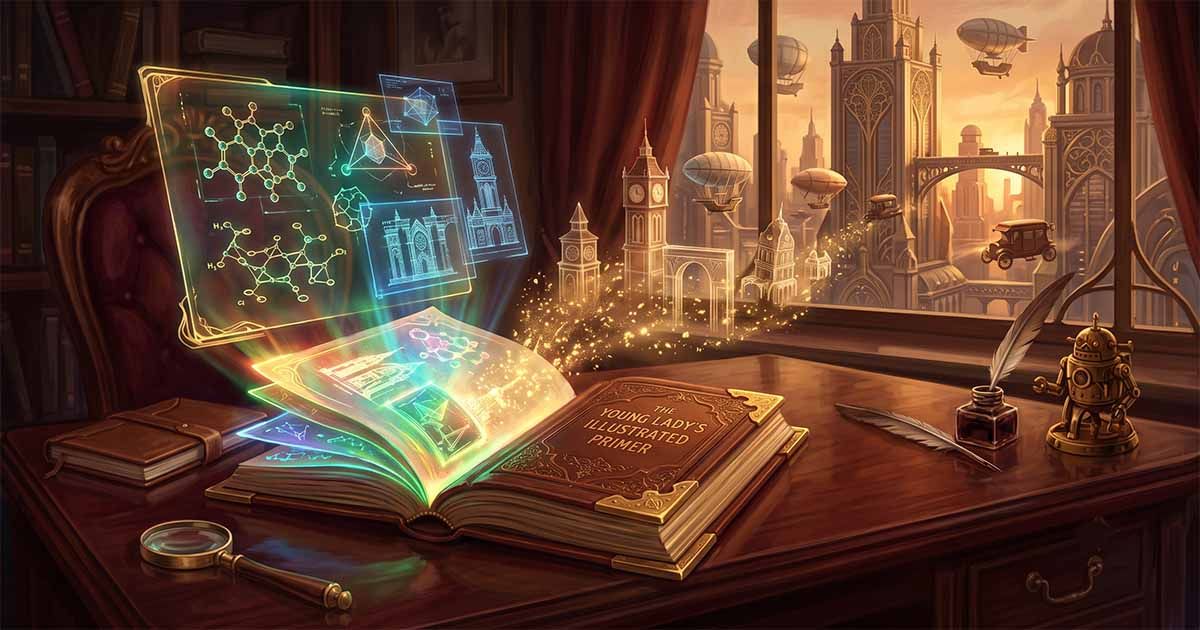
Education for the Nanotech Age
Neal Stephenson published "The Diamond Age" in 1995, just as science fiction began looking beyond the familiar shadows of cyberpunk. His novel imagined a future filled with astonishing technology, yet it asked timeless questions about character, learning, and civilization. That balance gave the book unusual depth, and it remains one of the most rewarding science fiction novels of its era.
Many science fiction stories promise bigger machines, faster computers, or stranger worlds. "The Diamond Age" certainly delivers all three, but its greatest idea arrives in the form of a remarkable educational device known as the Young Lady's Illustrated Primer. The novel quickly reveals that the future belongs not only to those who invent new technology, but also to those who understand how wisdom passes from one generation to the next.
Readers expecting another variation of "Neuromancer" may find themselves surprised. Stephenson borrows some familiar cyberpunk tools, yet he builds something very different. Instead of endless urban decay and corporate gloom, he imagines societies that have rebuilt themselves around culture, tradition, and shared identity.

A Richly Imagined Future
The world of "The Diamond Age" feels enormous without becoming confusing. Nation states have faded into the background, while cultural communities known as phyles shape politics, commerce, and everyday life. The result feels both imaginative and strangely believable because Stephenson pays careful attention to how people actually live.
Nanotechnology transforms nearly every aspect of society. Ordinary objects appear almost as easily as printed pages, and scarcity has changed into a question of access rather than production. Stephenson rarely pauses for lengthy technical lectures because he allows the world itself to explain his ideas through ordinary events.
One of the novel's finest achievements lies in its Neo-Victorian society. Rather than treating the Victorian age as a joke or a costume party, Stephenson considers why disciplined manners, education, and social order might return in a highly advanced civilization. The contrast between old customs and futuristic science gives the novel much of its personality.
Science fiction often assumes that technology automatically changes human nature. Stephenson takes a more thoughtful position. His future contains astonishing inventions, yet people still struggle with ambition, loyalty, greed, courage, and love.
That perspective gives the novel lasting weight. The machines become interesting because they serve recognizable human desires and weaknesses. Readers never lose sight of the people behind the technology.

The Power of Stories
The Young Lady's Illustrated Primer ranks among the finest inventions in modern science fiction. It serves as a teacher, companion, storyteller, and guide while adapting itself to the needs of its reader. Few fictional devices have captured the imagination of readers as completely.
The brilliance of the Primer comes from its understanding that education involves more than facts. Stories teach judgment, courage, and imagination in ways that lectures rarely accomplish. Stephenson understands that great teachers shape character as well as intellect.
That insight gives the novel surprising emotional warmth. In spite of its advanced technology, "The Diamond Age" never loses interest in personal relationships. The human connections surrounding the Primer matter just as much as its remarkable engineering.
Reading the novel today adds another layer of fascination. Modern readers cannot help noticing similarities between the Primer and today's conversational artificial intelligence, adaptive learning software, and personalized educational tools. Stephenson imagined many of these possibilities decades before they entered public discussion.
The comparison also reveals an important difference. The novel never suggests that technology alone can raise a child. Genuine care, patience, sacrifice, and moral guidance remain essential, even inside a world filled with miraculous machines.
That idea separates "The Diamond Age" from many technology driven novels. Stephenson admired innovation, yet he also respected the traditions that shape responsible adults. The balance between progress and permanence gives the story unusual maturity.
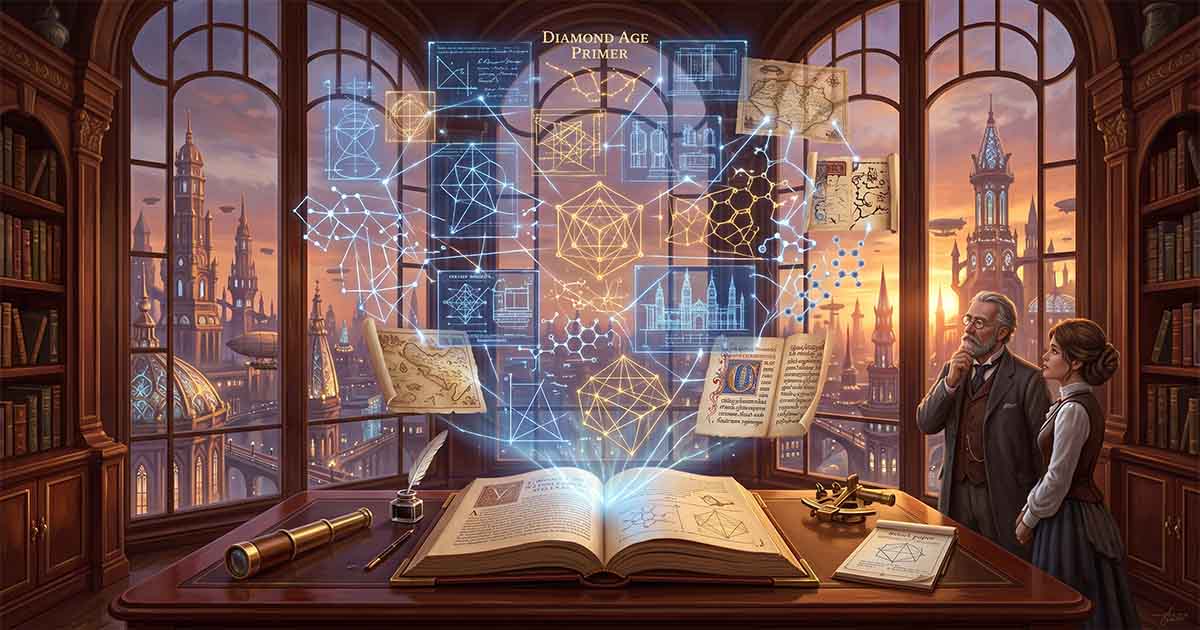
Ambition Beyond Easy Answers
Stephenson writes with remarkable confidence. His prose remains clear even while introducing unfamiliar ideas, and he trusts readers to connect the pieces without constant explanation. That confidence rewards patient reading.
The novel blends several traditions without losing its identity. Parts of the story resemble an adventure, while others resemble political speculation or philosophical fiction. Those shifting perspectives create a reading experience that rarely becomes predictable.
Not every element works equally well. Stephenson's imagination occasionally races ahead of his storytelling, and the abundance of ideas can reduce the urgency of the narrative. Readers who prefer tightly focused plots may wish that a few threads had received less attention.
Even so, those weaknesses seem closely connected to the book's greatest strengths. Stephenson refuses to simplify complicated questions merely to keep the pages turning more quickly. His willingness to explore difficult ideas gives the novel unusual richness.
The characters also deserve praise. They avoid becoming simple mouthpieces for philosophical arguments because Stephenson allows them distinct personalities and believable motivations. Their decisions grow naturally from the world they inhabit.
Readers looking for nonstop action may occasionally find the pace deliberate. Readers who enjoy thoughtful science fiction will likely appreciate the slower rhythm, as it creates space for reflection. The novel rewards careful attention rather than hurried reading.

A Modern Classic
More than thirty years after publication, "The Diamond Age" continues to feel remarkably fresh. Some predictions naturally reflect the 1990s, yet the central questions have become even more relevant. Education, artificial intelligence, and cultural identity remain subjects of lively public debate.
The novel also avoids the trap that weakened many speculative works of its generation. Stephenson cared less about predicting individual gadgets than about examining the forces that shape civilization. That broader vision has allowed the book to age gracefully.
Its influence appears throughout modern science fiction and technology discussions. The idea of an intelligent educational companion has inspired countless comparisons as new digital tools have entered classrooms and homes. Few novels have anticipated that conversation with equal imagination.
There is also a quiet optimism beneath the sophisticated world-building. Knowledge still matters. Good teachers still matter. Character still matters. Those convictions give the novel an enduring sense of hope without drifting into sentimentality.
Readers who admired "A Canticle for Leibowitz" for its respect for learning or enjoyed the thoughtful speculation of "2001 A Space Odyssey" may discover similar pleasures here. Stephenson reaches different conclusions, yet he shares the belief that humanity advances through both intellect and moral responsibility.
"The Diamond Age" is not a flawless novel, and it never pretends to be simple entertainment. It is ambitious, thoughtful, inventive, and occasionally uneven. Its finest ideas remain unforgettable, and its central vision feels even more relevant today than it did in 1995.
The highest praise may be the simplest. Many science fiction novels predict tomorrow's machines. Very few imagine how tomorrow's children might learn to become wise adults. That achievement secures "The Diamond Age" a lasting place among the essential works of modern science fiction.