
“The Invisible Man” and the High Price of Unseen Power
H.G. Wells turned invisibility into a study of science, power, and human nature. Our “The Invisible Man” review examines why this 1897 classic still works.

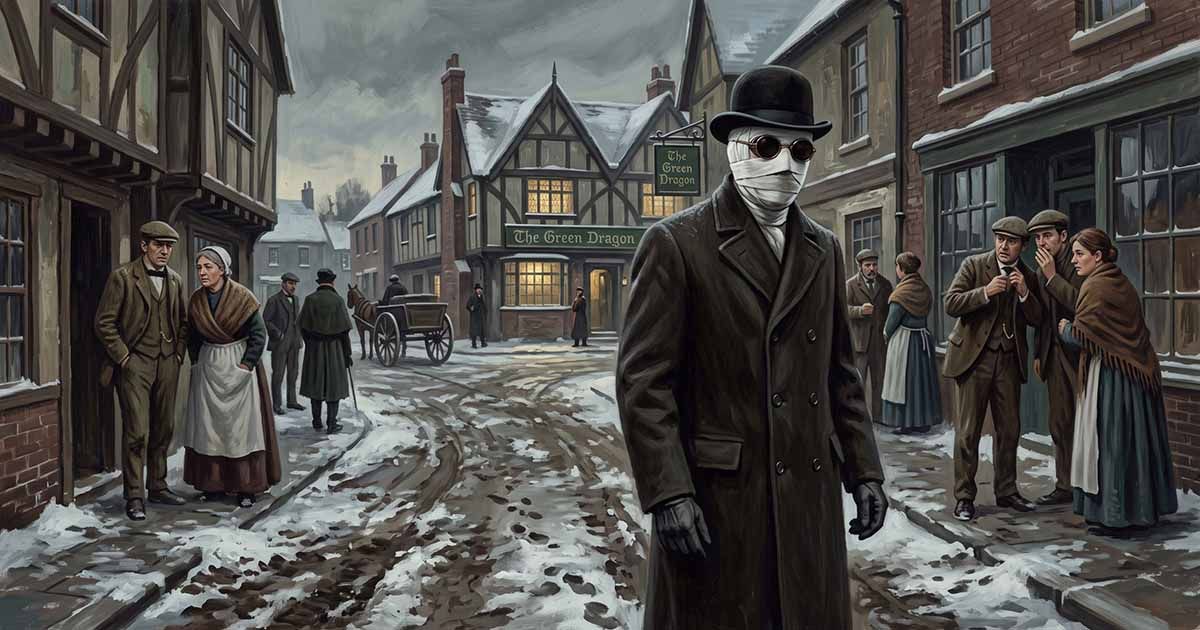
The Stranger Arrives
A stranger wrapped in bandages arrives in the English village of Iping during bitter winter weather, takes a room at the local inn, and immediately makes everyone uncomfortable. He hides his face, guards his privacy, surrounds himself with scientific equipment, and reacts badly when the villagers become curious. H.G. Wells needs little more than this odd intrusion into ordinary country life to set "The Invisible Man" in motion.
Published in 1897, "The Invisible Man" came from the remarkable period when Wells was helping shape what would become modern science fiction. Yet the novel carries little of the dust associated with Victorian literature. Wells writes with economy, moves the story quickly, and lets mystery build from the collision between an extraordinary stranger and people worried about ordinary things like rent, luggage, meals, and gossip.
The stranger is Griffin, a scientist whose experiments with optics have produced a result that sounds like the fulfillment of an ancient human fantasy. He has discovered a means of becoming physically invisible. Wells wisely withholds much of the explanation at first, allowing Griffin's predicament to emerge through suspicious behavior and increasingly strange incidents.
That decision points toward the novel's greatest strength. Wells was not satisfied with asking whether a man could become invisible. He wanted to know how that man would eat, dress, travel, work, hide, and survive once nobody could see him. "The Invisible Man" endured because Wells took an impossible idea and treated its consequences with practical seriousness.

Making the Impossible Practical
Wells's great trick was to grant himself one impossible premise and remain stubbornly practical about almost everything that followed. Griffin can become invisible. Still, the physical world does not politely change its rules to accommodate him. His condition creates problems that a more romantic treatment of invisibility might conveniently ignore.
Clothing presents the most obvious difficulty because an invisible man wearing a coat is still a visible coat walking down the street. Cold weather makes going without clothes dangerous, while rain, mud, and dirt can betray a body that the eye otherwise cannot detect. Footprints remain footprints, objects still move when touched, and a collision hurts whether the person responsible can be seen or not.
Even eating becomes complicated. Food does not simply vanish the moment Griffin swallows it, which turns an ordinary necessity into another problem requiring forethought. Wells repeatedly returns to details like these, and each one makes his impossible premise feel a little more credible.
This attention to everyday consequences impressed Wells's contemporaries. Arnold Bennett admired the author's unusual combination of scientific imagination and close observation of ordinary people. Wells could conceive a radical experiment, then consider how an innkeeper, policeman, villager, or passerby might react when its consequences entered daily life.
Joseph Conrad captured the same quality when he called Wells a "Realist of the Fantastic." The phrase neatly describes the method of "The Invisible Man." Wells asked readers to accept something impossible, then rewarded that acceptance by refusing to cheat about its consequences.
The approach also explains why the novel remained important after its central invention became familiar. Much serious science fiction would follow the same basic method by changing one element of reality and tracing the consequences through everything around it. Technology mattered, but consequences mattered more.
That discipline separates Wells's story from simple wish fulfillment. Invisibility offers remarkable advantages, but it does not abolish hunger, weather, pain, gravity, or human suspicion. Griffin may escape the eye, but Wells never allows him to escape the material world.
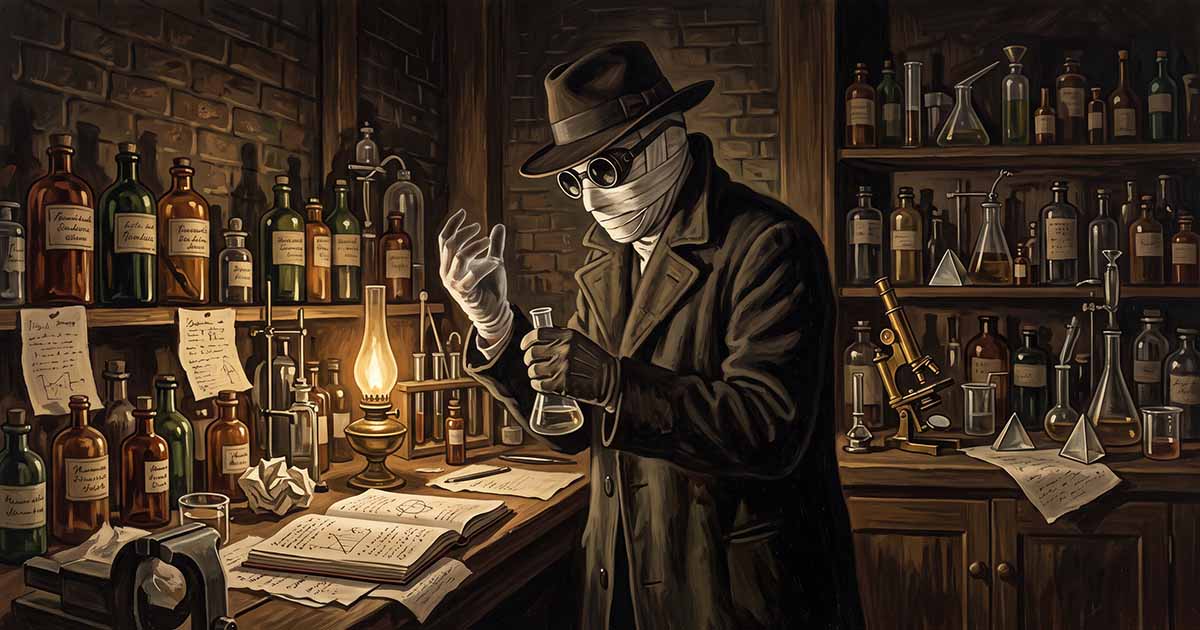
Griffin and the Price of Power
Griffin would be less interesting if Wells portrayed him as a decent man suddenly ruined by a dangerous discovery. He is brilliant, determined, and capable of extraordinary scientific work, but he is also arrogant, secretive, impatient, and contemptuous of interference. His achievement gives those qualities room to grow rather than creating them from nothing.
That distinction matters because "The Invisible Man" is not simply another warning about forbidden knowledge. Griffin's problem is not that he knows too much. He pursues knowledge without accepting responsibility for what he might do with it, and he treats other people primarily according to whether they help or obstruct him. Wells makes scientific ability impressive without confusing intelligence with wisdom.
Griffin initially sees invisibility as liberation. A man who cannot be seen might go where he pleases, avoid unwanted attention, and operate beyond the restrictions imposed on everyone else. Yet his supposed freedom steadily narrows his life. Ordinary activities require planning, secrecy, and constant awareness of the people around him.
The result is a fine paradox. Griffin gains an extraordinary power while losing much of his ability to live as an ordinary man. He becomes increasingly isolated because normal human contact threatens the secrecy on which his independence depends. The more fiercely he protects his freedom, the more confined his existence becomes.
Wells also refuses to confuse invisibility with invulnerability. Griffin remains a man of flesh and blood who can become tired, frightened, injured, and overwhelmed. His scientific breakthrough changes what other people can see, but it does not release him from the basic limits of the human body.
That limitation gives the novel its moral weight without requiring Wells to deliver a sermon. Griffin possesses power with fewer restraints and gradually reveals what he wants to do with it. His predicament suggests that removing accountability does not improve a man's character. It may simply give his existing character greater opportunity to show itself.
Griffin therefore becomes more than the solution to a scientific puzzle. He is Wells's test case for what happens when technical brilliance outruns judgment, responsibility, and self-command.

Horror, Humor, and Wells's England
"The Invisible Man" is often remembered as a tale of a dangerous scientist, but Wells gave the novel a broader range of tones. Suspense and horror share the page with scientific speculation, social observation, and a dry sense of humor. The mixture keeps the story lively even when its subject becomes grim.
Much of the comedy comes from Iping itself. Its residents respond to strange events with curiosity, suspicion, gossip, and concern for everyday business. Wells understood that an extraordinary event becomes more entertaining when ordinary people must somehow deal with it. The villagers give the fantastic story a recognizable English setting without requiring lengthy descriptions or elaborate supporting histories.
This approach also helps the pacing. "The Invisible Man" is a short book, and Wells rarely allows it to become stationary for long. Mystery gives way to revelation, scientific explanation, confrontation, and pursuit with the efficiency of a writer who knows that a strong idea does not automatically justify a long novel.
That economy has a cost. Some early reviewers regarded the story as slight, and the criticism is understandable when the scale of the narrative is compared with the possibilities contained in its central invention. Supporting characters can be thin, while some of the action edges toward melodrama. Griffin himself works better as the dangerous embodiment of an idea than as a richly developed psychological portrait.
These weaknesses never become fatal because Wells keeps the machinery moving. He does not ask minor characters to carry more weight than they can bear, and he does not bury a compact story beneath unnecessary explanation. The result has the directness of a good adventure tale while retaining enough intellectual substance to reward closer attention.
Wells knew when to investigate his idea and when to let the story run. That balance gave "The Invisible Man" much of its enduring energy.
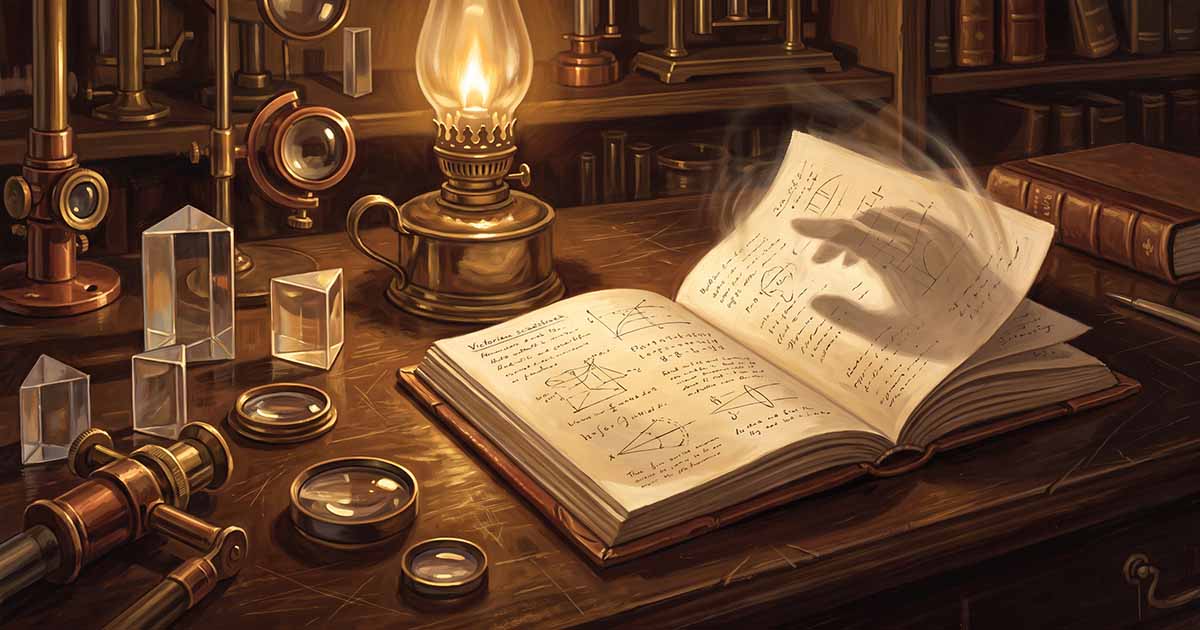
The Visible Achievement
More than a century after publication, "The Invisible Man" remains worth reading because its central idea still works. Familiarity has robbed invisibility itself of some novelty, but it has not weakened Wells's treatment of it. He took an impossible invention seriously enough to follow its effects through the physical world and into human behavior.
That achievement matters more than the novel's age or its place in science fiction history. Wells helped establish a method that later writers would repeatedly adopt, but historical importance alone does not make an old book enjoyable. "The Invisible Man" survives because it remains brisk, clever, unsettling, and occasionally funny.
Its earliest readers recognized much of the same appeal. Contemporary critics found the story original and entertaining, while some thought its execution slight compared with the possibilities of its premise. Both judgments remain reasonable. The novel is modest in scale, but Wells's marriage of fantastic invention with everyday realism gives it unusual conviction.
Its deeper strength lies in the relationship between scientific power and the man who possesses it. Wells never treats discovery as something separate from character. Intelligence can create remarkable tools, but intelligence alone cannot provide the judgment, restraint, or responsibility needed to control them.
That idea has lost none of its force. New technologies change what a man can accomplish without necessarily changing the man himself. Wells understood the difference, and Griffin gave him an unforgettable way to demonstrate it. He discovers how to escape human sight, yet never discovers how to escape the ordinary limitations of being human.