
"Minority Report" (2002) When Justice Predicts the Crime
A thoughtful review of Minority Report (2002), exploring its themes of free will, surveillance, and justice in a future where crimes are stopped before they happen.


Introduction
"Minority Report" (2002), directed by Steven Spielberg, marks a significant moment in modern science fiction cinema. Based on a story by Philip K. Dick, the film blends speculative ideas with the structure of a tightly controlled thriller.
It does not treat its concepts as distant abstractions, but embeds them within a narrative driven by urgency and consequence. This approach gives the film both immediacy and intellectual weight.
The film arrives at a time when digital effects were becoming dominant, often at the expense of storytelling. Spielberg takes a different path by grounding his vision in character and structure.
The technology serves the narrative rather than overwhelming it. Contemporary critical responses noted this balance, praising the film's ability to engage both thought and emotion. This discipline allows the film to remain coherent even as it explores complex ideas.
At its core, the film addresses the human desire for certainty. It presents a world that believes it has eliminated the unpredictability of violent crime. This achievement appears admirable, yet it introduces new forms of control and moral ambiguity. The film builds its tension from this contradiction, allowing its ideas to emerge through action rather than exposition.
The tone remains measured throughout. The film does not descend into despair, nor does it celebrate its imagined future. Instead, it maintains a steady examination of its premise, allowing the audience to consider the implications without overt guidance. This restraint reflects a confidence in both the material and the viewer.
"Minority Report" (2002) – Film Details
| ATTRIBUTE | DETAILS |
|---|---|
| Title | Minority Report |
| Director | Steven Spielberg |
| Writers | Scott Frank, Jon Cohen |
| Based on | Story by Philip K. Dick |
| Actors or Actresses | Tom Cruise, Colin Farrell, Samantha Morton, Max von Sydow |
| Rated | PG-13 |
| Runtime | 145 min |
| Setting | Washington metropolitan area, 2054 |
| Premise | PreCrime unit prevents murders using precognitive visions |
Synopsis
The narrative is set in the Washington metropolitan area in the year 2054, where a prototype PreCrime program has operated successfully for six years. This system uses three precognitive individuals to foresee acts of murder before they occur. Their visions are recorded and analyzed by law enforcement, allowing officers to intervene before the crime is committed. The result is a society that believes it has achieved near total control over violent wrongdoing.
John Anderton, portrayed by Tom Cruise, leads the PreCrime unit with unwavering commitment. His belief in the system is shaped by personal loss, as the disappearance of his son continues to define his outlook. This tragedy has driven him toward a method that promises to spare others from similar pain. His dedication borders on faith, giving the system a moral dimension in his eyes.

The narrative turns when Anderton is identified as a future murderer. The prediction names a victim he does not know, placing him in direct conflict with the institution he serves. Faced with this accusation, he chooses to flee rather than submit. His escape reveals the extent of the system's surveillance, as every movement is tracked and analyzed.
During his flight, Anderton begins to question the assumptions that support PreCrime. He learns of minority reports, rare instances where one precog perceives a different outcome. These dissenting visions are removed from the official record to preserve the system's reputation. This discovery introduces doubt and forces Anderton to reconsider his beliefs.
The investigation unfolds as a layered mystery. Each step reveals new information about the structure and operation of PreCrime. The narrative gradually exposes the system's dependence on selective interpretation and hidden decisions. The final resolution reveals a deeper manipulation that undermines the program's authority.
The collapse of PreCrime follows from this revelation. The system's claim to certainty cannot withstand scrutiny once its flaws are exposed. The story concludes with a return to a world where uncertainty and choice remain central. This resolution reinforces the film's broader concerns about control and responsibility.
Themes
The tension between free will and determinism serves as the central theme of the film. PreCrime operates on the assumption that the future can be known and acted upon with certainty. The existence of minority reports challenges this assumption by introducing the possibility of alternate outcomes. This contradiction drives the narrative and shapes its moral inquiry.
The film presents free will as an active force within human life. Anderton's actions demonstrate that knowledge of a predicted future does not eliminate the ability to choose differently. This reinforces the idea that moral responsibility is grounded in action rather than expectation. The film avoids simplistic conclusions, instead presenting the issue as an ongoing tension.

The balance between security and freedom emerges as another major concern. The PreCrime system eliminates murder, creating a sense of safety and order. However, this safety is achieved through preemptive judgment. Individuals are punished for actions they have not yet taken. This raises fundamental questions about the nature of justice and the limits of authority.
Surveillance plays a central role in shaping the film's environment. The constant monitoring of individuals creates a society where privacy is nearly nonexistent. Identification systems track movement and behavior with precision. This condition reflects broader concerns about the integration of technology into daily life. The film presents this reality without exaggeration, allowing its implications to speak for themselves.
The treatment of the precogs introduces an ethical dimension that cannot be ignored. These individuals exist in a controlled state, deprived of agency and used as tools. Their condition raises questions about the cost of maintaining the system. The film suggests that progress achieved through exploitation carries a moral burden.

Power and its potential for corruption form another important theme. The PreCrime system concentrates authority in a limited group of individuals. This concentration creates opportunities for misuse and manipulation. The narrative demonstrates that even well intentioned systems can become compromised when power is unchecked.
The film also engages with the idea of belief in systems. Anderton's faith in PreCrime reflects a broader tendency to trust institutions that promise order. This belief becomes a vulnerability when the system proves flawed. The film suggests that trust must be accompanied by scrutiny if it is to remain justified.
Who Will Watch This Movie
"Minority Report" appeals to viewers who value science fiction that engages with serious ideas. It offers a combination of action and intellectual inquiry that rewards careful attention. The film operates on multiple levels, providing both immediate excitement and deeper reflection.
Those interested in the work of Philip K. Dick will find familiar themes explored within a more structured narrative. The film expands on his ideas while maintaining accessibility. It serves as a strong example of how literary science fiction can be adapted for a broader audience.
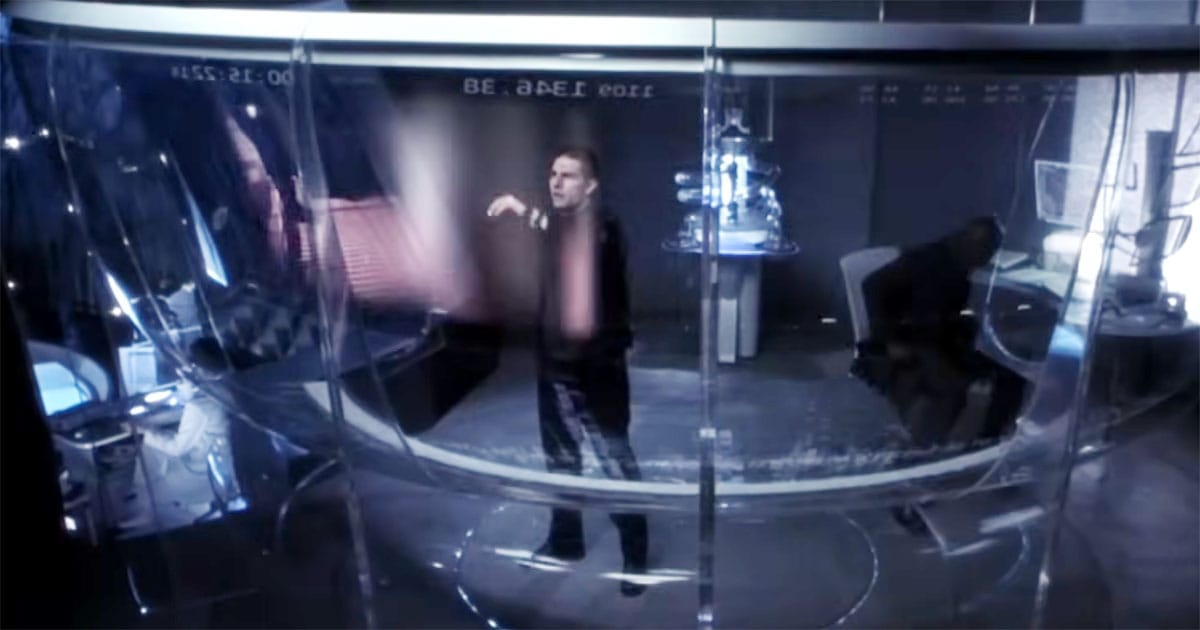
Viewers who follow Steven Spielberg will recognize a mature and controlled approach to filmmaking. The film reflects a balance between technical innovation and narrative clarity. It demonstrates how large scale productions can remain focused on character and story.
The film will also appeal to those who enjoy genre blending. It combines elements of mystery, chase narrative, and speculative drama. This mixture broadens its appeal while maintaining coherence. Each element supports the others, creating a unified experience.
At the same time, the film demands engagement. It does not function as passive entertainment. Its ideas require attention, and its structure rewards those willing to follow its progression. Viewers who prefer straightforward narratives may find it demanding, but those who engage with it will find it rewarding.
In the final analysis, "Minority Report" remains a compelling and thoughtful work of science fiction. It balances spectacle with substance and action with inquiry. The film endures because it treats its audience as capable of reflection, offering a vision of the future that is both engaging and cautionary.