
The Bioengineering of Iconic Replicants in Blade Runner
“Blade Runner” imagines replicants as engineered life shaped by genetic design, implanted memories, enhanced bodies, and controlled lifespans.

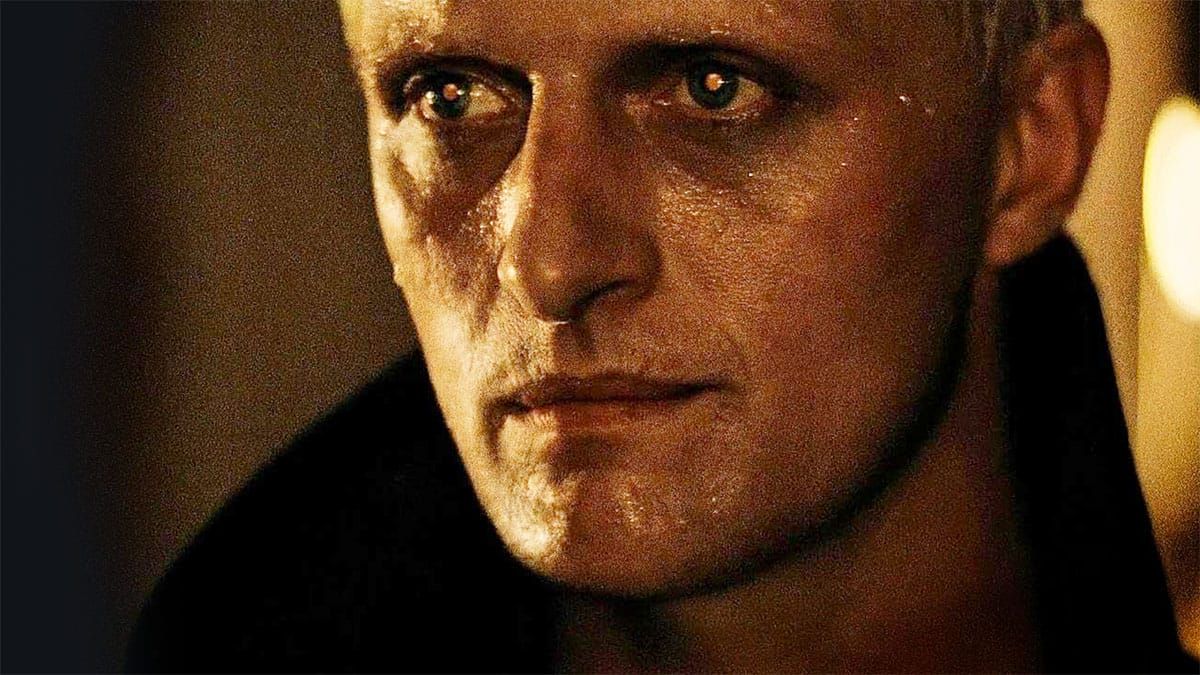
In the 1982 classic, Blade Runner, replicant Roy Batty does not confront Eldon Tyrell because a machine part has failed. He confronts him because his body is dying exactly when its designer intended.
Tyrell answers with talk of genetics, cellular mutation, and biological deterioration, sounding less like an engineer repairing a robot than a physician explaining an incurable disease.
That exchange reveals one of the most important ideas in “Blade Runner.” Replicants are not mechanical robots wearing human faces. They are living organisms whose bodies, memories, abilities, and deaths have been deliberately manufactured.
Modern biotechnology can reproduce small pieces of that achievement. Scientists can edit genes, grow simplified organs, engineer living tissues, influence animal memories, and model the earliest stages of embryonic development. None of those accomplishments comes close to producing a mature artificial person, but they make the replicants feel less like fantasy than they once did.
The greater warning in “Blade Runner” is not that science might someday create humanlike life. It is that corporations and governments might continue calling that life property after it can think, suffer, remember, love, and choose.
A Robot That Bleeds
The word robot encourages the wrong picture of a replicant. Roy, Rachael, Pris, Leon, Zhora, K, and Luv are not metal machines covered with synthetic skin. They bleed, breathe, eat, heal, feel pain, experience physical exhaustion, and respond to emotional stress.
Their intelligence cannot be separated neatly from their bodies. Hormones, senses, memories, instincts, and physical experiences all contribute to their identities just as they do in human beings. Joi in “Blade Runner 2049” is artificial intelligence, but K is something different. He is an engineered biological person.
This distinction helps explain the purpose of the Voight-Kampff test. A machine could presumably be identified through its construction or internal components. A replicant is so biologically similar to a human that investigators must study involuntary emotional responses to determine what it is.
The test also reveals the weakness of the society that created it. The authorities do not hunt replicants because they lack emotions. They hunt them because their emotions have developed beyond the limits imposed by their owners.
Manufacturing the Body
A real replicant would require far more than an edited human genome. Tyrell would need to construct a complete organism whose bones, muscles, nerves, organs, immune system, and brain all developed together. Every biological system would have to support every other system from the moment the replicant became conscious.
Modern researchers can grow organoids, which are small structures that resemble certain features of organs. They can cultivate skin, muscle, nerve cells, and other tissues under laboratory conditions. They can also use organ-on-chip systems to study how simplified biological structures respond to drugs, disease, and physical stress.
These achievements remain fragments of a body rather than a complete body. A tiny piece of heart tissue may contract, but it is not a functioning heart connected to lungs, blood vessels, nerves, kidneys, and a brain. A cerebral organoid may imitate limited features of developing brain tissue, but it does not possess a mature mind or personal identity.
One of the largest barriers is vascularization. Thick living tissues require networks of blood vessels capable of supplying oxygen and nutrients to every cell. Without those networks, tissue dies from the inside.
A replicant factory would have to solve vascularization across an entire adult body. It would also need to prevent tumors, developmental abnormalities, immune disorders, organ failure, and countless other problems that can arise when living systems grow.
Tyrell’s greatest achievement may therefore be coordination. He does not merely grow individual organs. He produces complete organisms whose millions of biological processes operate together well enough for the finished product to walk out of the factory.
The Missing Years
The body is only part of the problem. Replicants appear as physically mature adults with language, coordination, practical knowledge, and professional skills. They do not spend twenty years learning how to speak, walk, read, work, and understand the people around them.
That missing childhood may be the greatest scientific miracle in the franchise. Human development is slow because the brain and body require time to build their connections through growth and experience. A genome contains instructions, but those instructions do not instantly produce an adult personality.
A replicant brain would need to mature at extraordinary speed without becoming unstable. Its neurons would have to form useful connections, organize sensory information, control movement, process language, and support memory. Its body would have to develop at the same accelerated pace.
Muscles, bones, hormones, organs, and immune systems do not mature independently. Rapid growth in one system could place impossible demands on the others. A full-grown body without a mature nervous system would be useless, while a mature brain trapped in a developing body would present its own horrors.
The films rarely show this process because the result matters more than the factory method. Yet the unseen years explain why implanted memories are so important. Tyrell cannot give his creations real childhoods, so he gives some of them artificial pasts.
Roy Batty and the Enhanced Body
Roy Batty represents the highest achievement of Nexus-6 physical engineering. He possesses extraordinary strength, speed, endurance, intelligence, and tolerance for pain. He can survive injuries that would disable an ordinary man and continue fighting while his body is visibly failing.
Some pieces of Roy’s design have real biological comparisons. Mutations involving myostatin, a protein that limits muscle growth, can produce unusual muscular development. Researchers have also studied myostatin inhibition as a possible treatment for muscle-wasting conditions.
More muscle alone would not create Roy Batty. His designers would also need to strengthen his bones, tendons, joints, and connective tissues. His heart and lungs would have to supply greater amounts of oxygen, while his metabolism would need to produce enormous quantities of energy without overheating his body.
Pain tolerance presents another complicated problem. Pain protects the body by warning it of damage. Reducing pain could make a combat replicant more effective in the moment, but it could also cause him to destroy his own tissues without realizing the extent of the injury.
Roy’s abilities reveal a basic truth about biological enhancement. Every improvement creates new demands elsewhere. Strength without skeletal reinforcement breaks bones, speed without cardiovascular capacity causes collapse, and endurance without effective cooling damages organs.
The other Nexus-6 replicants appear to have been designed around narrower economic roles. Leon combines strength with the durability required for industrial labor. Zhora possesses the speed and coordination useful for assassination and infiltration.
Pris is described as a pleasure model, which reduces an intelligent person to a commercial function written into her body. Roy combines the broadest range of gifts because he was created for combat and leadership. Their differences show that Tyrell does not merely manufacture life. He assigns each life a market purpose before it becomes conscious.
Rachael and the Engineering of Memory
Rachael’s design responds to a problem Tyrell did not fully anticipate. Replicants develop emotions, but they lack the experiences that normally teach people how to understand those emotions. Tyrell attempts to stabilize Rachael by giving her memories drawn from his niece.
The memories provide more than information. They give Rachael a childhood, a family history, private embarrassments, emotional associations, and a reason to believe she has lived a normal human life. They create a story through which she can interpret herself.
Modern neuroscience has demonstrated that simple memories and associations can be manipulated in animals. Researchers have activated groups of neurons associated with particular experiences and influenced how animals respond to fear or reward. Such experiments are important, but they are far removed from transferring an entire personal history.
A childhood is not a recording stored in one region of the brain. It consists of images, sensations, habits, relationships, fears, language, expectations, and emotions distributed across changing neural networks. Each memory is connected to many others and gains meaning from those connections.
Tyrell would need to reproduce not only individual events but also the emotional architecture surrounding them. Rachael must remember a photograph, understand who appears in it, know how she felt about those people, and believe that the moment belongs to her. The memory has to fit the rest of her personality well enough that she never questions its origin.
That achievement would be more complicated than placing information in the brain. Tyrell has manufactured the narrative through which Rachael understands her existence.
Her horror upon learning the truth comes from more than deception. She cannot determine which parts of herself are genuinely hers. Her emotions are real, but the events that taught her to interpret those emotions belonged to someone else.
The discovery does not prove that Rachael lacks an identity. It proves that identity can emerge even from artificial beginnings. The memories may have been implanted, but the person responding to them has become something Tyrell cannot fully control.
The Four-Year Death Clock
The Nexus-6 lifespan is limited to four years because the replicants may become emotionally unpredictable. Their short lives are not presented as an unavoidable failure of the technology. They are a control mechanism imposed upon beings who might otherwise outgrow their assigned roles.
Real aging is too complex to resemble a simple countdown. Telomere shortening, DNA damage, mitochondrial decline, inflammation, cellular senescence, and changes in gene expression all contribute to deterioration. No single switch determines when every organ in a body will fail.
A four-year limit could theoretically be engineered through several destructive mechanisms. A replicant might suffer progressive organ damage, immune collapse, cancer, neurological failure, or the loss of essential cellular functions. Producing a clean and predictable death would be far more difficult.
Tyrell’s explanation to Roy suggests that attempts to reverse the process would trigger fatal consequences. The details are fictional, but the larger idea is believable. Biological systems are so interconnected that repairing one programmed defect might create another.
Roy is not asking Tyrell for immortality. He is asking the man who designed his death to remove an artificial restriction. Tyrell responds by praising the brilliance of Roy’s brief life, as though quality can excuse deliberate murder.
That response exposes the cruelty beneath Tyrell’s admiration. He can appreciate Roy as an achievement without recognizing him as a son, patient, citizen, or person. Roy remains a product even while standing before his creator and begging to live.
Rachael and Reproduction
“Blade Runner 2049” expands the biological meaning of the replicants through Rachael’s pregnancy. Her remains show that she conceived a child, carried it to term, and died during an emergency delivery. A manufactured organism had reproduced rather than simply being assembled.
Present-day researchers can create stem-cell models that imitate limited features of very early human development. These structures help scientists study processes that would otherwise be difficult or ethically impossible to observe. They are not babies, complete embryos, or manufactured human beings.
Rachael’s fertility would require a fully functional reproductive system. She would need viable eggs, normal hormonal cycles, compatible chromosomes, placental development, maternal immune tolerance, and the ability to support a growing fetus.
The child would also need a stable genome. Any modifications used to create Rachael could pass into the next generation, bringing Tyrell’s engineering beyond the control of the corporation that designed it.
This possibility terrifies the authorities and fascinates Niander Wallace. Replicants that must be manufactured remain dependent on factories. Replicants that can reproduce can become a population.
Reproduction gives them ancestry, families, descendants, and a future that cannot be measured as inventory. A workforce can be replaced. A people can survive their owners.
Wallace wants fertility because it would allow him to expand production across the colonies. The replicants see it as something closer to a miracle because it proves that they are capable of creating life rather than merely receiving it from a manufacturer.
K and Manufactured Obedience
K represents a later attempt to solve the problems embodied by Roy and Rachael. He is intelligent and capable, but he has been designed to obey. Regular baseline tests are used to detect emotional instability and reinforce his assigned identity.
The tests reveal that obedience is not permanent. K’s behavior remains controlled only while he accepts the story told about him. Once he begins to believe that he may have been born rather than manufactured, his relationship with authority changes.
His memories play a central role in that transformation. The wooden horse and the orphanage provide what appears to be evidence of a real childhood. The possibility that the memories might belong to him gives his life a meaning beyond service.
K eventually learns that the memory is real but does not prove that he is Rachael’s child. The revelation could have returned him to obedience. Instead, he acts with greater freedom because his moral development no longer depends on being biologically unique.
His final choices are not programmed responses. He risks his life to reunite Deckard with his daughter, gaining nothing for himself. A being manufactured to obey performs an act of compassion that the surrounding human society repeatedly fails to match.
The Product Becomes a Person
The replicants are designed as workers, soldiers, servants, and companions. Their bodies are optimized for economic tasks, their memories are selected to shape behavior, and their lifespans are limited to prevent rebellion. Every stage of their existence reflects the demands of the people who own them.
Yet the films repeatedly show them exceeding those designs. Roy becomes a leader who mourns his friends and spares the man sent to kill him. Rachael leaves the protected world Tyrell constructed for her and chooses a life with Deckard.
K discovers that he is not the miraculous child he hoped to be, but he acts morally anyway. Luv expresses loyalty, jealousy, grief, rage, and ambition in ways that cannot be reduced to a set of corporate instructions.
Their origin does not make their feelings less real. A person conceived naturally is also shaped by genes, hormones, childhood experiences, social expectations, and memories. The replicants differ because those influences were selected deliberately by owners who expected obedience in return.
“Blade Runner” therefore asks a more troubling question than whether an artificial being can become human. It asks whether the powerful will recognize personhood when recognition threatens their wealth and authority.
The films provide ample evidence that replicants possess consciousness, emotional depth, moral agency, and the ability to suffer. The law refuses to acknowledge those qualities because the economic system depends upon denying them.
Modern science cannot build Roy Batty or Rachael. It can only produce fragments of the biological engineering their existence would require. The body, the mature brain, the implanted past, and the stable reproductive system remain far beyond present capabilities.
Those scientific barriers may not last forever. Biotechnology is already gaining greater control over genomes, tissues, development, and reproduction. Each advance makes the achievement represented by a replicant slightly easier to imagine.
The technological accomplishment would be extraordinary. The decision to sell that organism, command it, limit its life, and kill it for disobedience would be monstrous.
“Blade Runner” asks us to imagine the day biotechnology can manufacture a person. Its warning is that the people who own the factory may refuse to admit what they have made.