
The Hidden Meaning of the Bees in "Blade Runner 2049"
An analysis of the symbolic meaning of the bees in "Blade Runner 2049," including their connection to nature, replicants, memory, and survival.

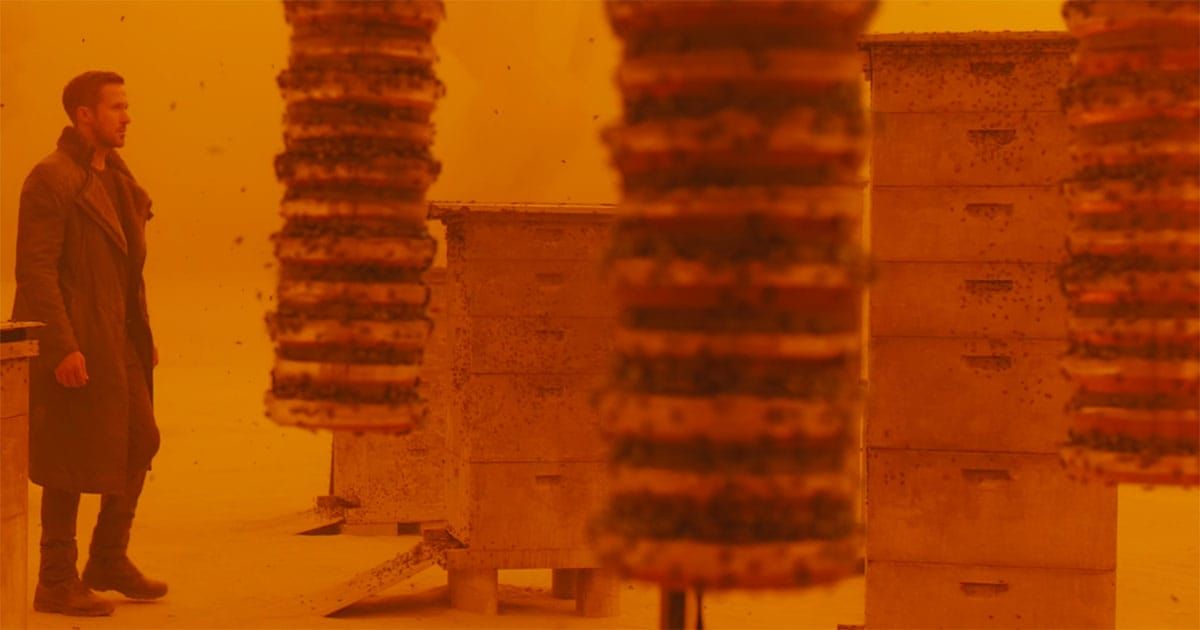
One of the most mysterious images in "Blade Runner 2049" appears when Officer K enters Rick Deckard's abandoned hideout in Las Vegas. As K walks through the dusty casino ruins, he discovers a living hive of bees. The moment is quiet, strange, and deeply symbolic. Many viewers leave the film wondering why director Denis Villeneuve included the bees at all.
The answer connects directly to the film's larger themes about memory, humanity, survival, and the meaning of real life in a dying world. Like many great science fiction images, the bees communicate ideas without lengthy explanation. The scene works emotionally first, then intellectually. That balance gives the moment its unusual power.
Bees Represent the Survival of Nature
The world of "Blade Runner 2049" is environmentally broken. Real animals are rare, and artificial animals have replaced many living creatures. Pollution and industrial decay dominate nearly every city and landscape in the film. Against that background, the bees immediately feel important.
The hive shows that natural life still survives in spite of humanity's collapse. The bees continue their work quietly among the ruins without human control or supervision. In a world full of synthetic creations, the hive reminds viewers that genuine life still endures. The image suggests that nature remains resilient even after civilization begins to fail.
This idea fits one of the oldest themes in science fiction. Nature often survives mankind's arrogance and technological excess. The bees become a symbol of endurance and continuity. Even in a broken future, life refuses to disappear completely.
The Hive Mirrors the Replicants
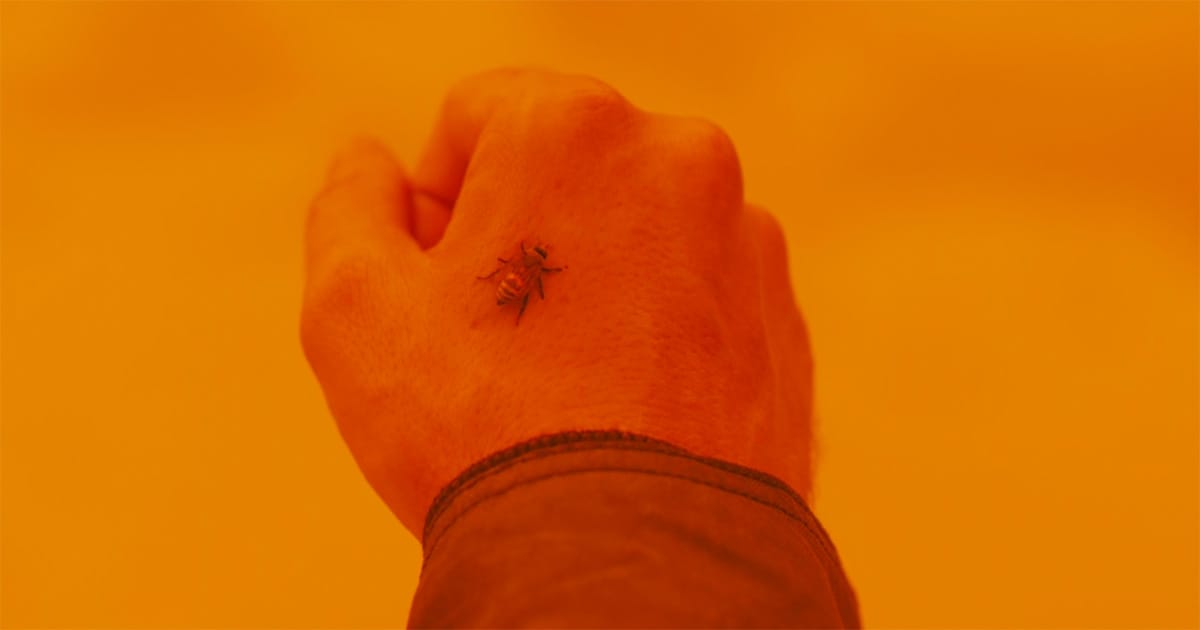
The bees also reflect the condition of the replicants themselves. A hive operates through strict organization and assigned roles. Worker bees exist to serve the colony through labor and obedience. Replicants were also created to serve human society as workers, soldiers, and tools.
The comparison is difficult to ignore. Yet no one questions whether bees are truly alive or deserving of protection. The film quietly asks whether replicants deserve the same recognition. If living creatures can function within a system and still possess value, perhaps replicants can as well.
This becomes especially meaningful for K. Throughout the story, he searches for proof that his existence matters. The hive scene reinforces the film's central question about whether artificial beings can possess identity, purpose, and even a soul. The bees help frame K's journey in spiritual as well as emotional terms.
Deckard and the Bees
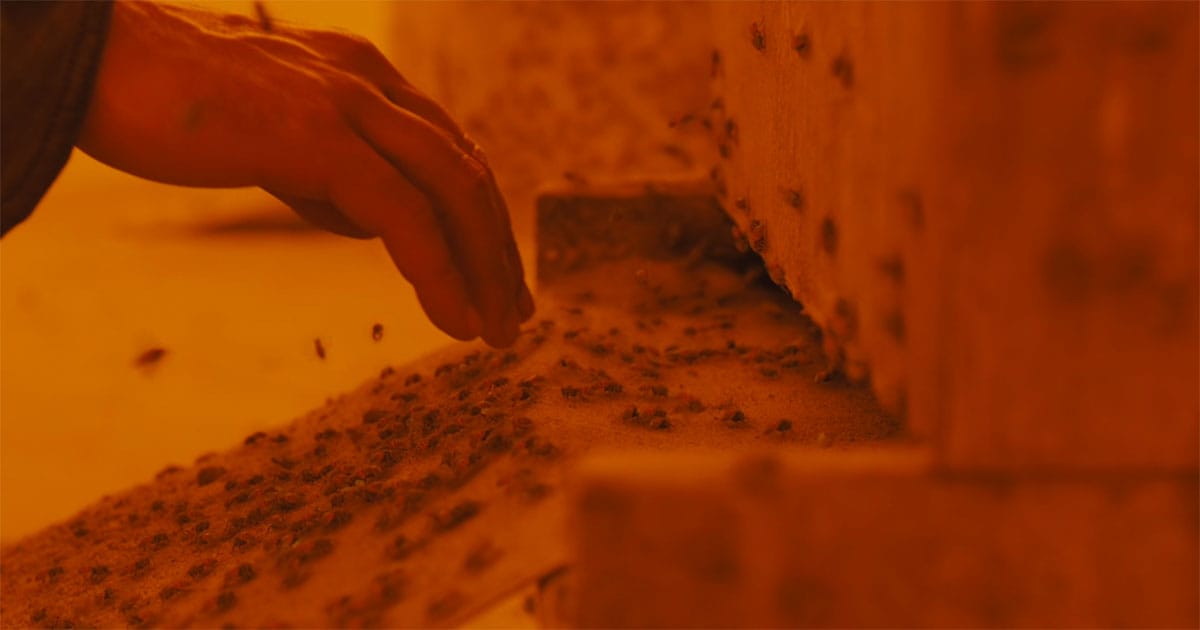
The bees also reveal something about Deckard himself. Deckard lives in total isolation inside a ruined city that feels frozen in time. His hideout is filled with echoes of the past, including old holograms, abandoned statues, and fragments of dead civilization. The hive introduces living order into that decay.
In many ways, Deckard resembles the keeper of the hive. He protects a secret connected to the future of replicants. He preserves memories, guards hidden truths, and lives apart from society. The bees reinforce his role as a caretaker of something fragile and valuable.
The scene also creates one of the film's strongest visual contrasts. Life exists beside ruin, and warmth exists inside decay. Villeneuve repeatedly uses those contrasts throughout the movie. The bees become one more reminder that hope survives in hidden places.
Religious and Mythic Meaning
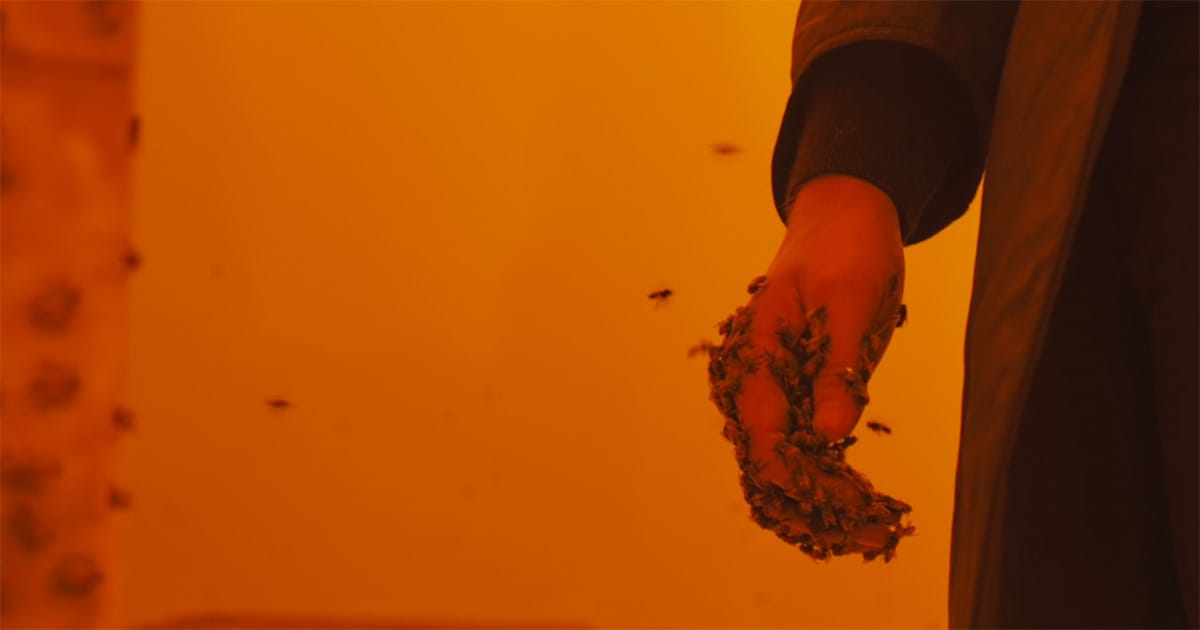
Bees have carried symbolic meaning throughout history. Ancient cultures connected bees with immortality, resurrection, and divine order. In some traditions, bees represented the soul itself. Their ability to produce honey from flowers made them symbols of transformation and renewal.
Those ideas fit naturally inside "Blade Runner 2049." The film constantly explores whether manufactured beings can possess authentic humanity. Replicants seek memories, emotional connection, and spiritual meaning throughout the story. The bees quietly support those themes without explaining them directly.
Villeneuve uses the image carefully and with restraint. He trusts viewers to feel the symbolic weight of the moment rather than spelling it out through dialogue. That choice gives the scene much of its lasting impact. The mystery surrounding the bees makes the symbolism feel richer and more personal.
Why the Scene Matters
The bee sequence lasts only a few moments, yet it captures the entire spirit of "Blade Runner 2049." The film is not really about futuristic technology alone. It is about the search for authentic life in a world filled with artificial substitutes. Every major character longs for something real, whether that means memory, love, family, or purpose.
The bees become a visual shorthand for that search. They are small creatures continuing their ancient work while civilization collapses around them. In a film filled with synthetic humans and digital illusions, the hive reminds viewers that genuine life still exists, even if it survives only in hidden places.
That idea gives "Blade Runner 2049" much of its emotional depth. Beneath the neon lights and dystopian landscapes, the film argues that life, memory, and hope continue to endure in spite of the darkness. The bees quietly carry that message better than pages of dialogue ever could.