
The Real Meaning of the Throne Room Duel
The throne room duel in "Return of the Jedi" is more than a lightsaber battle. Explore how George Lucas made Luke Skywalker's greatest victory a triumph of character, mercy, and moral choice.

The Wrong Measure
When fans rank the greatest lightsaber duels in "Star Wars," the throne room confrontation in "Return of the Jedi" often loses points for its relatively simple choreography. Compared with the athletic combat of the prequel trilogy or the rapid exchanges in later television series, the duel can appear slow and restrained. That criticism measures the scene by the wrong standard. George Lucas never intended the climax of the original trilogy to be a contest of swordsmanship.
The throne room duel resolves a question that began in the first film. Can power rooted in fear overcome love rooted in sacrifice? Every action in the Emperor's chamber serves that larger purpose. The lightsabers are important, but they are only the visible expression of a battle taking place in the minds and hearts of three men.
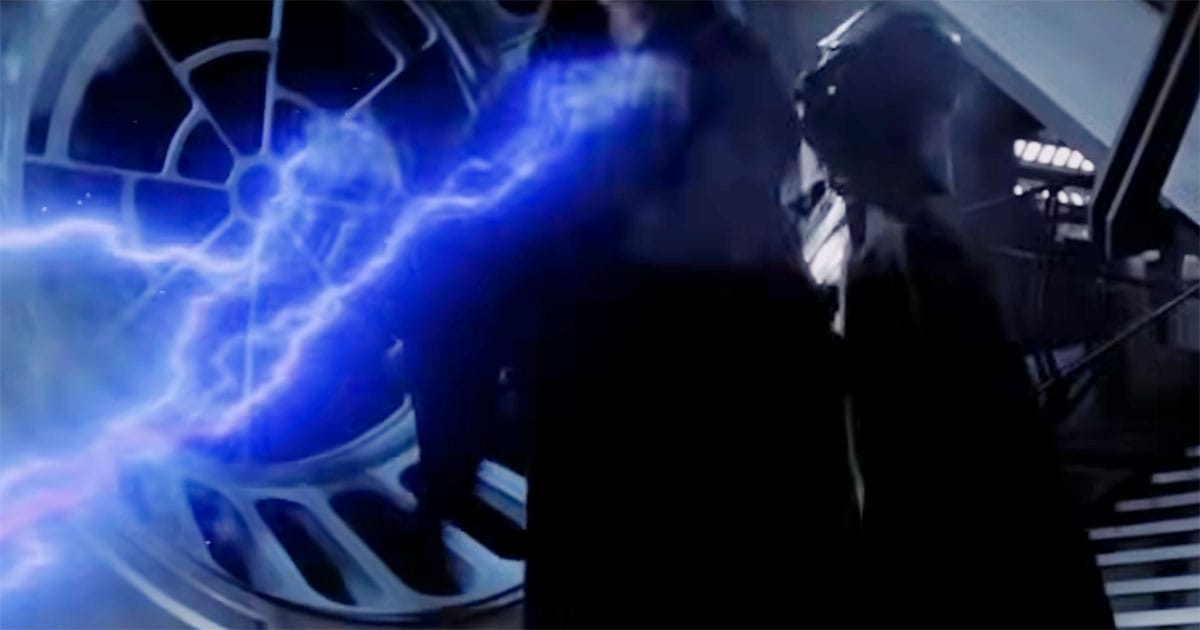
Palpatine's Trap
That distinction explains why Emperor Palpatine spends so little time talking about combat itself. He never praises superior technique or urges Darth Vader to finish Luke Skywalker quickly. Instead, he speaks about anger, hatred, and destiny. His real battlefield is Luke's conscience.
Palpatine believes every man has a breaking point. He believes enough pain, enough fear, and enough despair will cause anyone to abandon his principles. That belief shaped his rise to power during the fall of the Republic, and it guides every word he speaks in the throne room.
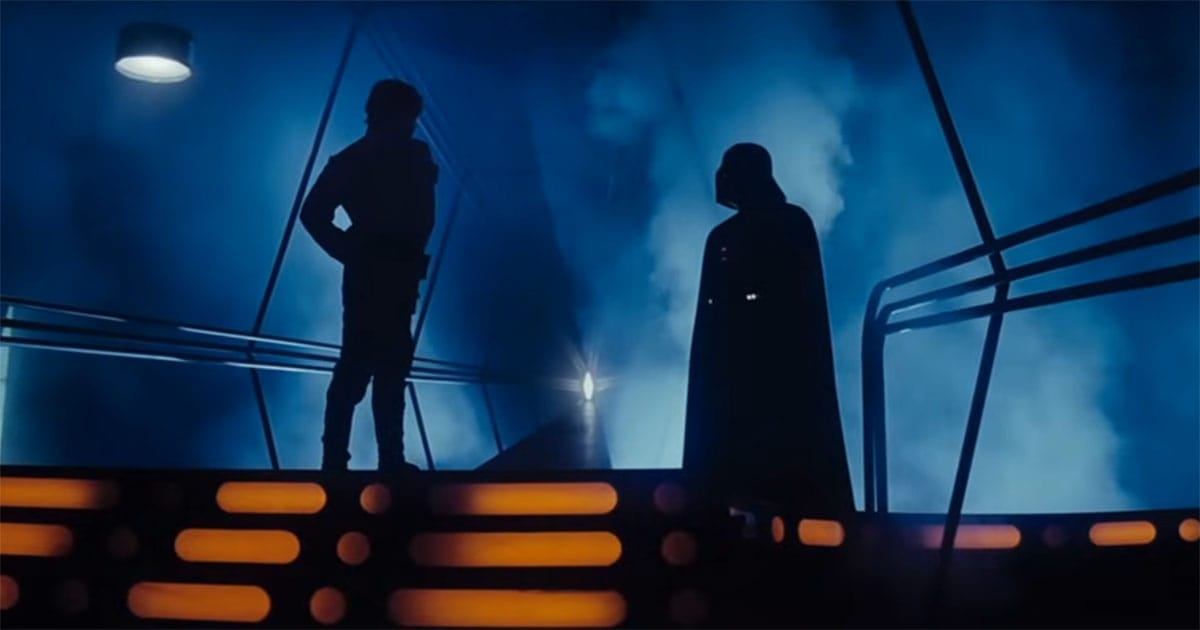
Darth Vader enters the confrontation with a conflict of his own. He remains loyal to his master, yet his conversations with Luke reveal an uncertainty that never appeared in "The Empire Strikes Back." He still hopes father and son might rule together. Even after years of serving the Emperor, Anakin Skywalker has not disappeared completely.
That inner conflict shapes the duel from beginning to end. Vader attacks, but he also searches for Luke's emotions. He wants his son to surrender willingly. His greatest weapon is not his lightsaber. It is his understanding of Luke's heart.
Luke's Breaking Point
The turning point arrives when Vader senses Luke's thoughts about Leia. His threat to turn her to the dark side cuts through Luke's self-control. The patient and disciplined Jedi disappear in an instant. What follows is not a graceful display of skill. It is an explosion of anger.
John Williams recognized the importance of that moment. His score abandons heroic adventure in favor of relentless emotional pressure. The music tells the audience that something has gone terribly wrong. Luke may be winning the duel, but he is losing the battle that truly matters.
Luke drives Vader backward with a furious assault until the Dark Lord falls. A final blow severs Vader's mechanical hand. On the surface, the contest appears finished. The hero has defeated the villain.
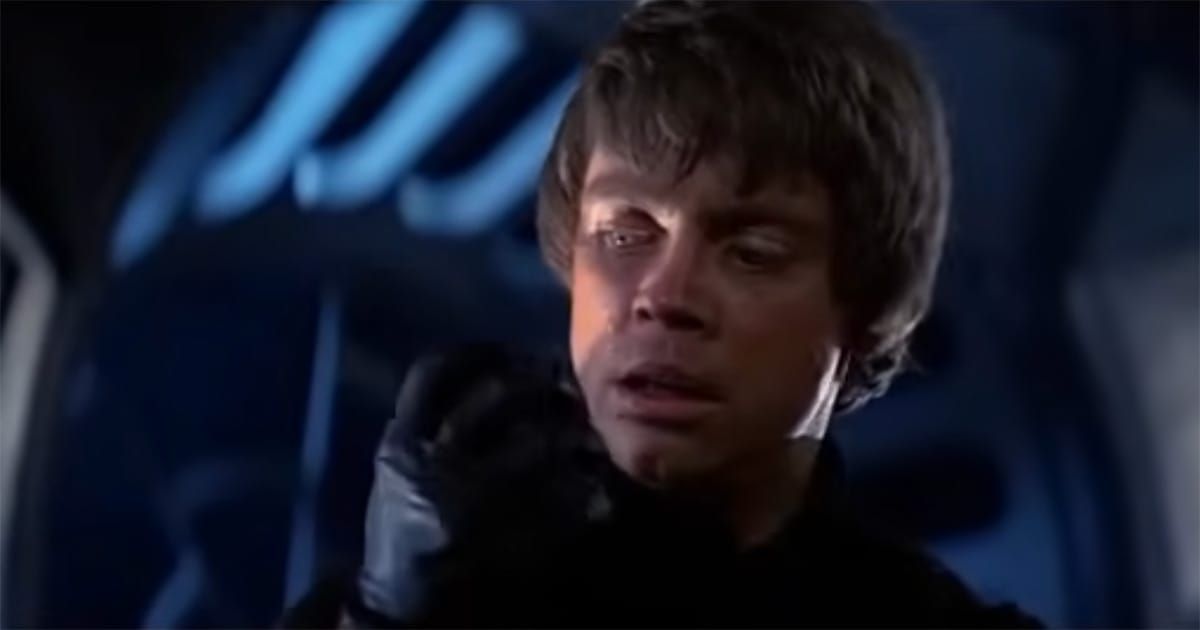
Lucas immediately shifts the audience's attention away from the apparent victory. Luke looks at Vader's severed mechanical hand. Then he looks at his own mechanical hand. The comparison lasts only a moment, yet it communicates everything the audience needs to understand.
The True Victory
Luke finally sees the future Palpatine has prepared for him. Another strike will kill Vader, but it will also destroy the man Luke hopes to become. If he acts in anger, he will not replace the Sith. He will join them.
That realization transforms the entire duel. Luke shuts off his lightsaber and throws it aside. Many adventure stories celebrate the hero who refuses to surrender. "Return of the Jedi" celebrates the hero who refuses to hate.
Luke's famous declaration that he is "a Jedi, like my father before me" follows naturally from that decision. He earns the title not by defeating Darth Vader, but by rejecting the Emperor's definition of strength. Self-control becomes the highest expression of courage.
Palpatine cannot comprehend Luke's choice because it contradicts everything he believes about human nature. He sees compassion as weakness. He mistakes mercy for surrender. His greatest failure is not tactical. It is philosophical.
Luke's decision also reaches the part of Vader that still remembers being Anakin Skywalker. Throughout the trilogy, Luke insists that goodness survives beneath the armor. Obi-Wan Kenobi and Yoda believe that hope is misplaced. Luke refuses to accept their conclusion.
That faith finally proves stronger than the Emperor's manipulation. Anakin does not return because he is defeated in combat. He returns because his son refuses to become a murderer. Luke's example accomplishes what violence never could.
Why It Lasts
The destruction of the second Death Star provides the trilogy's spectacular conclusion. The throne room provides an emotional one. One victory destroys an empire. The other restores a father, a son, and the ideals that had nearly vanished from the galaxy.
More than forty years after its release, the throne room duel remains one of the defining moments in science fiction cinema. Later films introduced faster choreography, larger battles, and dazzling visual effects. Few matched the dramatic power of a scene in which the decisive act was neither a strike nor a victory in combat. It was the moment one man laid down his weapon and refused to let evil define the terms of the fight.