
The Terrible Science of “The Island of Doctor Moreau”
On a remote island, science has slipped its moral leash. H.G. Wells’ “The Island of Doctor Moreau” asks how much really separates civilized man from the beast.


A Nightmare of Science
H. G. Wells published "The Island of Doctor Moreau" in 1896, but the problem at its center has hardly grown old. What happens when scientific ability advances beyond the moral judgment of the man who possesses it? Wells takes that question into territory far darker than the distant island and maritime adventure of his premise initially suggest.
Edward Prendick reaches that territory by accident. After surviving a disaster at sea, the English gentleman finds himself aboard a vessel carrying Montgomery, a former medical student, along with an unsettling collection of animals. Their destination is an isolated Pacific island inhabited by the brilliant and notorious Dr. Moreau.
Wells reveals the nature of the island slowly, allowing Prendick's uncertainty to shape the reader's experience. Strange inhabitants appear at the edges of his vision, terrible cries emerge from behind closed doors, and Moreau offers few comforting explanations. His work involves experimental manipulation of living creatures, but Wells wisely makes discovery part of the horror.
That horror separates "The Island of Doctor Moreau" from a simple lost-world adventure. Wells has little interest in making the island an exotic playground where a resourceful Englishman conquers danger and sails home with a good story. The setting instead removes ordinary restraints and gives scientific ambition room to pursue its own logic.
The result is deliberately unpleasant, yet the ugliness has a purpose. Wells uses Moreau's experiments to examine what happens when intelligence, curiosity, and technical skill operate without compassion or moral limits. Beneath the cries, strange creatures, and tropical isolation lies the novel's more disturbing subject, human nature itself.
The House of Pain
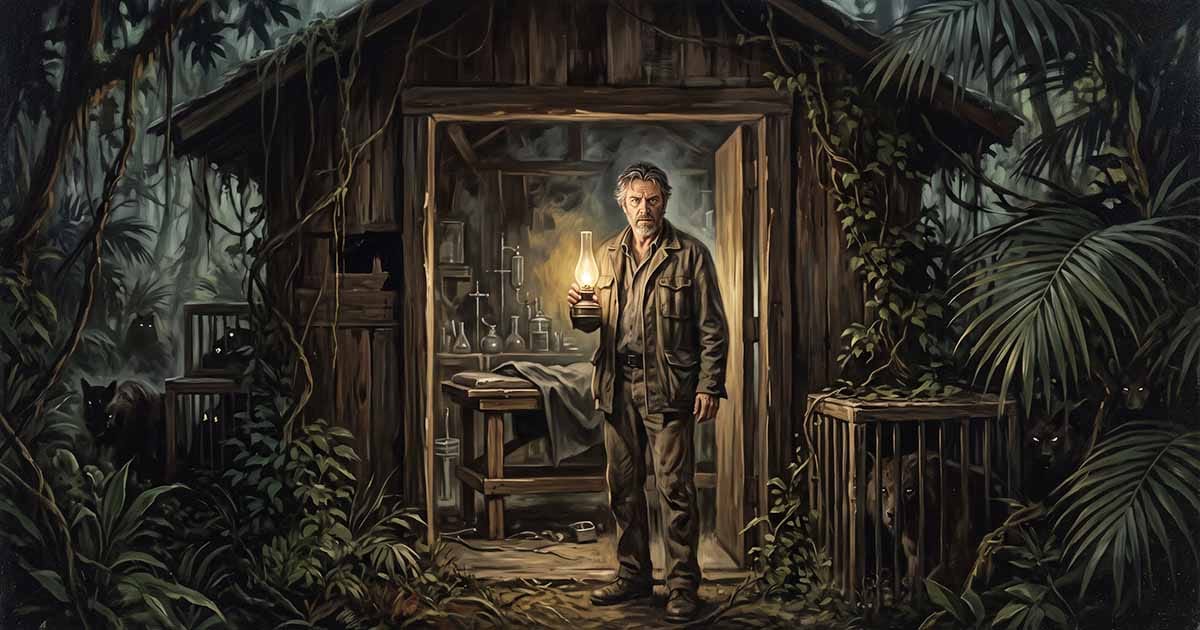
Dr. Moreau belongs among the foundational scientists of speculative fiction, but calling him a mad scientist misses what makes him frightening. He does not rant, stumble into discoveries, or lose control of his reason. He approaches his work with chilling calm, and his intelligence makes his conduct worse rather than excusing it.
Wells drew much of the novel's immediate power from the Victorian controversy over vivisection. Experiments on living animals had become the subject of fierce public debate in Britain, where questions about scientific progress collided with concerns about cruelty and unnecessary suffering. Moreau represents an extreme answer to that dispute because he regards pain as an obstacle to sentiment rather than a reason to limit his work.
That distinction gives "The Island of Doctor Moreau" much of its moral force. Moreau possesses extraordinary technical confidence, but Wells refuses to equate knowledge with wisdom. A man may understand how to alter living nature while remaining dangerously ignorant about whether he has the right to do so.
Contemporary reviewers recognized the ugliness immediately, though they disagreed about its value. Some critics in 1896 complained that Wells had descended into repulsive sensation and piled horror upon horror without adequate artistic justification. Others saw something more serious beneath the brutality and understood that the suffering formed part of Wells's argument about experimental science.
The sympathetic interpretation has aged better. Wells certainly wants the reader to recoil from the House of Pain, and a few passages remain uncomfortable even by the standards of modern horror. Yet he rarely treats suffering as entertainment.
Instead, the gruesomeness exposes the weakness in Moreau's reasoning. His scientific discipline has become so narrow that measurable results matter more than the living creatures that produce them. Wells earns the horror because the cruelty reveals character, sharpens the novel's ethical conflict, and asks a question that remains difficult long after the laboratory doors close.
What Makes a Man?
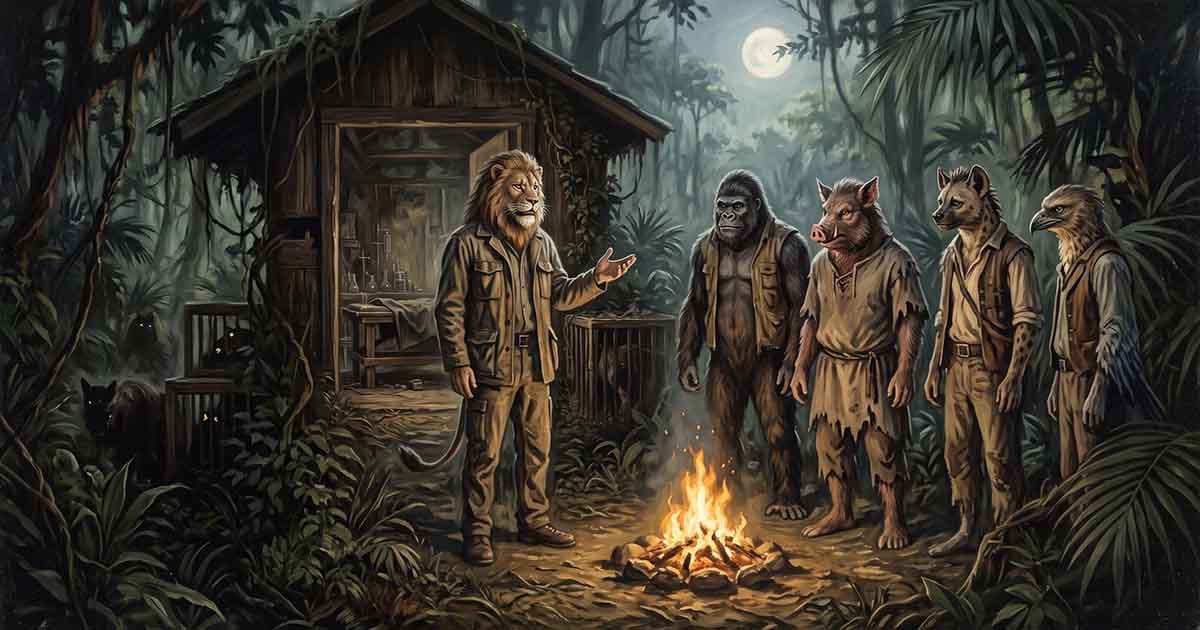
The Beast Folk are Wells's greatest imaginative achievement in "The Island of Doctor Moreau." They disturb the reader because they occupy an uncertain territory between animal and man, possessing speech, social habits, and recognizable personalities without fitting comfortably into either category. Wells makes that uncertainty more troubling than any conventional monster could be.
The creatures have their own crude society, complete with ceremonies and a body of commandments known as the Law. They speak, wear clothing, recognize authority, and repeat rules intended to separate acceptable conduct from animal behavior. Their civilization looks primitive, but its basic machinery is familiar.
That familiarity leads Wells toward the novel's most unsettling question. If language, clothing, rules, habits, and social expectations help distinguish man from beast, then civilization may depend partly upon learned restraint. The Beast Folk must continually suppress impulses that conflict with the behavior expected of them, and their struggle gives the Law a significance far beyond the island.
Wells wrote only a few decades after Charles Darwin's "On the Origin of Species" had transformed arguments about humanity's place in nature. Evolution had challenged comfortable assumptions about an absolute biological gulf separating human beings from other animals. Wells pushes that uncertainty into fiction and gives it flesh, speech, and an uncomfortable face.
The result is not a simple claim that men are merely animals wearing clothes. Wells instead asks how much of civilized behavior comes from nature and how much must be taught, practiced, and reinforced. The question becomes especially disturbing because ordinary society also depends upon laws, customs, habits, and expectations that restrain individual appetite.
This philosophical uncertainty gives the novel much of its lasting power. A lesser story might have presented the Beast Folk as grotesque creatures whose appearance supplied the necessary thrills. Wells makes them reflections of a deeper problem.
Their existence forces the reader to consider whether humanity rests securely in the body or depends upon qualities that can prove harder to define. "The Island of Doctor Moreau" becomes more than a Victorian tale of unnatural creatures because Wells makes the boundary between civilization and animal nature the real object of his experiment.
Wells Builds His Island
Ideas give "The Island of Doctor Moreau" its intellectual weight, but Wells also knew how to construct a fast, unsettling story. The novel is compact, and very little space goes to waste. Its isolation, strange encounters, and unanswered questions create unease before Prendick understands enough to explain what he sees.
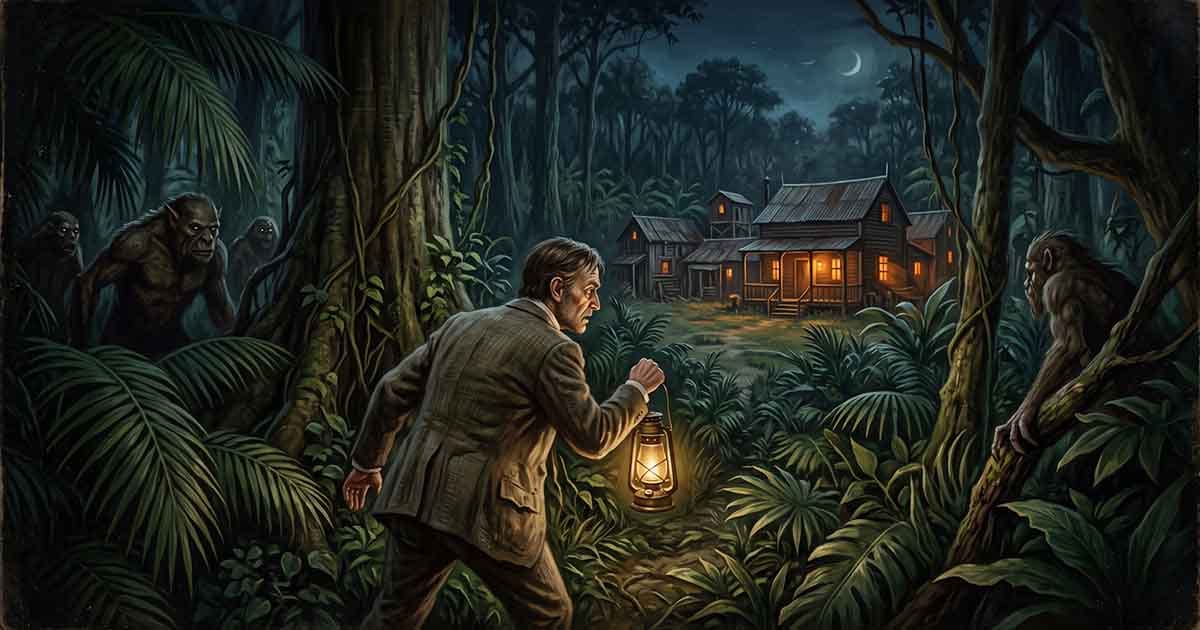
Prendick works especially well as a narrator because he arrives without special knowledge of Moreau's activities. The reader discovers the island through a frightened outsider who repeatedly encounters something before he understands it. Wells controls information carefully, allowing sounds, glimpses, and suspicious behavior to build dread without immediately supplying answers.
The structure combines elements of the sea adventure, lost-world story, horror tale, and scientific romance. Wells moves quickly among them without allowing any one form to dominate for long. The result has the momentum of an adventure while retaining the uneasiness of a nightmare.
Characterization is less impressive. Some contemporary reviewers complained that Wells had not created people substantial enough to support the horrors surrounding them, and the criticism has merit. Prendick often functions more effectively as a witness than as a deeply developed personality, while Montgomery remains interesting without receiving comparable depth.
Moreau is different because his intellectual certainty gives him an unforgettable presence. The Beast Folk succeed largely as a group, while individual creatures emerge sharply when Wells needs them. These characters serve the novel's design well, even when they lack the psychological richness found in more conventional fiction.
Wells's plain prose helps compensate for those limitations. He writes efficiently, describes enough to disturb the imagination, and rarely lingers over gruesome material merely to prolong a reaction. That restraint matters because "The Island of Doctor Moreau" could easily have become a catalog of grotesque sights.
Instead, Wells keeps the machinery moving. The island feels dangerous because Prendick never possesses complete control over what he sees, and the reader shares that uncertainty.
The Beast Within
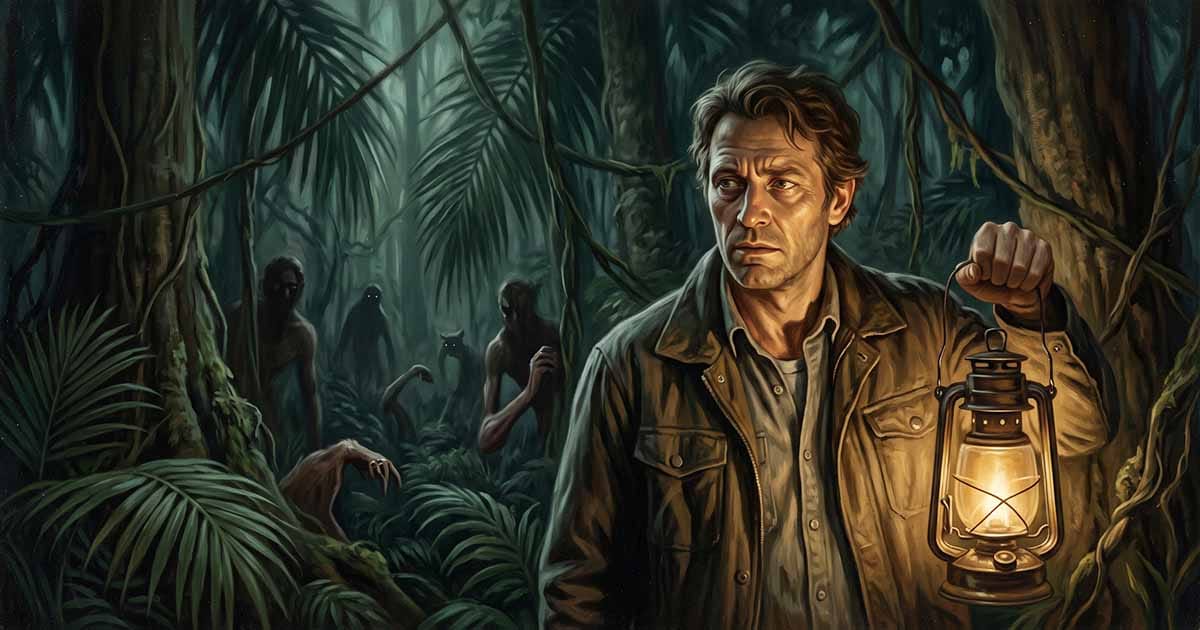
The hostile reviewers of 1896 were not wrong to recognize something ugly in "The Island of Doctor Moreau." Wells wanted discomfort, and he built the novel around suffering, unnatural experimentation, and the uneasy resemblance between man and animal. The real disagreement concerned whether he had transformed that ugliness into worthwhile fiction.
More than a century later, the stronger answer is yes. The scientific procedures behind Moreau's experiments belong unmistakably to Wells's period, and their literal plausibility matters less now than the problem they create. The ability to manipulate living creatures gives one man enormous power without giving him the wisdom required to exercise it responsibly.
Later developments in genetics, biotechnology, and experimental medicine have given that problem new forms. Wells did not predict those technologies in any precise sense, nor does the novel need such predictions to remain relevant. His lasting insight was simpler and more troubling, since greater scientific power creates greater opportunities for both achievement and abuse.
The novel has weaknesses. Its characters sometimes serve Wells's ideas more effectively than they live as fully developed people, and its deliberate unpleasantness will repel some readers. Yet its brevity, atmosphere, narrative economy, and intellectual force give the book a power that more polished novels sometimes lack.
Wells understood that the most effective scientific horror does not require an elaborate future or an impossible machine. It requires a plausible human desire pushed beyond ordinary restraint. Moreau's island gives that desire a laboratory, while the Beast Folk give its consequences a face.
That combination keeps "The Island of Doctor Moreau" disturbing long after its Victorian science has aged. Beneath its horrors lies a question more enduring than any particular experiment. What separates civilized man from the beast, and how secure is that separation?