
Why "The Incredible Shrinking Man" Still Looms Large
"The Incredible Shrinking Man" turns an impossible scientific premise into a gripping story of survival, ingenuity, changing scale, practical effects, and one man’s enduring significance before God.

"The Incredible Shrinking Man" Took an Impossible Idea Seriously
"The Incredible Shrinking Man" began with one of the cleanest questions in classic science fiction. What would happen if an ordinary man started losing a fraction of his height every day and nothing could stop it?
Director Jack Arnold treated that impossible idea with remarkable discipline. Working from a screenplay credited to Richard Matheson and Richard Alan Simmons, adapted from Matheson's 1956 novel "The Shrinking Man," Arnold followed the process from its first medical measurements to its final cosmic implications.
The result was far more than a movie about oversized furniture and a fight with a spider. It combined atomic-age science, physical ingenuity, practical effects, adventure, and faith in a story that continually changed scale without losing sight of its central man.
Grant Williams played Scott Carey as a capable American facing a problem that defeated doctors, disrupted ordinary life, and eventually reduced his home to a hostile wilderness. Scott could not stop shrinking, but he learned to observe, adapt, build, fight, and reconsider what gave his life value.
That progression gave the film unusual weight for a 1950s studio production. It won the first Hugo Award for Best Dramatic Presentation in 1958, and the Library of Congress selected it for the National Film Registry in 2009.
| Attribute | Details |
|---|---|
| Title | "The Incredible Shrinking Man" |
| Director | Jack Arnold |
| Screenplay | Richard Matheson and Richard Alan Simmons |
| Based on | "The Shrinking Man" by Richard Matheson |
| Principal cast | Grant Williams, Randy Stuart, April Kent, Paul Langton, and Raymond Bailey |
| Studio | Universal-International |
| Runtime | 81 minutes |
| U.S. release | February 22, 1957 |
| Recognition | 1958 Hugo Award and 2009 National Film Registry selection |
Synopsis
Scott and Louise Carey were relaxing aboard a boat when a glittering mist moved across the water. Louise had gone below for a drink, leaving Scott alone on deck when the cloud passed over him and deposited a strange residue on his skin.
Six months later, Scott noticed that his shirts and trousers no longer fit. His doctor initially doubted that an adult man could be getting smaller, but repeated measurements confirmed that Scott was losing weight and height.
Specialists traced the process to the combined effects of the mysterious mist and Scott's later exposure to pesticide. They concluded that the two substances had altered his molecular structure, creating a reaction that science could observe but not fully control.
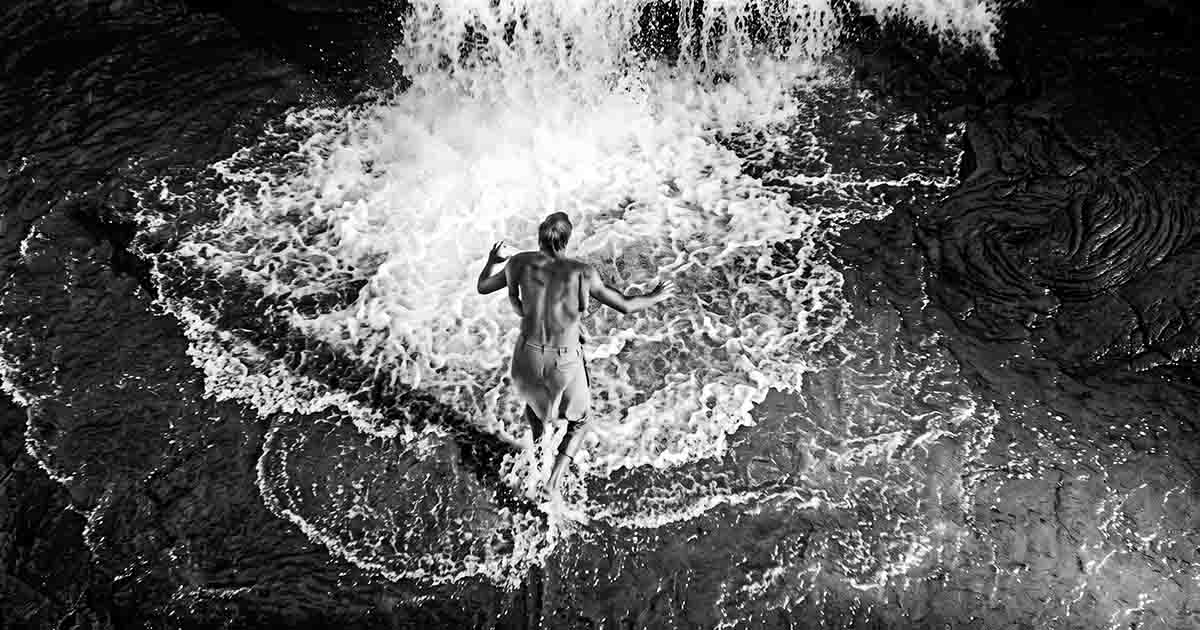
A treatment briefly appeared to halt the shrinking. It could not restore the height Scott had already lost, however, and the process soon resumed.
Scott's condition became public, drawing reporters and spectators to his home. He sold his story and withdrew from ordinary life as each reduction placed another familiar activity beyond his reach.
At roughly three feet tall, Scott met Clarice, a carnival performer who understood life outside the usual physical scale. Their friendship restored some of his confidence until he discovered that he had become shorter than she was.
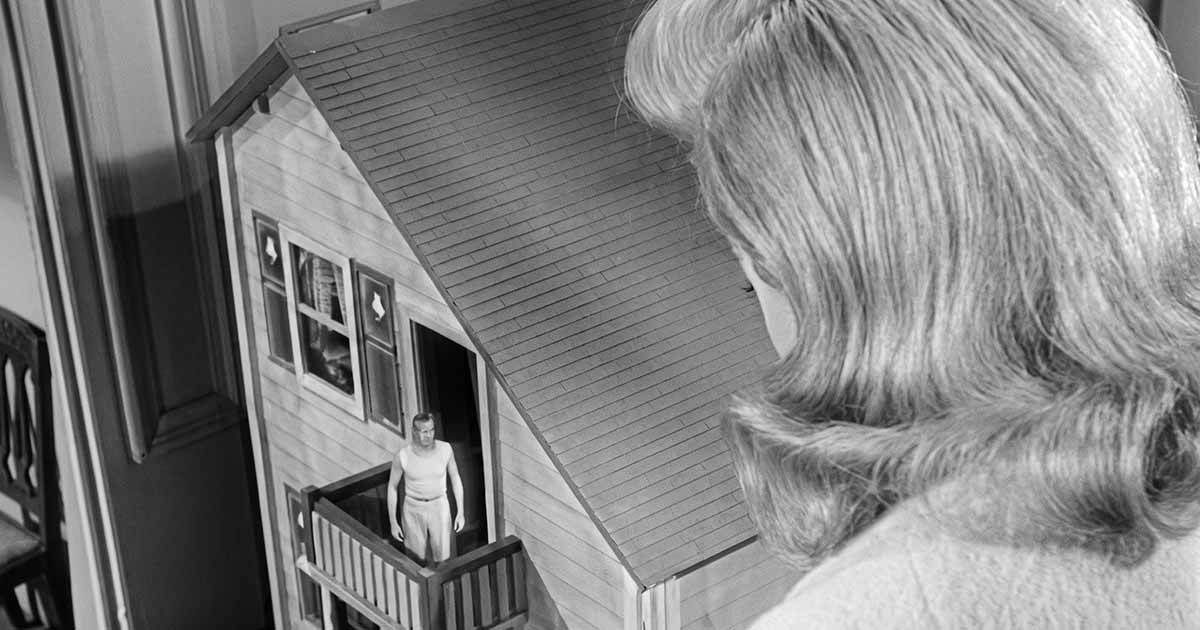
Scott eventually became small enough to live in a dollhouse. The arrangement provided temporary shelter, but it also showed how completely the proportions of his world had changed.
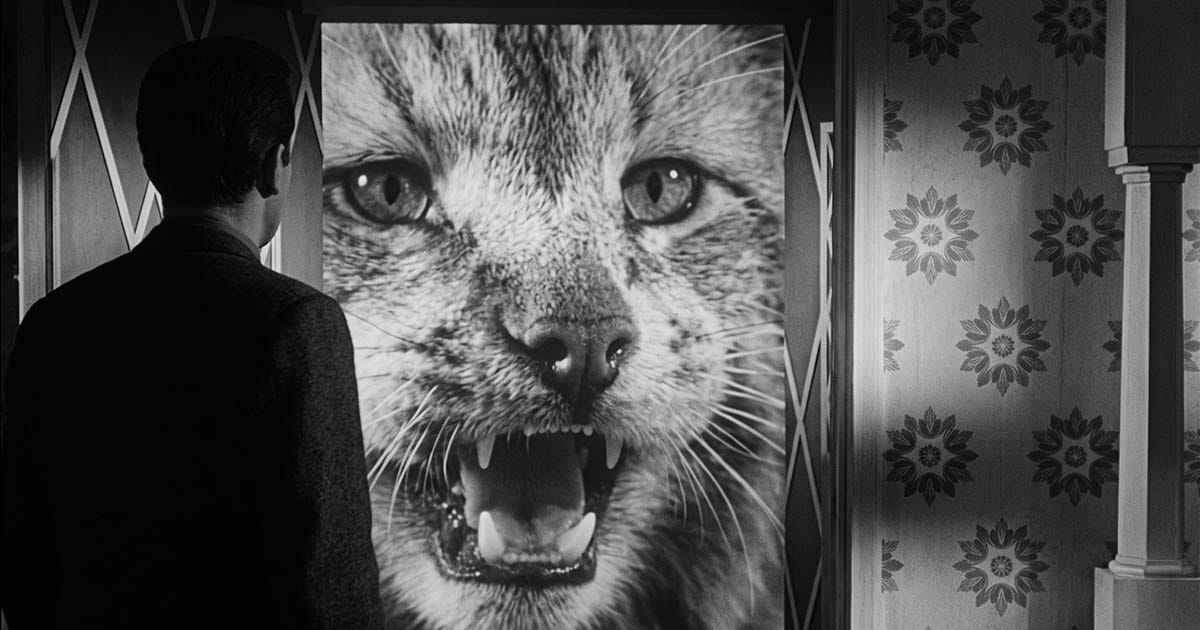
The family cat attacked Scott while Louise was away and drove him into the basement. Louise returned to find a bloodied piece of his clothing and concluded that the cat had killed him.
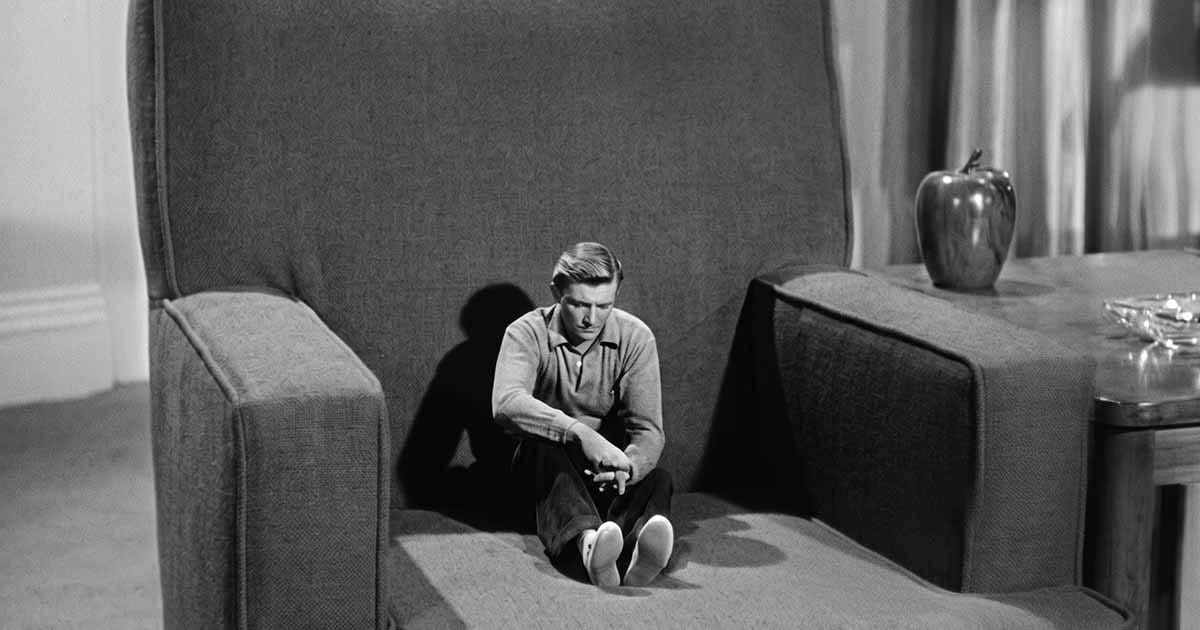
Scott survived the fall, but he could no longer make himself seen or heard. The basement became a vast frontier where a matchbox offered shelter, a pin became a spear, and crumbs provided essential food.
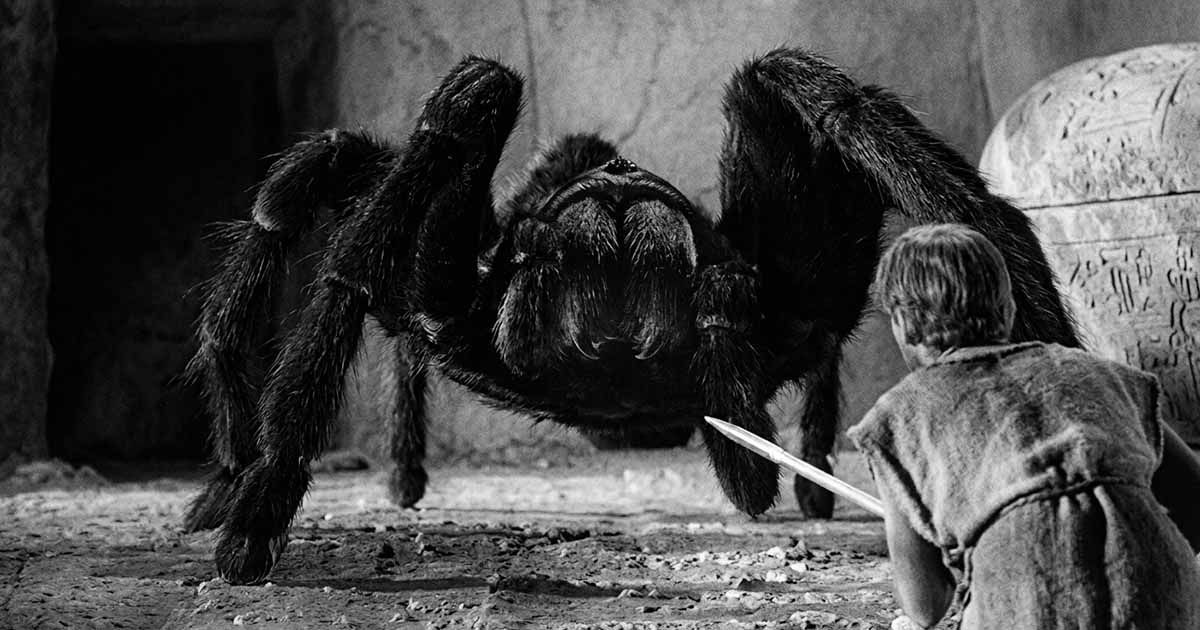
A leaking water heater produced a flood that nearly swept him away. He later climbed toward a piece of cake and fought a spider that had become a monster at his reduced scale.
Scott killed the spider and secured the food, but continued shrinking made rescue impossible. He eventually passed through an opening in the basement window screen and entered a world beyond ordinary human measurement.
Beneath the night sky, Scott no longer saw his size as proof that he had become unimportant. He concluded that however small he became, he remained part of creation and could never become nothing before God.
Themes
The science of "The Incredible Shrinking Man" reflected the hopes and fears of the atomic age. Radiation had become an invisible power capable of producing energy, curing disease, poisoning bodies, and changing life in ways the public was only beginning to understand.
The movie combined that anxiety with another modern concern through Scott's exposure to pesticide. Neither encounter harmed him immediately, but together they produced a delayed reaction, suggesting that ordinary people could carry unseen consequences long after contact with new technologies.
Scott's doctors followed a recognizable scientific process. They began with doubt, gathered measurements, compared earlier records, conducted tests, developed a hypothesis, and tried an antidote.
Their work gave the fantastic premise a practical foundation. The scientists did not behave like reckless madmen, and the film did not present knowledge as the enemy. Still, honest investigation could only take them as far as the available evidence allowed.
Actual physics would create problems the movie largely left unanswered. If Scott retained his original mass while shrinking, his increasing density would make floors, furniture, and eventually the ground unable to support him.
If his density remained constant, his mass would fall rapidly as his height decreased. A man reduced to half his height would occupy roughly one-eighth the volume, changing his weight, strength, food requirements, and ability to retain heat.
The relationship between surface area and volume would become increasingly important. A smaller body has more surface area relative to its volume, which helps explain why small animals generally lose heat faster and require more energy in proportion to their weight.
Water would also behave differently at Scott's scale. Surface tension, falling droplets, and shallow flows could become serious barriers, making the basement flood even more dangerous than it appeared to a full-size observer.
His voice should have changed as his vocal cords and resonating chambers became smaller. The movie adjusted Grant Williams' voice for dramatic effect, but the broader question showed how thoroughly a true reduction would alter every bodily system.
The film did not solve these scientific contradictions. Its success came from choosing understandable rules and applying them consistently enough that viewers could believe Scott's danger from one scene to the next.
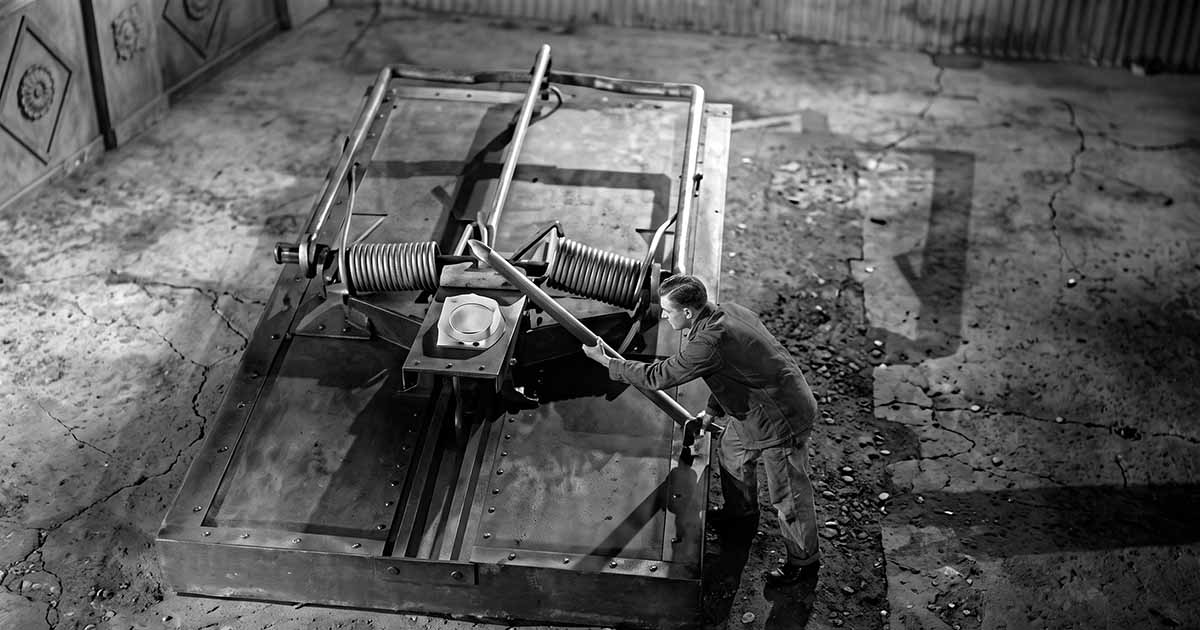
Arnold and his effects team used oversized sets and props, rear projection, compositing, split-screen work, and forced perspective to create that belief. A staircase, paint can, mousetrap, and wooden crate gained new purposes because the camera presented them from Scott's changing point of view.
The effects were most impressive when they became engineering problems. Scott measured distances, studied routes, fashioned tools, built shelter, and converted whatever he found into equipment suited to his size.
His basement ordeal celebrated competence under pressure. Scott lacked outside help and conventional strength, but careful observation and determined action allowed him to survive the flood, reach food, and defeat the spider.
The cat and spider were not mutants created for the story. They were ordinary creatures made terrifying by scale, allowing the movie to transform a familiar American home into an unexplored, dangerous world.
Later critics recognized how much Arnold built upon the scientific premise. Roger Ebert examined Scott's changing response to his condition, while Geoffrey O'Brien explored the existential anxiety of an ordinary environment becoming strange.
Geoff Andrew of Time Out ranked the film among the genre's finest achievements. Tim Brayton emphasized its movement from medical and domestic drama into survival, while Robert R. Thompson described its central nightmare as both timely and durable.
The final scene carried the science beyond medicine and into the structure of the universe. Scott imagined passing from the visible world toward the microscopic, the atomic, and perhaps scales still smaller than science could measure.
Universal reportedly considered an ending that restored him to normal size, but Arnold defended the conclusion that reached the screen. A cure would have closed the medical problem while avoiding the greater question raised by Scott's continuing reduction.
Scott finally understood that physical measurement could not determine human worth. Science could describe his size, track its rate of change, and define the limits of observation, but it could not declare that a life had ceased to matter.
His answer was explicitly theological rather than merely optimistic. Scott accepted that God knew him at every scale, making his existence meaningful even when no other human eye could see him.
Who Will Watch This Movie
"The Incredible Shrinking Man" will appeal to viewers who remember when science fiction could build an entire movie from one strong question. Its premise was simple enough to explain in a sentence, yet rich enough to support medicine, physics, adventure, horror, and theology.
Fans of classic filmmaking will appreciate the craftsmanship behind the changing scale. The effects did not exist merely to decorate the story, since every oversized object created a new obstacle, tool, or route to survival.
The basement sequences should appeal to viewers who enjoy stories about competence and self-reliance. Scott survived because he studied his surroundings, controlled his fear, made plans, and acted with the materials available to him.
Readers of Richard Matheson will recognize his ability to place an impossible event inside an ordinary American life. Admirers of Jack Arnold will find the same confident direction that shaped "It Came from Outer Space," "Creature from the Black Lagoon," and "Tarantula."
The altered scale anticipates "Fantastic Voyage," while the bodily transformation recalls "The Fly." Its clear speculative premise and moral conclusion also pointed toward the kind of storytelling that "The Twilight Zone" would soon bring into American homes.
Modern viewers should expect atomic-age speculation rather than accurate molecular science. They should also expect a film that becomes more serious as it proceeds, moving from diagnosis to spectacle, then into survival and faith.
The title promised an ingenious visual attraction, and the movie delivered a man battling a cat, a flood, and a spider. Its lasting accomplishment was following that shrinking man past the limits of conventional adventure and asking what remained when science could measure him no longer.
Nearly seven decades after its release, "The Incredible Shrinking Man" remained a model of disciplined science fiction. It began with an impossible physical change and ended with the conviction that no human life became too small for God to know.