
Why The Landsraad Matters More Than You Think
The Landsraad is one of the most important forces in "Dune." Learn how the Great Houses balance imperial power, why Duke Leto worried the Emperor, and what most fans miss.

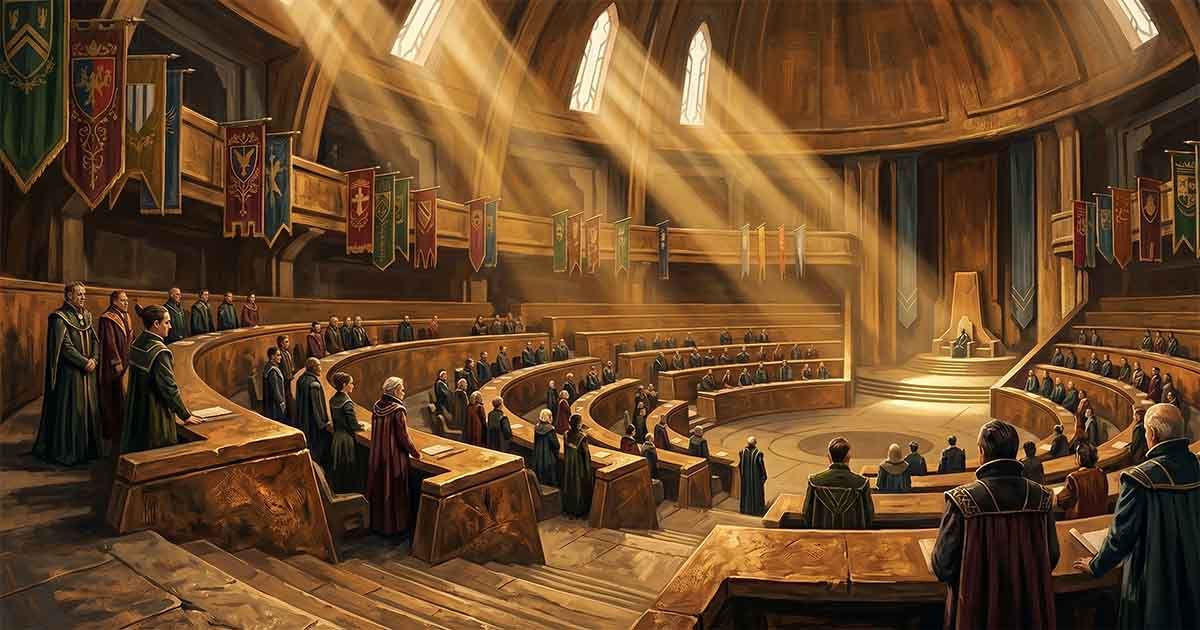
When fans think about "Dune," they usually remember giant sandworms, the spice melange, and the rise of Paul Atreides. The political institutions behind those events often receive less attention. One of the most important is the Landsraad, an assembly of noble Houses that quietly shapes nearly every major conflict in Frank Herbert's novel.
The Landsraad rarely dominates a scene, yet its presence can be felt throughout the story. It helps explain why powerful rulers hesitate, why conspiracies remain hidden, and why political influence can be more dangerous than military strength. Understanding the Landsraad reveals how the Imperium actually works.
Origins And Context
The Landsraad is the political alliance of the Great Houses of the Imperium. It serves as a gathering place where noble families negotiate, form alliances, settle disputes, and protect their interests. Unlike a modern legislature, it does not represent ordinary citizens. Its members are aristocrats whose authority comes from hereditary power.
Frank Herbert built the Imperium as a feudal society projected thousands of years into the future. Advanced technology exists, but political power often resembles the struggles of medieval kingdoms. Noble Houses control planets, maintain military forces, and compete for influence within a rigid social order.
The Landsraad occupies a central position within that system. It exists alongside the Padishah Emperor and the Spacing Guild. Each institution possesses a different form of power, and none can easily dominate the others. This balance creates much of the tension that drives the events of "Dune."
Landsraad At A Glance
| Category | Information |
|---|---|
| Full Name | Landsraad |
| Meaning | Assembly of the Great Houses of the Imperium |
| Type | Political alliance and governing institution |
| Affiliation | Great Houses of the Imperium |
| Primary Role | Counterbalance to imperial authority |
| First Appearance | "Dune" by Frank Herbert, 1965 |
| Political Position | One of the three major power centers of the Imperium |
| Main Constituents | Great Houses and Minor Houses |
| Principal Rival | The Padishah Emperor |
| Key Allies | Individual Houses, CHOAM interests |
| Source Of Influence | Collective military, economic, and political power |
| Defining Function | Unites noble Houses against threats to their privileges |
| Central Conflict | Balancing House interests against imperial authority |
| Narrative Purpose | Demonstrates Herbert's theme that power is distributed rather than absolute |
| Most Important Relationship | The ongoing balance between the Landsraad and House Corrino |
| Associated Concepts | Kanly, Great Convention, noble privilege, legitimacy |
| Major Adaptations | "Dune" (1984), "Frank Herbert's Dune" (2000), "Dune" (2021), "Dune Part Two" (2024) |
A Balance Of Power
Many first-time readers assume the Emperor possesses absolute authority. Herbert quickly demonstrates that this is not the case. Emperor Shaddam IV commands the feared Sardaukar and sits at the top of the imperial hierarchy, yet he must still consider the reactions of the Great Houses.
The reason is simple. Any single House is weaker than the Emperor, but the Houses together represent enormous military and economic strength. The Landsraad provides a framework through which those Houses can cooperate when their interests align. That possibility acts as a restraint on imperial power.
This balance gives the Imperium stability. The Emperor cannot openly crush rival Houses without consequences. The Houses cannot overthrow the Emperor without risking disaster. The result is a political system built on caution, negotiation, and constant calculation.
| Power Center | Main Source Of Power | What It Controls | Limit |
|---|---|---|---|
| Emperor | Throne and Sardaukar | Imperial authority and military force | Cannot openly defy all Great Houses |
| Landsraad | United Great Houses | Noble legitimacy and collective strength | Weak when Houses are divided |
| Spacing Guild | Space travel monopoly | Interstellar movement and commerce | Depends on spice from Arrakis |
| CHOAM | Economic control | Trade, wealth, and imperial shares | Controlled through political influence |
| Bene Gesserit | Breeding and counsel | Bloodlines, training, and court access | Works indirectly, not openly |
The Imperium functions through a balance of competing institutions. The Emperor, the Landsraad, and the Spacing Guild each possess enough power to prevent the others from dominating outright.
How The Landsraad Works
The Landsraad functions through alliances, bargaining, and shared interests. Houses seek support from one another, trade favors, and build coalitions that increase their influence. Political relationships often matter as much as armies.
The institution also helps maintain accepted rules of conduct among the nobility. Rival Houses may engage in feuds and conflicts, but those conflicts operate within established traditions. Herbert presents a society where legitimacy matters greatly. Actions viewed as lawful can be tolerated, while violations of accepted norms can unite former rivals against a common threat.
This arrangement helps explain why so many struggles in "Dune" occur behind closed doors. Open aggression carries political risks. Successful leaders must manage appearances as carefully as they manage military campaigns.
Why Duke Leto Mattered
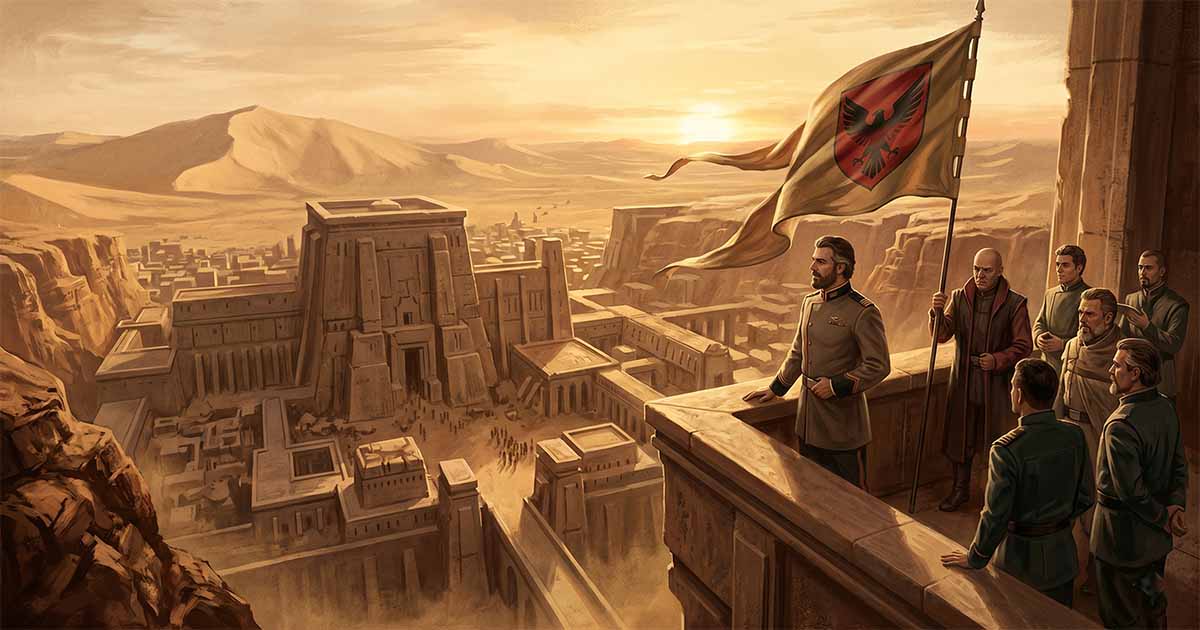
The importance of the Landsraad becomes especially clear when considering Duke Leto Atreides. Leto commands a respected House, but his true strength extends beyond soldiers and territory. He earns admiration throughout the Imperium because of his reputation for honor, competence, and leadership.
That popularity creates a problem for Emperor Shaddam IV. A noble leader who attracts widespread support can become a political alternative to the throne. Even if Leto never seeks imperial power, his growing influence alters the balance among the Great Houses.
This concern helps explain the Emperor's actions at the beginning of "Dune." Many summaries focus on military threats, yet Herbert repeatedly emphasizes the importance of reputation and alliances. Leto's standing within the Landsraad makes him dangerous in ways that armies alone cannot measure.
Role In The Story
The Landsraad influences the central conflict of "Dune" even when it remains offstage. The conspiracy against House Atreides must be carefully concealed because open imperial involvement would provoke serious political consequences. The appearance of legitimacy becomes almost as important as victory itself.
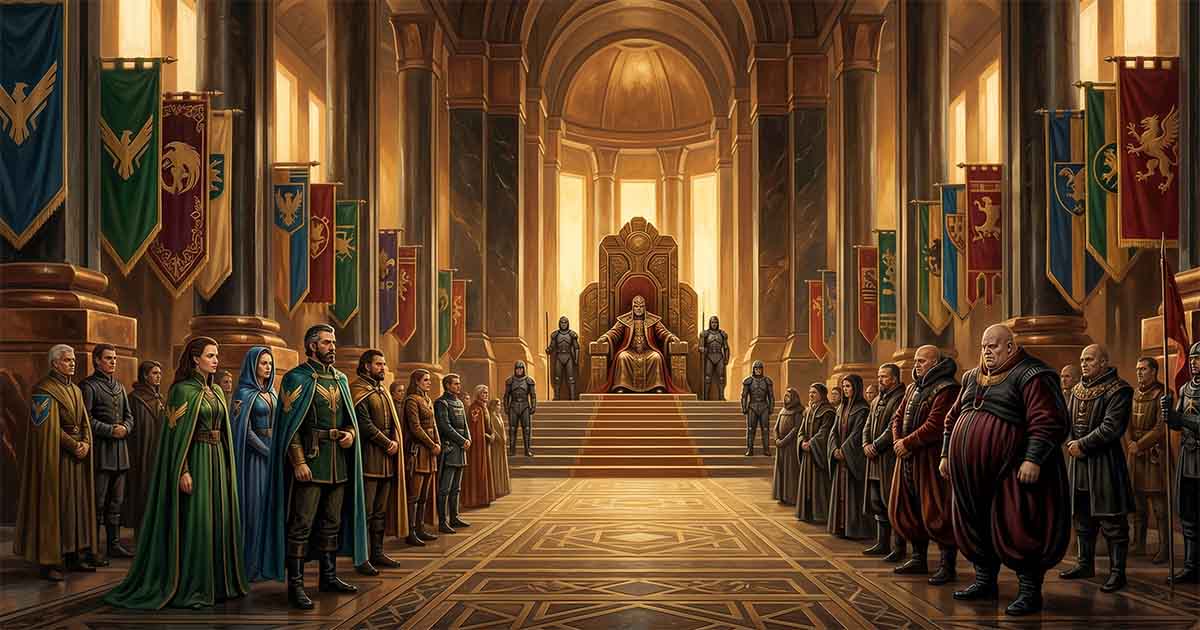
This point is often overlooked in discussions of the novel. If the Emperor truly possessed unlimited authority, there would be little reason for secrecy. Instead, the plot depends on the fact that powerful institutions constrain one another. Political limits shape every major decision.
Herbert uses this structure to create suspense. Characters must think beyond immediate battles and consider how their actions will be interpreted throughout the Imperium. Every alliance, betrayal, and military operation carries political implications.
The result is a richer form of storytelling. The conflict on Arrakis is not merely a struggle between rival families. It is also a contest over legitimacy, influence, and the future balance of power. The Landsraad helps transform "Dune" from a simple adventure into a complex political epic.
What Most Fans Miss
Many articles describe the Landsraad as an assembly of noble Houses and leave the discussion there. That definition is accurate, but it misses the institution's real importance. The Landsraad matters because it forces every major power in the Imperium to consider the reactions of others.
In the end, the Landsraad is less about meetings and votes than about collective strength. Its existence prevents the Emperor from acting without restraint and gives the Great Houses a way to protect their position. Once readers recognize that role, many of the political decisions in "Dune" become much easier to understand.