
"Battlestar Galactica" and the Search for Earth
"Battlestar Galactica" from 1978 follows the last survivors of humanity as they flee the Cylons and search deep space for the legendary planet Earth after catastrophic war.


"Battlestar Galactica" arrived in 1978 during the great explosion of science fiction films that followed the success of "Star Wars."
Produced by Universal and created by Glen A. Larson, the movie attempted to bring cinematic scale and excitement to the space adventure genre. The result was a large and energetic production that mixed futuristic warfare with the spirit of classic naval epics and frontier adventures.
The story begins with mankind facing sudden destruction at the hands of the Cylons, a mechanical enemy determined to wipe out human civilization. Amid the chaos, Commander Adama leads the surviving refugees aboard the Battlestar Galactica into deep space. Their only hope lies in reaching the distant and possibly mythical planet known as Earth.
Much of the film's appeal comes from its impressive visual effects and strong sense of movement. Fighter squadrons race through space battles filled with explosions, miniature spacecraft, and practical effects that still possess weight and texture decades later. The action scenes move quickly, yet the movie never loses sight of the desperation behind the conflict.
The cast gives the film much of its personality and emotional strength. Lorne Greene brings authority and calm resolve to Adama, while Richard Hatch and Dirk Benedict provide youthful energy as Apollo and Starbuck. Together, they help turn "Battlestar Galactica" into more than a simple effects spectacle. Beneath the lasers and starships lies a story about survival, leadership, and the struggle to preserve civilization after catastrophe.
| Attribute | Details |
|---|---|
| Title | "Battlestar Galactica" |
| Director | Richard A. Colla, Alan J. Levi |
| Writer | Glen A. Larson |
| Actors or Actresses | Lorne Greene, Richard Hatch, Dirk Benedict, Maren Jensen, John Colicos |
| Rated | PG |
| Runtime | 125 min |
| Box Office | $11 million |
| U.S. Release Date | 16 May 1978 |
| Quality Score | 8.1/10 |
| Plot | After the destruction of the Twelve Colonies by the robotic Cylons, Commander Adama leads the last survivors of humanity aboard the Battlestar Galactica on a desperate journey through space in search of the legendary planet Earth. |
Synopsis
Humanity prepares for peace negotiations with the Cylons after generations of war between man and machine. The leaders of the Twelve Colonies believe the conflict may finally be ending, yet the meeting is only a trap designed to destroy mankind. Count Baltar secretly betrays the Colonies to the Cylons, allowing the enemy fleet to launch a devastating surprise attack.
Entire worlds are consumed in fire as the Cylons sweep through human defenses with overwhelming force. Commander Adama survives aboard the Battlestar Galactica because his ship is older and less dependent on vulnerable computer systems. Realizing the Colonies have fallen, Adama gathers a small convoy of civilian ships and begins leading the last survivors away from the destruction.

Among the defenders are Adama's son, Apollo, and the reckless but skilled pilot, Starbuck. Both men launch repeated counterattacks against pursuing Cylon fighters while trying to protect the fragile refugee fleet. Their missions place them in constant danger as the Cylons attempt to finish what they started.
As panic spreads among the survivors, Adama reveals knowledge of a distant world called Earth. According to ancient tradition, Earth was settled long ago by members of the human race and may still exist somewhere beyond known space. The possibility of reaching another human world gives the refugees a sense of purpose and hope in spite of their losses.
The journey across space quickly becomes a struggle for survival. Supplies grow limited, fear spreads through the fleet, and Cylon attacks continue without rest. Apollo emerges as one of the fleet's strongest defenders, while Starbuck uses his instincts and daring to survive impossible situations. Meanwhile, Baltar attempts to secure his own power under the protection of the Cylons, though even his new allies distrust him.
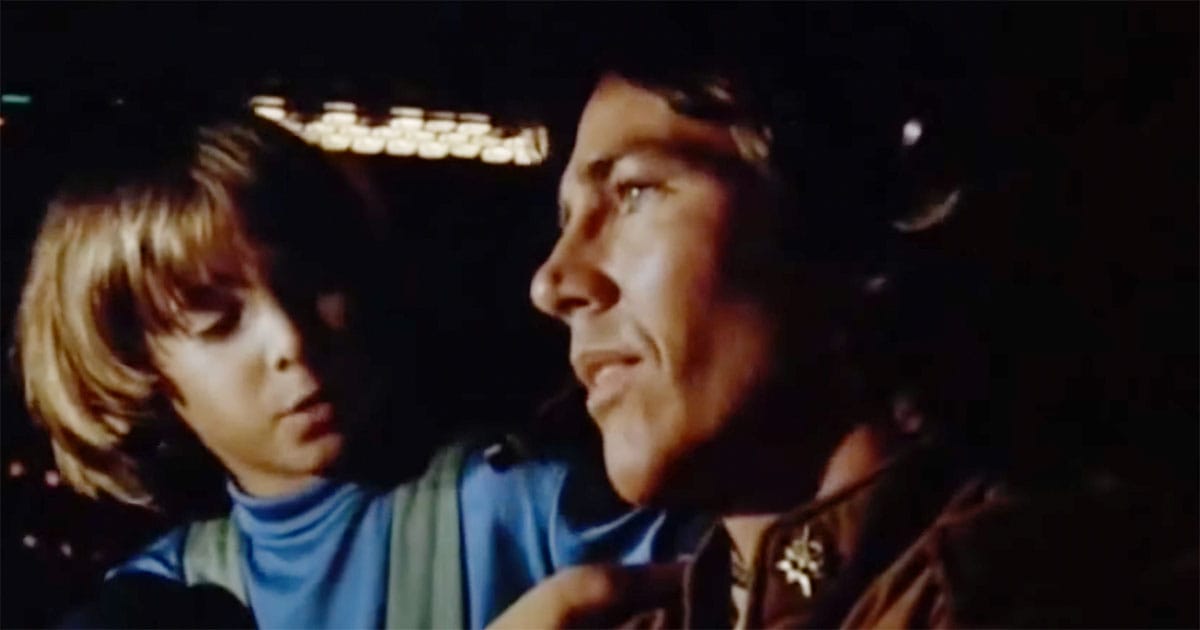
The conflict eventually leads to a major confrontation between the Galactica and the pursuing enemy forces. Apollo takes part in a dangerous assault that gives the surviving fleet another chance to escape destruction. Though the battle ends with temporary victory, mankind remains homeless and vulnerable. The survivors continue their uncertain voyage through deep space, searching for Earth and hoping civilization can endure long enough to find it.
Theme
"Battlestar Galactica" reflects many of the anxieties and hopes that shaped science fiction during the late 1970s. The film arrived during a period marked by Cold War tension, fears of nuclear destruction, and uncertainty about the future of modern civilization.
The sudden annihilation of the Twelve Colonies mirrors the fear that advanced societies could vanish almost overnight through technological warfare. Beneath the space battles and futuristic settings lies a story about mankind confronting the possibility of extinction.
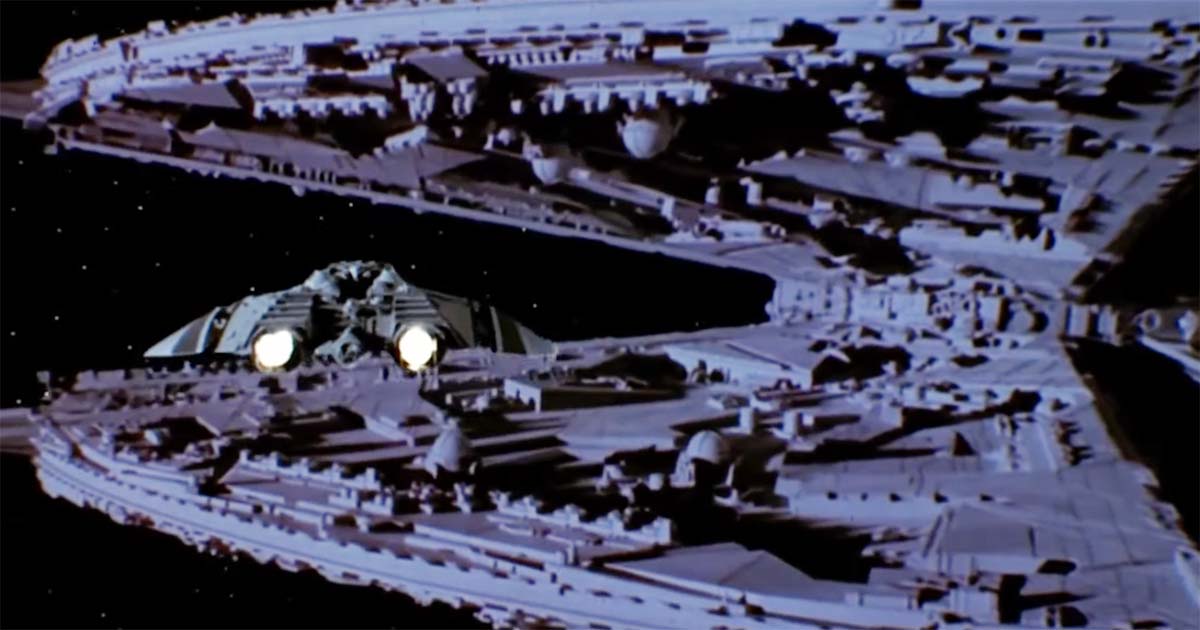
The refugee fleet at the center of the movie carries strong historical and mythic symbolism. The surviving civilians drift through space like displaced populations fleeing the collapse of their homeland. In many ways, the journey resembles ancient migration stories where entire peoples wandered through hostile territory searching for safety and renewal. Earth becomes less a physical destination and more a symbol of hope, continuity, and the belief that civilization can survive disaster.
Leadership is another important idea running throughout the film. Commander Adama represents an older form of authority built on discipline, sacrifice, and responsibility. He does not lead through charisma or emotional speeches. Instead, he remains calm under pressure and understands that survival depends on preserving order during chaos. The movie suggests that civilization survives because individuals accept duty even when fear and uncertainty threaten to overwhelm them.
The Cylons represent fears surrounding mechanized warfare and the loss of humanity within modern conflict. They are cold, relentless, and entirely devoted to destruction. Unlike traditional enemies motivated by territory or politics, the Cylons behave more like an unstoppable force of extermination. The film reflects concerns that technology, once separated from morality and human restraint, can become destructive on a massive scale.

Another strength of the movie is the way it combines futuristic ideas with older American storytelling traditions. Much of the structure resembles frontier adventures and World War II combat films rather than abstract science fiction. Fighter pilots defend vulnerable civilians while commanders struggle to guide refugees across dangerous territory. This approach gives the story a familiar emotional foundation beneath its science fiction surface.
In spite of its dark premise, "Battlestar Galactica" ultimately remains hopeful. The survivors lose their worlds, their homes, and much of their population, yet they continue forward with determination. The film argues that humanity's greatest strength is not advanced technology or military power. Its true strength comes from courage, loyalty, faith, and the refusal to surrender even after catastrophic defeat.
Who Will Watch
"Battlestar Galactica" will appeal most to viewers who enjoy science fiction built around adventure, atmosphere, and traditional storytelling. The movie avoids the detached tone that became common in later decades and instead embraces sincerity without embarrassment.
Its heroes are courageous, its villains are unmistakable, and its conflicts are driven by survival rather than personal cynicism. Audiences who appreciate straightforward storytelling with emotional clarity will likely connect with the film immediately.

The movie should also resonate with viewers who enjoy older Hollywood productions that place character and momentum above constant spectacle. Much of the film's charm comes from its pacing and sense of scale. Scenes are allowed to breathe long enough for the audience to absorb the size of the fleet, the danger of the mission, and the isolation of deep space. The result feels more deliberate and grand than many faster modern science fiction films.
Fans of classic American adventure stories may notice how strongly the movie draws from older traditions outside science fiction. The structure resembles frontier migration tales, naval dramas, and wartime aviation pictures where survival depends on courage, discipline, and cooperation. This gives the story a familiar emotional foundation even while the setting remains futuristic. The film understands that audiences become invested in science fiction worlds when the human struggles underneath them feel recognizable.
Viewers interested in the history of science fiction cinema may also appreciate the movie as a reflection of its era. The late 1970s saw renewed optimism about large-scale space fantasy after years in which darker dystopian stories dominated the genre. "Battlestar Galactica" captures that renewed sense of excitement and wonder while still acknowledging fears surrounding war and technological destruction. It occupies an interesting middle ground between hopeful adventure and cautionary science fiction.
The movie is especially rewarding for audiences who prefer practical filmmaking techniques over modern digital excess. Physical models, detailed set construction, and analog effects create a tactile quality that gives the universe credibility. That craftsmanship helps the film retain personality decades after its original release.
For viewers seeking a science fiction film driven by earnest heroism, visual imagination, and large-scale adventure, "Battlestar Galactica" continues to offer an entertaining journey through one of the genre's most ambitious cinematic worlds.