
Consequence and Catastrophe in the Original Godzilla
A giant monster born from nuclear recklessness. The 1954 original "Godzilla" is not just a classic film—it is a timeless lesson in consequence.

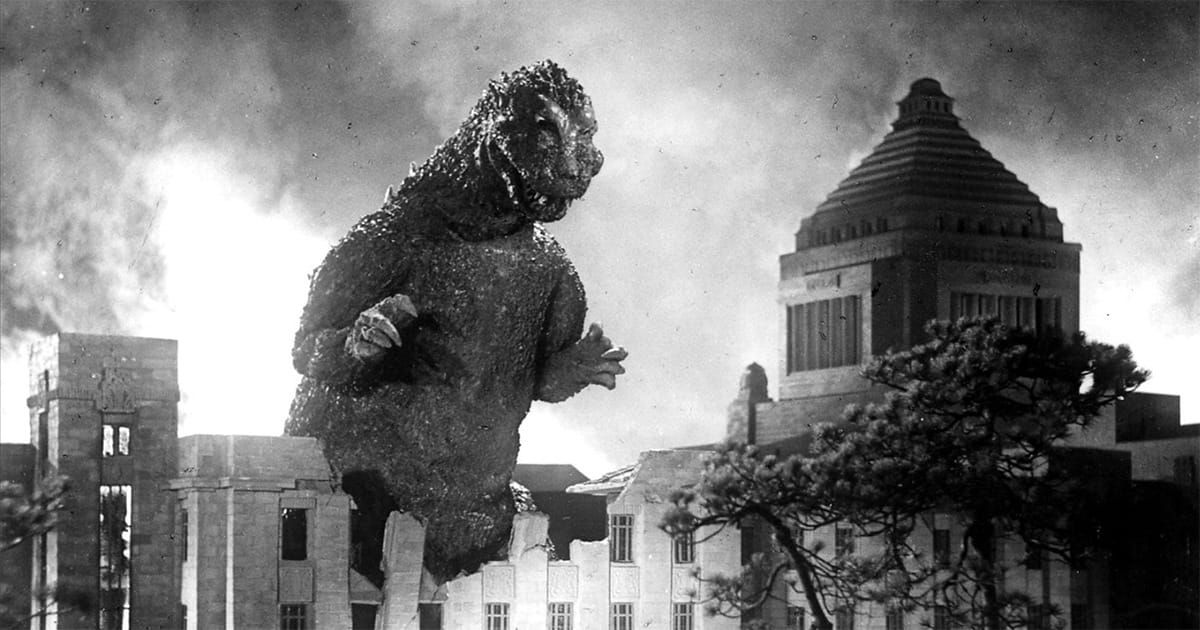
The original “Godzilla” (1954) is widely remembered as the film that launched a monster franchise. But it might also be something more, a cautionary fable from the beginning of the nuclear age.
Director Ishiro Honda may have created “Godzilla” as a serious argument about cause and effect. A look, if you will, into the kind of destruction that follows when powerful people make reckless decisions and walk away from the consequences. That argument is as clear today as it was 70 years ago.
An Idea Born from Real Fear
Tomoyuki Tanaka was a producer at Toho Studios in early 1954 when a co-production deal with Indonesia collapsed. Flying back to Tokyo with a hole in his schedule, he began thinking about “The Beast from 20,000 Fathoms” (1953), an American film in which a prehistoric creature awakened by nuclear testing in the Arctic terrorizes the American coast.
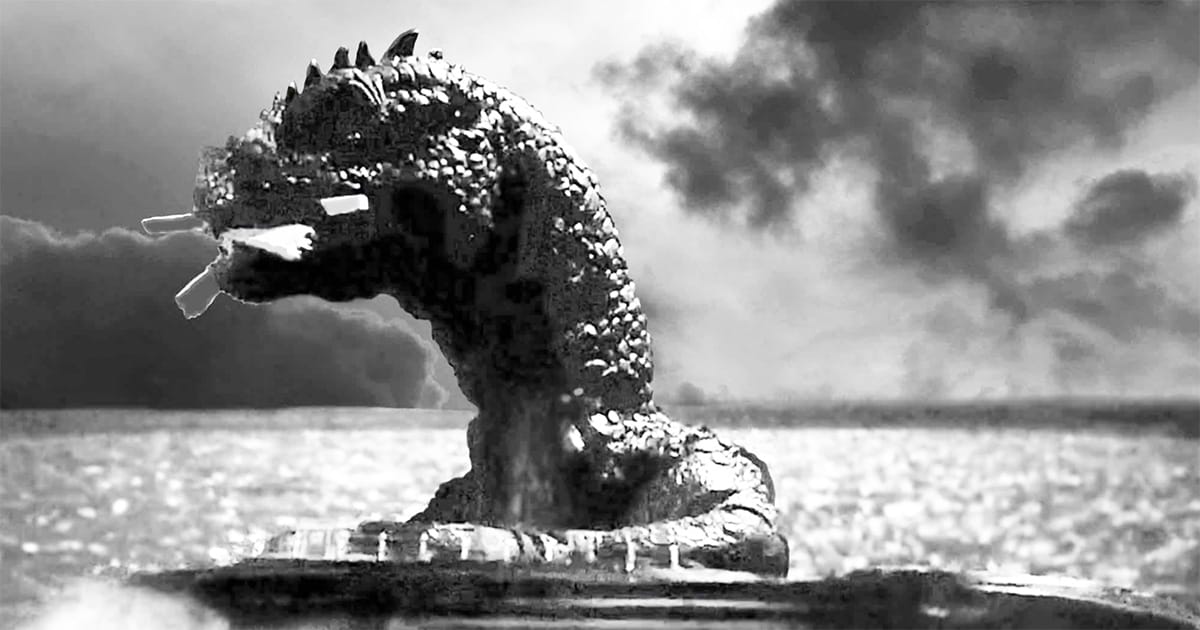
In a sense, the concept was ready-made for Japan. Nuclear fear was not science fiction. It was a memory. Less than a decade earlier, the atomic bombings of Hiroshima and Nagasaki had killed hundreds of thousands of civilians in two days. The survivors, called hibakusha, carried radiation sickness, disfigurement, and social stigma for the rest of their lives. And in March of 1954, the crew of a Japanese fishing vessel called the Lucky Dragon No. 5 was blanketed in radioactive fallout from an American hydrogen bomb test at Bikini Atoll.
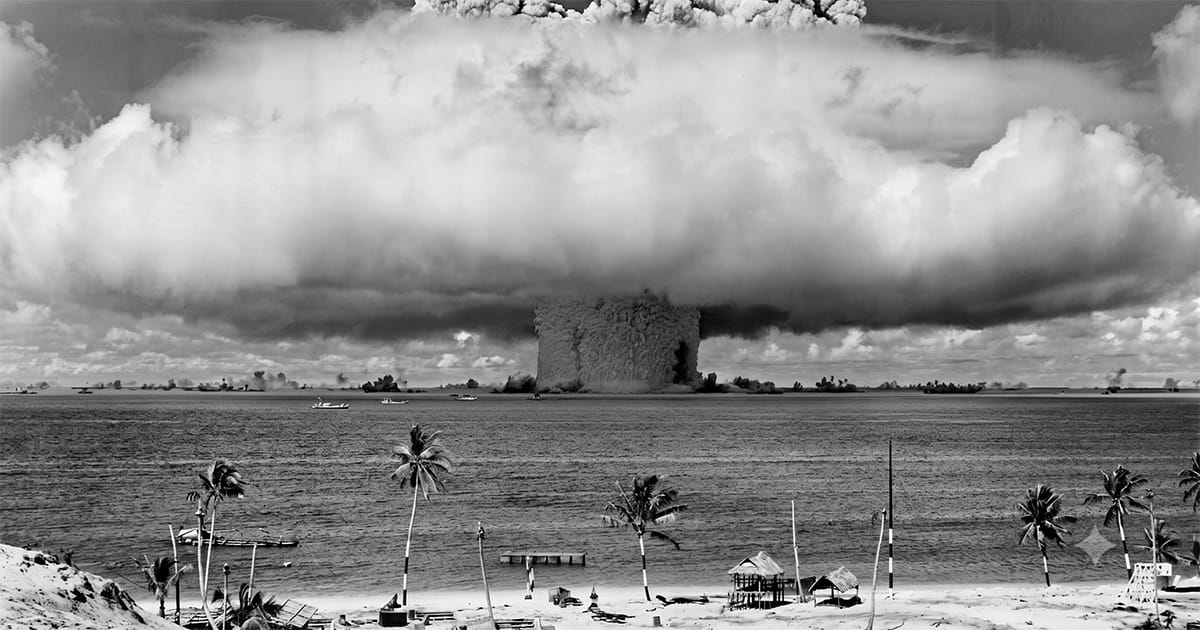
One crewman died. The rest suffered for years. Nobody on that boat had any say in the decision to detonate that bomb. They were fishermen who happened to be in the wrong place.
Tanaka brought his idea to Honda and special effects artist Eiji Tsuburaya. Honda had served in the Japanese army and witnessed the aftermath of the war firsthand. He had no interest in a simple monster picture. Tsuburaya was a technical genius with extraordinary skills in practical effects. Together, they were a well-matched pair.
The name “Gojira” (ゴジラ) was reportedly a nickname for a large, burly Toho employee who reminded coworkers of both a gorilla and a whale, gorira and kujira in Japanese. Whether the story is accurate is debated, but it has persisted for seven decades.
Making the Film
Toho allocated roughly 60 million yen to the project, making it one of the most expensive Japanese films produced to that point. Honda and Tsuburaya had about a year to bring it to the screen.
Tsuburaya built elaborate miniature sets of Tokyo, with scale models of buildings, bridges, and train lines in careful detail. The creature was a man in a suit, actor Haruo Nakajima, who would go on to play Godzilla in a dozen films over the next two decades. The costume weighed more than 200 pounds, was made of concrete-impregnated rubber, and was suffocating to wear. Nakajima could only remain in it a few minutes at a time.
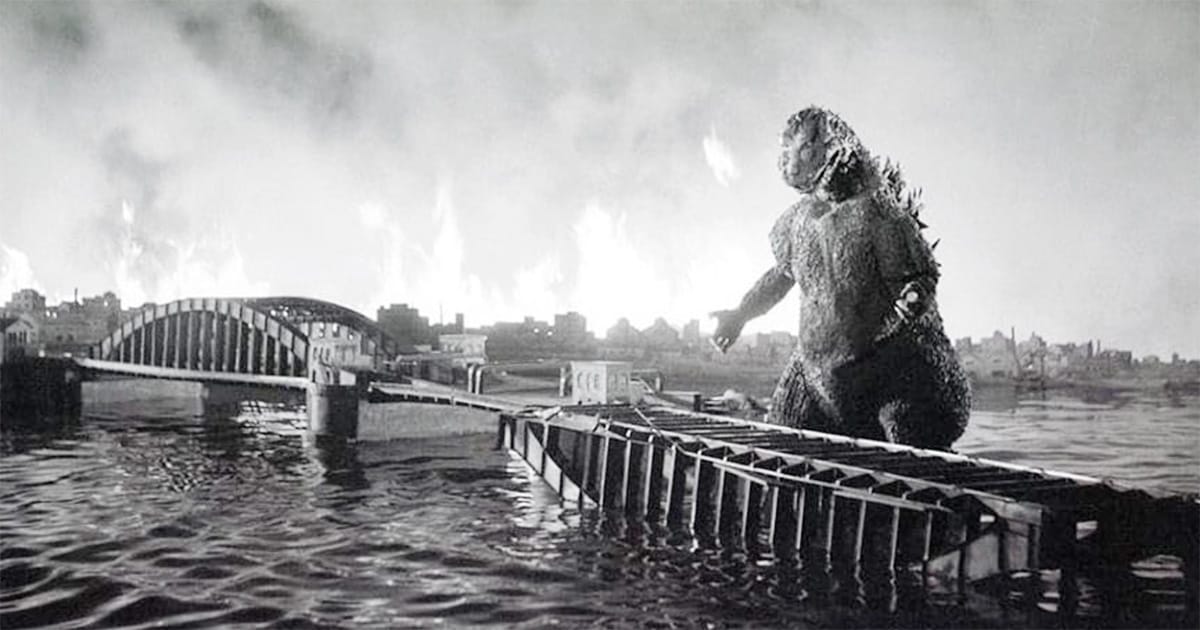
Tsuburaya shot the miniature sequences at high speed so that when played back at normal speed, the destruction felt heavy and enormous. Water tanks, forced perspective, and layered optical effects completed the illusion. Japanese audiences had never seen anything quite like it.
Honda focused on the human story. He filled the film with people the audience could feel for, a scientist who recognized in Godzilla the terrible logic of nuclear consequence, a young woman caught between the man she loved and the man her father wanted her to marry, military officers wrestling with a threat that conventional weapons could not stop. The human drama was not window dressing. Honda meant it to carry equal weight with the spectacle.
Composer Akira Ifukube wrote the score, including the iconic Godzilla theme, a massive, plodding march that managed to sound both threatening and mournful. Ifukube would score dozens of subsequent Godzilla films, but his work on the original remains the benchmark. The music told the audience how to feel. What it told them was that this was not entertainment. This was a dirge.
The Film Itself
“Godzilla” opens with the destruction of a fishing boat by an unseen force near Odo Island. Investigators find survivors. The islanders name the cause without hesitation. It was a creature from the deep that their ancestors called Godzilla.
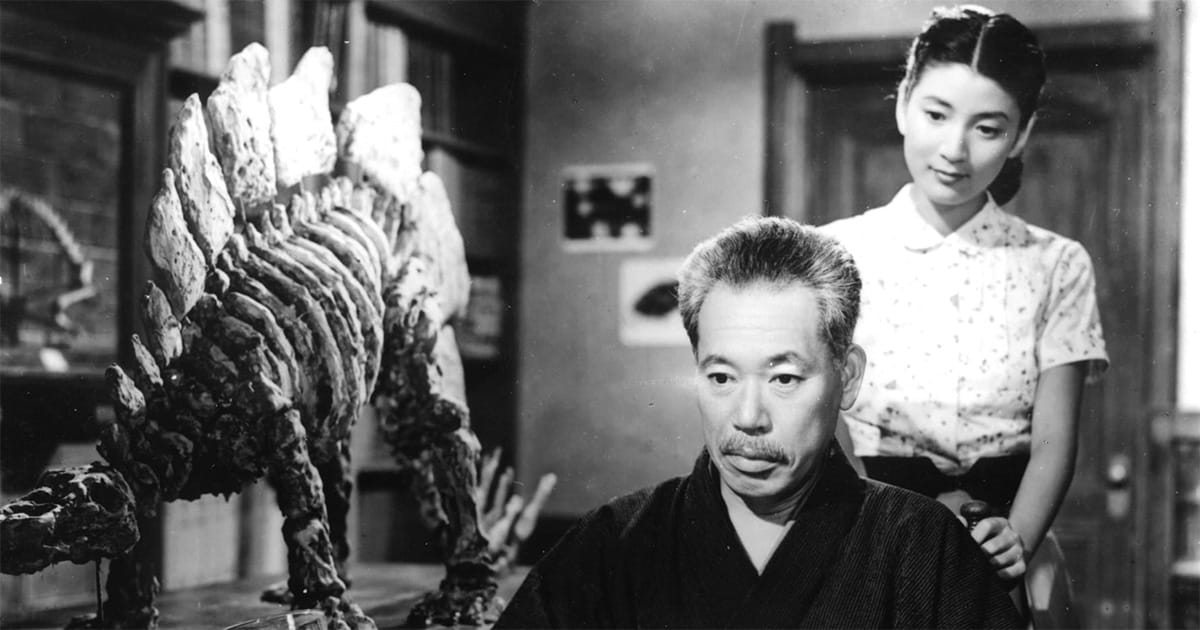
The authorities bring in paleontologist Dr. Kyohei Yamane, played by Takashi Shimura. Shimura was one of the most respected actors in Japan at the time, best known for his work with Akira Kurosawa in “Rashomon” (1950) and “Seven Samurai” (1954). Yamane is methodical and careful. What he finds on Odo Island troubles him. The creature is real, it is ancient, and its presence in shallow waters near human civilization traces directly to nuclear testing in the Pacific.
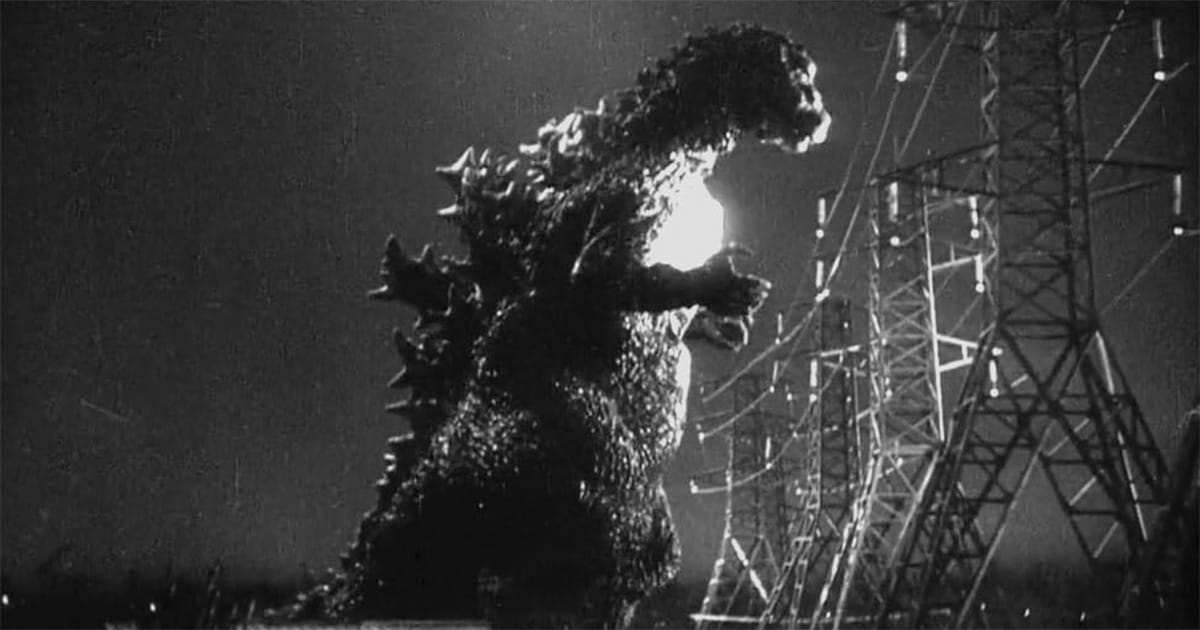
Godzilla comes ashore and destroys Odo Island. Then, in spite of naval efforts to stop him, he comes ashore again at Tokyo Bay and levels much of the city. Honda stages the attack with slow, grinding inevitability. Godzilla does not rush. He walks, and things fall. Fires sweep through the city. There is no malice in any of it. He is simply moving, and the city is in the way.
Honda pauses the destruction to show the hospitals. He shows the burn wards. He shows a mother crouching in the rubble with her children, telling them quietly that they are about to see their father, her voice making clear she knows they are dying. These are not action beats. They are moments of grief, placed deliberately so the audience has to sit with what is actually happening. Honda wanted the destruction to hurt, not thrill.
A Monster Born, Not Created
Godzilla did not come from nowhere. He was already there, a prehistoric creature from a deep-sea environment that had survived from the age of the dinosaurs. Nuclear weapons testing in the Pacific disturbed him, mutated him, and drove him toward human civilization.
Honda makes no mystery of this. The causal chain is explicit. Scientists trace the evidence and arrive at the conclusion that the audience has suspected from the first scene. Underwater nuclear detonations awakened something ancient and made it dangerous. Godzilla is not a freak accident. He is the direct result of a specific human decision, the decision to detonate nuclear weapons in the ocean without serious thought for what those detonations might disturb.
Godzilla has no motive and no grudge. He arrives the way a flood arrives after a dam breaks, because something upstream went wrong.
The Innocent Pay the Bill
The people who made the decisions that woke Godzilla are not the ones who suffer for it. The fishermen suffer. The families in coastal villages suffer. The citizens of Tokyo suffer.
Honda does not look away from this. None of these people had any say in weapons testing policy. None of them made the choices that set events in motion. They lived in the path of the consequences.
This is one of the oldest difficult truths in human experience. The recklessness of the powerful tends to land hardest on the people least responsible for it. A government makes a decision. A nation lives with the results. Honda put this on screen with clarity and without sentimentalism.
The Japanese audience in 1954 did not need it explained. They had lived it within the decade. That is part of what made the film land the way it did, not as an allegory but as recognition.
A Different Kind of Monster
Honda does not ask the audience to hate Godzilla. In several scenes, the tone shifts toward mourning, for the creature as much as for his victims. Scientists speak of him with reluctant awe. Dr. Yamane argues after the initial destruction that Godzilla should be studied rather than destroyed. He is the only living specimen of his kind, Yamane says, a biological record of an ancient world, and killing him would mean losing something irreplaceable.
The military overrules him. Of course it does. But the argument stands long enough for the audience to feel its weight.
If Godzilla were simply a villain, the film would be a straightforward action story. Because he is framed as a force of nature, a consequence given physical form, the moral weight stays where Honda intended it, on the decisions that produced the crisis, not on the creature caught up in it.
The One Man Who Faced the Bill Honestly
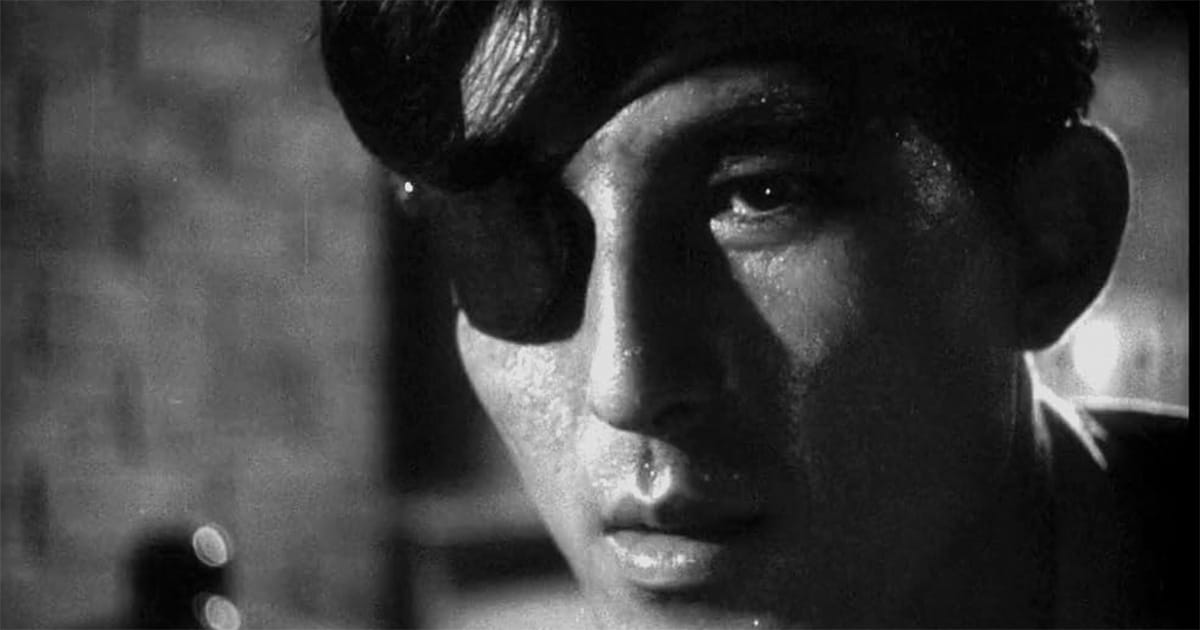
The film’s moral climax belongs to Dr. Daisuke Serizawa, played by Akihiko Hirata. Serizawa lost an eye in the war and has spent the years since in private research. He has developed a device called the Oxygen Destroyer, something capable of stripping oxygen from water and dissolving any living tissue it touches. He has tested it. He knows it works. He has told almost no one, because he understands exactly what would happen if he did.
His former fiancée, Emiko, eventually tells her boyfriend, the naval officer Hideto Ogata, about the device. Ogata presses Serizawa to use it against Godzilla. Serizawa refuses, not because he does not care about the casualties, but because he cares about what comes next. If the Oxygen Destroyer is used it will become known. If it becomes known, governments will want it. If governments want it, it will be built in quantity, refined, made more powerful, and eventually used on people. He has already watched this sequence play out. He will not start it again.
The argument Ogata makes, that the immediate crisis justifies the risk, is not wrong. Tokyo is burning. People are dying. But Serizawa’s position is not wrong either. Good intentions in a crisis have a long history of producing terrible long-term consequences, and a new class of weapon cannot be undone once it is out in the world.
In the end, Serizawa agrees to use the device. He has one condition. He burns his notes and all his research in his own fireplace while Emiko watches. Then he descends to the ocean floor with Ogata to find Godzilla, deploys the device, and cuts his own air line. He goes to the bottom with the monster. What he knows and what he built dies with him.
It is the one genuine act of accountability in the entire story. Every other character in the film is managing consequences, responding to them, arguing about them, surviving them. Serizawa is the only one who looks at the chain of cause and effect and decides, at personal cost, to break it.
The film gives him no hero’s send-off. Ogata surfaces and mourns him quietly. The camera does not linger. Serizawa made his choice and is gone, and the ocean is calm above him.
The Warning That Does Not End
The film does not end on a note of triumph. With Godzilla gone, Dr. Yamane delivers the final thought. If nuclear testing continues, he says, there will be others.
The monster is dead. The conditions that produced him are not.
Honda had been building toward this all along. Godzilla was never the problem. He was the symptom. The problem is the willingness to set forces in motion whose consequences cannot be fully known, and to leave other people to deal with whatever follows. Yamane says it the way a doctor delivers a diagnosis, carefully, without theatrics, because the facts are serious enough on their own.
The American Version
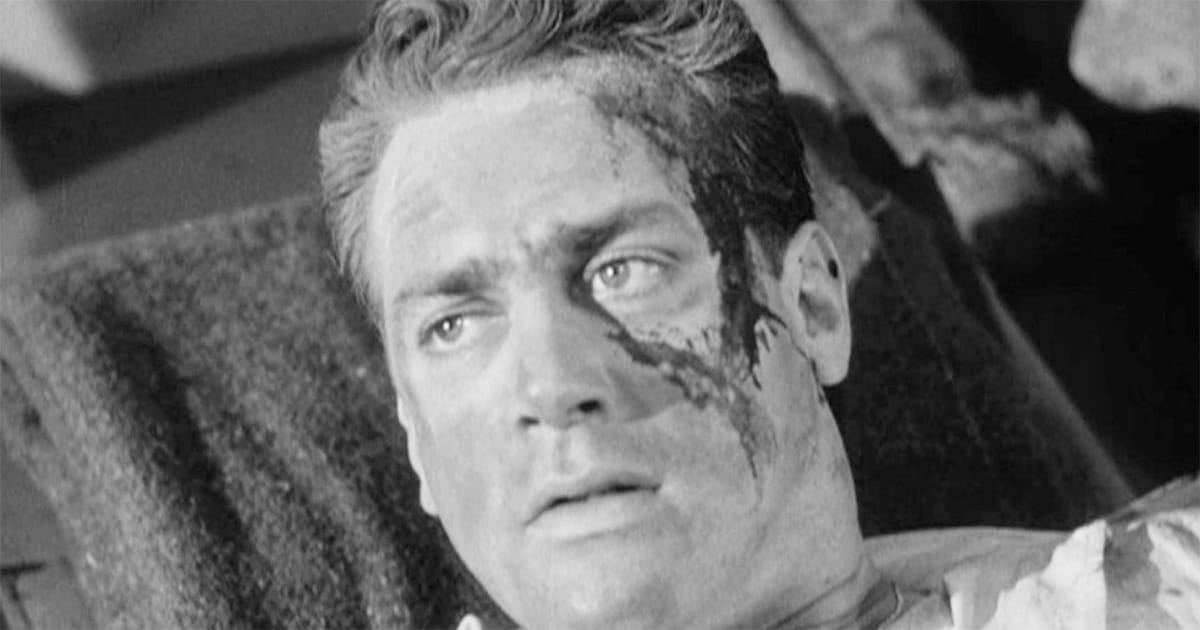
When “Godzilla” (1954) was acquired for American distribution, it was significantly reworked. Producer Joseph E. Levine and director Terry Morse added roughly 40 minutes of new footage featuring Raymond Burr as a reporter named Steve Martin, who narrates the events as a story he survived. A Japanese-American actor stood in for Burr in shots alongside the original cast.
The film was released in the United States in 1956 as “Godzilla, King of the Monsters” and was a commercial success. For most Western audiences, it was the only version that existed for decades. Burr’s narration shifted the tone. The American cut played as a genre picture, a monster movie, exciting and occasionally scary, but stripped of the moral argument that gave the original its weight.
Honda’s original cut was not officially released in the United States until 2004, fifty years after it was made. For most of that time, American audiences had been watching a version of the film edited to remove the very thing that made it matter.
Why It Still Matters
“Godzilla” (1954) is more than 70 years old. Dozens of sequels, two American franchise reboots, animated series, and a merchandising empire have followed. Most of what came after traded Honda’s moral seriousness for spectacle, which is a reasonable trade, and many of those films are a great deal of fun.
The original endures for a different reason. It asks a question that does not go out of date. When powerful people make choices that shake the world, who actually pays for it?
The answer in 1954 is the same as it is now. It is rarely the people who made the decision. It is the fishermen in the wrong place at the wrong time. It is the families in the coastal villages. It is the city that had nothing to do with any of it.
Godzilla rises because someone made a choice and assumed someone else would bear the consequences. Honda’s film argues, with quiet and devastating patience, that the world does not work that way. Consequences find their way home.
The only question, the one Serizawa answered with his life and everyone else in the film failed to answer, is whether anyone is willing to face them honestly.