
What "Planet of the Apes" Understood About Civilization
More than apes and astronauts, "Planet of the Apes" explores the rise and fall of civilization, the lessons of history, and the challenge of building a better future.

This Week in Classic Science Fiction
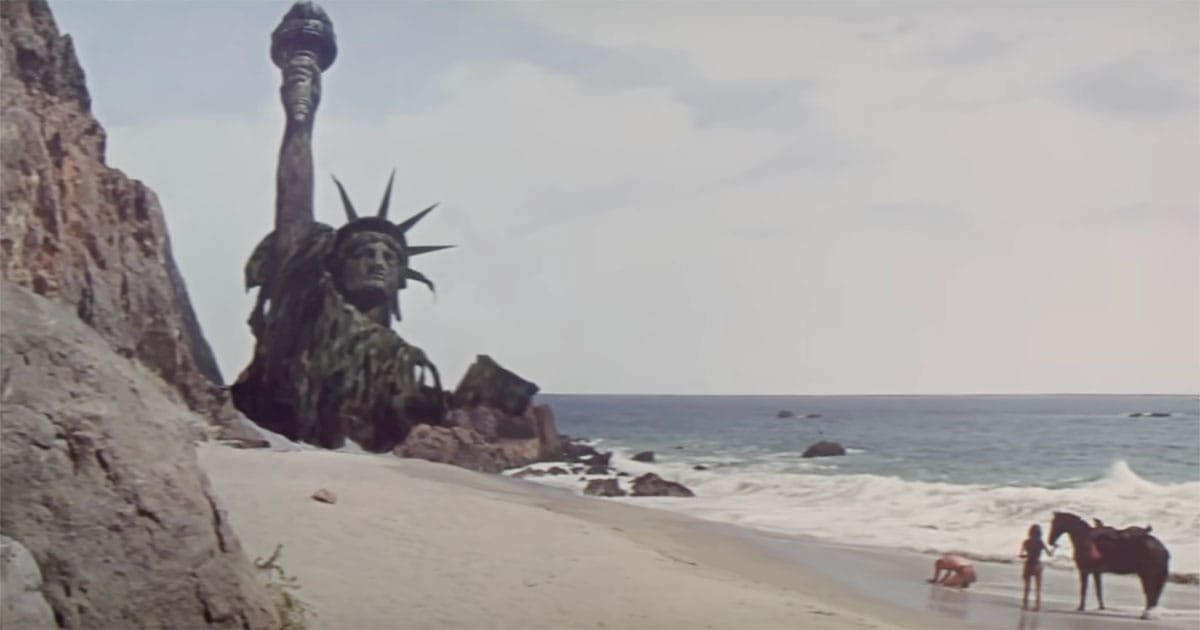
June 15 marks an important anniversary for fans of classic science fiction. On that day in 1973, "Battle for the Planet of the Apes" opened in American theaters. The film brought the original "Planet of the Apes" movie series to its conclusion after five films in five years.
When "Planet of the Apes" debuted in 1968, few moviegoers expected it to become one of the most successful science fiction franchises of its era. The series combined action, adventure, social commentary, and one of the most memorable endings in movie history. Each sequel expanded the story and explored the rise of ape civilization.
By the time "Battle for the Planet of the Apes" arrived, the world of the series had changed dramatically. Human civilization had collapsed, and Caesar led a growing ape society struggling to build a better future. The film asked whether intelligent beings could learn from the mistakes that destroyed the old world.
The final chapter did not enjoy the budget or box office success of the earlier films. Even so, it completed a story that had begun with an astronaut's shocking discovery on a distant beach. More than fifty years later, the original series remains one of science fiction's most ambitious cinematic achievements.
This week offers a good opportunity to revisit the ape saga and consider the questions that made it endure. Can a civilization escape its past? Can power be used wisely? Those questions remain as relevant today as they were in 1973.
Sponsored By: Ironclaw Bongo

Space pirates, alien battlefields, and a gorilla warrior carrying enough firepower to stop an invasion. The Ironclaw Bongo T-shirt celebrates the kind of larger-than-life adventure that made science fiction a favorite genre for generations. Soft, comfortable, and built for everyday wear, it is a tribute to courage, loyalty, and old-fashioned heroics among the stars.
Can Civilization Escape Its Past
When "Battle for the Planet of the Apes" reached theaters on June 15, 1973, it brought the original "Planet of the Apes" saga to a close. The film followed Caesar as he attempted to build a new society from the ruins of the old one. Human civilization had collapsed. The future belonged to the apes.
At first glance, the movie appears to be another science fiction adventure. There are ape warriors, human survivors, and the threat of violence. Yet beneath the action lies a question that has fascinated science fiction writers for generations. Can a civilization learn from history, or is it destined to repeat the same mistakes?
The Dream of a New Beginning
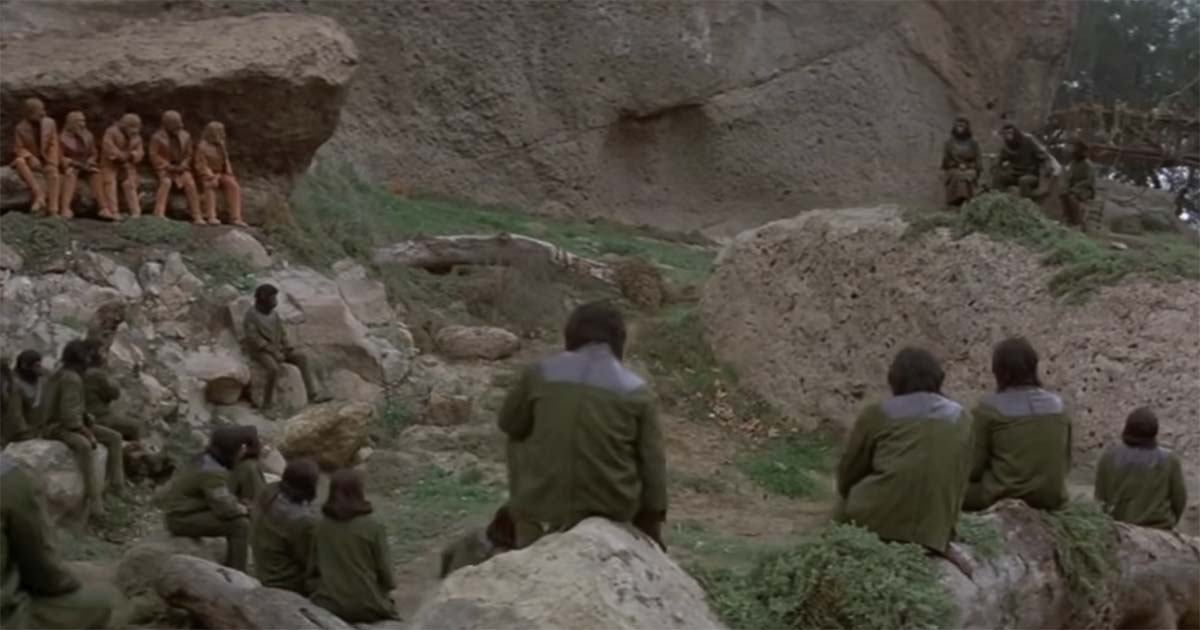
That question sits at the heart of the entire "Planet of the Apes" series. The original 1968 film shocked audiences with its famous ending. The sequels gradually revealed how the old world fell apart and how a new one emerged. By the final film, the focus had shifted from destruction to reconstruction.
Caesar faces a challenge familiar to every generation. He inherits a broken world. He understands what caused its downfall. He sincerely wants something better for those who come after him.
Many science fiction stories begin with a similar dream. A disaster wipes away the old order. The survivors receive a second chance. They believe they can build a society free from the failures of the past.
The Return of Old Mistakes
That hope appears throughout classic science fiction. In "A Canticle for Leibowitz," civilization slowly rebuilds after nuclear war. Knowledge survives, and new institutions emerge. Humanity seems ready to chart a wiser course.
Yet the story takes an unexpected turn. As society grows stronger, old ambitions return. Political rivalries reappear. Weapons become more powerful. The cycle begins again.
The same pattern appears in "Foundation." Isaac Asimov imagined the collapse of a vast galactic empire. New leaders emerge. New governments take shape. New opportunities appear.
Even so, human ambition never disappears. The names change. The technologies change. The circumstances change. The underlying struggles remain remarkably familiar.
Why These Stories Endure
This idea explains why classic science fiction remains relevant decades after publication. The stories are not merely predictions about rockets, computers, or distant planets. They are examinations of human nature.
Science fiction often places familiar problems in unfamiliar settings. An alien world allows readers to see their own world more clearly. A future civilization becomes a mirror reflecting the strengths and weaknesses of the present.
The ape society in "Battle for the Planet of the Apes" serves exactly that purpose. The conflict is not really about apes and humans. It is about fear, power, justice, and revenge. Those themes remain constant whether the characters are astronauts, aliens, robots, or intelligent apes.
Caesar's Choice
What makes Caesar such a compelling character is his awareness of history. He knows how the old world ended. He understands the dangers of hatred and unchecked power. He recognizes how easily noble intentions can become something darker.
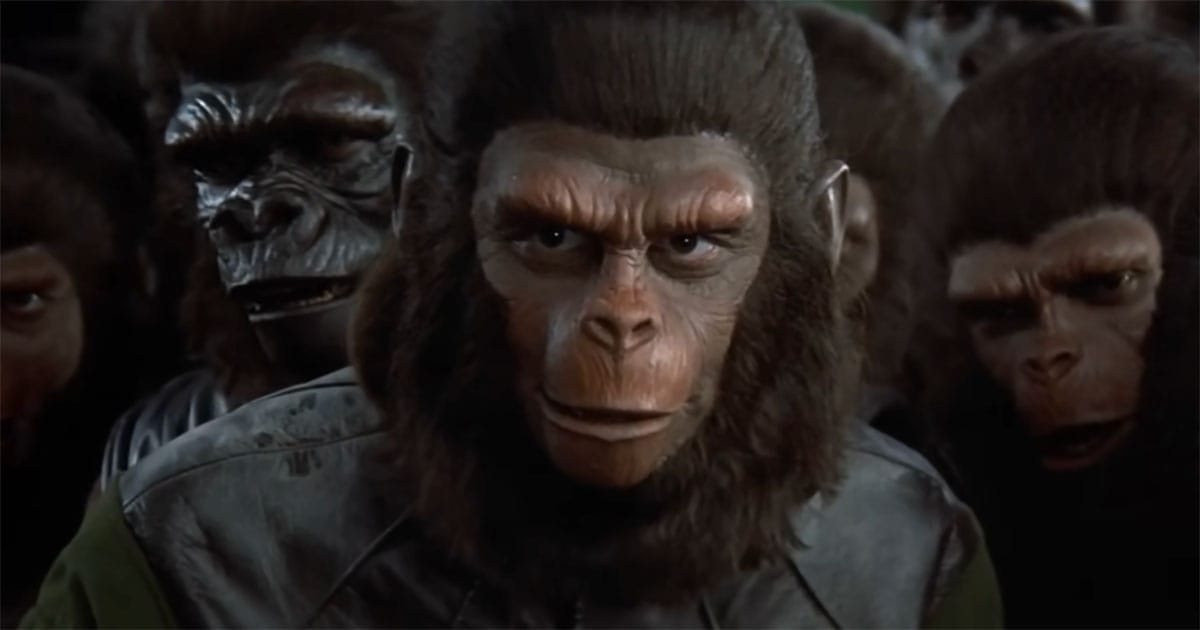
His greatest challenge is not defeating an enemy. His greatest challenge is governing wisely after victory has already been won.
That struggle appears throughout history and throughout science fiction. Winning power is one thing. Using power responsibly is something else entirely. Many societies succeed in the first task. Far fewer succeed in the second.
The film never offers an easy answer. It does not suggest that progress is inevitable. It does not promise that future generations will automatically become wiser. Instead, it presents civilization as a series of choices made by imperfect individuals.
The Future Is Not Fate
That perspective gives the story its enduring strength. The future is not shaped by fate alone. It is shaped by character. A society becomes the product of the values it chooses to embrace.
More than fifty years after its release, "Battle for the Planet of the Apes" continues to ask an important question. Can a civilization escape its past?
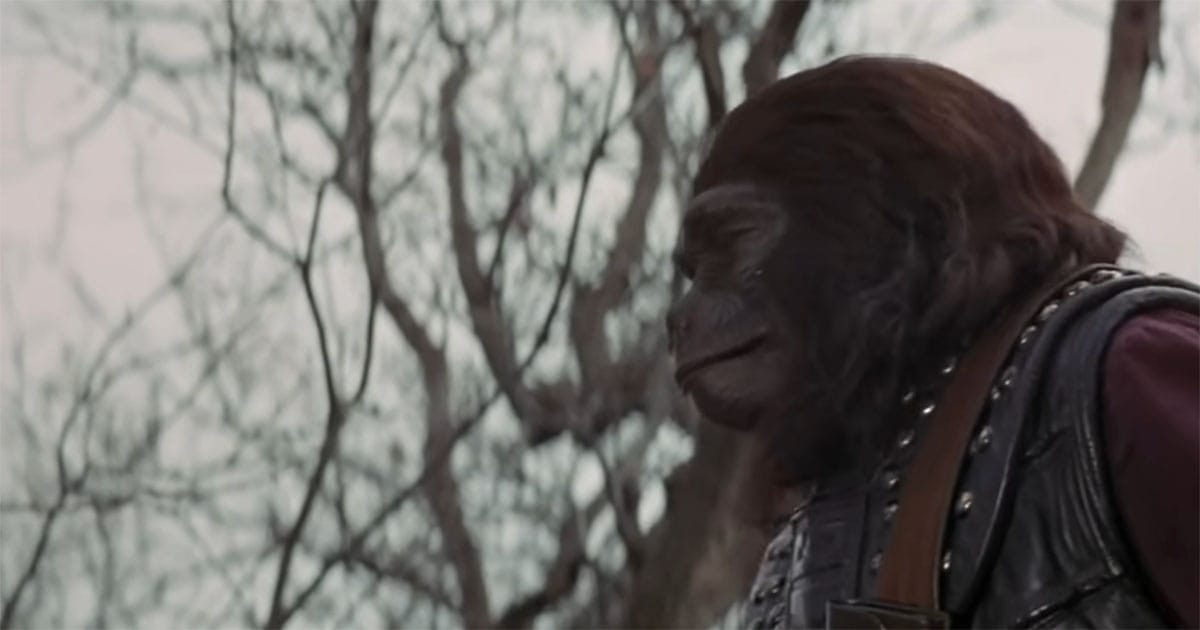
The film suggests that history exerts a powerful pull. Old habits survive. Old fears endure. Old mistakes wait for another opportunity to return.
Yet the story also leaves room for hope. Individuals can choose wisdom over anger. Leaders can choose responsibility over power. Societies can choose to remember the lessons of history rather than ignore them.
That possibility may be the most enduring idea in the entire "Planet of the Apes" saga. The future is never guaranteed. Each generation inherits the consequences of the past. Each generation also decides what comes next.
That was Caesar's challenge. It remains ours as well.
"Planet of the Apes" Trivia
- Rod Serling created the Statue of Liberty ending for "Planet of the Apes." It became one of the most famous twists in movie history.
- Makeup artist John Chambers received an honorary Academy Award for his groundbreaking ape makeup. The Academy did not have a competitive makeup category at the time.
- Roddy McDowall appeared in four of the five original "Planet of the Apes" films and the television series. No actor is more closely associated with the franchise.
- Charlton Heston helped rewrite Taylor's opening narration because he felt the original version was too optimistic. His changes gave the character the cynical outlook that defined the film.