
When Science Fiction Ruled the Radio
Classic science fiction found a natural home on radio as “Dimension X” and “X Minus One” brought stories by Bradbury, Asimov, Heinlein, and other great SF writers to American listeners.

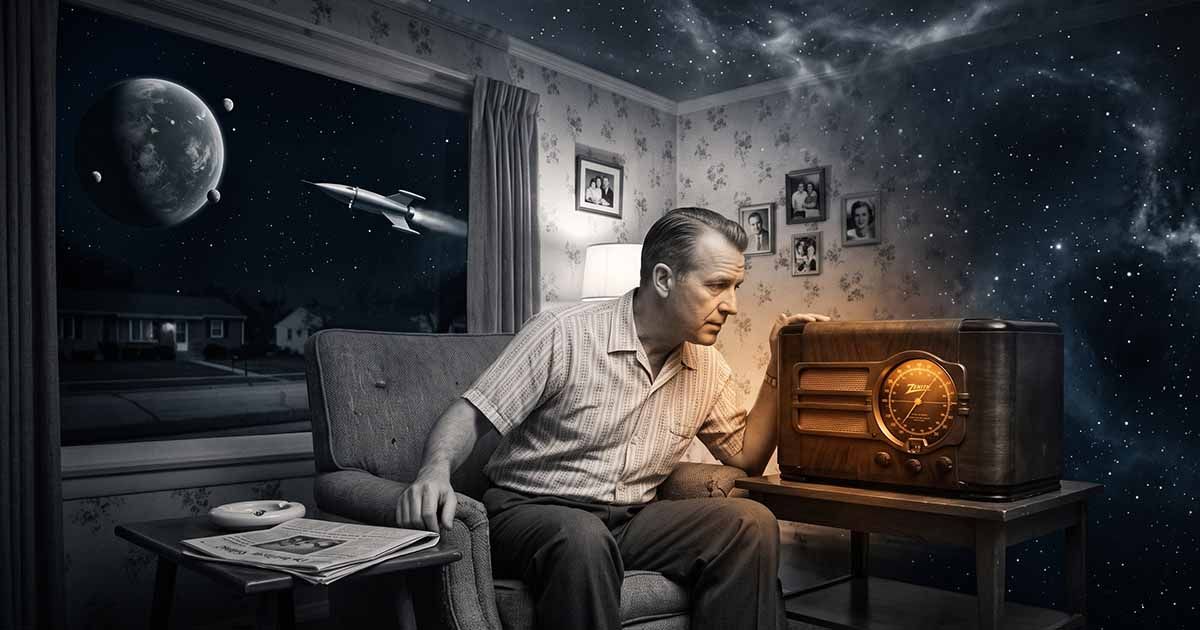
This Week in Classic Science Fiction
On September 29, 1950, NBC's "Dimension X" carried listeners to Mars with Ray Bradbury's "And the Moon Be Still as Bright." Ernest Kinoy adapted the story for the half-hour radio drama, with Alexander Scourby playing archaeologist Jeff Spender.
Bradbury's story follows the fourth human expedition to Mars, where the explorers discover the remains of a once-great civilization. The Martians are dead, but their cities, art, and culture remain. Spender develops a deep respect for what they left behind, while some of his crewmates regard Mars as little more than another place for mankind to conquer.
The story had first appeared in the June 1948 issue of "Thrilling Wonder Stories." Bradbury later incorporated a revised version into "The Martian Chronicles," published in 1950, making the radio adaptation remarkably timely.
"And the Moon Be Still as Bright" showed what radio science fiction could accomplish without elaborate visual effects. Bradbury made Mars strange and beautiful, but his real subject was mankind. The story asks whether technological achievement necessarily brings wisdom with it, and whether men capable of reaching another planet will have enough humility to respect what they find there.
Sponsored by: Alien Free Fall | Свободное

Every explorer dreams of being the first man to set foot on another world. Nobody says much about the trip from the ship to the ground.
Alien Free Fall is for science fiction fans who know that the unknown is half the attraction. Sometimes the frontier isn't waiting beyond the horizon. Sometimes it is several thousand feet below.
When Science Fiction Ruled the Radio
Science fiction has always presented filmmakers with an expensive problem. A Western needs horses and a patch of open country. Science fiction might need a city on Mars, an interstellar spacecraft, and a creature with six arms. In the days before computer effects, somebody had to figure out how to put all of that in front of a camera.
Radio had no such problem. A microphone, actors, music, and a good sound-effects crew could transport millions of listeners to another planet. A spaceship did not need to look convincing because there was nothing to see. The audience built the ship in its imagination.
That limitation became one of radio's greatest strengths. Science fiction depends upon ideas, and radio could make almost any idea seem enormous without having to build it.
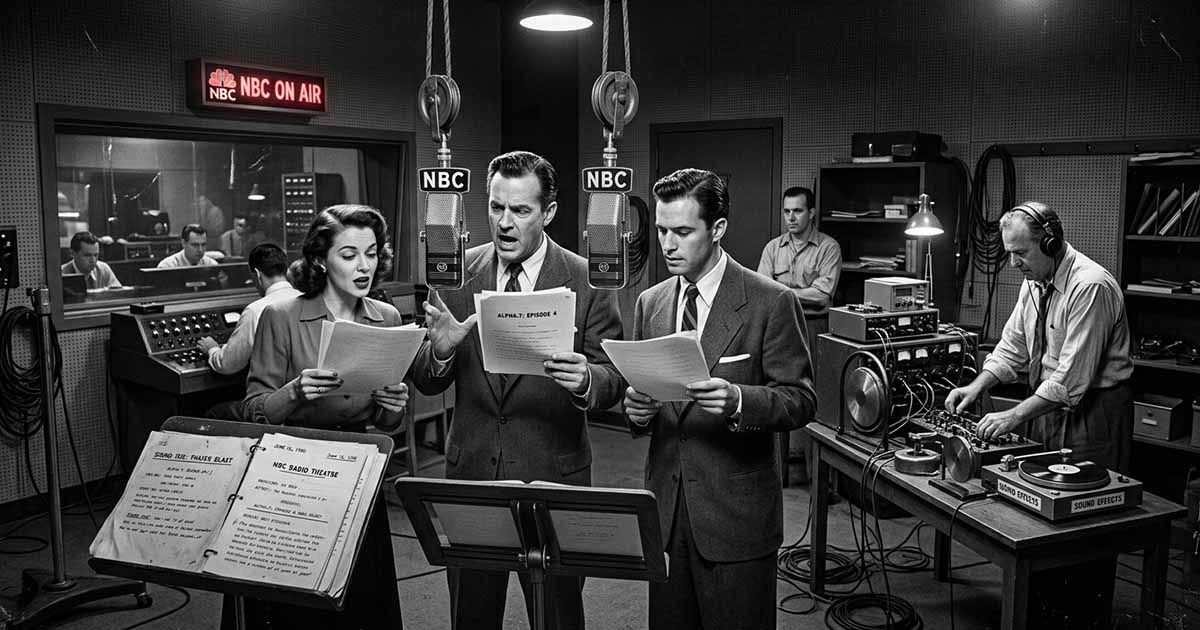
"Dimension X" Takes Science Fiction Seriously
NBC launched "Dimension X" on April 8, 1950. The half-hour anthology was not the first adult science-fiction program on American radio, but it quickly distinguished itself by drawing heavily from published science fiction. Its 50 episodes included adaptations of stories by Ray Bradbury, Robert A. Heinlein, Isaac Asimov, Murray Leinster, Jack Williamson, Clifford D. Simak, and other established writers.
That gave "Dimension X" something more valuable than spaceships and ray guns. It gave the program ideas.
Listeners heard Heinlein's "The Green Hills of Earth" and "The Roads Must Roll." Bradbury supplied "Mars Is Heaven!," "The Veldt," "Kaleidoscope," and several other stories. Asimov's "Pebble in the Sky" and "Nightfall" also received adaptations. NBC writers Ernest Kinoy and George Lefferts handled many of the scripts.
"And the Moon Be Still as Bright" demonstrated the possibilities particularly well. Ernest Kinoy adapted Bradbury's story for the September 29, 1950, broadcast. Actors and sound transformed the Martian ruins of Bradbury's imagination into a place listeners could visit without NBC constructing a single Martian city.
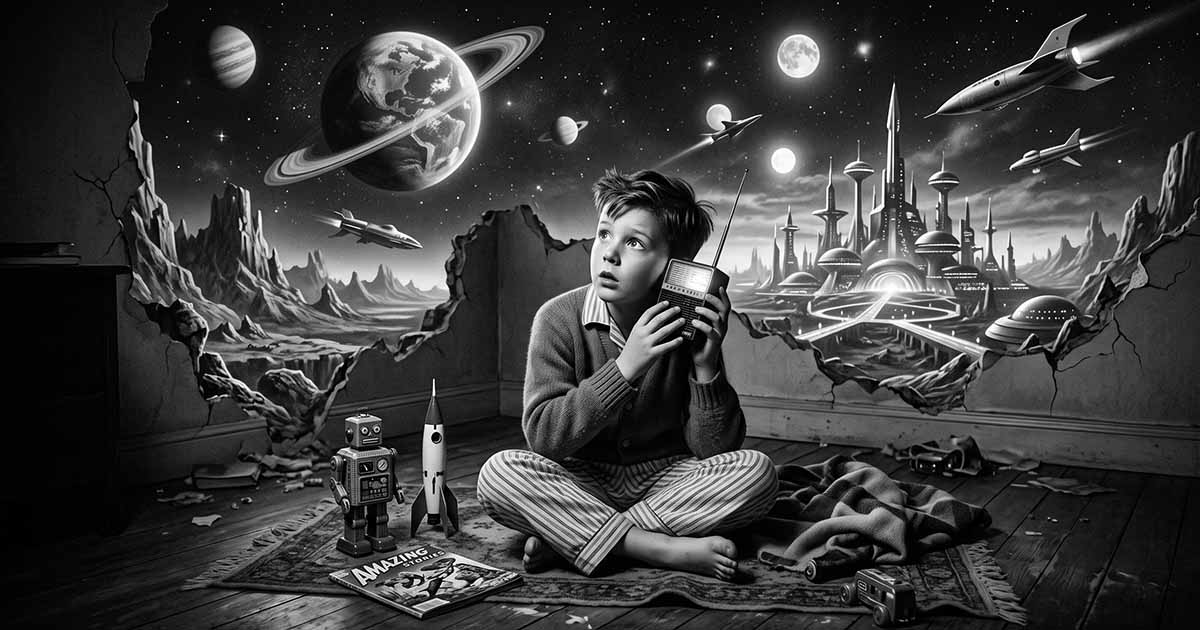
The Greatest Special Effect Was Imagination
Radio could accomplish something that early science-fiction movies sometimes struggled to do. It could hide the machinery.
A movie monster might be terrifying until the audience noticed that he appeared to be a fellow wearing a rubber suit. A miniature spaceship might cross the galaxy while dangling from a wire. Radio suffered from neither problem. Its Martians never had visible zippers.
Sound created the suggestion, and the listener completed it. A mechanical hum could become an atomic engine. An echo could create an enormous underground chamber. A strange voice emerging from static could put an alien intelligence on the other side of the universe.
"Dimension X" took sound seriously. Productions sometimes employed several sound-effects artists, while music and electronic effects helped give the dramas their otherworldly character.
More importantly, every listener saw something different. The Martian city inside one man's head did not have to resemble the city imagined by the fellow sitting next to him. Radio supplied enough information to start the picture, then wisely got out of the way.
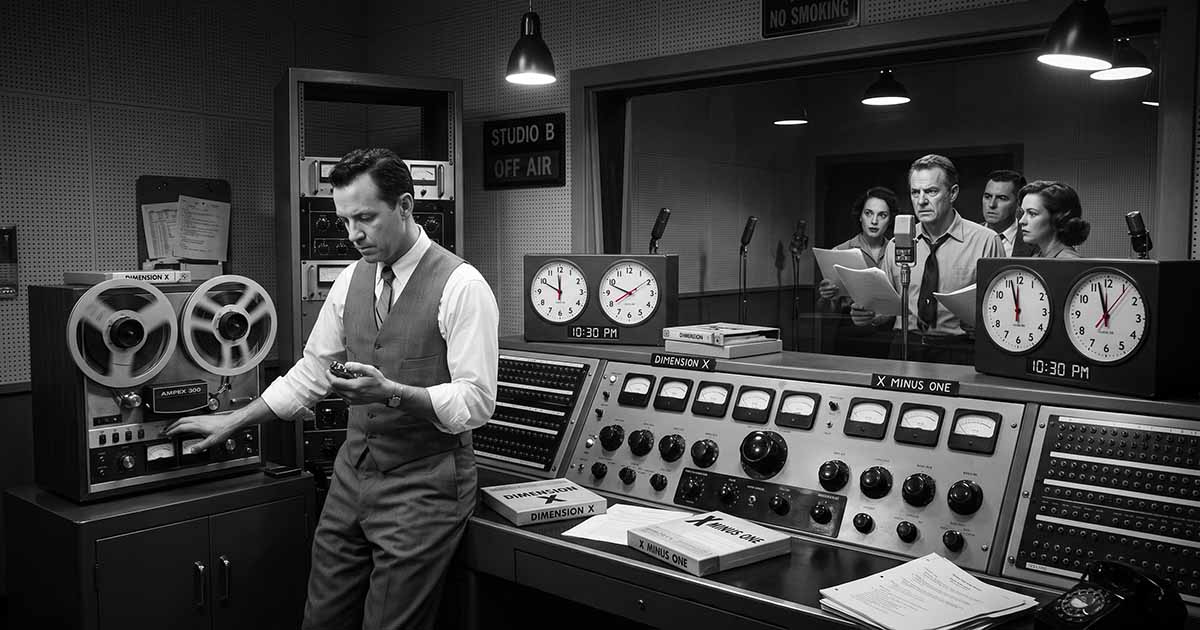
"X Minus One" Carries the Torch
"Dimension X" ended in 1951, but NBC returned to serious radio science fiction four years later. "X Minus One" premiered on April 24, 1955, and initially revived material from its predecessor. Its first 15 broadcasts were new performances of scripts previously produced for "Dimension X."
The program soon developed an impressive library of its own. "X Minus One" adapted stories by writers including Asimov, Bradbury, Heinlein, Philip K. Dick, Frederik Pohl, Theodore Sturgeon, Fritz Leiber, and Robert Sheckley. Among its notable productions were Pohl's "The Tunnel Under the World," Leiber's "A Pail of Air," and Dick's "The Defenders."
The program also maintained close connections with the science-fiction magazines. It was first associated with "Astounding" and later with "Galaxy," drawing much of its material from the same magazines serious SF readers bought.
Yet the world of broadcasting was changing. "X Minus One" remained on NBC until January 1958, when television had already transformed American entertainment. The timing carried a certain irony. Science fiction was becoming increasingly suited to the screen just as network radio drama was surrendering the living room to television.
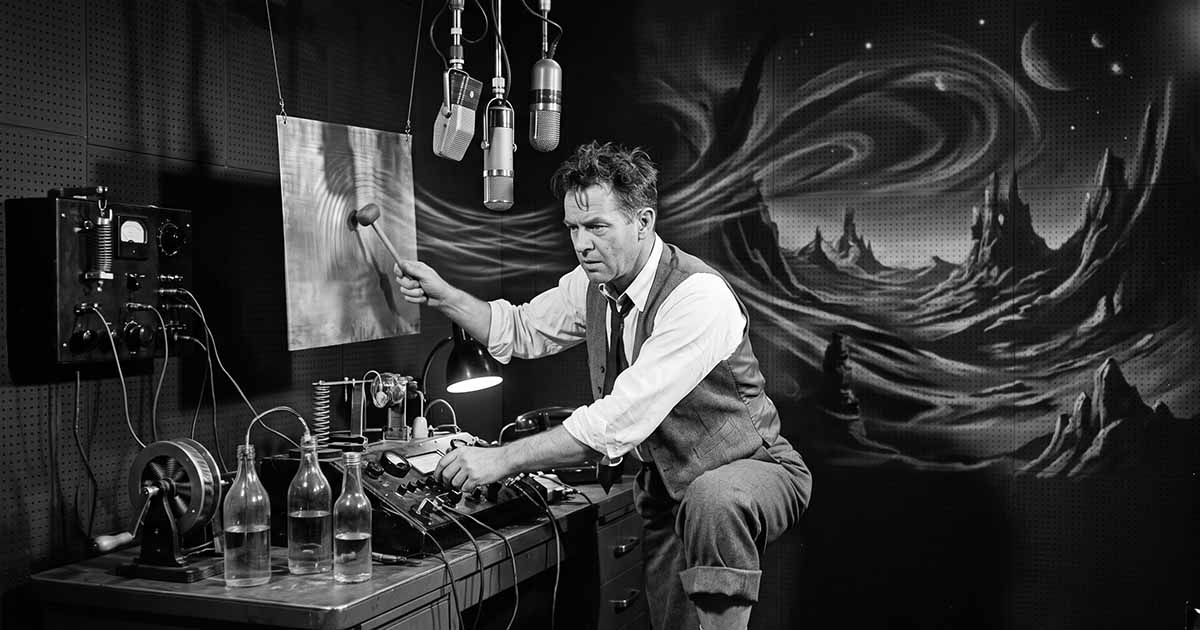
Worlds Built From Sound
Modern science fiction can show audiences almost anything. Filmmakers can create whole planets, fleets of spacecraft, alien civilizations, and battles involving thousands of ships. The technical limits that once made fantastic stories difficult to film have largely disappeared.
Radio worked in exactly the opposite direction. It showed the audience nothing.
That demanded something from the listener. He had to participate in the story by supplying faces, landscapes, machines, and monsters for himself. The result could be more personal than anything constructed on a soundstage.
"Dimension X" and "X Minus One" demonstrated that the essential special effect in science fiction was never a model spaceship or an elaborate alien costume. It was imagination.
Radio supplied the voices and sounds. The listener built the world.
Science Fiction Radio Trivia
- “And the Moon Be Still as Bright” first appeared in “Thrilling Wonder Stories” in June 1948, two years before joining “The Martian Chronicles.”
- Alexander Scourby played archaeologist Jeff Spender in the 1950 “Dimension X” adaptation.
- “Dimension X” also adapted Bradbury stories including “Mars Is Heaven!,” “The Veldt,” and “Zero Hour.