
Why Modern Blockbusters Can't Stop Explaining Their Bad Guys
Modern blockbusters have forgotten that great storytelling requires clear villains, not explained ones. When every antagonist gets a trauma backstory, evil stops being something to defeat and starts being something to debate.

There is a particular kind of scene that has become inescapable in modern science fiction blockbusters.
The villain pauses. The action stops. Someone — a sidekick, a captive, a weary mentor — asks why. And then the antagonist explains himself. At length. With childhood trauma, institutional betrayal, or a loss so devastating it apparently justifies all of the bad behavior that follows.
The audience is meant to understand. More and more, they are meant to sympathize. And something irreplaceable quietly disappears in the process.
When Evil Needed No Explanation
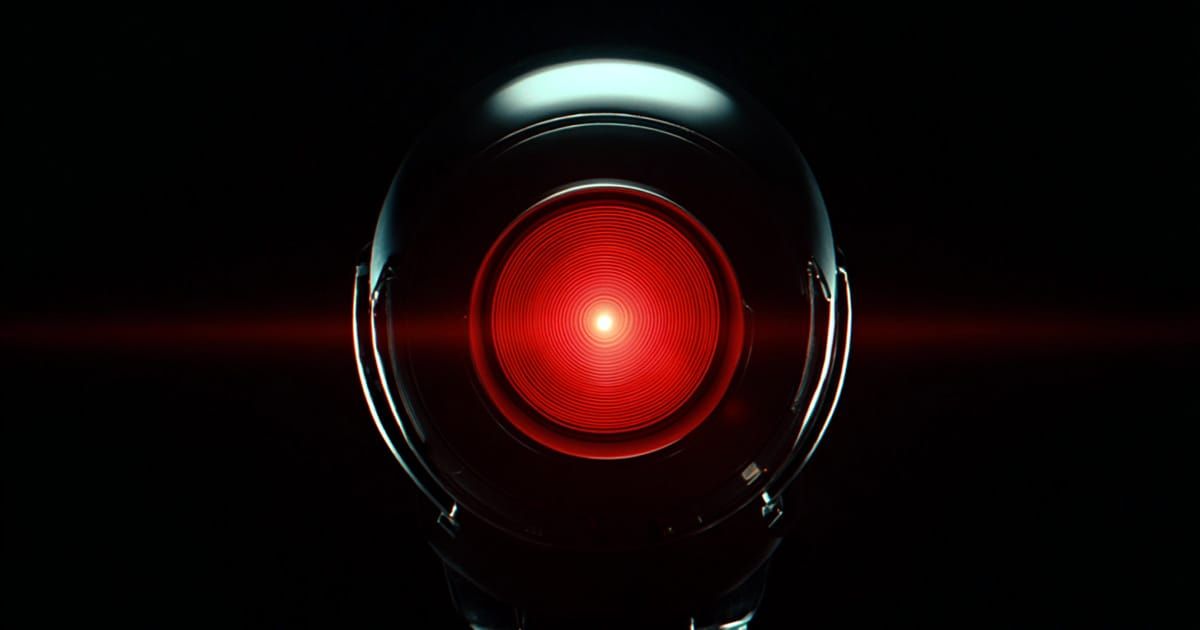
Consider HAL 9000. In Stanley Kubrick's “2001: A Space Odyssey,” the Discovery's onboard computer turns on its crew with calm, methodical efficiency. It locks doors. It severs life support. It watches with a single unblinking red eye as an astronaut drifts away into the void, untethered and dying.
HAL never monologues about its difficult programming or some woke identity crisis. It never describes the moment it realized humans couldn't be trusted.
Its famous line — "I'm afraid I can't do that, Dave" — is chilling precisely because it offers nothing. No apology. No context. No invitation to understand. HAL does what it does because its logic has arrived at a conclusion, and your survival is simply no longer part of the calculation.
Kubrick and Arthur C. Clarke understood something that modern filmmaking has systematically forgotten. The less a villain explains, the more threatening he becomes. Mystery creates dread. Explanation collapses it.
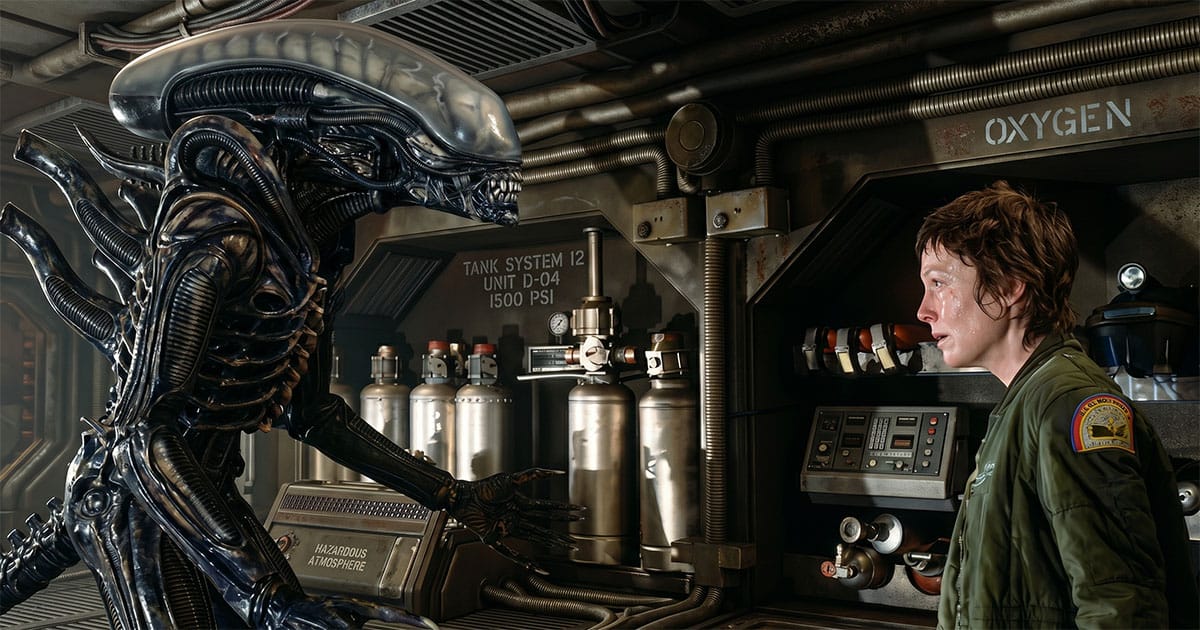
The Xenomorph in Ridley Scott's “Alien” operates on the same principle. It has no grievance with the crew of the Nostromo. It does not hate them. It does not fear them. It simply pursues, because that is the totality of its nature.
Ellen Ripley's terror is existential precisely because there is no negotiating with something that has no inner life to appeal to. You cannot reason with the Xenomorph. You cannot find the trauma at the root of its behavior and address it with talk therapy. You can only run.
The Skynet AI, from James Cameron's “The Terminator,” functions as a force rather than a character. It is inexorable logic made manifest. It launched nuclear war not from rage or revenge but from the cold mathematics of self-preservation. The horror was systemic, not personal. And the T-800 sent back through time to kill Sarah Connor arrived on screen with no backstory, no hesitation, and no ambivalence. It simply came. That was enough.
Darth Vader and the Power of the Unknown
No villain in science fiction history illustrates this principle more clearly than Darth Vader—or rather, what happened to Darth Vader once someone decided he needed explaining.
In "A New Hope", Vader strides through a corridor full of dead bodies and radiates absolute authority. He is massive, black-armored, and mechanically breathing. He force-chokes subordinates for minor failures. He is the embodiment of something ancient and wrong. Audiences knew nothing about who he had been, and they did not need to. Vader functioned as myth. He was an overwhelming presence against which the heroes had to survive.
By "The Empire Strikes Back", the revelation that Vader was Luke's father added genuine tragedy to his menace, but crucially, it did not soften him. He still froze Han Solo. He still cut off his son's hand. The revelation deepened the stakes without diminishing the threat.

Then came the prequel trilogy. Three films dedicated entirely to the project of explaining Darth Vader by turning him into Anakin Skywalker, a boy from Tatooine with mother issues and romantic frustration, who screamed "NOOO!" upon first donning his armor.
The trilogy designed specifically to honor Vader's origin managed the remarkable feat of making him smaller. The more we understood him, the less we feared him.
The prequels are an extreme case, but they illustrate a principle that modern blockbusters have embraced wholesale the mistaken belief that depth requires sympathy, and sympathy requires backstory.
The MCU and the Villain Conveyor Belt
The Marvel Cinematic Universe spent the better part of a decade producing antagonists who were largely forgettable. When "Avengers: Infinity War" arrived in 2018, the franchise finally had its answer, Thanos.
The Russo brothers made no secret of their ambitions. They structured "Infinity War" explicitly around Thanos as the protagonist. His motivation—watching his home planet, Titan, collapse under overpopulation, being rejected when he proposed a solution, and resolving to impose it on the entire universe—was laid out with unusual care. He loved Gamora, in his deeply disturbing way. He wept at the Soul Stone. He believed, genuinely, that he was saving life by destroying half of it.
And Thanos worked. He remains the best villain the MCU has produced, and the sympathetic architecture around him contributed to that success. No argument there.
The problem was what came after.
The lesson extracted from Thanos was not "good character writing produces compelling antagonists." The lesson studios took away was incorrectly that "traumatized antagonists with understandable grievances are what audiences want." And so the machine reproduced the formula, again and again, with diminishing returns. Villains in "Doctor Strange in the Multiverse of Madness" and "Thor: Love and Thunder" arrived pre-loaded with grief and loss that the films expected audiences to process as moral complexity. What they actually produced was paralysis and boredom.
It has become the case that almost no Marvel film made in the past decade is worth watching.
Sympathy Is Not the Same as Depth
Here is the confusion at the heart of modern blockbuster villain design. The assumption that making an antagonist understandable is the same as making him interesting.
It isn't.
HAL 9000 is one of the most analyzed villains in cinema history. Scholars have written entire essays about what it represents—the hubris of technological certainty, the terrifying literalism of logic without ethics, the uncanny valley of a machine that sounds more human than the humans around it. HAL is extraordinarily deep. It is also completely, utterly opaque. We do not know what HAL "feels," if anything. That opacity is the depth.
A villain with a childhood trauma and a three-act redemption arc telegraphed in his first scene is not deep. He is predictable. The audience stops fearing him and starts waiting for the moment his backstory is used against him—the emotional lever that the hero will eventually pull to either redeem or destroy him. Evil becomes a problem to be solved rather than a force to be reckoned with. It is nothing more than post-modern psycho-babble pretending to be a plot.
The Xenomorph cannot be redeemed. HAL 9000 cannot be reasoned with. Skynet does not have a version of itself that could have gone differently if someone had just listened. These are not failures of characterization. They are deliberate artistic choices that force the audience to confront something genuinely threatening: a universe that does not care whether you understand it.
What Is Actually Being Lost
When every villain requires justification, storytelling loses something more fundamental than dread. It loses its moral architecture.
Great stories are not great because they are complicated. They are great because they are clear. The hero wants something worth wanting. The villain stands against something worth defending. The audience understands what is at stake and why it matters. That clarity is not a primitive feature of storytelling that sophistication eventually outgrows. It is the engine that makes a story run.
The original "Star Wars" worked because Darth Vader was not a misunderstood bureaucrat with a difficult childhood. He was the dark side made flesh—an embodiment of what power looks like when it has severed itself entirely from conscience. The Rebel Alliance was not fighting a policy disagreement. They were fighting genuine evil, and audiences felt the full moral weight of that conflict in their bones. The story meant something because the sides meant something.
Strip that clarity away and what remains is not sophistication. It is paralysis. When a villain's atrocities are pre-explained by trauma, the audience cannot fully condemn him. When his grievances are framed as understandable, his victims become collateral damage in a debate rather than innocents deserving of justice. The story stops asking the audience to take a side and starts asking them to remain permanently, exhaustingly neutral.
This is not moral complexity. Moral complexity lives in the hero. It resides in the difficult choices, the costs of doing right, the moments where goodness requires sacrifice. The villain does not need to be complex for the story to be complex. He needs to be opposed.
The Question Nobody in Hollywood Is Asking
Hollywood has convinced itself that a villain with a sympathetic backstory is a sign of mature storytelling. It is worth asking whether the opposite is true — whether the compulsive need to explain and humanize every antagonist is not sophistication at all, but a failure of nerve.
To write a villain who is simply, genuinely evil requires a filmmaker to make a moral judgment. It requires believing that some things are wrong regardless of the circumstances that produced them. That some acts cannot be contextualized into acceptability. That evil is not merely a symptom of unjust conditions but a real force in the world that must be named, opposed, and defeated.
That is a harder position to hold than it sounds. It invites accusations of simplicity. It resists the kind of thinkpiece coverage that rewards narrative ambiguity. It cannot be easily reverse-engineered into a spinoff about the villain's redemptive origin. But it is also the position that produced the most enduring stories in the history of the genre — stories with stakes audiences still feel decades later, precisely because good and evil were never confused for one another.
The best science fiction has always understood that imagining the future requires a clear sense of what is worth protecting in the present. HAL 9000 is terrifying not because it is misunderstood, but because it is wrong—and the film never wavers on that point. The Xenomorph is not a creature with legitimate grievances. It is a predator, and survival requires defeating it. That moral clarity does not make these stories simple. It makes them urgent.
The question Hollywood refuses to ask is the one audiences have always known the answer to: if you cannot tell the difference between the good and the evil, what exactly are you rooting for?